Drinking Water Systems for Laguna Woods Homes: Filters and Testing
November 12, 2026 · 15 min read
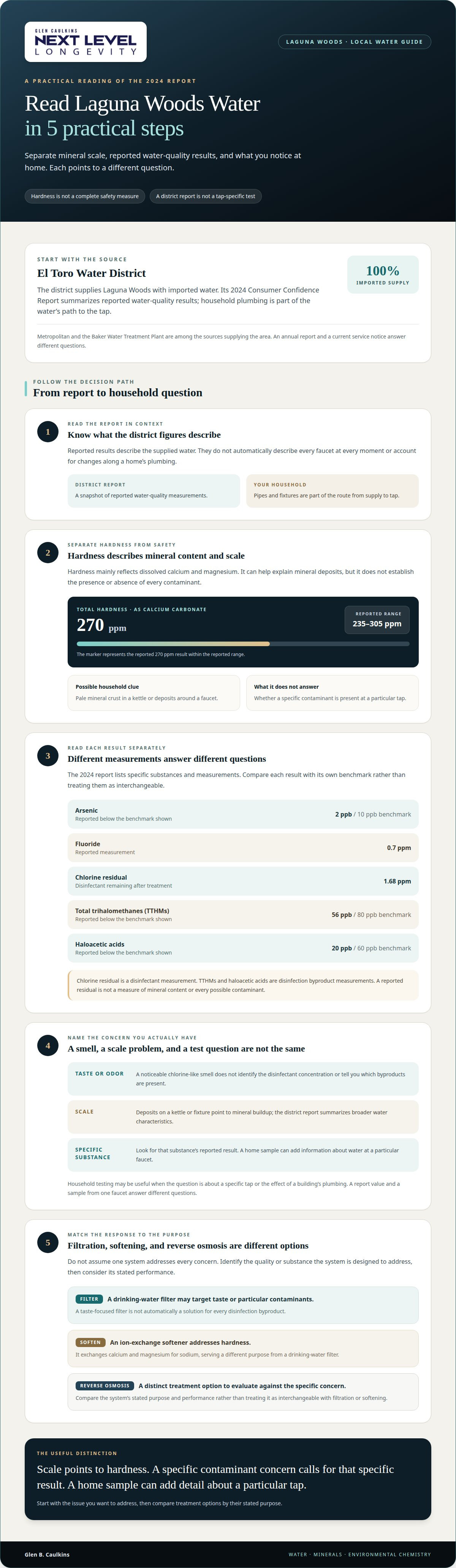
Hard water and unsafe water are not the same question. The 2024 El Toro Water District report lists total hardness at 270 ppm, within a reported range of 235 to 305 ppm. That figure can help explain mineral scale, but it doesn’t by itself determine whether a drinking water system in Laguna Woods is needed or which type would suit a home.
It’s reasonable to want a clear picture of what comes from the tap and what a household filter can change. This guide explains how to read local water-quality information, when home testing may add useful detail, and how filtration, softening, and reverse osmosis differ.
The guide starts with the local safety question, then compares testing and treatment options in practical terms. The goal is to distinguish concerns that call for a specific test from preferences about taste, hardness, or the water used for drinking and cooking.
Key Takeaways
- Learn why hard water can affect scale and taste without, by itself, answering every question about drinking-water safety.
- Understand how chlorine residuals and disinfection byproducts relate to water treatment and why both belong in context.
- See how filtration, water softening, and reverse osmosis address different water concerns rather than serving as interchangeable solutions.
- Identify when household testing can add detail beyond a community water-quality report.
- Use the type of concern you want to address to narrow the options for a home drinking-water system.
Is Laguna Woods Tap Water Safe to Drink?
El Toro Water District supplies Laguna Woods with imported water. Its 2024 report provides a snapshot of measured water quality, while hardness describes mineral content and possible scale. These are related to household water decisions, but hardness alone does not establish drinking-water safety.
Drinking Water Providers
El Toro Water District is the drinking water provider for Laguna Woods. Its supply is 100 percent imported, with water from Metropolitan and the Baker Water Treatment Plant among the sources supplying the area. The district’s 2024 Consumer Confidence Report gives residents local information about reported water-quality results.
The 2024 report lists arsenic at 2 ppb, below the 10 ppb benchmark shown, and fluoride at 0.7 ppm. Those measurements describe specific substances in the reported supply. They don’t tell you about every possible change after water enters a home’s plumbing.
Are there water advisories or service disruptions in Laguna Woods? An annual water-quality report and a current service notice answer different questions. For a current advisory or interruption, check the latest notice from the responsible district. Hardness results alone cannot tell you whether service is interrupted.
Water sources matter because supply conditions and treatment can affect the finished water. Imported water is treated before distribution, while household plumbing can influence the water at an individual tap. A building’s pipes and fixtures, for example, are part of the path from district supply to kitchen faucet.
Hardness and Scale Buildup
Hardness measures dissolved minerals, mainly calcium and magnesium. The 2024 El Toro Water District report lists total hardness at 270 ppm as calcium carbonate, within a reported range of 235 to 305 ppm. This describes mineral content, not the presence or absence of every contaminant.
Hard water can leave mineral deposits as it evaporates or heats. A kettle may collect a pale crust, and deposits can form around a faucet outlet. Repeated mineral buildup in household plumbing and appliances can contribute to scale and interfere with normal operation.
The practical question is where hardness affects your home. Scale on a kettle or shower fixture points to mineral deposits, while the district report gives a broader picture of the supplied water. These observations serve different purposes: one shows a household effect, the other summarizes measured water characteristics.
When choosing a drinking water system in Laguna Woods, separate a concern about hardness from a concern about other substances. A filter intended to improve taste or reduce particular contaminants may not soften all household water. An ion-exchange softener addresses hardness by exchanging calcium and magnesium for sodium, but it serves a different purpose from a drinking-water filter. Start with the specific issue: scale on fixtures, mineral taste, or a question about a particular contaminant.
Chlorine residual and disinfection byproducts
El Toro Water District’s 2024 report records chlorine residual and two groups of disinfection byproducts. Reading those figures separately helps distinguish treatment measures from substances formed during disinfection.
Chlorine and Chloramines
Water systems add chlorine or chloramines to disinfect water. A chlorine residual is the amount remaining after treatment, as water moves through distribution pipes. The El Toro Water District report lists a chlorine residual of 1.68 ppm in 2024. That measurement describes the reported supply, not every household tap at every moment.
Residual measurements show how much disinfectant remains in the system. They don’t describe mineral content, such as magnesium, or measure every possible contaminant. The district’s reported result provides local context for treated water in Orange County. A report value and an odor noticed at one faucet answer different questions.
The same report lists total trihalomethanes at 56 ppb, below the 80 ppb benchmark shown. Trihalomethanes, often abbreviated as TTHMs, are disinfection byproducts. The report also lists haloacetic acids at 20 ppb, below the 60 ppb benchmark shown. These results apply to the reported water-quality information, not necessarily every point in the distribution system.
Disinfection byproducts form when disinfectants interact with other materials in water during treatment. Reported TTHM and haloacetic acid values describe measured groups of these byproducts. They are not the same as a chlorine residual: one is a disinfectant measurement, while the others are byproduct measurements. Each result has its own context and benchmark.
For a household concern, first distinguish reported byproducts from a specific taste or smell at the tap. A district report summarizes monitoring; a home sample can provide information about water at a particular faucet. This distinction matters in older plumbing, where the water’s path through a building may influence the sample.
Chlorine Taste and Odor
A chlorine-like taste or smell can be noticeable even when a water report lists a measured residual. Sensory experience alone does not identify the disinfectant concentration or reveal which disinfection byproducts are present. For example, a noticeable odor at one kitchen tap is not equivalent to the district’s 1.68 ppm result.
Compare the reported water-quality measurements with the concern you actually notice. If the issue is taste, focus on the sensory change; if it is a specific substance, look for that substance’s result. The 2024 El Toro Water District report separates chlorine residual, TTHMs, and haloacetic acids, making those distinctions easier to follow.
That distinction also helps guide treatment choices. A drinking-water filter selected for taste is not automatically a solution for every disinfection byproduct. Ask which substance or quality the system is designed to address and whether its performance information covers that target. The report’s separate measurements provide a useful starting point.
Filtration, softening, and reverse osmosis options
Choose treatment based on the water concern, not the system label alone. Filters, softeners, and reverse osmosis units work differently. A chlorine taste, mineral scale, and dissolved substances, for example, call for different treatment mechanisms. Matching the method to the goal helps avoid expecting one device to solve every water-quality concern.
Filtration includes several methods. A sediment filter physically captures particles, while activated carbon can reduce chlorine taste and odor. Other media target particular substances. The media and the system’s tested performance determine what it treats. Water passing through a filter is not automatically improved in every respect, so let the specific contaminant or taste concern guide your choice.
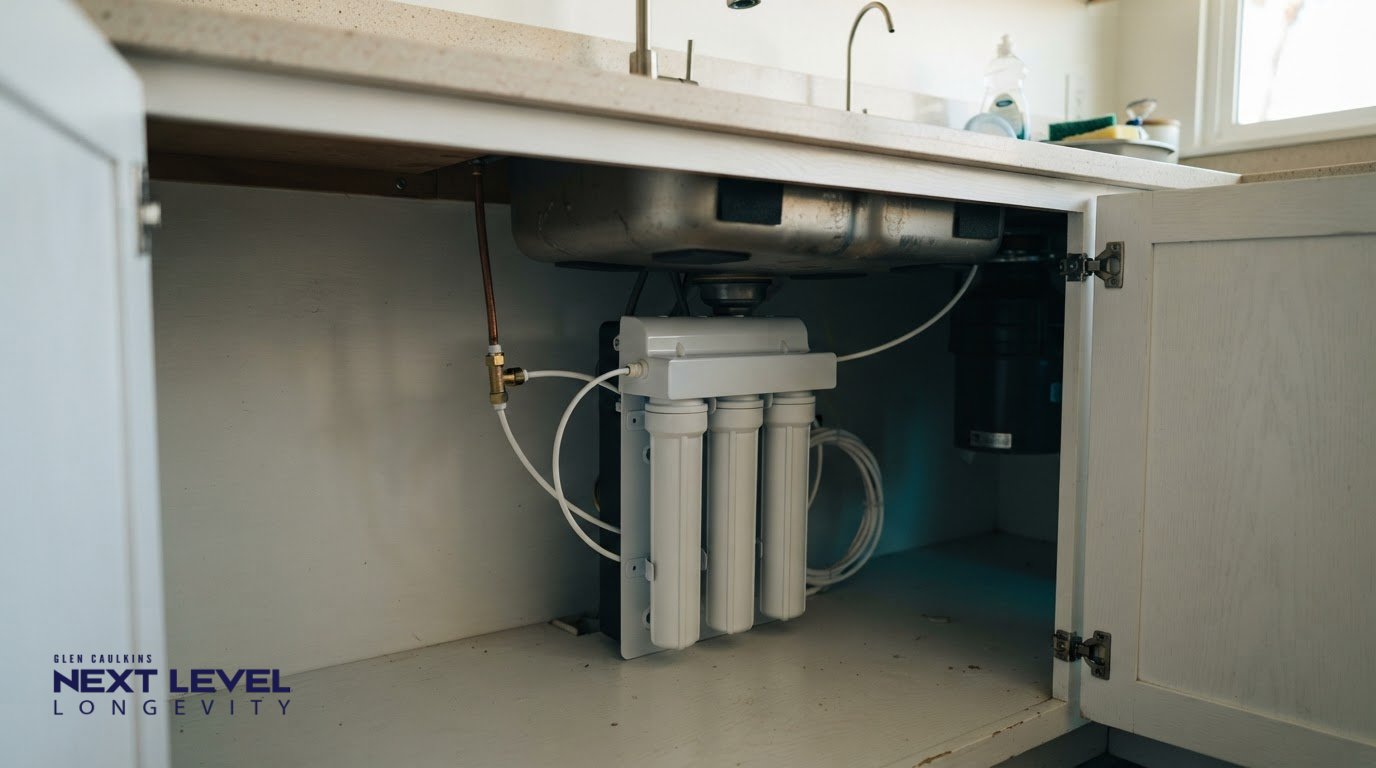
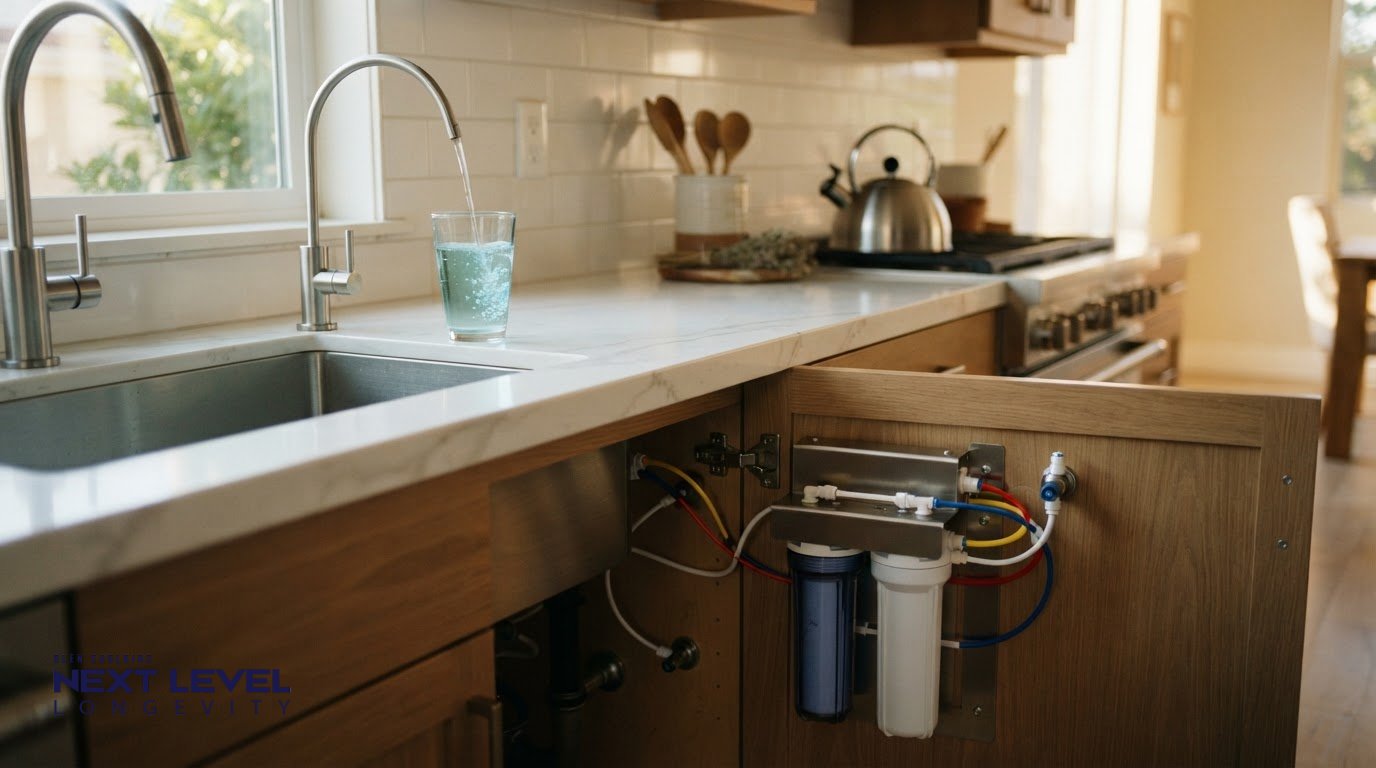
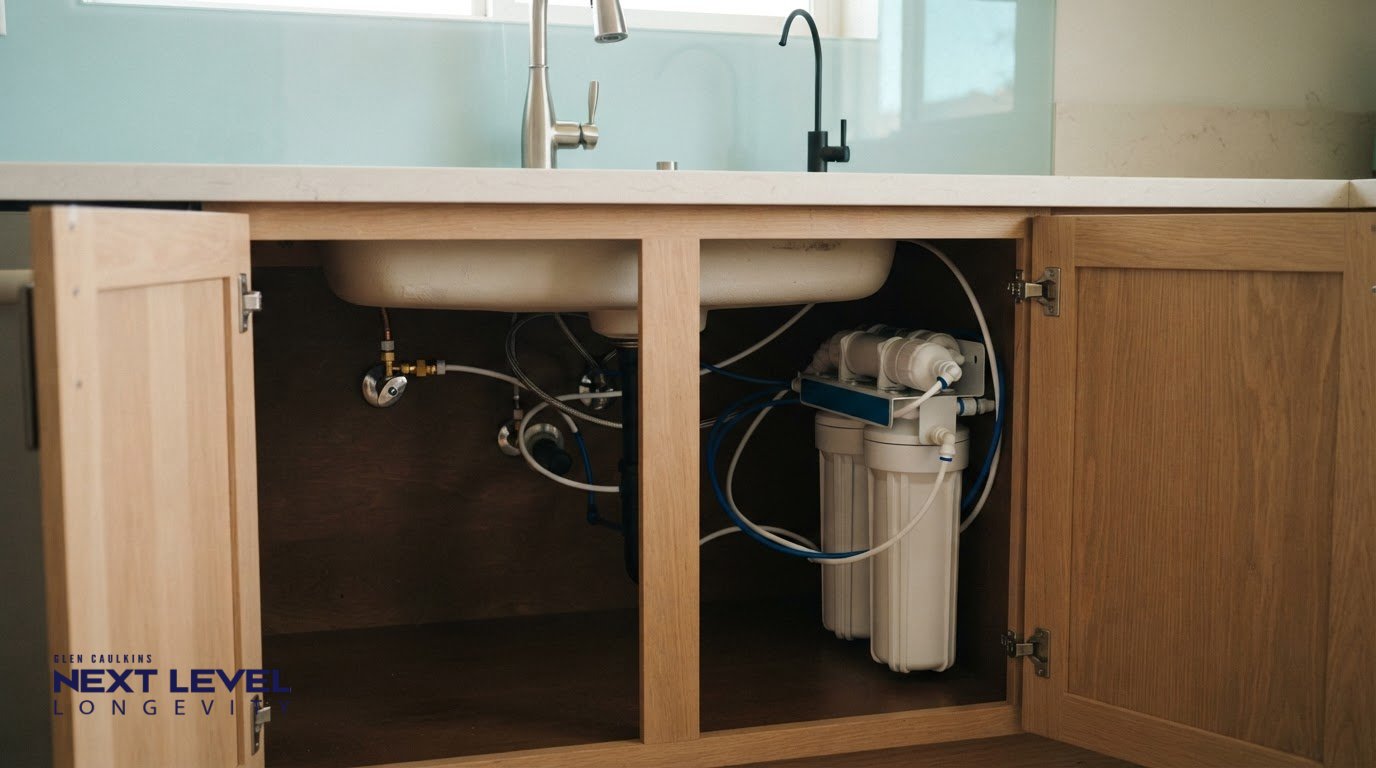
Point-of-use filtration treats water at one fixture, such as the kitchen sink. A whole-house system treats water as it enters the home and serves multiple outlets. These approaches have different purposes: a kitchen filter can focus on drinking and cooking water, while treatment at the entry point also affects showers and appliances.
Water softeners address hardness; they are not general-purpose drinking-water filters. An ion-exchange softener reduces scale by exchanging calcium and magnesium for sodium. This can help limit mineral deposits in pipes and appliances, but it also changes the water’s mineral composition. A softener is a different choice from filtration aimed at taste or a particular contaminant.
Reverse osmosis uses pressure to move water through a membrane that separates many dissolved substances from the treated water. It also produces a concentrated reject stream, so installation and water use matter. Its effect on minerals differs from that of a carbon filter, which targets substances according to its media. Performance depends on the system and its specific test results.
A practical selection process starts with the observed issue. First, identify whether it involves taste, particles, scale, or a named substance. Next, match the issue to a treatment method and review performance information for that target. Finally, consider where treatment is needed, how much water the household uses, and what maintenance the system requires.
For example, scale around several faucets points to a hardness concern across the home. A chlorine-like taste at the kitchen tap suggests a drinking-water filtration goal. A question about a dissolved substance calls for evidence about that substance, not a broad claim that a filter improves all water. These distinctions make a home system easier to choose and maintain.
Water testing and system recommendations
Testing is most useful when it answers a defined question. A community report describes sampled water across a service area; a household sample can reveal conditions at a particular tap. In California, reports and tests provide different views of water quality. Neither replaces the other.
How can residents request water quality reports or testing in Laguna Woods? El Toro Water District mails its annual water quality report in June, covering drinking-water testing and reporting for the prior year. For a household-specific question, arrange testing of water from the relevant tap through a qualified laboratory, and choose the substances to be analyzed.
El Toro Water District tests water at 70 representative sample locations throughout its service area and conducts approximately 12,000 water quality tests each year. These figures describe district monitoring, not a test of every home. A sample from a kitchen faucet may help investigate an issue tied to that home’s plumbing or point of use.
Start by defining the concern. A change in taste calls for a different test than a question about lead, PFAS, or calcium-related hardness. Then match the sampling location to the question: use a kitchen tap for drinking-water concerns, or identify another outlet if the issue occurs there. A result is useful only when its substance, sample location, and units are clear.
PFAS records need careful reading. According to Irvine Ranch Water District, its record includes 23 PFAS compounds. That record relates to Irvine Ranch Water District, not a direct measurement of a Laguna Woods household’s water. A compound appearing in a testing record does not, by itself, show that it was detected in every sample or at every location.
Use the relevant district report to understand regional monitoring, then use targeted household testing to investigate a specific tap or concern. For example, a resident concerned about lead from interior plumbing needs a sample that reflects the relevant faucet and sampling conditions. A district-wide result cannot identify what happens inside one building.
Let the findings and your goal guide system recommendations. If testing identifies a particular substance, choose filtration with performance evidence for that substance. If the concern is taste, a taste-focused filter may be the relevant category. If calcium and magnesium contribute to scale, a softener addresses hardness, not every contaminant. Reverse osmosis is a separate treatment approach, so its suitability depends on the target substances and system performance.
Keep the district report and any household results together. Before choosing treatment, compare the substance names, sampling locations, and units. This helps distinguish a district-level pattern from a home-specific issue and keeps system decisions tied to relevant evidence.
Laguna Woods drinking water safety
El Toro Water District’s water quality report is the clearest starting point for Laguna Woods residents. It summarizes measurements from the district’s supply, while a sample from a home faucet reflects water at that specific location. Those records answer related but different questions. Neither should be read as a complete account of every home’s plumbing or every possible water concern.
The 2024 El Toro Water District report lists uranium at 1 pCi/L, below the 20 pCi/L benchmark shown. It also lists gross beta particle activity at 4 pCi/L. These results describe reported measurements and their stated context. They should not be extended into a claim about a different sample, building, or reporting period.
To read a result, start with the substance name, value, unit, and comparison value. Uranium is reported in pCi/L, while other substances may use ppb or ppm. A number without its unit can mislead, and a benchmark for one substance cannot be applied to another. The report’s “highest” result also needs context: it refers to the measurement described, not necessarily every tap in Laguna Woods.
Federal drinking-water information and a district report serve complementary roles. The federal benchmark shown beside a result helps readers interpret that measurement; the El Toro Water District report identifies local monitoring results. Neither describes the condition of every household fixture, so a concern tied to one home may call for a sample from that home’s tap.
Residents can follow a simple sequence. First, identify the concern, such as an unusual taste or a named substance. Next, find that substance in the district report and note its units and comparison value. Then consider whether the concern involves the supplied water or a particular faucet. A building-specific plumbing question, for example, differs from a question about district-wide treatment.
A report can show measured results without explaining every household’s experience. A faucet’s condition, plumbing materials, and the time water spends in household pipes can affect what a home sample reveals. A district result is not a test of an individual kitchen tap. This distinction matters when deciding whether further testing or a treatment system addresses the actual concern.
The clearest takeaway is measured, not absolute: use El Toro Water District’s report to understand local supply data, then match any additional testing or treatment to a specific concern. A filter chosen for taste does not automatically address every named substance. Choose a drinking-water system for a Laguna Woods home according to its intended target and supporting performance information, not a broad claim that all tap water has the same condition.
Glen B. Caulkins
Glen B. Caulkins connects water chemistry research with practical options for household drinking water. Once local reports clarify your concerns, the next step is to match your goal with an appropriate system rather than assume one treatment addresses every issue. Glen is the founder of PristineHydro and discloses a commercial interest in its water-treatment products.
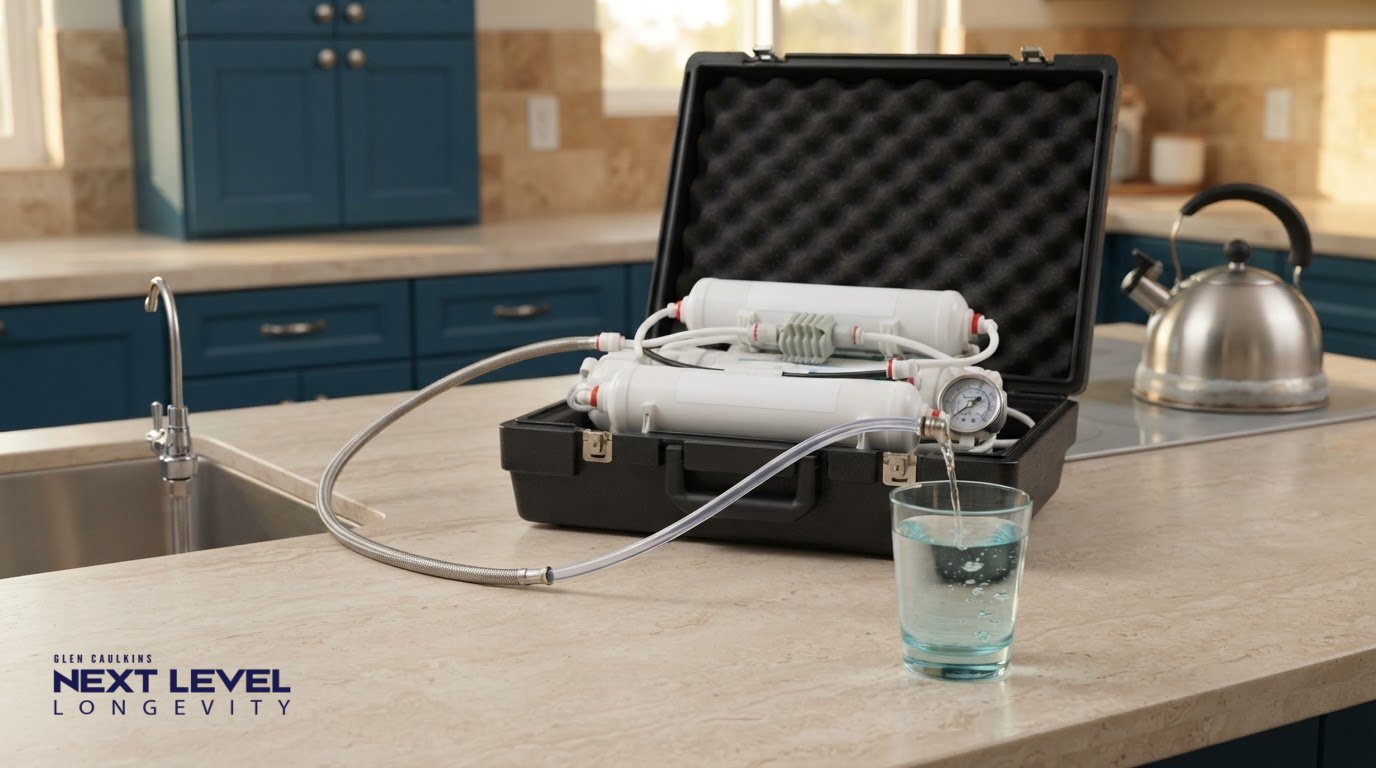
The Under-Counter Water Revival System is an option for home drinking water, while the Travel-Portable Water Revival System suits a different setting. The Aqualux filter with head and Ultimate Dual KDF inline filter address shower filtration needs. Each has a distinct use, so the water concern and where treatment is wanted should guide your choice.
For a thoughtful next step, learn more about Glen B. Caulkins.
Make the Next Step Specific
Start with one clear household goal: decide what you want to change at the tap, then use that goal to guide your system choice. A drinking water system in Laguna Woods should fit the water you use, the concern you want to address, and the treatment approach you prefer. The aim is not to add equipment for its own sake, but to make a considered choice for your home.
If you have an unresolved question, such as how to match a treatment method to a particular water concern, explore PristineHydro’s filtration options and educational resources. Glen B. Caulkins connects water research with practical filtration choices, recognizing that each home’s needs are different.
Learn more about Glen B. Caulkins and explore his work as you consider what matters in your home.
Frequently Asked Questions
What contaminants have been detected in Laguna Woods drinking water?
El Toro Water District’s reporting includes measurements for disinfection byproducts, metals, and radionuclide-related indicators. To interpret a result, distinguish a measured contaminant from a level above a benchmark; these are not interchangeable statements. Also note whether a result applies to a district or household sample. A household sample can help investigate conditions at a specific faucet.
Does Laguna Woods water meet EPA and California drinking water standards?
The information discussed here does not support a blanket yes-or-no statement for every substance, sample, or household tap. Read the report’s compliance findings alongside substance-specific results, rather than treating one comparison as a conclusion about all water quality. If your concern involves a home’s plumbing, district-wide compliance information cannot establish the condition of that plumbing.
What is the water hardness in Laguna Woods?
The district report expresses hardness as calcium carbonate, a common equivalent unit for comparing the combined effect of hardness minerals. If you use a home test, first check that both readings use compatible units and describe the same type of measurement. This helps prevent differences in reporting format from being mistaken for a change in household water.
What steps should Laguna Woods residents take if their tap water tastes or smells unusual?
Record when the change began and whether it affects hot water, cold water, or both. Note visible changes, such as cloudiness or discoloration, and whether nearby taps show the same pattern. These details help the water district understand where and how the issue occurs. Taste or odor alone cannot identify a specific substance or establish its concentration.
Frequently Asked Questions
What contaminants have been detected in Laguna Woods drinking water?
Does Laguna Woods water meet EPA and California drinking water standards?
What is the water hardness in Laguna Woods?
What steps should Laguna Woods residents take if their tap water tastes or smells unusual?
More articles