Drinking Water Systems for Irvine Homes
November 10, 2026 · 15 min read
A recent water quality report measured fluoride in Irvine water at 0.6 parts per million, but that figure alone can’t tell you which drinking water system in Irvine suits your home. Whether you want additional filtration depends on what you want to address and how the system fits your household’s water use and plumbing.
It’s reasonable to want a clear picture of your tap water before choosing a filter. This guide explains what Irvine’s water information can and can’t tell you, and how a household water test can help clarify your water’s composition.
You’ll also learn how to assess system fit, distinguish drinking-water treatment from whole-house treatment, and plan for filter maintenance. The goal is a practical way to weigh your water, your home, and the upkeep before deciding what suits you.
Key Takeaways
- Assess Irvine tap water in context: a single measurement does not describe every aspect of water quality or determine which filtration approach fits your home.
- Understand how under-sink filters and reverse osmosis treat drinking water at the point of use, and how that differs from treating water throughout a home.
- Learn what a water test can help clarify and how to use its findings when considering a filtration system.
- Recognize how Irvine’s reported water hardness can contribute to mineral buildup, and why hardness concerns differ from drinking-water filtration needs.
- See how system choice and upkeep connect, including where Glen B. Caulkins’s Water Revival Systems and replacement filters may fit.
Is Irvine Tap Water Safe To Drink?
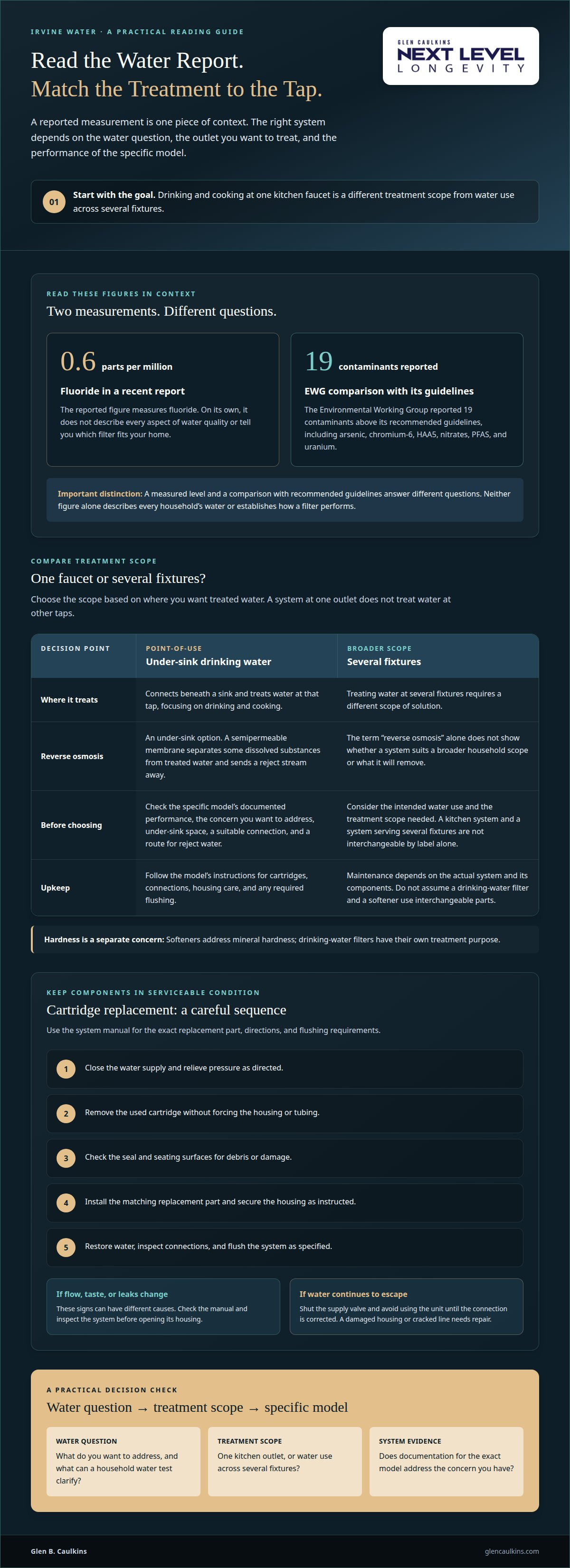
Irvine water quality is described by more than one measurement. A recent water quality report measured fluoride at 0.6 parts per million. The Environmental Working Group reported 19 contaminants above its recommended guidelines, including arsenic, chromium-6, HAA5, nitrates, PFAS, and uranium. These figures answer different questions: one reports a measured fluoride level, while the other compares contaminant levels with the group’s recommendations. Neither figure alone describes every household’s water or the performance of a filter.
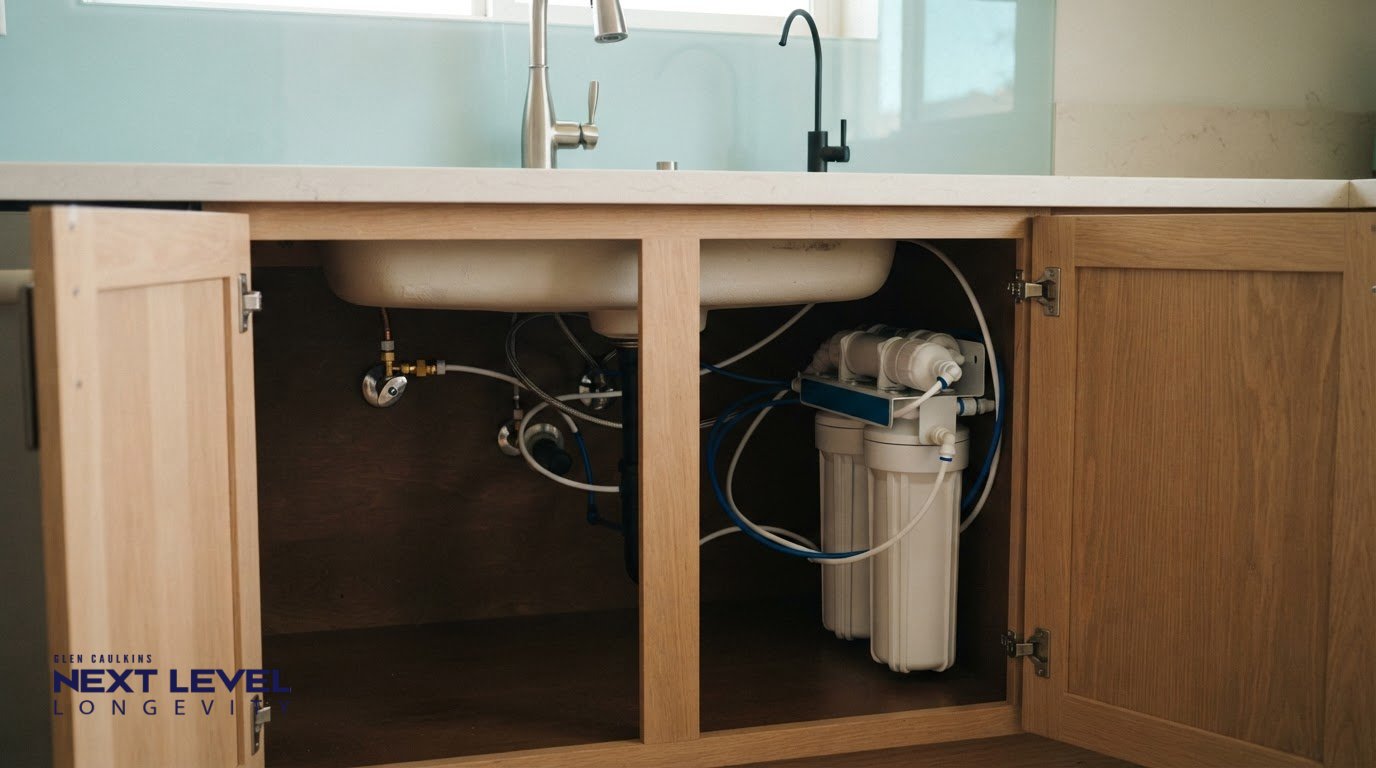
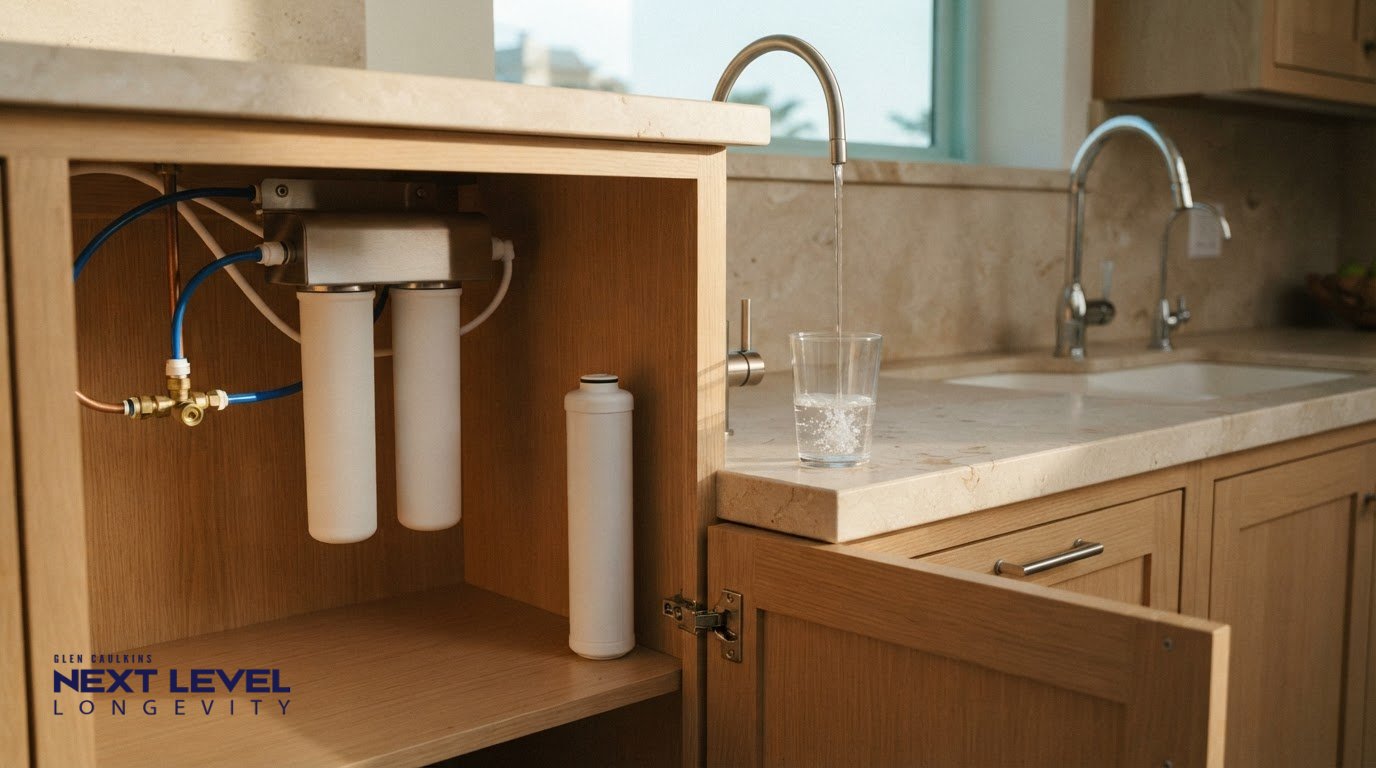
For homeowners, the practical starting point is how you use the water. A point-of-use filter treats water at one outlet, such as a kitchen faucet. An under-sink drinking water filter connects beneath that sink and treats water at that tap, focusing on drinking and cooking rather than every bathroom and appliance. Choose based on the concern you want to address, the system’s documented performance, and the water it will treat.
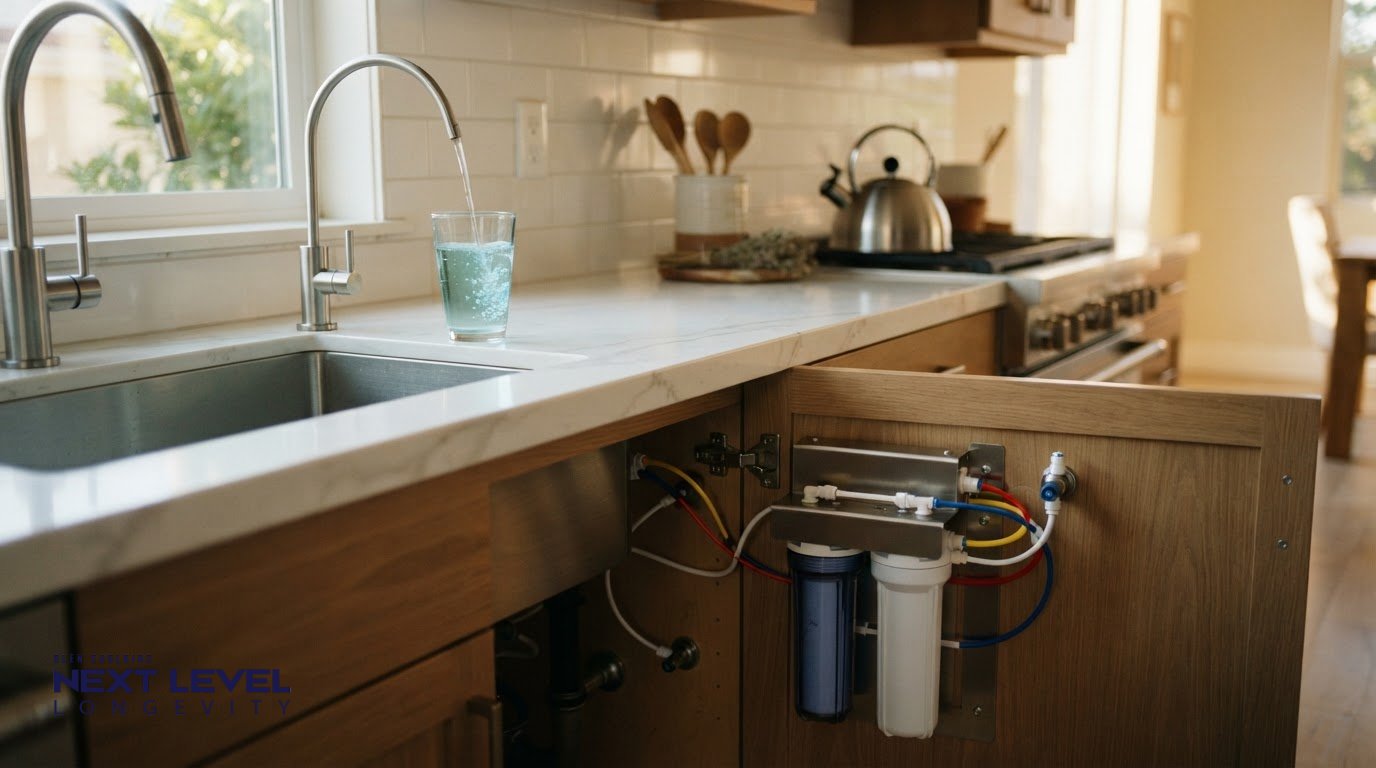
Reverse osmosis is one approach to under-sink treatment. It pushes water through a semipermeable membrane that separates some dissolved substances from the treated water, sending a reject stream away from the membrane. Performance depends on the specific system and its components, so the term “reverse osmosis” alone doesn’t establish what a unit removes. Look for evidence tied to the exact model and substance rather than assuming all systems perform alike.
Reverse osmosis drinking water systems generally use multiple stages. A prefilter may reduce particles or chlorine that could affect later components, while the membrane performs the separation. Some systems add a post-treatment stage to adjust taste, but features vary by model. Under-sink installation also requires space, a suitable connection, and a route for reject water. A system at one faucet does not treat water at other taps.
Commercial reverse osmosis systems use the same broad separation principle, but serve different water-use demands. A home kitchen unit and a commercial installation are not interchangeable simply because both use reverse osmosis. Flow needs, incoming water, equipment layout, and operating requirements shape the design. The commercial label alone does not show whether a system suits a particular home or what its output will be.
When evaluating a drinking water system for an Irvine home, connect three things: the water-quality question, the treatment method, and the system’s documented performance. A household focused on drinking water at one kitchen tap might consider an under-sink system. A household seeking treatment at several fixtures needs a different scope of solution. Reverse osmosis is an option, not a conclusion; its suitability depends on the goal and the specific system.
Filter maintenance and repairs
A filter works as intended only while its components remain in serviceable condition. Under-sink maintenance may involve replacing cartridges, checking connections, and keeping the housing clean. The schedule depends on the model’s instructions, incoming water, and household use. A drinking-water cartridge is not interchangeable with a water-softener component or another appliance filter.
Start with the system manual. Note the cartridge names, replacement directions, and any flushing steps, and keep that information with the model details. If a household water test identifies a particular concern, use the result to understand what treatment may be relevant. A test does not replace the manufacturer’s maintenance instructions or establish that a cartridge still performs as designed.
Watch for practical changes at the tap. Reduced flow, a leak near the housing, or a new taste may signal a maintenance need, but these signs don’t identify the cause. A closed valve, kinked tubing, loose fitting, or exhausted cartridge can cause similar symptoms. Note where the change occurs, then inspect the system according to its manual before opening any housing.
For cartridge replacement, follow a steady sequence:
- Close the water supply to the unit and relieve pressure as directed.
- Remove the used cartridge without forcing the housing or tubing.
- Check the seal and seating surfaces for debris or damage.
- Install the matching replacement part and secure the housing as instructed.
- Restore water, inspect connections, and flush the system as specified.
The final inspection matters: a displaced seal can leak when the water returns. If the manual calls for it, flushing helps clear air and loose material from a newly installed cartridge. If water continues to escape, shut the supply valve and avoid using the unit until the connection is corrected. A damaged housing or cracked line needs repair, not a tighter cartridge.
Reverse osmosis systems need attention beyond the faucet cartridge. Their stages may include prefilters, a membrane, and post-treatment components. Each part has a different role, so replacing only the easiest-to-reach element may leave another stage overdue. Follow the model’s maintenance schedule rather than a generic interval. Also distinguish drinking-water treatment from hard-water treatment: softeners address mineral hardness, while drinking-water filters have their own treatment purpose.
After maintenance, check the supply line and fittings of any appliance connected to a filter. A refrigerator dispenser, for example, may have reduced flow if its filter or line needs attention. Keep a simple record of part changes and observed symptoms. Glen B. Caulkins’s water chemistry research offers a broader perspective on how water composition and treatment relate.
Who supplies drinking water in Irvine, California?
The water agency serving an Irvine address is best identified from the property’s water bill. Irvine Ranch Water District is a relevant local agency, but its name alone does not establish which provider serves every Irvine home. Start with the service address and the utility named on the bill. This gives you a sound starting point for finding the right water information.
Irvine Ranch Water District tests water quality in its laboratories. Its listed drinking-water sources include rivers, lakes, streams, ponds, reservoirs, springs, and wells. These source types describe where water may originate; they do not identify the utility serving a particular address or explain the composition of water at a specific tap.
Use the agency name on the bill when looking for local water information. If the bill names Irvine Ranch Water District, use that name to find its report and related service details. If it names another agency, search using that name instead. This helps prevent treating information for a neighboring service area as though it necessarily applies to your home.
Once you have the agency name, read its water information for the address and period it covers. Distinguish source-water details from information about treated drinking water. A source list describes origins such as a well or reservoir. A water-quality report describes test results within its stated scope. These are related, but distinct, kinds of information.
Agency testing also differs from a test taken at a household tap. Water passes through distribution lines and building plumbing before reaching a faucet. If your question concerns a particular outlet, such as the kitchen sink, a sample from that outlet addresses that location more directly. It does not replace the broader context provided by the agency’s reporting.
For a useful local check, follow a clear sequence: identify the agency on the bill, match its information to the service address, then clarify whether your question concerns source water, treated water, or a household fixture. Irvine Ranch Water District’s laboratory testing and listed source types offer local context, while the service address determines which agency’s information is relevant.
This approach avoids assuming that a city name alone identifies the water provider. It keeps the questions focused: which agency serves this property, what does its information cover, and where does the household want to understand its water more closely? These distinctions make local research more precise and prevent treating one agency’s details as universal across Irvine.
Local water considerations may also intersect with equipment rules. California restricts traditional salt-based water softeners in certain municipalities. That restriction alone does not establish whether it applies to a particular Irvine address. If you are considering a traditional salt-based softener, confirm whether local requirements cover the property before relying on general information about water service or quality.
Hard water and mineral buildup
Irvine water hardness ranges from 7.5 to 17.3 grains per gallon, averaging about 15.8 grains per gallon. Water above 10.5 grains per gallon is classified as very hard. These figures describe dissolved minerals, commonly calcium and magnesium, rather than the contaminants discussed in drinking-water reports. A household’s experience can vary across that reported range.
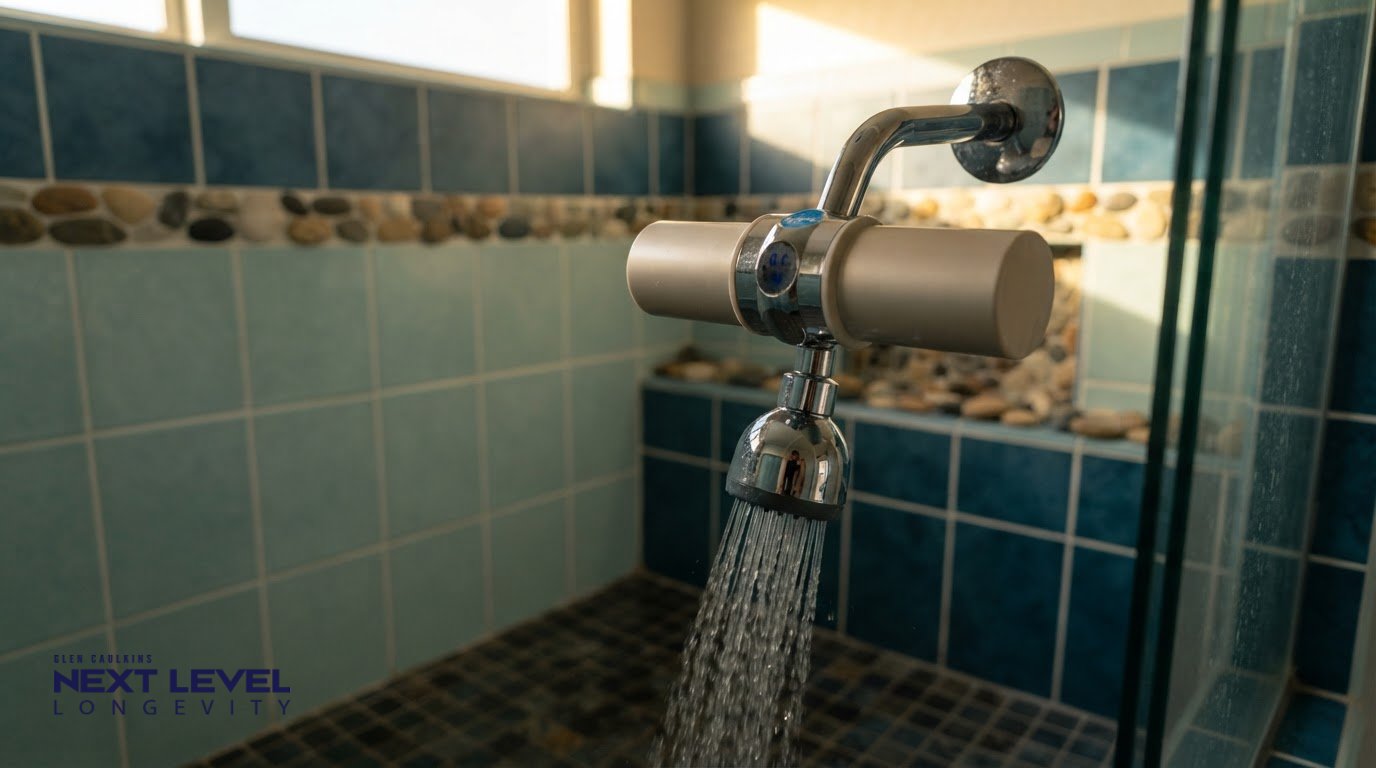
Hardness becomes visible when mineral-rich water dries or heats. A white ring around a faucet, spots on glassware, and scale inside a kettle are familiar examples. Scale forms when minerals leave the water and collect on surfaces. Deposits may build up in a water heater over time, while a showerhead may develop clogged openings. These signs point to mineral buildup, not necessarily a water-safety problem.
Before choosing treatment, notice where deposits appear. White spots on dishes may reflect water drying after a wash; a crust inside a kettle points to repeated heating. Soap that rinses poorly can also make hard water noticeable. One example cannot establish the hardness at every tap, but repeated signs across fixtures may suggest a household-wide mineral issue.
A drinking-water filter and a softener serve different purposes. An under-sink filter treats water at a selected faucet, while a softener is intended to reduce hardness across connected plumbing. Reverse osmosis can reduce dissolved substances in treated drinking water, but a kitchen unit does not prevent scale in a water heater or bathroom fixtures. Match the treatment area to the problem.
For a practical assessment, use this sequence:
- Record where buildup appears, such as a kettle, showerhead, or faucet.
- Separate drinking-water concerns from appliance and plumbing concerns.
- Use a water test when you need a measurement for a specific sample.
- Choose treatment based on the measured concern and the fixtures involved.
That distinction can prevent a narrow kitchen filter from being mistaken for a whole-home solution. It also avoids choosing a softener when the main goal is changing water at one drinking tap. Irvine’s average hardness of about 15.8 grains per gallon offers useful local context, but the visible effects depend on where water is heated, how often fixtures are used, and how minerals collect on surfaces.
Maintenance matters after treatment, too. Clean a scaled kettle according to its manufacturer’s instructions, and address blocked showerhead openings at the fixture. Filters have their own replacement schedules and should not be assumed to control household scale. By identifying whether the concern is mineral buildup, drinking-water quality, or both, Irvine homeowners can choose a system with a purpose that matches the problem.
Reliable drinking water sources
Reliability can mean different things. A source may provide a steady supply, while water quality describes what is present in the water. These questions need separate answers. A dependable supply does not tell you which treatment a household prefers. Likewise, a filter’s performance does not establish how dependable the original source is.
For a household decision, start with the intended use. Drinking, cooking, and filling a kettle all draw from the kitchen tap, but each use may lead to different priorities. Someone focused on taste may weigh the result differently from someone investigating a specific substance. A useful decision connects the concern to evidence about that concern, rather than treating “reliable” as an all-purpose label.
When reading water information, pay attention to what each result measures. A concentration differs from a general description of treatment, and a result for one substance does not describe every property of water. If a report uses technical terms, identify the substance, unit, and sample context before comparing results. Comparing unlike measurements can make two sources appear more similar or different than they are.
Household choices can follow a simple sequence:
- Define the use, such as drinking, cooking, or preparing coffee.
- Name the concern, such as taste or a particular measured substance.
- Match the concern to relevant water information or a test result.
- Choose any additional treatment for that purpose and maintain it as directed.
This approach also separates source questions from treatment questions. A household deciding whether to use tap water is asking about the source and its quality. A household selecting a filter is asking how an added device changes water at a chosen point. These decisions are connected, but one does not automatically answer the other.
Reliable information makes its limits clear. A result for one sample, for example, cannot describe every property of water at every tap. A treatment description cannot show the composition of a particular home’s water. Keep each conclusion close to the evidence that supports it. This habit makes decisions more measured and prevents an unfamiliar technical term from carrying more meaning than its measurement warrants.
Glen B. Caulkins’s water research explores how water chemistry relates to the wider environment. For households, the practical lesson is to move from broad labels toward a defined use and a specific concern. That provides a clearer basis for deciding whether existing information is enough or whether a more focused measurement would help.
Glen B. Caulkins
Glen B. Caulkins connects household water questions with research into water chemistry, minerals, and environmental exposure. He also has a commercial interest in PristineHydro water-treatment products, including the Under-Counter Water Revival System and Travel-Portable Water Revival System. For Irvine homeowners, the useful next step is to define the concern and where treatment is wanted. Glen’s work includes different filter options, but choosing among them begins with the intended use. To learn more about Glen’s work, visit his About page.
Choose the Next Step for Your Home
The next step is to turn a general water question into a specific treatment goal. What do you want to address, and at which tap? Is your priority drinking water, mineral buildup, or maintenance? A clear goal makes it easier to consider what kind of system fits your home and what upkeep you can manage.
Choosing a drinking water system in Irvine is not just about picking a filter. Match the system’s purpose to your household’s water use, plumbing, and maintenance routine. Glen B. Caulkins offers home and travel water systems, along with filter options for different uses. First identify the use that matters most, then choose a system designed for that purpose.
For a thoughtful next step, explore Glen’s research on water. A clearer question can help you move forward with confidence and choose a direction that suits your home.
Frequently Asked Questions
Does Irvine tap water meet EPA and California drinking water standards?
A contaminant level above an organization’s recommended guidelines does not, by itself, show whether water meets EPA or California standards. The reported Irvine figures include comparisons with Environmental Working Group recommendations, which are distinct from regulatory standards. To assess compliance, consult Irvine Ranch Water District’s current water-quality report and its stated results against applicable standards. Choosing a household filter is a separate decision from determining regulatory compliance.
What contaminants have been detected in Irvine drinking water, and at what levels?
Reported Irvine water information includes fluoride measured at 0.6 parts per million. Environmental Working Group identified 19 contaminants above its recommended guidelines, including arsenic, chromium-6, HAA5, nitrates, PFAS, and uranium. The count describes contaminants above those recommendations; it isn’t a concentration for each substance. For specific individual levels, consult Irvine Ranch Water District’s current report and note the sample and reporting period associated with each result.
Is Irvine tap water hard, and what are its hardness and mineral levels?
Yes, reported Irvine hardness ranges from 7.5 to 17.3 grains per gallon, averaging about 15.8. Hardness mainly reflects dissolved calcium and magnesium, but a hardness figure does not give each mineral’s separate concentration. For example, the same hardness measurement cannot tell you the exact magnesium level. If you need a mineral-specific result for your tap, use a laboratory test that measures the particular minerals you want to understand.
What water filters are recommended for Irvine tap water, and how much do they cost?
Choose a filter according to the substance you want to reduce and its documented performance for that substance. For drinking and cooking water at a kitchen tap, an under-counter reverse-osmosis system is one option; the Under-Counter Water Revival System uses reverse osmosis and dual deionization, then adds minerals. Product prices vary, so no general cost figure applies here. Product guidance is not health advice and cannot determine your water’s composition.
Frequently Asked Questions
Does Irvine tap water meet EPA and California drinking water standards?
What contaminants have been detected in Irvine drinking water, and at what levels?
Is Irvine tap water hard, and what are its hardness and mineral levels?
What water filters are recommended for Irvine tap water, and how much do they cost?
More articles