Irvine CA Water Quality: Hardness, Safety and Sources
November 29, 2026 · 16 min read
Irvine tap water is generally hard, with reported hardness of 10 to 15 grains per gallon. That exceeds the commonly used threshold for hard water. The water meets EPA primary drinking water standards and California State Water Resources Control Board requirements, but compliance doesn’t mean it is soft or contains no detectable substances.
Among the Irvine CA water quality issues residents may notice, hardness is a practical household concern: minerals can contribute to scale on fixtures and appliances. The water’s sources and test results provide further context for understanding what comes from the tap.
This article explains what hardness means in daily use, how Irvine’s drinking water is monitored, and which contaminants may be detected. It also describes the local and imported sources that shape the supply. The goal is to clarify what water-quality results can and cannot tell you, so you can better understand your tap water and decide whether additional filtration fits your needs.
Key Takeaways
- Irvine tap water is typically 10 to 15 grains per gallon in hardness, which can help explain mineral scale on fixtures and appliances.
- Hardness describes mineral content, not whether water meets drinking-water safety standards. Those questions require different evidence.
- Irvine’s supply combines local groundwater with imported water, so source and treatment help shape its finished-water chemistry.
- Monitoring can detect or track substances such as chromium, PFAS, arsenic, lead, and nitrates; a detection needs context to understand what it means.
- Learn how drinking-water filtration options differ from shower filters, and what each is intended to address.
What are common contaminants found in drinking water?
Drinking-water standards set limits for certain contaminants, while monitoring tracks substances that can enter water from natural deposits, agriculture, or industry. In Irvine, chromium findings and household plumbing raise two distinct questions.
Potential contaminants include bacteria, heavy metals, pesticides, nitrates, chlorine, and volatile organic compounds. Their presence and concentration depend on the water source and treatment. Some occur naturally; agricultural runoff and industrial pollution can introduce others. A detection alone does not show that water exceeds a safety standard. The measured level and applicable limit matter.
The California State Drinking Water Act limits certain contaminants in drinking water. Secondary contaminants, such as those affecting taste, odor, or appearance, are regulated for aesthetic reasons; their presence in tap water does not pose a health hazard. These categories help distinguish noticeable changes in water from contaminants that raise health concerns.
Chromium in Drinking Water
Chromium is a metal that can occur in water, and chromium 6 is one form monitored in drinking water. In Irvine Ranch Water District testing, chromium 6 was identified in four of its 18 drinking-water wells. A well detection is not the same as proof that every household tap contains chromium 6 at that level. The relevant questions are the concentration in treated water and how it compares with the applicable standard.
Lead in Service Lines and Plumbing
Lead can enter tap water from plumbing materials, so a utility-wide inventory and a household tap test answer different questions. Irvine Ranch Water District completed its initial lead service line inventory on September 16, 2024. That milestone does not establish whether a particular home’s fixtures or interior plumbing contribute lead. Residents can arrange a test of water collected from their tap through a qualified laboratory. The U.S. EPA Lead and Copper Rule sets action levels of 15 parts per billion for lead and 1.3 parts per million for copper.
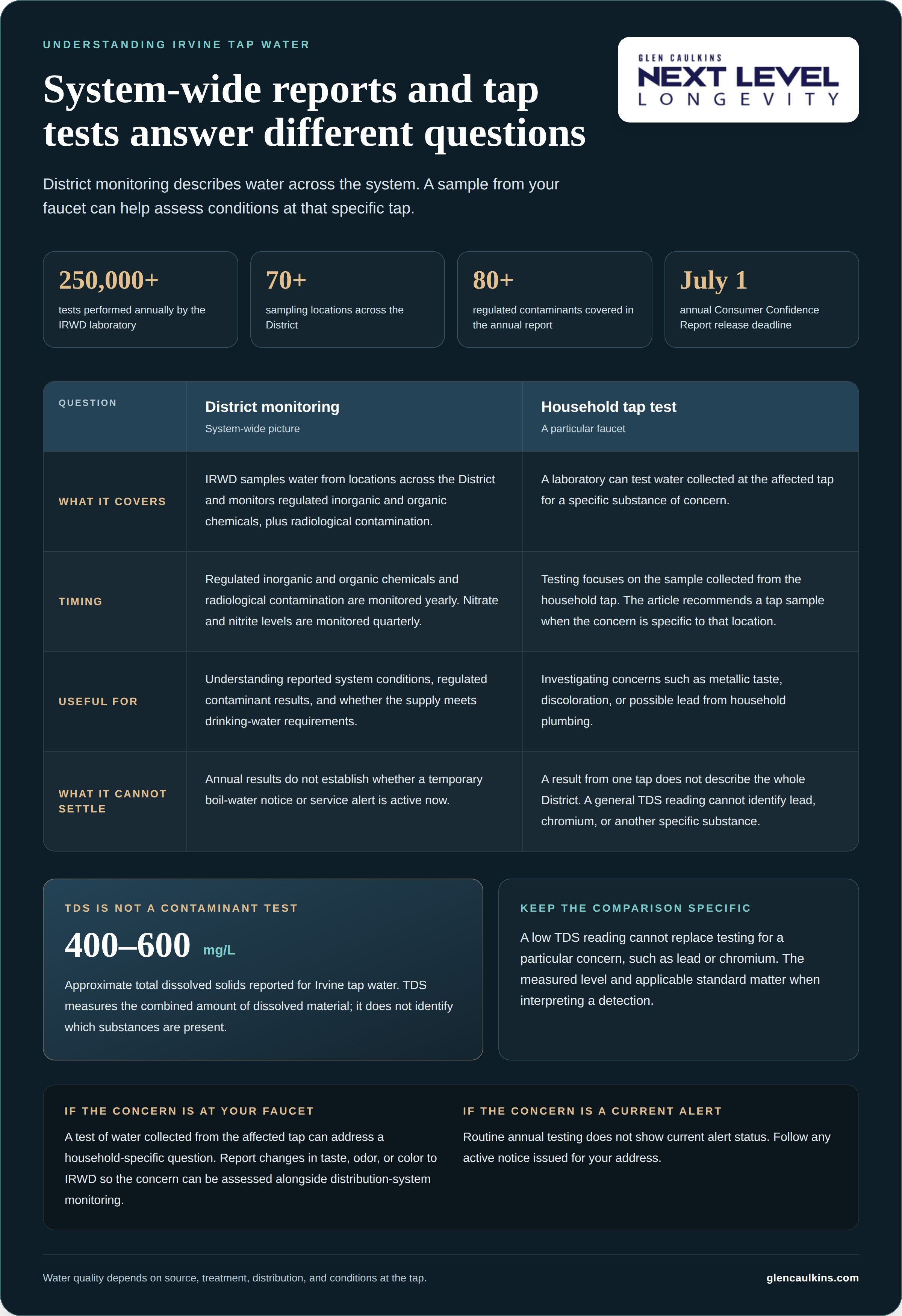
Reverse osmosis pushes water through a membrane that separates many dissolved substances from treated water. It can also change the water’s mineral content, so treatment goals matter. Total dissolved solids, or TDS, measure the combined amount of dissolved material, not which substances are present. A low TDS reading cannot replace testing for a specific contaminant such as lead or chromium.
Irvine tap water safety and regulatory compliance
Irvine’s drinking water is monitored against federal and California standards. Annual results describe system-wide water quality, while household plumbing and temporary service alerts raise separate questions.
Irvine Ranch Water District (IRWD) reports that its tap water meets EPA primary drinking-water standards and California State Water Resources Control Board requirements. Its laboratory performs more than a quarter of a million tests annually, using samples from over 70 locations across the District. The annual Consumer Confidence Report covers results for more than 80 regulated contaminants and is released by July 1 every year.
Tap Water and Bottled Water Comparisons
A useful comparison looks at measured composition and applicable standards, rather than assuming bottled water is automatically safer. Irvine tap water has total dissolved solids of approximately 400 to 600 mg/L, a measure of dissolved material that does not identify individual substances. Bottled water varies by source and treatment, so a fair comparison requires product-specific test results. Neighboring Orange County cities can also have different water sources and finished-water chemistry; hardness alone does not establish which supply is safer.
Boil Notices and Service Alerts
Boil-water notices and service alerts concern temporary conditions, not routine annual compliance. Annual testing cannot establish whether an advisory is active now. A Consumer Confidence Report does not show current alert status, so residents should follow any active notice issued for their address. IRWD also keeps records of water-quality and system water-outage complaints for five years.
Water Testing and Concern Reports
For a household concern, first distinguish a system-wide issue from one specific to your tap. A metallic taste, discoloration, or concern about lead from plumbing calls for testing water collected at the affected tap. A laboratory test can measure the substance of concern; a general TDS reading cannot identify lead or another specific contaminant. Residents can report changes in taste, odor, or color to IRWD so the concern can be assessed alongside distribution-system monitoring.
IRWD monitors regulated inorganic and organic chemicals and radiological contamination yearly, while nitrate and nitrite levels are monitored quarterly. The District provides customers with an annual water-quality report and notifies them in writing if its supply fails to meet the California Safe Drinking Water Act, including violations and corrective steps. These procedures provide system-level context; a household test addresses conditions at a particular faucet.
Irvine water hardness and scale buildup
Hardness comes from dissolved minerals, especially calcium and magnesium. Irvine water is typically 10 to 15 grains per gallon, a range generally considered hard. This describes mineral content, not whether water is safe to drink. A supply can meet drinking-water standards and still leave deposits on faucets, dishes, and heating elements.
Hardness categories use different thresholds. The Water Quality Association classifies water above 7 grains per gallon as hard, while 10 grains or more is also commonly treated as hard. Irvine’s typical range sits above both guideposts. These numbers describe the tendency to form scale, not a health-based limit. Scale develops as mineral-rich water evaporates or heats, leaving deposits behind.
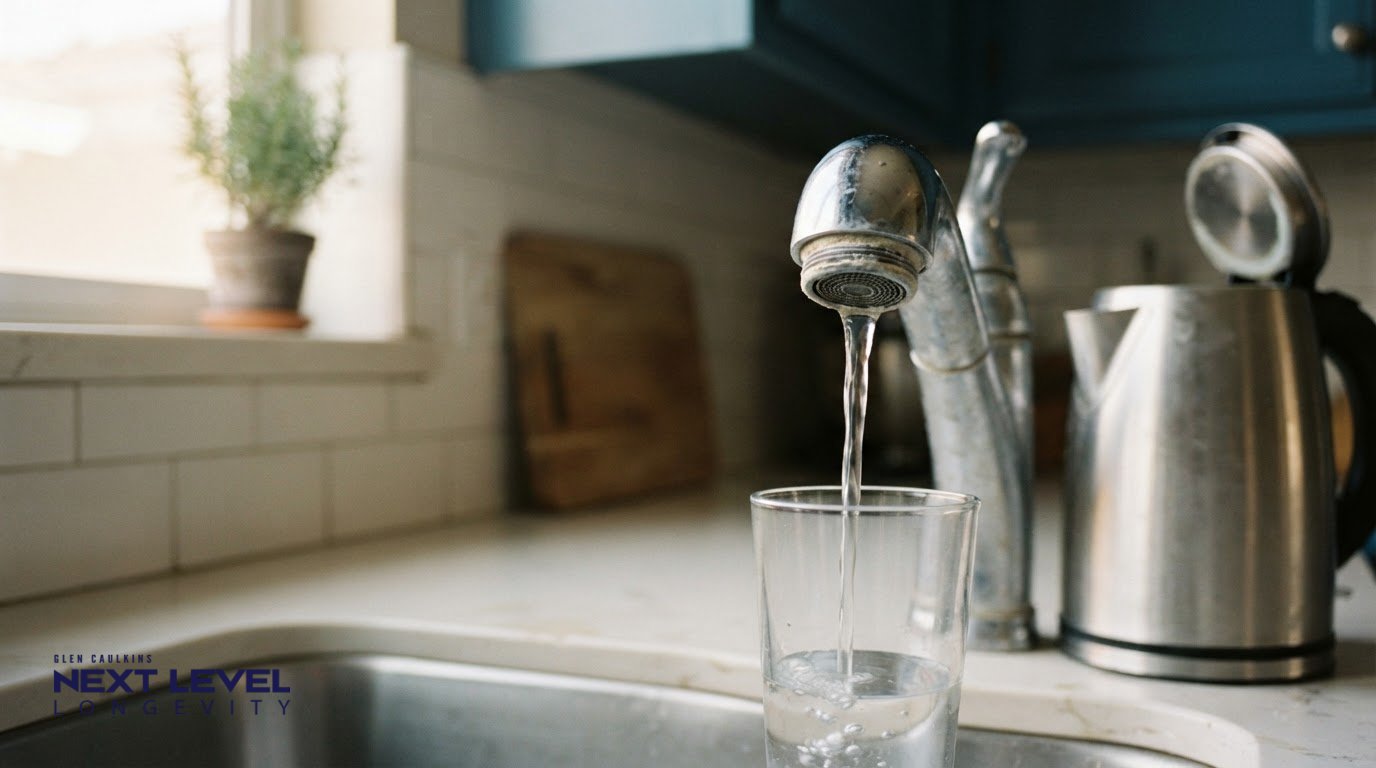
At home, signs of hardness can include white crust around a faucet aerator, spots on glassware, or residue inside a kettle. Heating can make deposits more noticeable on water heaters and other heated surfaces. Soap may also lather less readily in hard water, leaving a film after washing. These effects can be frustrating, but they do not establish that a contaminant exceeds a drinking-water standard.
Taste, odor, discoloration, and sediment can have different causes, including mineral content, disinfectant, plumbing, or temporary changes in the distribution system. Cloudiness alone does not identify a contaminant. Irvine Ranch Water District advises waiting three minutes to see whether cloudy tap water begins to clear. Persistent changes in color, smell, or taste are separate concerns and should not automatically be attributed to hardness.
Softening options require local context. Irvine Ranch Water District prohibits standard self-regenerating salt-based water softeners because their brine discharge can compromise recycled-water treatment. Keep this restriction in mind when considering how to address scale. Reducing hardness, filtering drinking water, and addressing taste or odor are different goals, and each approach targets a different aspect of water quality.
In short, Irvine’s 10-to-15-grain hardness range can explain household scale, but hardness and safety answer different questions. “The water is safe” concerns compliance with drinking-water standards, while a hardness reading describes mineral deposits. A kettle with scale, for example, signals mineral accumulation, not by itself a safety failure.
Local groundwater and imported water sources
Irvine’s drinking-water supply combines local groundwater and imported water. Each source has its own mineral and chemical profile, and treatment and testing shape the water delivered to homes. Knowing the source helps explain why finished-water composition can vary across a service area and why a single result may not describe every household’s tap.
About 65% of Irvine’s drinking water comes from local groundwater pumped from wells managed by Irvine Ranch Water District and the Orange County Water District. The remaining 35% is imported. This groundwater share connects the municipal supply to local aquifers, where naturally occurring minerals and past land uses can affect water chemistry.
Imported water reaches Irvine from the Colorado River through the State Water Project and Colorado River Aqueduct. Metropolitan Water District surface water comes from both the Colorado River Basin and California’s State Water Project in Northern California. With multiple origins, the regional supply’s blend reflects changing contributions from local wells and imported deliveries.
Groundwater history adds important context. Trichloroethylene, or TCE, was found in portions of the groundwater basin beneath the former Marine Corps Air Station El Toro and parts of central Irvine in 1985. However, Irvine Ranch Water District’s 27 drinking-water wells have never detected TCE in water served to customers. A finding in part of a groundwater basin does not establish that the substance is present in delivered drinking water.
Elevated salt levels were also discovered in portions of Irvine’s groundwater in the late 1980s. These findings illustrate why water testing needs location and source context: conditions in one groundwater area do not describe every well or the final blend. Recycled water is another part of the district’s broader supply picture, but it is not used for drinking water or other indoor uses in Irvine homes and businesses.
Recycled water meets about 28% of water needs across Irvine Ranch Water District’s service area, primarily for landscape and agricultural irrigation. It serves a different purpose from the drinking-water supply. For drinking water, local groundwater and imported water remain the relevant sources. Their mixture helps explain variations in minerals, including sodium levels that range from 25 to 125 parts per million across IRWD water sources.
What contaminants have been detected in Irvine water, including PFAS, arsenic, lead, and nitrates?
For Irvine tap water, a contaminant’s name alone does not reveal the level of concern. Detection means a test found a substance in a particular sample; it does not automatically mean the water exceeds a standard. Interpret the result in light of its sample location, measured concentration, and applicable benchmark. This distinction helps residents avoid treating every detection as evidence of unsafe water.
On PFAS, Irvine Ranch Water District says its drinking water meets EPA standards established for 2029. This is a compliance statement, not a claim that every PFAS compound is absent. PFAS refers to a broad group of substances, so a meaningful result identifies the specific compound and sample. A system-wide statement also does not describe the contents of every household tap at every moment.
Arsenic and nitrates are among the substances considered in drinking-water monitoring. Potential sources include erosion of natural deposits and agricultural runoff. These pathways explain why the substances may be tracked, but they do not establish that a particular Irvine home has a problem. Interpreting a result as a compliance concern requires a measured concentration and a relevant standard.
Lead deserves attention because household plumbing can affect water after it leaves the public distribution system. A utility report describes the broader supply, while a sample from an individual tap can address that home’s plumbing conditions. To get a useful lead result, the sample must be collected and analyzed specifically for lead. Taste, clarity, and odor cannot establish whether lead is present.
Other monitored examples include organic solvents and trihalomethanes, a group of compounds associated with water treatment. Agricultural runoff, industrial pollution, and natural deposits are different possible source pathways. Their appearance in a monitoring context does not mean they have all been found in Irvine samples. The substance, sampling point, and result determine what a finding actually indicates.
When reading a report, separate three questions: What substance was measured? Where did the sample come from? How does the result compare with the applicable standard? A broad monitoring list does not mean every listed contaminant was detected, and a detection alone does not establish a violation. This careful approach puts PFAS, arsenic, lead, and nitrate findings in context and helps distinguish source-water concerns from conditions at a household tap.
PristineHydro options for Irvine households
Glen B. Caulkins’s PristineHydro offers options for households considering how to manage drinking or shower water. The right category depends on the concern: an under-counter system serves a kitchen drinking-water point, while a shower filter is intended for bathing water. Neither is a whole-house system.
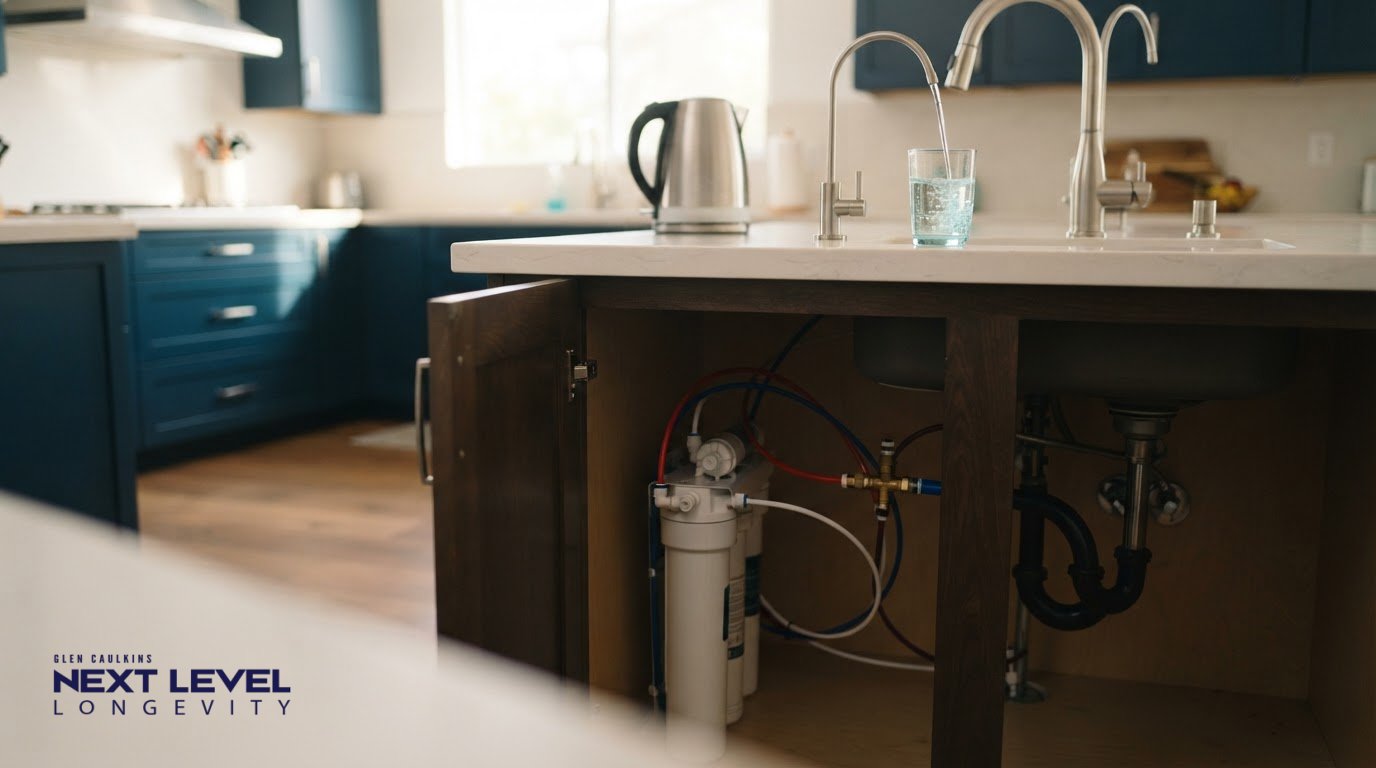
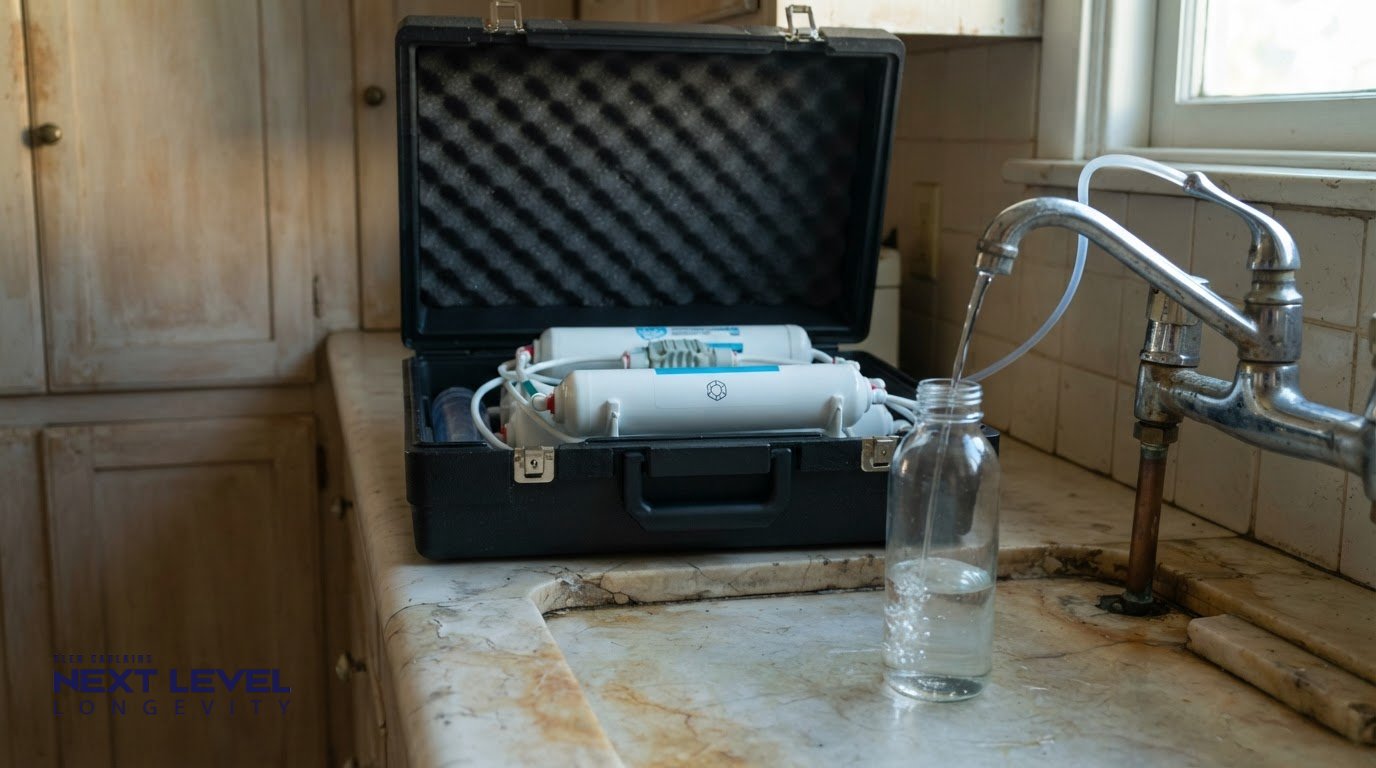
The Under-Counter Water Revival System is a residential drinking-water option for the kitchen. It uses reverse osmosis, dual deionization, and mineral addition, including magnesium and calcium bicarbonate. The Travel-Portable Water Revival System uses the same filter-then-remineralize approach in a portable countertop unit for use away from a fixed kitchen setup. Choose between them based on where you want to use the system.
Shower filters serve a different point of use. The Aqualux filter with head is an all-in-one option, while the Ultimate Dual KDF inline filter is designed to work with your existing shower head. Neither replaces a kitchen drinking-water system. Match the product category to the concern: a shower filter for shower water, or a drinking-water system for drinking water.
Start by separating the issue you observe from the result you want. Mineral scale on a kettle or faucet is not the same as a specific contaminant in drinking water. A taste concern also differs from a shower-water concern. Match filtration to the point of use and the concern being addressed; a kitchen system is not a solution for every faucet or appliance in the home.
A product name alone does not establish what a system reduces. Performance claims require evidence for the specific system and contaminant, and results depend on the tested conditions. If you are focused on a particular substance, use relevant water-quality results to define the question before choosing a treatment approach. For general household preferences, intended use and system format are practical starting points.
PristineHydro also offers replacement filters. Choose a replacement that matches the relevant system, rather than by appearance or category alone. The product range addresses distinct needs: a fixed kitchen drinking-water point, portable drinking-water use, or shower filtration. These filtration products are not medical advice or treatment.
View product information or contact PristineHydro with questions.
Frequently Asked Questions
Do I have hard water?
Probably, if your Irvine home receives the typical local supply. Irvine water hardness is commonly reported at 10 to 15 grains per gallon, above the Water Quality Association’s hard-water classification threshold of 7 grains per gallon. A practical clue is recurring mineral residue on a kettle or faucet. These deposits point to hardness, but they do not show whether water meets drinking-water safety standards.
Do I need bottled or filtered water?
Not necessarily. Irvine tap water meets stated drinking-water standards, and bottled water is not automatically safer. A filter may suit a specific preference, such as changing taste or reducing selected substances, but treatment should match the concern. Bottled water also varies by source and treatment. For a particular contaminant, rely on test results that identify that substance, not general claims about bottled or filtered water.
How much sodium is in the water?
Reported sodium levels across Irvine Ranch Water District sources range from 25 to 125 parts per million. The amount varies with the source contributing to the supply, so the range does not mean every home receives water at either endpoint. If sodium content matters for your household, consult the current water-quality report for source-specific context. A general taste or total dissolved solids reading cannot determine sodium concentration.
Is Irvine tap water safe to drink?
Irvine tap water is reported to meet EPA primary drinking-water standards and California State Water Resources Control Board requirements. That describes the regulated public supply, not every condition inside an individual home. Older or affected household plumbing can influence water at a particular faucet. If your concern involves lead or another specific substance, a tap-water sample tested for that substance provides more relevant information than appearance alone.
What is the latest Irvine, CA drinking water quality report and annual Consumer Confidence Report?
Irvine Ranch Water District releases its annual water-quality report by July 1 every year. Its Consumer Confidence Report covers results for more than 80 regulated contaminants. Since report editions update annually, use the latest edition published by IRWD for the current reporting period. Pay attention to the sample results, reporting period, and units, since those details clarify what each listed measurement represents.
Does Irvine tap water meet EPA and California drinking water standards?
Yes. Irvine Ranch Water District tap water is reported to meet EPA primary drinking-water standards and California State Water Resources Control Board requirements. Compliance means reported results meet applicable standards; it does not mean every substance is absent. IRWD says it notifies customers in writing if the supply fails to meet the California Safe Drinking Water Act, including information about violations and corrective steps.
What are Irvine's water hardness levels, and how do they compare with nearby cities?
Irvine water is typically 10 to 15 grains per gallon in hardness. Anaheim water often measures 15 to 18 grains per gallon, so Irvine is typically less hard by comparison. Hardness can differ between communities because source water and treatment blends vary. The comparison helps explain relative scale potential, but a city’s hardness level does not establish whether its water is safer to drink.
Where does Irvine's drinking water come from, and which agencies supply it?
About 65% comes from local groundwater managed by Irvine Ranch Water District and the Orange County Water District; imported supplies make up 35%. Imported water arrives from the Colorado River through the Colorado River Aqueduct and State Water Project. Metropolitan Water District supplies imported surface water from the Colorado River Basin and Northern California’s State Water Project, while IRWD manages local distribution in Irvine.
Frequently Asked Questions
Do I have hard water?
Do I need bottled or filtered water?
How much sodium is in the water?
Is Irvine tap water safe to drink?
What is the latest Irvine, CA drinking water quality report and annual Consumer Confidence Report?
Does Irvine tap water meet EPA and California drinking water standards?
What are Irvine's water hardness levels, and how do they compare with nearby cities?
Where does Irvine's drinking water come from, and which agencies supply it?
More articles