Portable Water Filtration: How to Choose and Use a Travel System
October 17, 2026 · 15 min read
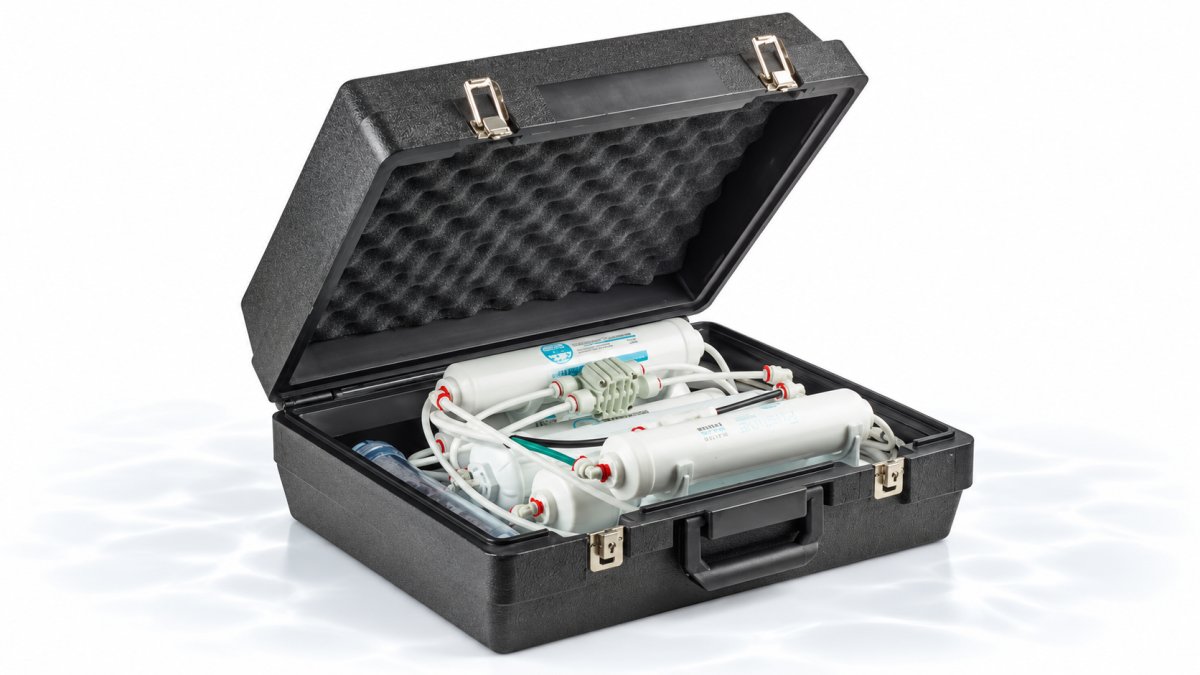
What if the filter that suits a backcountry stream is the wrong choice for a hotel tap? That’s the central question when comparing water filtration portable systems: the right choice depends on the water source and what you need the treatment to do. A compact device may be easy to carry, but portability alone doesn’t establish what it can reduce.
It’s reasonable to want one dependable system for a journey. In practice, don’t assume one method addresses every source or concern. Filtration, purification and remineralization describe different processes, and broad performance claims can hide important limits. Look for evidence that identifies what was tested, under which conditions, and for which model.
This guide will help you match a treatment approach to the water you expect to encounter and your intended use. It explains the differences between filtering and purifying, what product specifications and test reports can show, and how to plan for setup, use and maintenance. The goal is a considered travel choice, not a promise that one device suits every stop.
Key Takeaways
- Start with the water source you expect to encounter, then match the treatment method to the concern and setting.
- Learn how filtration, purification, and remineralization differ so you can assess what a system is designed to do.
- When comparing portable water filtration options, look for model-specific test evidence instead of relying on broad performance claims.
- Use a careful routine: identify the source, follow the system instructions, treat and store water as directed, and maintain the equipment.
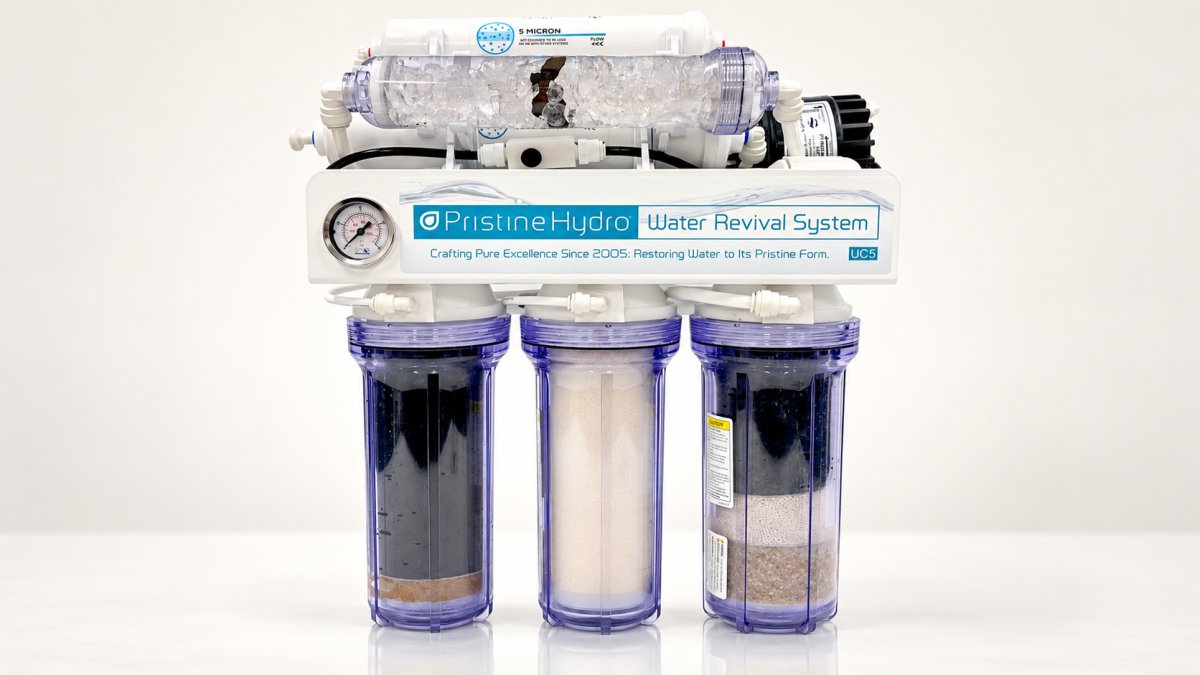
- Explore where PristineHydro’s Travel-Portable Water Revival System, designed to purify and remineralize drinking water, may fit your travel needs.
What portable water filtration does, and when travelers need it
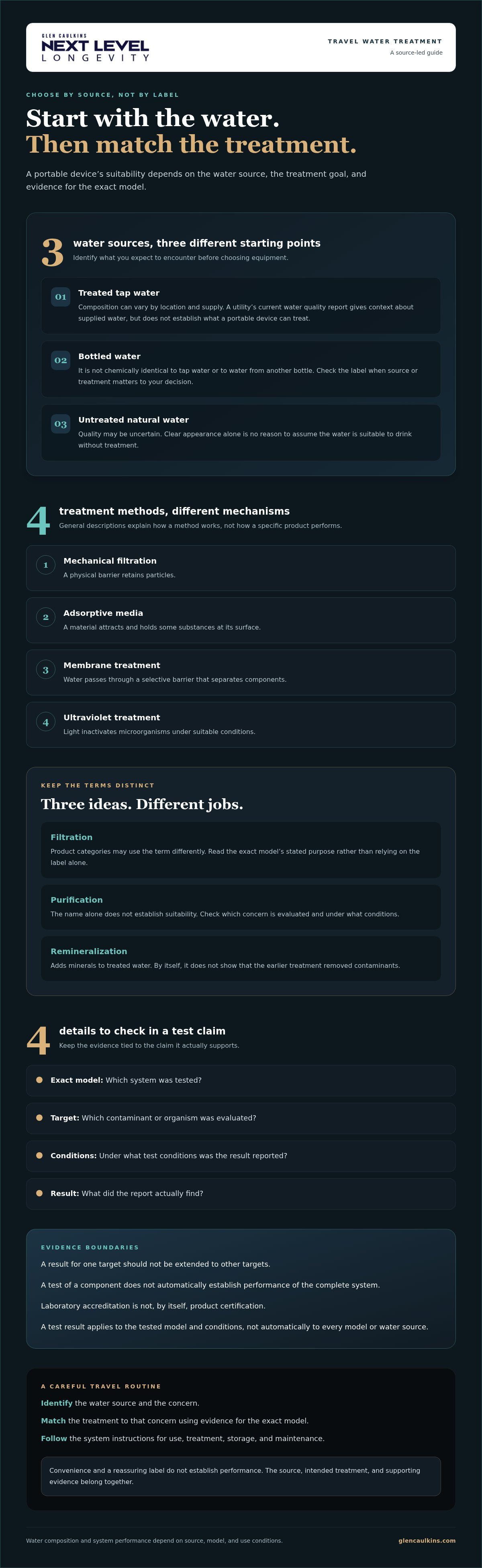
Where will your drinking water come from during the trip? A hotel tap, a refill station, and a stream on a remote route are different starting points. Portable water filtration means treatment equipment designed for use away from a fixed home system. Whether a device fits depends on the source, your intended use, and what that particular system is designed to treat. Carrying equipment does not, by itself, make uncertain water safe.
You might want to improve taste, reduce a particular substance, or address microorganisms in water from an untreated source. Those are different goals, and a method suited to one may not address another. Identify the source and concern first, then look for evidence connecting the exact system to that need. A broad label such as “travel filter” isn’t enough to establish suitability.
Start with the water source, not the product label
Treated tap water has been processed for distribution, but its composition can vary by location and supply. For municipal water, consult the supplying utility’s current water quality report. It provides context about the water the utility supplies, but it won’t tell you what a portable device can treat.
Bottled water is another source, but it shouldn’t be treated as chemically identical to tap water or to water from another bottle. When source or treatment matters to your decision, check the label for relevant information. Water from an untreated natural source is different: its quality may be uncertain, and clear appearance alone is no reason to assume it is suitable to drink without treatment.
These distinctions help prevent a common mistake: choosing equipment before defining the task. A trip based on treated tap water may call for a different approach from a route where natural water is the only available source. The portable water purification overview describes a range of treatment methods and applications, but suitability still depends on the source and the exact equipment.
Separate filtration, purification, and remineralization
“Filtration” and “purification” can be used differently across product categories, so read the model’s stated purpose instead of relying on the label alone. Check what a test covers, which organisms or substances it evaluates, and what conditions applied. Evidence for one reduction does not establish performance against everything else.
Remineralization is a separate step that adds minerals to treated water. It does not, by itself, show that the earlier treatment removed contaminants. Keep the steps and their evidence distinct: what the system is designed to reduce, what it adds afterward, and how each claim is supported.
Treatment claims are meaningful only when they match the exact model, the tested concern, and the evidence behind that claim. That makes portable water filtration a source-led decision, not a choice based on convenience or a reassuring label alone.
How portable water-treatment methods work, and what evidence can show
Treatment equipment can rely on a physical barrier, a material that interacts with water, a membrane, or ultraviolet light. These approaches work differently, so their names alone don’t establish which is suitable for a particular source. The CDC’s About Home Water Treatment Systems describes common treatment approaches, while the World Health Organization’s Evaluating Household Water Treatment Options: Health-Based Targets and Microbiological Performance Specifications explains why performance needs to be assessed against defined targets. Neither reference establishes the performance of a specific travel model.
A product specification describes a device or component. A pore-size rating, for example, describes a physical feature, not necessarily the performance of the complete system. A test result reports findings under stated conditions. Any broader conclusion about suitability needs more context, including the water source and how the equipment is operated.
Understand treatment methods without assuming they are interchangeable
Mechanical filtration uses a physical barrier to retain particles. Adsorptive media uses a material that attracts and holds some substances at its surface. Membrane treatment separates components as water passes through a selective barrier. Ultraviolet treatment uses light to inactivate microorganisms under suitable conditions. These are general descriptions consistent with the CDC’s overview of treatment methods, not claims about any particular product.
The WHO evaluation framework assesses household treatment against specific performance targets. A method’s general mechanism does not prove that a particular device meets one. For portable water filtration equipment, compare the intended treatment with evidence for the exact model and its stated use conditions.
Read test claims within their stated limits
Look for the exact model tested, the target contaminant or organism, the test conditions, and the reported result. A claim about one target shouldn’t be extended to others. A test of a component also doesn’t automatically establish the performance of a complete system. Keep qualifications close to the claim so it’s clear what the result does and doesn’t show.
A test result applies to the tested model and conditions, not automatically to every model or water source. Laboratory accreditation concerns a laboratory’s competence for specified work; it does not, by itself, certify a product. Product certification is a separate claim that requires documentation for the product and relevant standard.
Read a report within its stated scope. Don’t turn a laboratory finding into a universal guarantee or a specification into proof of a health outcome. This evidence-first approach also informs Glen B. Caulkins’s interest in water treatment and finished-water composition. His work connects those subjects to minerals and environmental chemistry. Readers can explore Glen’s research for broader context.
How to compare portable water filtration options for your trip
Begin with the demands of the journey, not a product ranking. A trip based around hotel taps differs from a route where water comes from an untreated outdoor source. Use the table as a planning aid, not as proof that any format treats a particular source. Define the treatment goal first, then compare setup and care requirements for the specific model.
| Source type | Setting | Treatment goal | Power or setup | Maintenance |
|---|---|---|---|---|
| Treated tap water | Home, workplace, hotel, or RV | Identify the specific concern you want the system to address | Compare countertop or travel-oriented formats; consider connections, power, and available space | Review cleaning steps, replacement components, and storage directions |
| Untreated natural source | Hiking or other outdoor travel | Determine the treatment need for the source and intended use | Compare pump, squeeze, or inline formats by operation and setup demands | Check care instructions and plan for replacement parts |
| Bottled or refill-station water | Transit, lodging, or travel between stops | Decide whether additional treatment fits your purpose | Consider carrying space, setup time, and access to the source | Account for cleaning and storage between uses |
A home tap-water use case and an untreated outdoor-water use case call for different questions. At home, you may have a predictable source and space for a countertop format. On a trail, setup can affect whether you can use a system as directed. Neither example establishes that a particular device is suitable; check the model’s documented purpose and evidence.
Select by documented treatment fit, not by micron rating alone. A rating is one specification, not a complete comparison. Weigh it alongside test evidence, operating conditions, and your intended use. This gives you a practical way to compare portable water filtration options without assuming that similar labels mean similar capabilities.
Match the system format to the journey
Countertop or travel-oriented formats may suit trips with a stable place to prepare water. Pump, squeeze, and inline categories involve different handling and setup. Consider trip length, access to treated water, pack space, and how much preparation you’re willing to manage. Then compare the exact model’s documented use with the source you expect to encounter.
Check practical fit and ownership details
Read the manufacturer’s instructions for setup, operating limits, cleaning, maintenance, and replacement components. Consider where you’ll store the system and whether its care requirements fit your itinerary. Replacement parts and their care requirements can affect practical fit, even when the system otherwise suits your plans.
PristineHydro Water Revival Systems are one option to include in your comparison. Use the current product information to assess the specific system against your source, travel setting, and treatment needs.
How to use a portable water filtration system carefully
A careful routine begins before water reaches the device. Confirm the source and intended use, then follow the instructions for the exact model. Appearance and taste can prompt questions, but clear water can still have concerns you can’t see, and an unusual taste alone can’t establish whether water is safe.
Use this sequence as a planning checklist. The manufacturer’s instructions take priority for setup and operating limits.
- Identify the source. Note whether water comes from a treated tap, refill point, bottled supply, or untreated natural source. Don’t assume the same treatment is appropriate for each.
- Read the model instructions. Check the system’s intended source and use, setup steps, operating limits, and any stated performance evidence. Don’t apply instructions from a different model.
- Prepare the equipment. Assemble and prepare it exactly as directed. Don’t skip steps or add a treatment method the manufacturer hasn’t specified.
- Treat the water as instructed. Follow the required process and handling directions. If the source falls outside the system’s documented scope, don’t assume the device can make it suitable.
- Store treated water carefully. Follow instructions for containers and storage. Keep treated water separate from untreated water and avoid practices that could contaminate it again.
- Maintain the system. Follow the model’s guidance for cleaning, storage, and replacement components. Worn or improperly maintained equipment may not perform as intended.
Prepare and treat water according to the specific model
Before each use, check that the source and purpose fit the device’s documented scope. Follow the official setup and operating instructions, including any stated limits. A portable filter isn’t a substitute for current public-health guidance. During a water advisory or known emergency, follow local public-health directions for the affected area.
Maintain the system without guessing
Cleaning methods, storage steps, and replacement intervals can differ by model. Use the current instructions for your own equipment, not directions copied from another brand or product type. Before a trip, review the care requirements and plan how to follow them on the road. If a component is due for replacement, don’t assume continued use will deliver the same performance.
That practical discipline matters as much as selecting portable water filtration equipment for a particular journey. For details on a system designed to purify and remineralize drinking water, explore PristineHydro’s Travel-Portable Water Revival System and use its official instructions for model-specific setup and care.
Where the PristineHydro Travel-Portable Water Revival System fits
PristineHydro’s Travel-Portable Water Revival System is designed to purify and remineralize drinking water. That describes the system’s stated purpose, not its performance against every contaminant or its suitability for every source. Compare your intended use with the current product specifications and any applicable test evidence.
Consider whether a travel-oriented Water Revival System fits your needs
A travel-oriented system may suit someone seeking a portable setup for drinking water away from home. Before deciding, consider where you expect to use it and whether its documented scope fits that source. Consult the current official product information for specifications, setup, operating limits, and maintenance. These details help you assess practical fit without relying on the product name alone.
Glen B. Caulkins’s interest in finished-water composition informs his broader inquiry into water treatment, minerals, and environmental chemistry. He is also the founder of PristineHydro and has a commercial interest in its products. His research provides context for these questions, but it does not establish product performance or promise a health outcome.
Explore the product or visit the Laguna Woods store
PristineHydro’s local water store is in Laguna Woods, California. For readers in Laguna Woods, Newport Beach, Costa Mesa, Laguna Beach, Carlsbad, and Irvine, it offers a local point of connection to the brand. Whether you explore online or locally, use the current product information to understand the system’s stated purpose and care requirements before deciding whether it suits your travel plans.
To review the product details, explore the Travel-Portable Water Revival System and compare its documented use with your needs.
Make your next trip’s water plan deliberate
Before you leave, map out where you expect to get drinking water. Note where you’ll refill, what may change between stops, and how you’ll respond if the source or local guidance differs from your plan. That simple exercise turns portable water filtration from a packing decision into part of your travel preparation. It also gives you a clearer basis for deciding whether a system’s intended use and instructions fit the journey.
Keep the plan flexible. Travel can shift, and the water available at one stop may differ from what you find at the next. Treat product descriptions as a starting point, then use current model information and relevant evidence to make a considered choice. Glen B. Caulkins’s work as an independent researcher and PristineHydro founder reflects a wider interest in how treatment relates to finished-water composition. That interest invites careful inquiry, not a promised health outcome.
To compare systems for your trip, explore PristineHydro products and match their stated purposes with your travel needs.
Frequently Asked Questions
Can a portable water filter make any water source safe?
No. A portable filter is not a universal guarantee. Equipment intended for a hotel-room tap may not be appropriate for an untreated stream, and neither use can be judged by the product label alone. Check the exact model’s documented scope and instructions. If local authorities issue an advisory, follow their directions. Treat the device as one part of a water plan, not a replacement for public-health guidance.
Does portable water filtration remove viruses?
Some products make virus-related claims, but that doesn’t mean every portable filter addresses viruses. Look for evidence that names the exact model and organism, describes the test conditions, and reports the result. A pore-size figure alone can’t establish performance against every contaminant. If you’re unsure about the microbiological quality of a source, don’t infer protection from the word “filter”; follow authoritative public-health guidance.
Can I use a portable water filter for tap water while traveling?
Possibly. First decide what concern, if any, you want to address. Tap water and local advisories vary by location, so use information for the actual supply rather than assuming all destinations share the same issue. In Laguna Woods, Newport Beach, Costa Mesa, Laguna Beach, Carlsbad, or Irvine, identify the utility serving your address and review its current water-quality information alongside the system’s instructions.
Is filtration the same as purification?
Not necessarily. Manufacturers may use these terms differently, so read the specific model’s description and supporting evidence. A label that says “purification” still needs to identify the intended use and the testing behind the claim. Don’t treat either term as proof that a device addresses every water-quality concern. The method, model, and stated evidence give the words practical meaning.
Can portable water filters treat seawater?
Don’t assume a drinking-water filter can make seawater suitable to drink. Salt removal requires a process designed for that purpose, and the system’s official specifications must support the intended use. A filter meant for another source should not be treated as a substitute. Before relying on any equipment for seawater, check its documented limits and consult authoritative guidance for that situation.
What should I do if a water advisory is in effect?
Follow the current instructions from the responsible water utility or public-health authority. An advisory may call for a specific response, so don’t assume a portable filter overrides it, including a boil-water notice. Check whether official guidance names a treatment method and whether your exact system fits those instructions. Resume ordinary use only after the responsible authority says the advisory has ended.
Frequently Asked Questions
Can a portable water filter make any water source safe?
Does portable water filtration remove viruses?
Can I use a portable water filter for tap water while traveling?
Is filtration the same as purification?
Can portable water filters treat seawater?
What should I do if a water advisory is in effect?
More articles