Is Irvine Tap Water Safe to Drink? Quality, Standards and Contaminants
November 4, 2026 · 16 min read
Zero health-based violations were recorded for Irvine’s water system over the last 10 years. If you’re asking whether Irvine tap water is safe to drink in 2026, the answer is yes by EPA legal standards. That answer matters, but it doesn’t tell you everything about what comes out of your tap.
It’s reasonable to want more than a pass-or-fail verdict. Water can meet safety limits and still contain minerals that affect its taste and hardness, while different sources and treatment steps shape its final composition.
This guide explains what Irvine’s water reports say, how reported detections compare with legal limits and health guidelines, and why the water provider for your address matters. You’ll also learn what hardness means and what system-wide figures can, and can’t, tell you about your tap.
Key Takeaways
- See how local groundwater and imported supplies shape Irvine’s finished tap water.
- Understand what a hardness range of 214-293 mg/L as calcium carbonate can mean for everyday water use.
- Learn why a detected contaminant and a health-guideline comparison don’t automatically mean a legal limit was exceeded.
- Find out how IRWD’s service area and water sources affect the context behind local quality reports.
- Explore what annual reports can tell you, and what a test of water at your own tap can add.
What's Really in Irvine's Tap Water in 2026?
In 2026, Irvine tap water meets federal legal limits, but its mineral content and monitoring results give a fuller picture. Irvine Ranch Water District’s annual water quality report and a test at your tap answer different questions.
Annual Reports and Water Monitoring
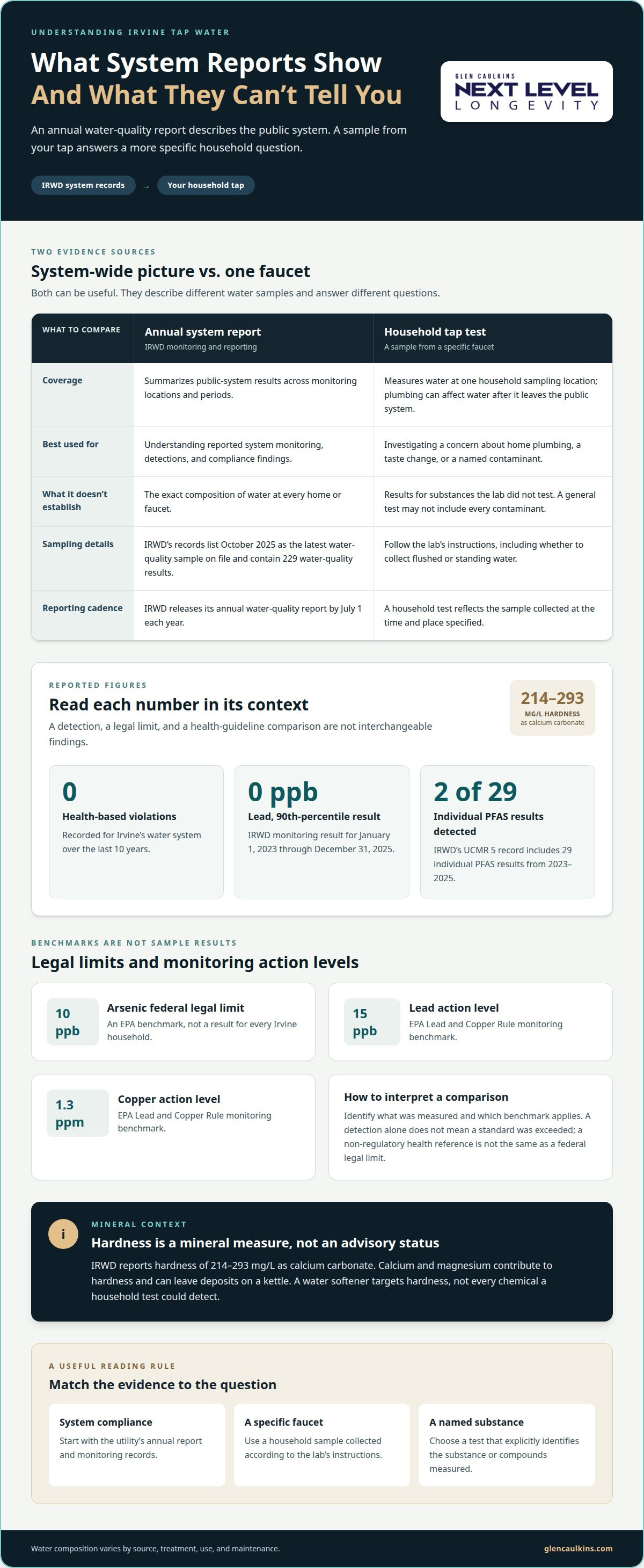
An annual water quality report summarizes public-system test results, while ongoing monitoring tracks water quality over time. Irvine Ranch Water District releases its report by July 1 every year. IRWD’s records list October 2025 as the latest water-quality sample on file and contain 229 water-quality results. These system records help distinguish broad monitoring from a sample collected at one home.
Monitoring covers different substances and sampling periods, so interpret each result in context. IRWD’s report may classify a substance as detected or not detected, or compare a result with a legal limit. These categories describe different findings: a detection alone doesn’t mean a standard was exceeded or show what is present at a particular faucet.
Household Tap-Water Testing
A household test measures water from a specific faucet, rather than summarizing results across a distribution system. It can help investigate a concern about home plumbing, a change in taste, or a particular contaminant. The sampling location and method matter because plumbing can affect water after it leaves the public system.
Choose a test that names the substance you want measured, such as lead or a PFAS compound. Follow the lab’s collection instructions, including whether to collect flushed or standing water. A general test may not include every contaminant. A water softener addresses hardness, not every chemical a household test could detect.
Lead, Copper, and PFAS Testing
Lead and copper monitoring focuses on customer taps, where plumbing materials can affect results. IRWD’s lead service line inventory, completed September 16, 2024, reports no lead or galvanized requiring replacement service lines in its distribution system. IRWD’s 90th-percentile lead result was 0 ppb for January 1, 2023 through December 31, 2025.
PFAS monitoring tests for individual compounds, not one substance called “PFAS.” IRWD’s UCMR 5 record includes 29 individual PFAS results from 2023-2025, with two detected. Household testing is most informative when the laboratory method identifies the compounds tested.
Boil-Water Notices and Advisories
A boil-water notice is a temporary instruction for a defined area. An annual report can’t establish whether a notice is active today. For a current Irvine advisory, consult notices issued by Irvine Ranch Water District or relevant public health authorities. The notice’s location and instructions determine whether it applies to your address.
Boiling addresses certain microbial risks, not dissolved minerals or PFAS. IRWD reports hardness ranging from 214 to 293 mg/L as calcium carbonate, a mineral measure rather than an advisory status. An annual report, a current notice, and a household test each provide a different kind of evidence about water reaching your glass.
Drinking water safety and regulatory standards
Irvine’s water meets federal legal limits, and its system recorded zero health-based violations over the last 10 years. The U.S. Environmental Protection Agency’s standards help assess regulated contaminants, while household taste, mineral content, and plumbing concerns require different kinds of information.
Drinking Water Safety Standards
Drinking water standards set limits for regulated contaminants and guide water-system monitoring and reporting. A detection is not automatically a violation. Irvine Ranch Water District’s reported compliance record describes the public system, not every faucet or the plumbing in every property.
Standards don’t measure every quality people notice. Hardness, taste, and odor are separate from contaminant limits. Calcium and magnesium, for example, contribute to hardness and can leave deposits on a kettle. A water softener targets hardness, but that change alone doesn’t establish whether water meets a contaminant standard.
Chlorine illustrates another distinction. Water systems use disinfection to control pathogens, while chlorine taste or smell is a sensory characteristic. Neither taste nor odor shows whether a regulated contaminant is below its legal limit. EPA compliance standards and IRWD monitoring results address regulatory questions; sensory observations don’t replace those measurements.
EPA Limits and Federal Legal Limits
The U.S. EPA sets federal legal limits for regulated drinking-water contaminants. These limits give utilities measurable compliance standards. For example, the EPA arsenic limit is 10 ppb. That figure is a benchmark for arsenic, not a general score for water quality and not a result for every Irvine household.
The EPA’s Lead and Copper Rule uses action levels for monitoring. According to the U.S. EPA, the lead action level is 15 parts per billion, and the copper action level is 1.3 parts per million. IRWD’s lead-monitoring record reports a 90th-percentile result of 0 ppb for January 1, 2023 through December 31, 2025. The comparison is specific to that monitoring period and measure.
A legal limit also differs from a health reference used for screening. A result may exceed a non-regulatory reference without exceeding a federal legal limit. To interpret a result, identify the benchmark and whether it is regulatory.
Water Safety Testing
Testing connects standards to measured samples. Public-system monitoring assesses water across the distribution system; a household sample can address a concern at one faucet. IRWD reports zero health-based violations over the last 10 years, but that system-level record doesn’t establish the composition of water in every home.
Match the test to your question. A lead test doesn’t measure PFAS, and a general test may not include every compound. Follow the lab’s sampling instructions because the collection method and faucet location affect what the result represents. A carbon filter may change taste, but its performance depends on the particular filter and contaminant.
For a closer look at how mineral composition differs from contaminant standards, explore water chemistry research.
Detected contaminants and health guideline comparisons
Irvine monitoring recorded detections of lithium and two PFAS compounds; its lead result was 0 ppb at the 90th percentile. These findings need context: a detection, a health reference, and a legal limit describe different things.
Reported Contaminants and Sample Detections
A sample detection means a testing method measured a substance in the tested water; it doesn’t by itself show a legal limit was exceeded. Irvine’s record includes 32 findings: two above a health reference, two detected with no limit, and 28 not detected. The categories help residents interpret local water results without treating every detection as evidence of equal risk.
Lithium reached 67.2 µg/L in Irvine Ranch Water District monitoring from March 14, 2023, through July 15, 2025. The EPA health reference shown for lithium is 10 µg/L, a screening level rather than a legal limit. Comparing the measured value with that reference identifies a comparison point, not a federal drinking-water violation.
PFAS Detections and Health Concerns
PFAS monitoring looks for individual compounds, and Irvine’s UCMR 5 record includes 29 PFAS results, with two detected. PFBA measured 7.9 ng/L, while PFPeA measured 3.8 ng/L. These detections give residents compound-specific information about the supply, rather than a single measurement for every PFAS.
PFOS was reported below 4 ng/L against a federal maximum contaminant level of 4.0 ng/L. PFBA and PFPeA have no federal or state limit in the reported data. A result without a limit cannot be read as either exceeding a legal standard or proving that a compound is harmless. Boiling doesn’t remove PFAS; activated carbon and reverse osmosis are treatment methods used to reduce them.
Lead, Arsenic, and Nitrate Detections
Lead monitoring reported a 90th-percentile result of 0 ppb for January 1, 2023, through December 31, 2025. That system-level monitoring result is not a claim that every individual household sample measured zero. Lead can also depend on plumbing between the distribution system and a home’s tap.
The EPA arsenic limit is 10 ppb. That benchmark gives context for an arsenic result, but a limit alone doesn’t establish whether a particular sample contained arsenic. Nitrate’s EPA limit is intended to protect infants under six months. These distinctions answer the central question carefully: Irvine monitoring detected PFAS, while the reported lead result was zero at the 90th percentile; arsenic and nitrate limits provide comparison standards, not proof of detection in a specific household.
Irvine Ranch Water District and water-system coverage
In 2026, Irvine Ranch Water District supplies water from local groundwater and imported water. About 65% comes from the Orange County Groundwater Basin, while about 35% is purchased from the Metropolitan Water District of Southern California. Local agencies disinfect drinking water to protect against pathogens.
The district serves 452,772 people, so “Irvine water” describes a regional system, not a single source or well. Water can come from different sources before reaching a faucet. That source mix helps explain why a report’s system-wide results may not match the particular blend reaching every household at every moment.
The Orange County Groundwater Basin is the largest named local source in the reported mix. Imported water, purchased through the Metropolitan Water District of Southern California, is another component. Both sources enter a managed public supply, where disinfection helps control bacteria, viruses, and other pathogens before water moves through the distribution network.
Recycled water is another part of the district’s water picture, but it serves a different purpose. It meets about 28% of the water needs across IRWD’s service area, primarily for landscape and agricultural irrigation. That figure describes total service-area demand, not the share of drinking water at a home’s faucet.
This distinction matters when interpreting “which areas does IRWD serve?” A district’s service boundary and a city boundary are not interchangeable labels. The reported coverage is the Irvine Ranch Water District service area, which serves 452,772 people; the source mix and recycled-water use describe that wider system. A place name alone doesn’t identify the water blend entering an individual property.
For residents, the practical starting point is to connect the address, water provider, and question. Source information explains where the supply originates; disinfection describes one treatment step. Neither reveals the exact composition at a particular faucet. Local plumbing, sampling location, and water delivered through the distribution system all affect what a household test measures.
Household filtration is a separate choice from the district’s source description. A drinking-water filter treats water at its point of use, while the district manages the public supply. Choose information or testing to match your goal: source details to understand the system, a report for system monitoring, or a faucet sample for a home-specific concern.
What is Irvine's latest annual water quality report and what contaminants were detected?
A consumer confidence report summarizes water-quality monitoring, but its scope and sampling dates matter when interpreting the results. That annual summary is useful, but its sample year, monitoring dataset, and the date of an individual result are not interchangeable.
Read the report as a record of what was tested, what was detected, and how results compare with standards or reference values. A contaminant may appear in the testing record without being present in every sample. A non-detect means the test did not measure the substance at or above its detection capability. Neither result describes every faucet in every home.
The report’s 229 tested contaminants also shouldn’t be read as 229 detections. Monitoring results include different categories, such as detected substances, non-detects, and measurements without a legal limit for comparison. Those categories help explain the record. The number of substances tested alone doesn’t tell readers how many were present or whether a legal standard was exceeded.
Other records add detail about specific monitoring programs. Irvine Ranch Water District’s UCMR 5 record includes lithium measurements through July 15, 2025, and individual PFAS results collected from 2023 through 2025. The newest UCMR 5 sample date listed is July 15, 2025. These dates refer to that monitoring record, while the consumer confidence report lists 2026 as its newest sample year. The two dates describe different records, not necessarily conflicting results.
One important limit concerns scope: the dataset described for the report does not include monitoring results for disinfection by-products. That means this dataset alone cannot summarize those compounds. Other dated records report bromoform at 1.83 ppb and bromodichloromethane at 5.09 ppb, both dated October 6, 2025. A health-goal comparison is not the same as a legal-limit finding, so readers should identify the benchmark attached to each result.
To interpret a result, start with the sample date and contaminant name. Then check the unit, whether the substance was detected, and the status of the comparison value. A screening reference, for example, is not a federal legal limit. This makes it easier to distinguish the measurement from its regulatory meaning.
Annual reports provide a system-level view; a household sample addresses water from a particular tap. Explore water chemistry research to understand how source, treatment, and measured composition fit together.
Glen B. Caulkins: Under-Counter Water Revival System
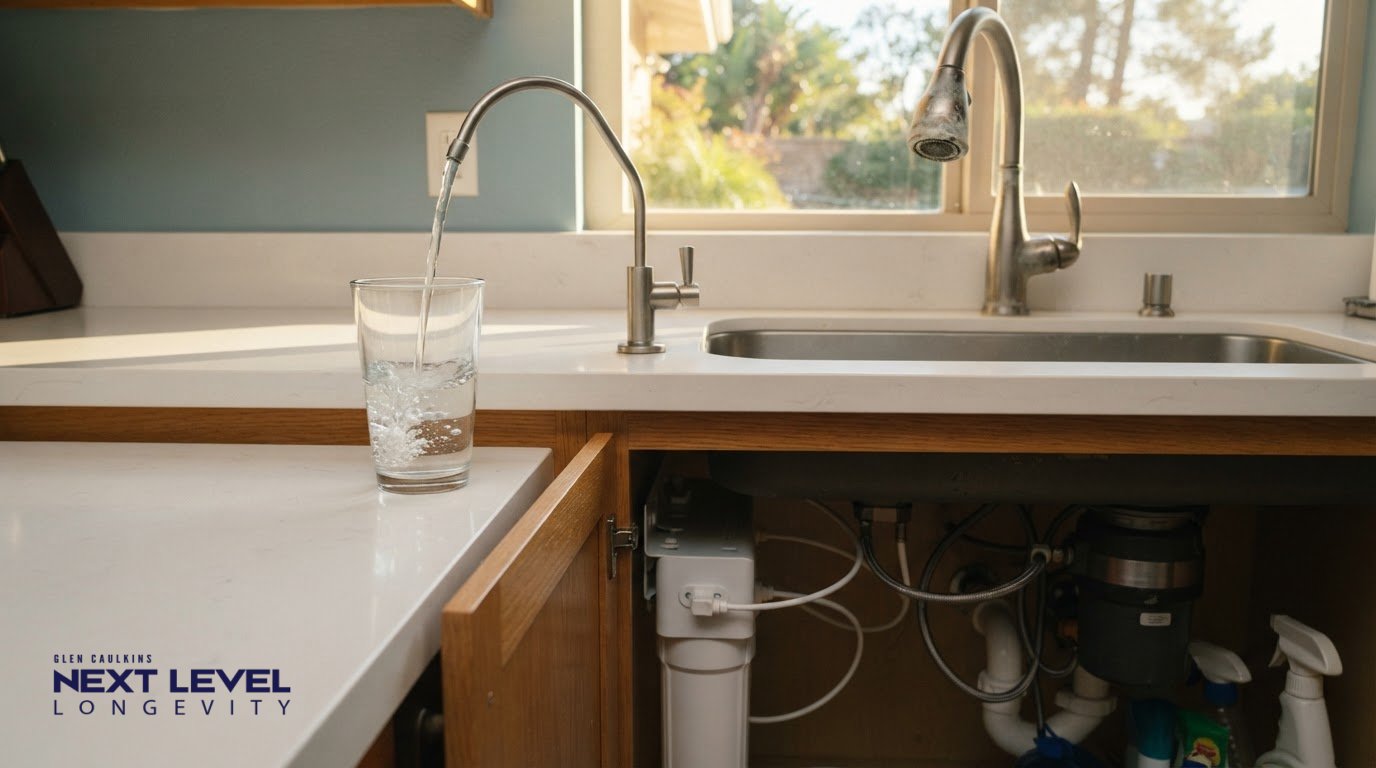
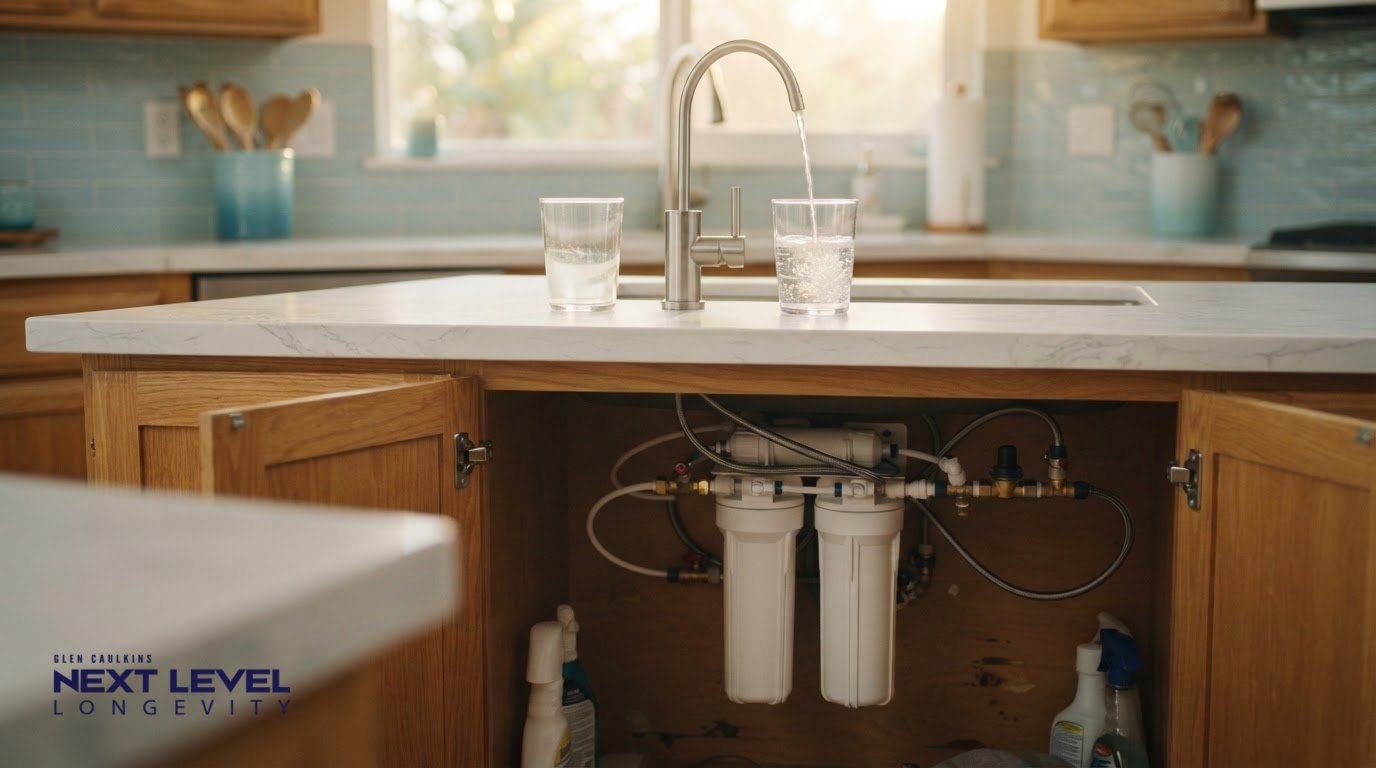
The Under-Counter Water Revival System is a household option for treating drinking water at the kitchen tap. It uses reverse osmosis and dual deionization, then adds minerals such as magnesium and calcium bicarbonate. Glen B. Caulkins has a commercial interest in PristineHydro products, including this system.
Consider this system if you want dedicated point-of-use treatment. Its product information describes the treatment process, but it can’t determine what’s in your water. Use a utility report or lab test to find out.
To discuss whether the Under-Counter Water Revival System fits your needs, contact Glen B. Caulkins.
Choose a water approach that fits your next question
Knowing whether Irvine tap water is safe to drink in 2026 is one part of the decision. Your next step depends on what you want to address: drinking water at home, water while traveling, or shower filtration. Keep the goal specific, and consider product information alongside any test results or public advisories relevant to your situation.
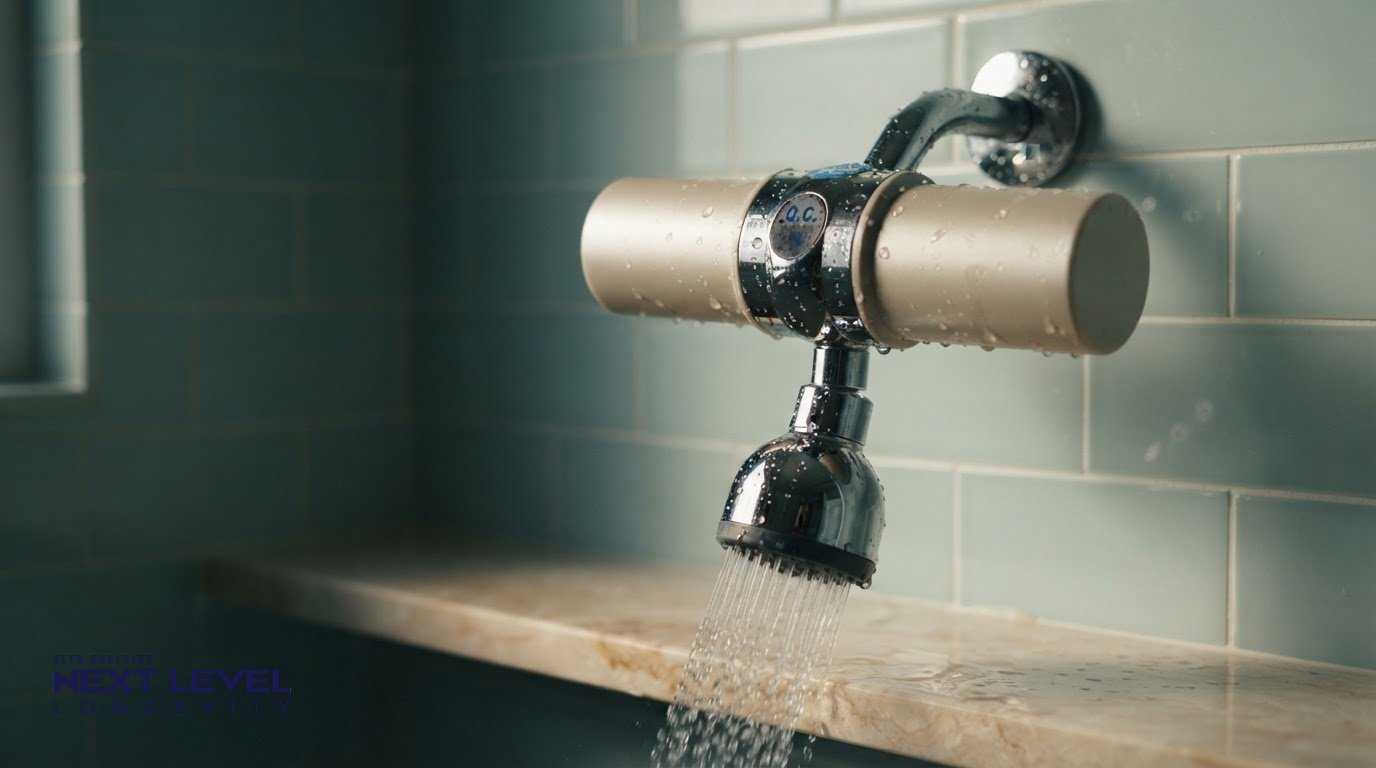
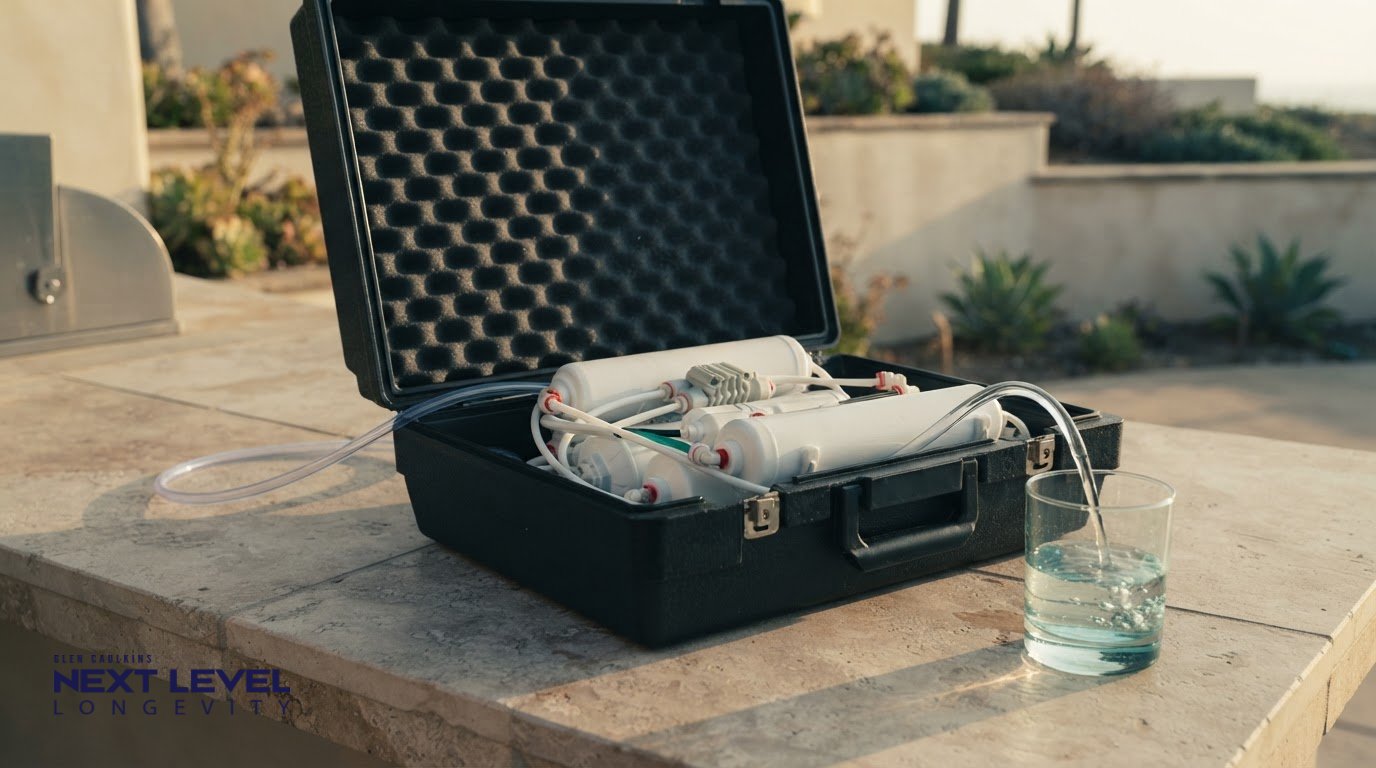
Glen B. Caulkins offers the Under-Counter Water Revival System, Travel-Portable Water Revival System, and Aqualux filter with head. Each serves a different setting and purpose, so start with how you plan to use it. Product details can help you choose without treating filtration as a substitute for testing or official safety guidance.
Water is part of a larger inquiry into chemistry, environment, and everyday life. If you’d like to explore a practical next step, contact Glen B. Caulkins today. Continue with a clear question and choose at your own pace.
Frequently Asked Questions
Do I need bottled or filtered water?
The information here identifies no general requirement for Irvine residents to switch to bottled water. Follow any current notice that applies to your address, since an advisory may temporarily change what you should do. A household filter is a personal choice for taste or a specific treatment goal. Bottled and filtered water aren’t interchangeable guarantees: focus on what a product treats and whether that matches your concern.
How much sodium is in the water?
Sodium levels depend on the water source and any treatment inside the home. Don’t use hardness as a substitute for a sodium measurement: hardness mainly reflects calcium and magnesium. A sodium-based water softener can change sodium levels as it reduces hardness. For a household-specific result, use a test that measures sodium or look for a sodium measurement in the applicable water report.
What should I do?
Start by identifying your question. For a temporary safety instruction, follow the current notice for your address. For a concern about a substance at one faucet, choose a test that measures it. For taste or mineral deposits, determine whether the issue is sensory or related to hardness. These are different questions, so one general filter or test may not answer them all.
Is Irvine, California tap water safe to drink in 2026?
Yes, Irvine tap water is safe to drink in 2026 under EPA legal standards. That system-level answer doesn’t describe every home’s plumbing or replace instructions during a local advisory. If your concern is specific to your faucet, a household sample can address that location. If you’re responding to a temporary notice, follow its directions rather than relying on a general annual assessment.
Does Irvine tap water meet EPA and California drinking water standards?
Irvine’s reported water meets federal EPA legal limits. That is the standards finding supported here. California residents can use the local water quality report to see which substances were measured and how results are classified. Keep the distinction clear: a system’s compliance finding is not a measurement from every home, and it doesn’t describe taste or mineral preference.
Who supplies drinking water to Irvine neighborhoods?
Irvine Ranch Water District is Irvine’s primary drinking-water supplier. Its supply includes local groundwater and water purchased from the Metropolitan Water District of Southern California. Service boundaries can differ from city boundaries, so start with the provider listed for your property when asking about neighborhood-specific water. Recycled water in the district’s service area is used primarily for irrigation, not household drinking.
Is Irvine tap water hard, and what does that mean for drinking and appliances?
Yes, Irvine’s reported hardness falls in the hard-water range. Hardness describes dissolved calcium and magnesium, not whether water meets drinking-water standards. These minerals can leave deposits on a kettle, shower surface, or faucet aerator. Hardness may affect taste, and scale can mean more frequent appliance cleaning, but neither by itself establishes a safety problem.
Do Irvine residents need a home water filter, and what type is recommended?
A home filter isn’t automatically necessary for every Irvine resident; choose based on a specific goal, such as taste or reducing a named contaminant. Glen B. Caulkins offers an Under-Counter Water Revival System that uses reverse osmosis and dual deionization, then adds minerals such as magnesium and calcium bicarbonate. This product guide isn’t health advice and can’t determine your water composition; use a utility report or lab test for that.
Frequently Asked Questions
Do I need bottled or filtered water?
How much sodium is in the water?
What should I do?
Is Irvine, California tap water safe to drink in 2026?
Does Irvine tap water meet EPA and California drinking water standards?
Who supplies drinking water to Irvine neighborhoods?
Is Irvine tap water hard, and what does that mean for drinking and appliances?
Do Irvine residents need a home water filter, and what type is recommended?
More articles