Under Sink Water Filter Costs and Installation in Irvine
November 9, 2026 · 16 min read
An under-sink water filter in Irvine can use reverse osmosis to treat drinking water at the kitchen sink. The total cost depends on the system, installation requirements and replacement filters, rather than one figure that fits every home. Filter replacements generally need attention every 6 to 12 months.
Choosing an under-sink water filter in Irvine means considering how water is treated, what installation involves, and how maintenance fits your household routine. This guide explains those practical details and the factors that affect cost, while recognizing that plumbing layouts and water needs vary from home to home.
You’ll also learn what to consider when comparing filter changes and discounts. The goal is to clarify what reverse osmosis does, what ongoing care involves, and which details matter before choosing a kitchen system.
Key Takeaways
- Understand the main installation and upkeep considerations for an under-sink reverse-osmosis system before choosing a setup.
- See which factors shape the overall cost, including system type, installation needs and replacement filters.
- Match a filtration approach to your drinking-water priorities, and learn why performance claims should be tied to relevant product testing.
- Know which plumbing and rental considerations can affect an under-sink installation in Irvine.
- Explore whether the Under-Counter Water Revival System and its replacement filters fit your kitchen’s drinking-water needs.
System installation and maintenance
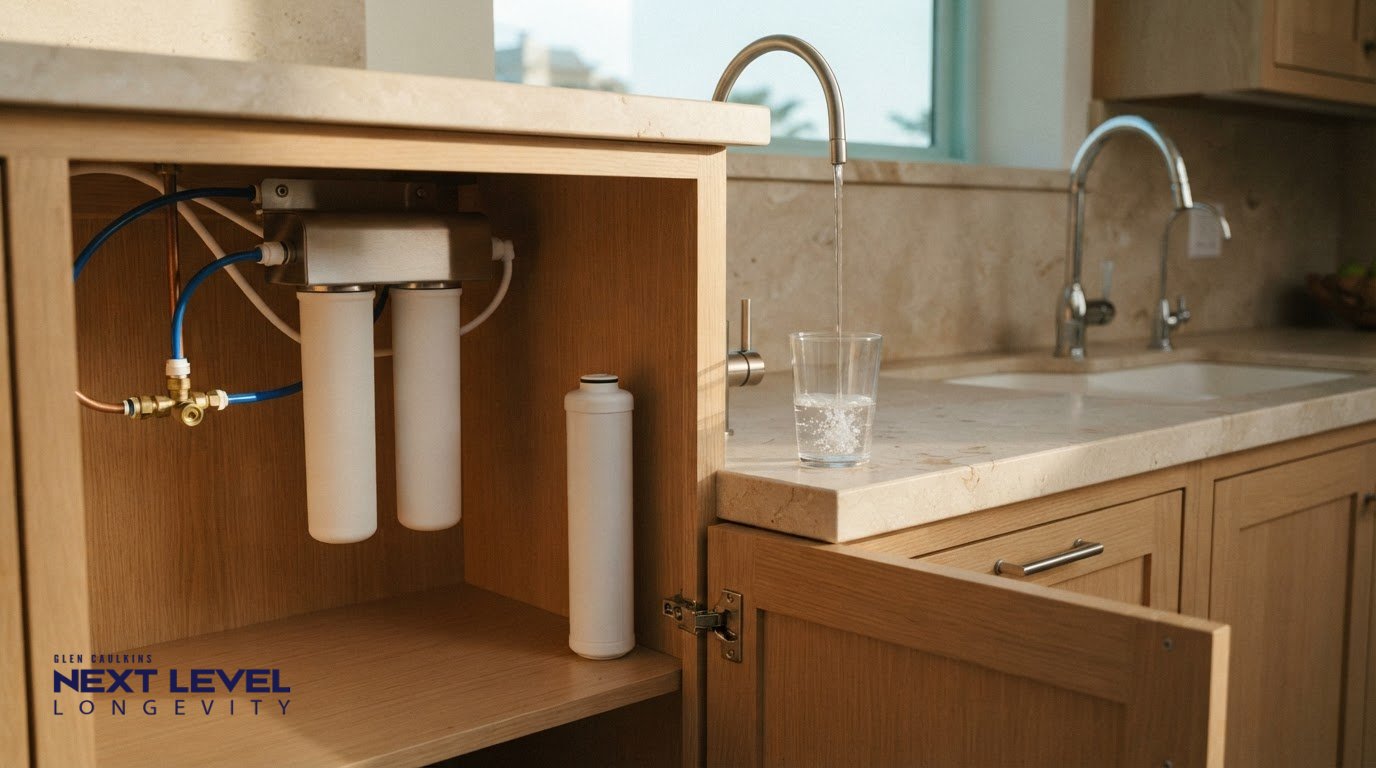
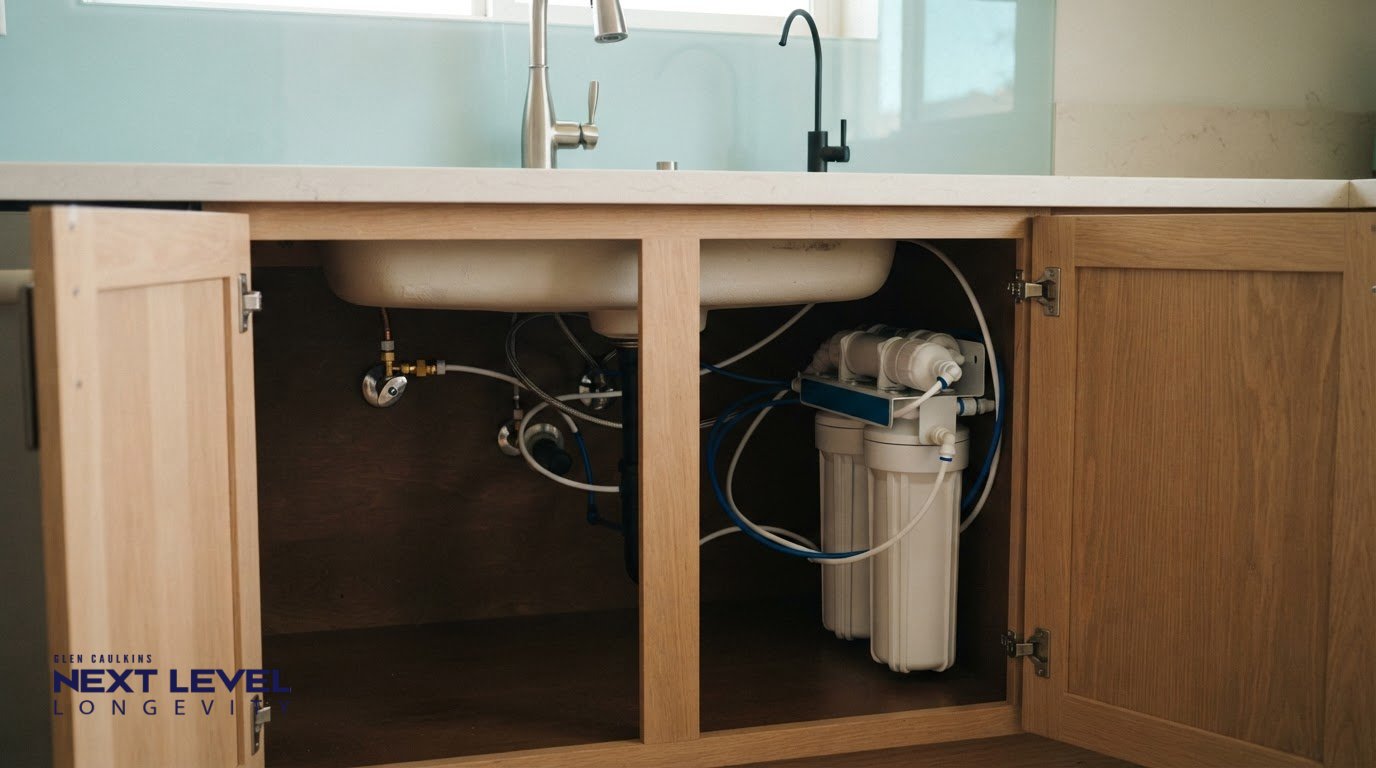
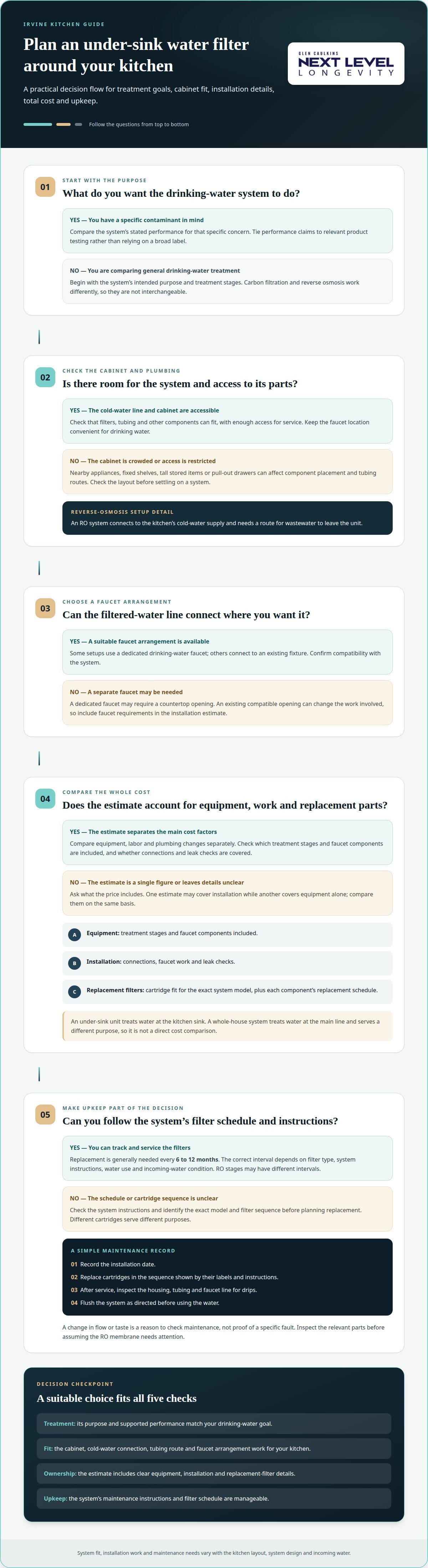
An under-sink reverse-osmosis system connects to the kitchen’s cold-water supply and needs space for filters, tubing, and other components. Some setups use a dedicated drinking-water faucet; others connect to an existing fixture. Cabinet layout affects how the parts fit. A crowded cabinet, nearby dishwasher, or disposal can limit access and influence how tubing is routed.
Installation follows a practical sequence. First, the water supply is shut off. The installer then connects the system’s feed line and positions its filtration components. Reverse-osmosis systems also need a route for wastewater to leave the unit. The filtered-water line connects to the designated faucet. Before closing the cabinet, check connections for leaks and run water through the system as directed by its instructions.
Space matters as much as plumbing. Tall storage containers, cleaning supplies, or pull-out drawers can block access to filter housings. A system placed behind a fixed shelf, for example, can make routine cartridge changes awkward. Leave room around serviceable parts to simplify maintenance. Faucet placement matters, too: a convenient spot near the main kitchen faucet keeps drinking water accessible without using counter space.
Maintenance centers on replacing filters on schedule. Under-sink filtration system filters generally need replacement every 6 to 12 months. The right interval depends on the filter type, system instructions, water use, and the condition of incoming water. Reverse-osmosis systems may have several stages, and each filter can have a different replacement interval. Keep the model name and filter sequence together, so each replacement matches its housing.
- Record the installation date. A note inside the cabinet helps track when each filter entered service.
- Follow the system’s replacement sequence. Remove and install cartridges according to their labels and instructions.
- Inspect connections after service. Look for drips around the housing, tubing, and faucet line.
- Flush the system as directed. Follow the product instructions after replacing a filter before using the water.
A change in flow or taste can prompt a closer look at system maintenance, but it doesn’t identify the cause. A clogged prefilter, overdue cartridge, and loose connection each call for a different response. Keep replacement records and inspect the relevant parts before assuming the membrane needs attention. This makes maintenance more deliberate and keeps system components accessible.
Under-sink filtration system costs in Irvine
The purchase price is only one part of an under-sink system’s total cost. Filter type, installation work, replacement cartridges, and plumbing layout all matter. Carbon filters and reverse-osmosis units use different treatment stages, affecting the equipment and maintenance plan. For an Irvine kitchen, start by deciding what you want the drinking-water system to do.
Carbon filtration and reverse osmosis aren’t interchangeable. A carbon system uses filter media to reduce certain substances, depending on its design and documented performance. Reverse osmosis pushes water through a membrane, often alongside other treatment stages. That equipment can take up more space beneath the sink. Compare each system’s stated purpose and supported performance, not just its initial price.
Installation costs depend on the cabinet and existing plumbing. An accessible cold-water line and clear cabinet space make for a simpler setup than cramped storage or a difficult faucet location. A separate drinking-water faucet may require a countertop opening. An existing compatible opening can change the work involved. Ask for an itemized estimate that separates equipment, labor, and plumbing changes.
- System equipment: Compare the included treatment stages and faucet components.
- Installation work: Identify whether the estimate includes connections, faucet work, and leak checks.
- Replacement filters: Confirm which cartridges fit the exact system model.
- Ongoing upkeep: Review each component’s replacement schedule and maintenance instructions.
Replacement filters affect long-term ownership costs. A system with several stages may use different cartridges for different purposes, and those parts may have different replacement intervals and prices. A sediment filter and an RO membrane, for example, are distinct components, so one replacement figure cannot represent both. Match each cartridge to the system model and follow its maintenance instructions.
Compare estimates on the same basis. One quote may include installation, while another covers equipment alone. One system may include a dedicated faucet; another may use a different arrangement. Compare these details alongside the replacement-filter plan. This shows whether a lower upfront figure reflects a simpler system, fewer included parts, or separate installation work.
For drinking-water treatment at the kitchen sink, focus your budget on that point of use. A whole-house system treats water at the main line and serves a different purpose, so it isn’t a direct cost comparison with an under-sink unit. In Irvine, weigh treatment goals, cabinet space, plumbing work, and the replacement parts the system requires.
What are the best under-sink water filters available in Irvine, California?
The right choice for an Irvine kitchen depends on the water concern and intended use. Carbon filtration and reverse osmosis treat water differently, and neither is automatically the right fit for every household. Start with your goal: improve taste, reduce a specific contaminant, or use a multi-stage drinking-water system. Then compare it with documented product performance and maintenance needs.
A carbon filter is a point-of-use option for water from one faucet. Its performance depends on the filter design and the substances it has been tested to reduce. A household concerned about chlorine taste, for example, can look for relevant performance documentation rather than choosing by appearance or brand alone. A general claim that a filter “purifies” water doesn’t identify what it reduces.
Reverse osmosis is another kitchen option. It uses a membrane to separate many dissolved substances from water, alongside other treatment stages in some systems. This may suit a particular use, but it isn’t a universal recommendation. A household seeking broader contaminant reduction can consider this approach while weighing its components and ongoing filter changes.
For a practical comparison, assess each candidate against the same criteria:
- Treatment purpose: Identify the contaminant or water characteristic the system addresses.
- Evidence: Look for product-specific performance information that matches that substance.
- Kitchen fit: Consider cabinet space, faucet placement, and access to filter components.
- Upkeep: Review replacement requirements and whether the correct filters remain easy to identify.
A whole-house system serves a different purpose from an under-sink filter. It treats water where the supply enters the home, while a kitchen unit focuses on drinking water at one point. If you’re comparing the two in Irvine, first decide whether your goal concerns the household supply or water at the kitchen sink. These approaches aren’t direct substitutes.
The Under-Counter Water Revival System is a kitchen option for households considering a dedicated drinking-water system. It uses reverse osmosis and dual deionization, then adds minerals such as magnesium and calcium bicarbonate. The Travel-Portable Water Revival System uses the same filter-then-remineralize approach in a portable countertop unit for homes, offices, and trips, rather than as a kitchen-installed alternative.
There is no single “best” filter for every Irvine home. A sound decision follows a clear sequence: define your purpose, match it to a treatment method, review relevant performance information, and account for installation and replacement needs. This gives “best” a practical meaning: a system that fits your household’s drinking-water priorities.
Which under-sink filters are certified to reduce lead, PFAS, chlorine, or other contaminants?
Certification should match the exact filter model and contaminant claim. A general label such as “water purifier” doesn’t establish reduction of lead, PFAS, chlorine, or sediment. Under-sink systems can reduce contaminants including chlorine, lead, and sediment, but performance depends on the particular system. Assess each reduction claim separately rather than assuming one filter addresses every concern.
Start with the product’s performance documentation. Find the exact model name, then identify the contaminants named in its results. Documentation describing chlorine reduction doesn’t establish lead reduction, and a lead claim doesn’t establish PFAS performance. If the documentation covers several substances, check each claim separately. Matching the model to the contaminant prevents broad marketing language from standing in for evidence.
PFAS is a family of chemicals, not a single substance. A claim about one PFAS compound shouldn’t automatically be read as proof about every compound in the family. The same care applies to terms such as “heavy metals” or “chemicals,” which don’t identify the substances evaluated. Look for the named contaminant and the scope of the reported performance.
- For lead: Find a lead-specific reduction claim for the exact filter model.
- For PFAS: Identify the named compounds covered by the product’s performance information.
- For chlorine: Look for a chlorine-specific claim, not a general taste or odor statement.
- For sediment: Confirm that sediment appears among the stated reduction claims.
Certification and testing are related, but they aren’t interchangeable. A laboratory result for a sample doesn’t, by itself, establish product certification. A certification mark should not be applied beyond the contaminants and model it covers. Read the performance statement alongside its test or certification details. Don’t assume a claim for one stage in a multi-stage system also applies to the complete unit.
Replacement also matters. A filter’s stated performance depends on using the correct cartridge and following its replacement instructions. A lead-reduction claim for one model, for example, shouldn’t be transferred to a visually similar replacement cartridge. Match replacement parts to the original system and keep the relevant product documentation together.
For Irvine households, use a direct sequence: name the contaminant of concern, find a matching claim, confirm the exact model, and understand the claim’s limits. No single phrase on a package answers all these questions. Specific evidence helps distinguish a targeted filter from a system with claims that merely sound broad.
Do Irvine plumbing codes or rental rules affect under-sink water filter installation?
Installing an under-sink filter can involve more than placing a unit beneath the sink. The work may connect to a cold-water line, route wastewater, or add a drinking-water faucet. These details determine whether existing plumbing or the countertop needs alteration. In Irvine, consider the scope of the work when assessing code questions, rather than relying on the filter’s label.
A unit that connects to an existing supply line involves different work from altering plumbing or cutting a new faucet opening. A reverse-osmosis system may also need a wastewater connection. The connection, materials, and installation method shape the job. Don’t assume every setup follows the same path. Review the system instructions alongside the actual cabinet and plumbing layout.
In a rental home, the lease and property owner’s expectations matter. A removable connection can leave a different footprint from drilling through a countertop or changing a drain line. Before making a permanent change, get written permission from the landlord or property manager. Describe the proposed faucet opening, water-line connection, and drain routing. Clear details can prevent later disputes about repairs or the kitchen’s condition.
- Identify the connection points. Note the cold-water supply, faucet location, and possible drain connection.
- Separate removable work from alterations. A new countertop opening or changed plumbing affects the property differently.
- Review rental terms. Check what the lease says about plumbing changes and fixtures.
- Keep installation records. Save written permission, product instructions, and details about completed work.
Local plumbing requirements depend on the work being performed. A simple connection and a modification to a supply or drain line are not identical tasks. Requirements can also depend on the property and installation conditions. This guide doesn’t identify a specific Irvine permit rule. Don’t treat a general online description as a determination for a particular home or alteration.
After installation, inspect the connections and surrounding cabinet for leaks. If the system has a separate faucet, confirm that its mounting is stable. In a rental, document the finished setup with clear photographs. These records show where the system connects and whether the countertop or cabinet changed.
For homeowners and renters, the practical sequence is to define the installation, identify any permanent alteration, and address permission before work begins. A filter that fits beneath the sink may still require decisions about plumbing, drainage, and the faucet. Keeping these details in view clarifies the installation plan without assuming that one rule applies to every Irvine property.
Glen B. Caulkins: Under-Counter Water Revival System
The Under-Counter Water Revival System is a kitchen option for Irvine households considering a dedicated drinking-water system. It uses reverse osmosis and dual deionization, then adds minerals such as magnesium and calcium bicarbonate. Glen B. Caulkins’s water research informs his product work, and he has a commercial interest in PristineHydro products. Review the system’s details alongside your household’s needs and available cabinet space. For a portable option, the Travel-Portable Water Revival System serves a different setting.
Choose the next step that fits your home
Choosing an under-sink water filter in Irvine starts with deciding how water treatment fits into your daily routine. A kitchen system, a portable option for travel, and a shower filter serve different settings. Keeping those uses distinct helps you focus on what fits your home, rather than adding features you don’t need.
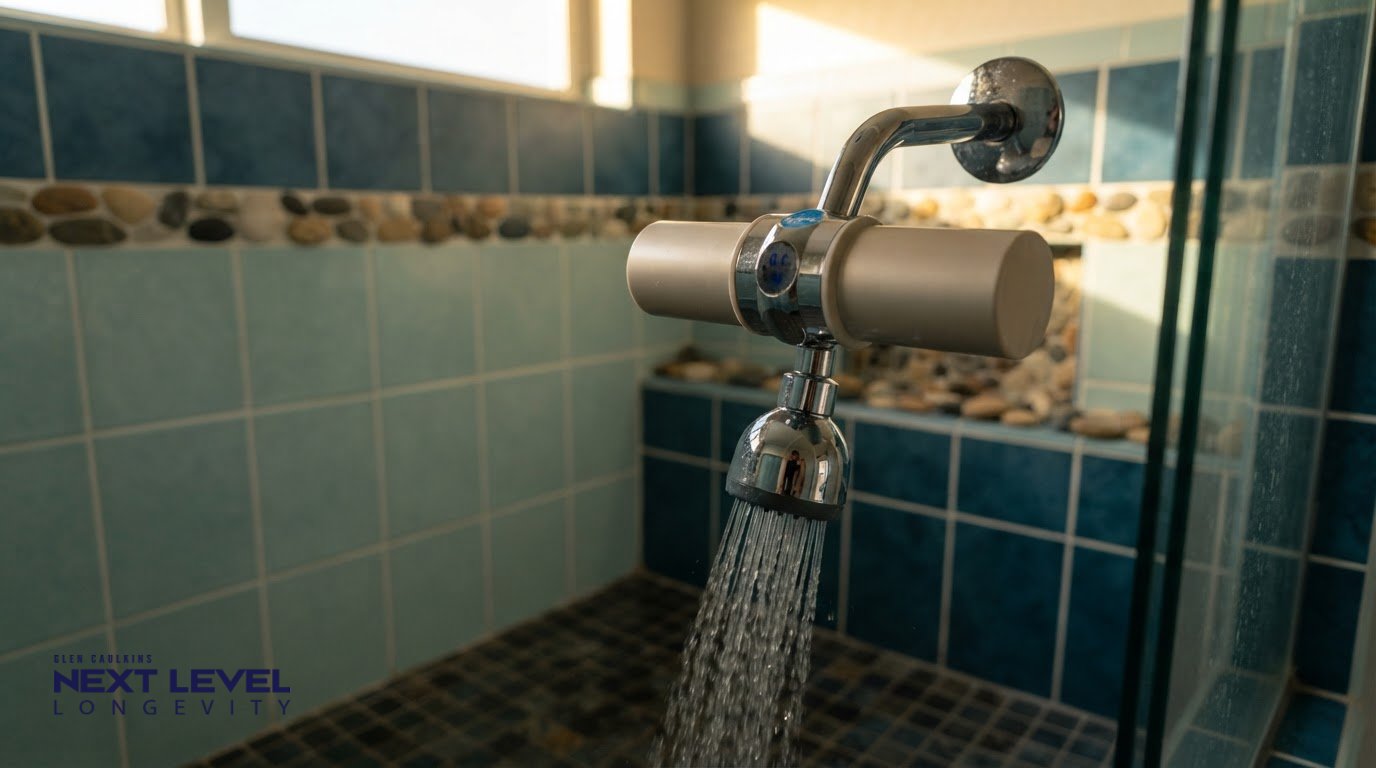
Glen B. Caulkins offers the Under-Counter Water Revival System for kitchen use and the Travel-Portable Water Revival System for travel. The Aqualux filter with head is a separate shower option. These products reflect different points of use, so the useful next step is to consider where you want filtered water and what matters in that setting.
If you’re ready to explore the options, contact Glen B. Caulkins to discuss your choices. A clear conversation can help you move from general research toward a practical decision for your household.
Frequently Asked Questions
How can I ensure my water is safe?
Start with your water utility’s quality report or a laboratory test, because a filter guide cannot determine what is in your tap water. Use the results to identify a specific concern, then compare it with product-specific performance information. A concern about lead, for example, calls for evidence addressing lead, not just chlorine taste. This guide is educational, not health advice, and does not replace professional guidance.
How much should I budget for installation?
Budget depends on the sink’s existing connections, faucet arrangement, and whether installation requires countertop or plumbing changes. A straightforward connection differs from adding a separate faucet or routing a drain line. Ask for an estimate that separates equipment from labor and describes the included work. This makes it easier to compare equivalent installation scopes without treating every Irvine kitchen as the same project.
What are the different types of under-sink water filtration systems available?
The main options include carbon filtration, reverse osmosis, and multi-stage systems that combine treatment methods. Carbon filters use media designed for particular reduction claims. Reverse-osmosis systems use a membrane, often alongside other stages. Multi-stage designs can put several components in sequence. Choose according to intended use and documented performance, not the number of stages alone. Each component also affects replacement planning and cabinet access.
What contaminants are found in Irvine's tap water, and what does the latest water quality report show?
Irvine tap water’s composition depends on its supply and treatment, so a citywide summary cannot establish what comes from an individual home’s faucet. The utility’s latest water quality report provides information about substances monitored in the public supply. A laboratory test can assess a household’s tap-water sample. Neither a filter guide nor a system description can determine your water’s actual composition.
How do reverse osmosis and carbon under-sink filters compare for Irvine homes?
Carbon filtration and reverse osmosis use different treatment methods, so compare them against your specific drinking-water goal. Carbon performance depends on the media and substances named in the product’s claims. Reverse osmosis uses a membrane and may include other stages. If your Irvine home has a particular contaminant concern, match it to product-specific performance information instead of assuming either method addresses every substance.
How much do under-sink water filters cost in Irvine, including installation?
Total cost depends on filter type, included components, installation work, and replacement needs. Carbon units and reverse-osmosis systems have different equipment requirements, while a new faucet opening or plumbing change can affect labor. Compare estimates that separate equipment, installation, and replacement filters. This gives you a clearer view of ownership costs without assuming one package or installation scope fits every Irvine kitchen.
Which Irvine plumbers or water filtration companies install under-sink filters, and what do they charge?
Installation charges depend on the work involved, including supply-line connections, faucet placement, and any drain or countertop changes. A useful estimate identifies the scope and separates equipment from labor. An estimate that includes a new faucet opening, for example, covers different work from one that uses an existing opening. Compare written scopes rather than relying on a general price for a different setup.
Can I install an under-sink water filter myself, and what tools and steps are needed?
Some systems are designed for homeowner installation, but instructions and connections vary by model. Review the manufacturer’s installation guide before beginning. Typical tasks may include shutting off the cold-water supply, connecting tubing, securing a faucet, and checking for leaks. A reverse-osmosis unit may also require a drain connection. If the work alters plumbing or involves a rental property, address permission and applicable requirements first.
Frequently Asked Questions
How can I ensure my water is safe?
How much should I budget for installation?
What are the different types of under-sink water filtration systems available?
What contaminants are found in Irvine's tap water, and what does the latest water quality report show?
How do reverse osmosis and carbon under-sink filters compare for Irvine homes?
How much do under-sink water filters cost in Irvine, including installation?
Which Irvine plumbers or water filtration companies install under-sink filters, and what do they charge?
Can I install an under-sink water filter myself, and what tools and steps are needed?
More articles