Compare Tankless, Traditional, and Countertop RO Systems
November 18, 2026 · 16 min read
A tankless reverse osmosis water filter system isn’t automatically the best choice. Traditional systems store filtered water, while countertop models simplify installation. The right fit depends on your space, water use, maintenance preferences, and whether you want minerals added back.
Filtration performance is a useful starting point, but other details matter too. Certification describes tested performance, replacement filters affect upkeep, and reverse osmosis can change water’s mineral content.
This comparison explains how tankless, traditional, and countertop systems differ, what to look for in certification, and how replacement filters and system lifespan shape long-term ownership. It also explores how mineral content may influence your choice, so you can weigh practical fit alongside what ends up in your glass.
Key Takeaways
- Match a tank, tankless, or countertop design to your kitchen space, installation preferences, and drinking-water needs.
- Interpret performance claims alongside the specific system’s testing and certification evidence.
- Plan maintenance around the replacement requirements for your exact model, not a generic schedule.
- Consider how filtration changes mineral content, while keeping water-composition facts separate from health claims.
- Learn how PristineHydro’s Water Revival Systems and Aqualux filter fit different water-use needs.
RO System Types: Tankless, Traditional, and Countertop
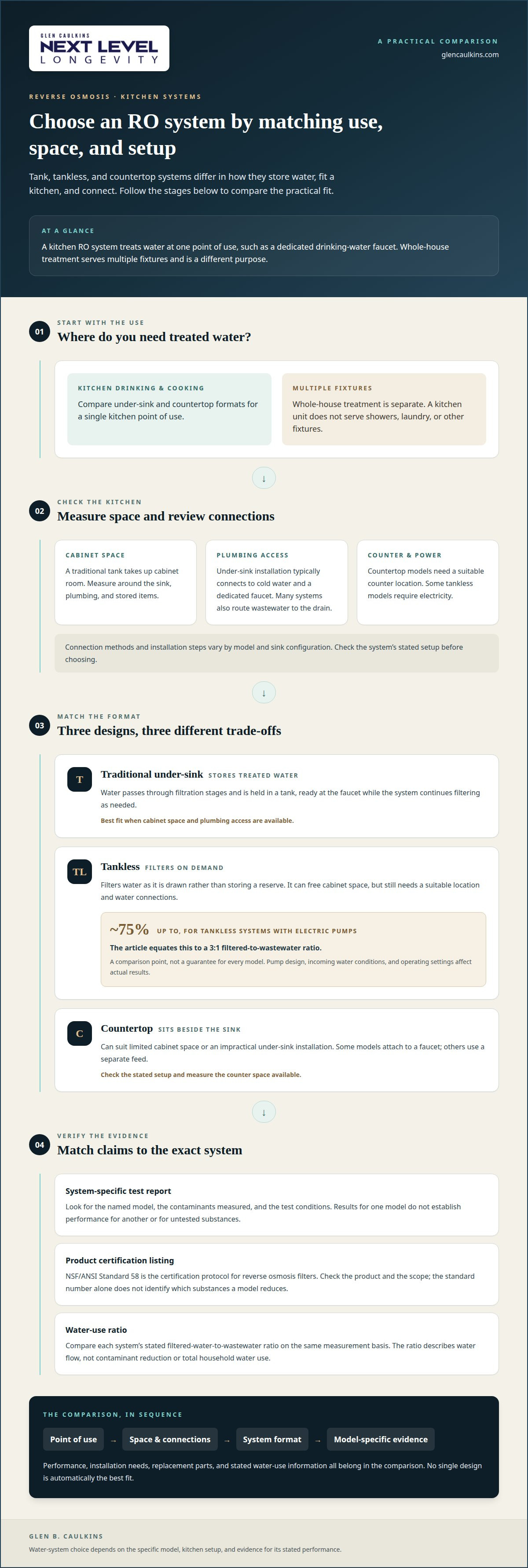
A kitchen reverse osmosis system usually treats water at one point of use, such as a dedicated drinking-water faucet. Traditional, tankless, and countertop designs differ in where they store water, how they fit the kitchen, and what installation they require. A whole-house system serves a different purpose: it treats water for multiple fixtures, not just a glass or gallon used for drinking and cooking.
Traditional systems store treated water
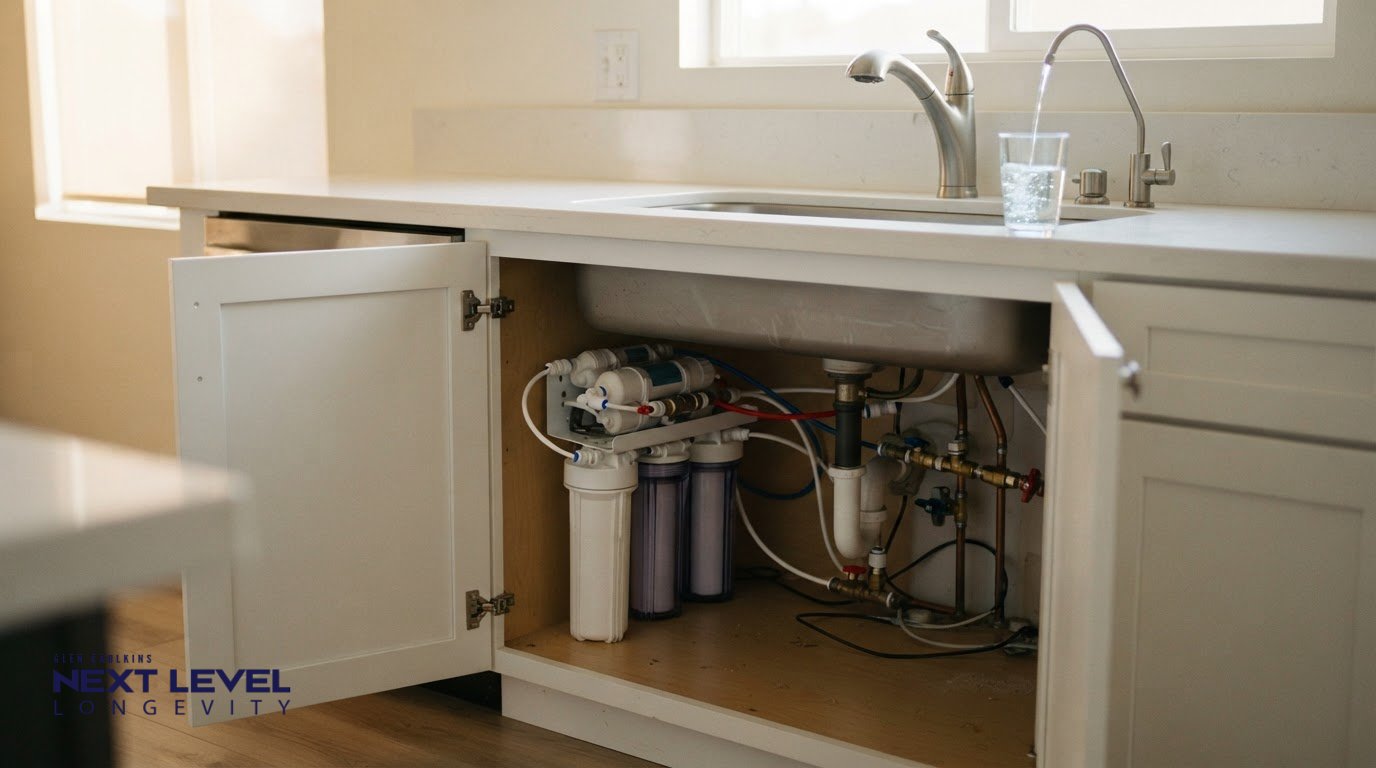
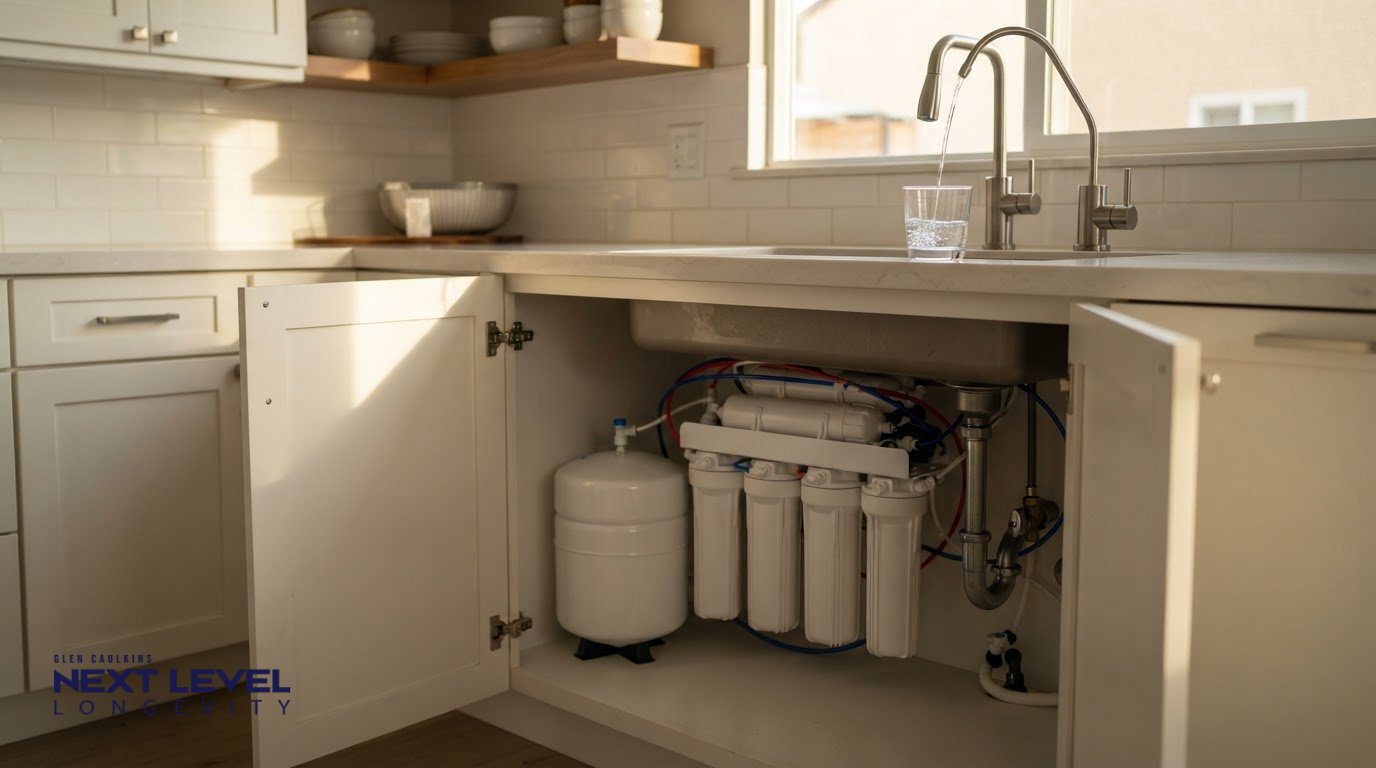
A traditional under-sink system sends water through its filtration stages and stores treated water in a tank. That reserve is available at the faucet while the system continues filtering as needed. Because the tank takes up cabinet space, measure the area around the sink, plumbing, and stored items before choosing this format.
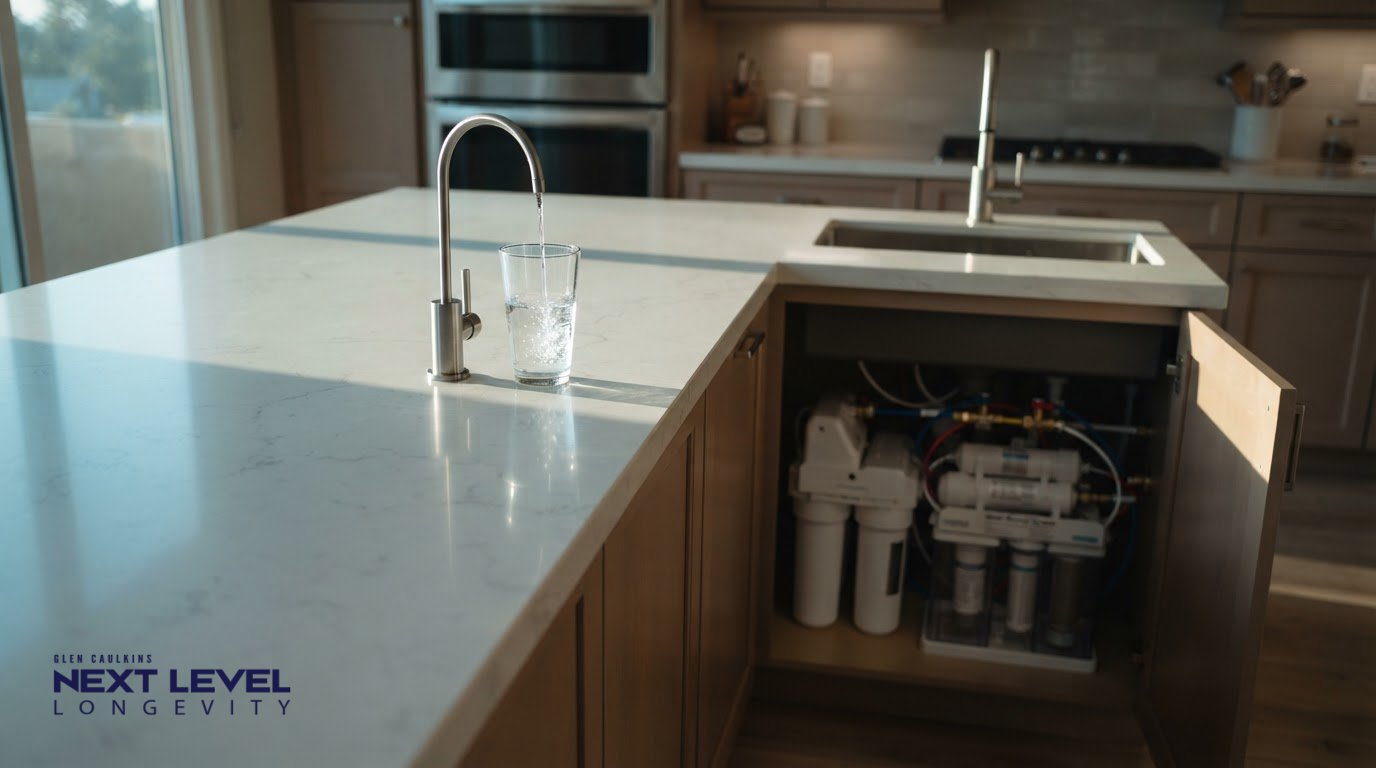
Installation typically connects the unit to the cold-water supply and a dedicated faucet. Many under-sink RO systems also route wastewater to the drain. Connections and installation steps depend on the system and sink configuration, so this format is most practical when cabinet space and plumbing access are available.
Tankless systems save tank space
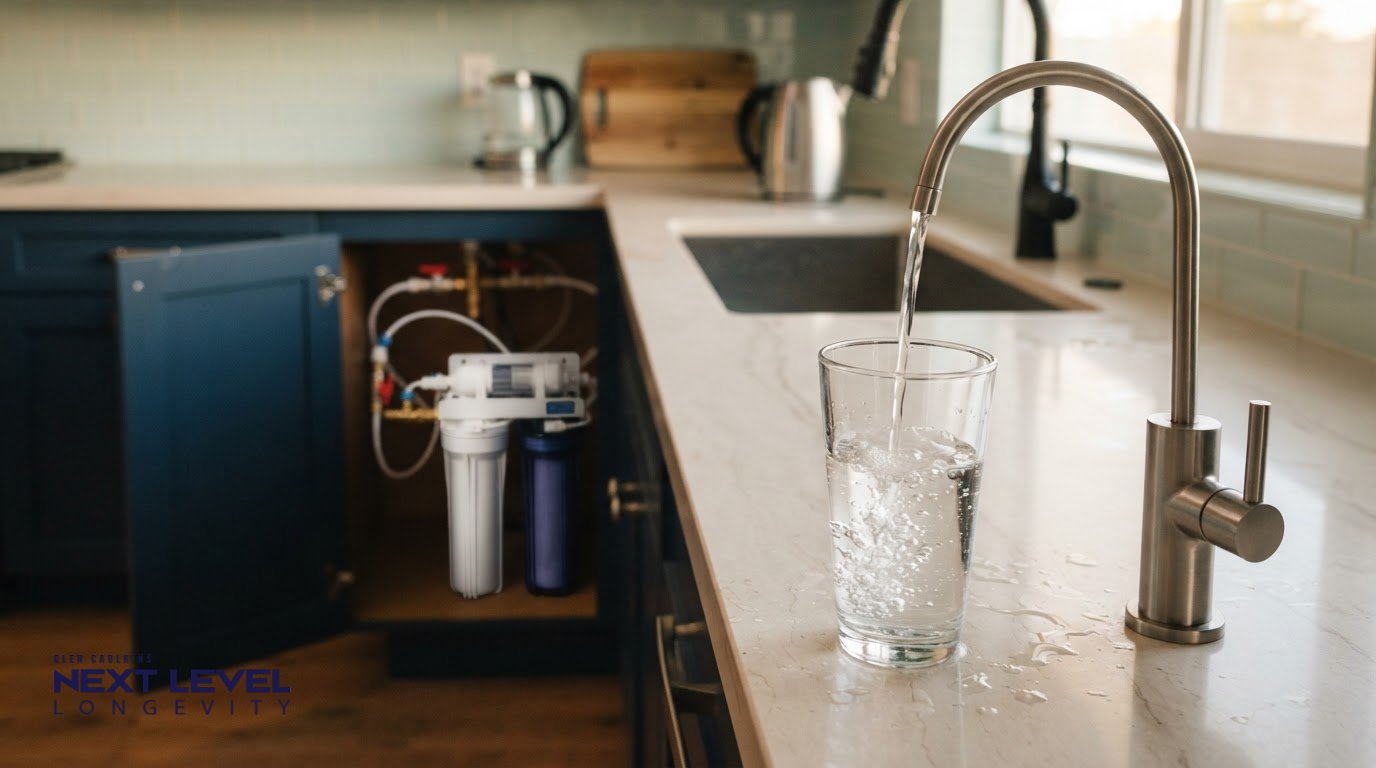
A tankless design filters water as it is drawn instead of storing a reserve in a tank. This can free cabinet space, but the system still needs a suitable location and water connections; some models also require electricity. Compare the required connections and stated production information, not just the word “tankless.”
Tankless systems with electric pumps can reach about 75% efficiency, or a 3:1 filtered-to-wastewater ratio. That figure offers a comparison point, not a performance guarantee for every model. Pump design, incoming water conditions, and operating settings affect the actual result. Review product-specific performance evidence when comparing models.
Countertop systems reduce under-sink changes
A countertop system sits beside the sink, making it an option when cabinet space is limited or an under-sink installation is impractical. Connection methods vary: some models attach to a faucet, while others use a separate feed. Check the stated setup and measure your available counter space before deciding.
Start by identifying where you want treated water. For drinking and cooking at one kitchen faucet, compare under-sink and countertop formats. Whole-house treatment is a separate consideration: a kitchen unit does not serve showers, laundry, or other fixtures. Compare actual coverage, installation needs, storage, and evidence for the system’s performance.
What Reverse Osmosis Does and What It Does Not Tell You
The cost of an RO system depends on its format, installation needs, and replacement parts. A reverse osmosis water filter system can reduce some dissolved substances, but performance depends on the specific model and the evidence supporting its claims.
RO Contaminant Reduction
Reverse osmosis can reduce certain dissolved substances, including some minerals and metals. The complete system matters: pre-filters and post-filters may also contribute to treatment. Claims about lead, fluoride, or another contaminant need evidence for that specific model and substance.
Look for reports that identify the system tested, the contaminant measured, and the test conditions. Results for one model don’t establish performance for another. A general filtration claim also doesn’t tell you which substances were measured or how much they were reduced. System-specific evidence makes comparisons more useful.
| Evidence option | What it can show | What it does not establish |
|---|---|---|
| System-specific test report | Measured results for a named model and tested contaminants | Results for other models or untested substances |
| Product certification listing | Whether a product meets the listed standard and scope | Claims beyond that scope |
| General marketing statement | A broad description of filtration | Measured reduction without supporting evidence |
For example, a report that names lead is more relevant to a concern about lead than a general statement about metals. Match the model and contaminant in the claim to the report.
Water Waste and Efficiency
RO filtration sends treated water for use and directs a concentrated stream to wastewater. The amount varies with system design and operating conditions, so there’s no single water-waste figure or efficiency rating for every model. Compare each system’s stated filtered-water-to-wastewater ratio on the same measurement basis.
That ratio describes water flow, not contaminant reduction or a household’s total water use. Actual use depends on the model and operating conditions, so don’t apply one system’s rating to another.
Match the contaminant evidence to your concern, then compare installation needs, replacement parts, and the system’s stated water-use information.
Testing, Certification, Installation, and Water Checks
Certification, performance testing, installation, and water analysis answer different questions. Assess each separately for a specific RO unit: which standard applies, which contaminants were tested, how the unit connects, and what a water sample can reveal.
NSF/ANSI Standard 58 is the certification protocol for reverse osmosis filters. A certification claim should identify the product and the standard’s scope. The number alone doesn’t show which substances a particular model reduces. Read it alongside evidence for the exact unit and the specific performance claim.
A useful test report identifies the system, the substances measured, and the test conditions. Check that it covers the complete unit, not just an individual membrane or filter stage. Component results don’t automatically establish the finished system’s performance, and test results for one model don’t show how another performs.
Before installation, read the model’s instructions and inspect the intended location. Under a sink, check cabinet space, the cold-water connection, faucet position, and drain access. A countertop unit may connect differently. These details determine where the system can sit and whether its connections suit the setup.
After installation, follow the manufacturer’s startup directions, including the specified flushing procedure. Flushing prepares the system for use; it doesn’t verify contaminant reduction. Check the connections and faucet for leaks during startup. If a connection or water flow differs from the instructions, resolve the installation issue before using the system.
A TDS meter estimates total dissolved solids from electrical conductivity. It can compare readings from two samples, but it can’t identify the substances behind those readings. A lower number doesn’t show whether a particular contaminant, such as lead, is present or reduced. Treat it as a limited comparison tool, not a contaminant-specific test.
Independent laboratory testing can answer a more focused question if the analysis targets the substance of concern. Follow the lab’s collection instructions, use the specified container, and avoid touching the inside of the bottle or cap. Careful handling helps prevent contamination from affecting the result.
Interpret a report within its stated scope, including sample location, collection conditions, and substances analyzed. A test of incoming water describes that sample; a test of treated water describes water at its collection point. Neither replaces certification or performance evidence for a specific system.
Filter Replacement and System Maintenance
Replacement timing depends on the system model, incoming water, and household use. Start with the exact model’s instructions, then identify each filter by its labeled stage. Pre-filters, post-filters, and the reverse osmosis water filter system membrane serve different roles. Because replacement parts may not fit across units, match the part number and system name before ordering.
Standard guidelines for a reverse osmosis water filter system suggest that pre-filters and post-filters typically need replacement every 6 months to 1 year. This interval is a general reference, not a universal schedule for every model. Water quality and use affect filter service life. Use the instructions for your specific system to understand how its stated schedule applies and whether its components have separate replacement intervals.
For a typical reverse osmosis water filter system, the RO membrane generally needs replacement every 2-5 years, depending on water quality and usage. The membrane has a different replacement interval from the pre-filters and post-filters. Track it separately rather than assuming all stages require replacement at the same time. A calendar reminder can help distinguish a membrane change from routine filter changes.
Keep a maintenance record with the system and service details. Record the system name, replacement part, installation date, and startup steps completed. Note changes in faucet flow or system pressure as well. These details help you track what changed and when, rather than relying on memory during troubleshooting.
- Match each replacement part to the exact system model.
- Record the date for each filter and membrane change.
- Follow the system’s instructions for replacement and startup.
- Note leaks or changes in flow after maintenance.
After replacing a filter, follow the system’s specified flushing procedure. Startup steps vary by model, so instructions for one unit may not apply to another. Check for leaks, then observe the faucet as the system returns to operation. If a connection or flow differs from the instructions, use the model’s troubleshooting guidance before continuing.
A change in pressure or flow can signal that the system needs attention, but it doesn’t identify the cause. A filter, connection, or another system condition may affect operation. Use the model’s instructions to guide maintenance instead of replacing parts by guesswork.
Keep performance claims in context. Test evidence describes a stated system configuration and test conditions; it doesn’t establish results for a neglected system or mismatched parts. Replacing a filter alone also doesn’t prove that heavy metals or other harmful substances are reduced. Maintain the specified model and components, and interpret evidence within its stated scope.
RO Water, Minerals, and Health
Reverse osmosis changes water composition by separating water from some dissolved substances, including minerals such as calcium and magnesium. The amount remaining depends on the system, its condition, and the incoming water. A useful comparison considers what enters the membrane and what leaves the faucet.
Minerals play different roles in water chemistry. Calcium and magnesium contribute to hardness, while bicarbonate affects water’s buffering capacity. When a membrane reduces dissolved minerals, these characteristics change. That change alone doesn’t establish a health benefit or harm.
Chlorine is an example of why system design matters. Some systems use a carbon prefilter before water passes through the RO membrane. These stages have different functions, and membrane test results don’t automatically describe the prefilter. For a contaminant claim, look for evidence tied to that substance and the complete system.
Water quality varies by source and treatment. Two homes can have different mineral profiles, even if both use municipal water. One household may notice a change in taste after filtration; another may focus on hardness or a contaminant identified in its water. These are different questions, not one universal measure of better water.
Health claims require separate evidence. A measured change in calcium or magnesium concentration is a fact about composition; it doesn’t show that drinking the water improves or harms health. Claims about hydration, mineral absorption, disease prevention, or biological resilience need evidence for the specific outcome, not just a filtration result.
Mineral intake also comes from the broader diet. Foods such as leafy greens, beans, and dairy can contain minerals, but their contribution depends on food choices and amounts. Water may contribute minerals too, depending on its composition. A water analysis describes a sample; a nutrition claim needs evidence about total intake and health outcomes.
Use three steps to keep the decision grounded:
- Identify the mineral or contaminant relevant to your water.
- Separate a measured filtration result from a health conclusion.
- Consider taste, water composition, and the evidence for the system together.
The practical takeaway is to choose based on a specific water-quality goal and treat health claims as a separate evidence question. Reverse osmosis describes a treatment process, not a complete judgment about what water means for an individual’s health.
PristineHydro Systems and Replacement Filters
PristineHydro connects system choices to practical questions about where you use water and how you maintain filters. Glen B. Caulkins’s Under-Counter Water Revival System and Travel-Portable Water Revival System offer distinct formats, and replacement filters help maintain the system you use.
For drinking and cooking water in the kitchen, consider the Under-Counter Water Revival System. Compare its product details with your available space and intended use. The Travel-Portable Water Revival System is a separate option for flexible use between homes, offices, and trips. Review each product’s information rather than assuming their setup or replacement parts are interchangeable.
Replacement filters need to match the specific system model. Identify the name of your system and the replacement part listed for it before selecting a filter. Don’t assume a filter for one model suits another without matching product information. Follow the system’s instructions for replacement timing, which can also depend on water conditions.
The Aqualux filter with head is designed for shower filtration, a different use from an under-counter drinking-water system. Consider it for shower water, not as a substitute for a kitchen reverse-osmosis unit. Its product details describe the filter and shower head. Keeping the intended use clear helps avoid comparing unlike systems.
Glen B. Caulkins is an independent researcher and the founder of PristineHydro. His work examines connections among water chemistry, minerals, environmental exposure, and biological resilience. Because PristineHydro sells water systems and filters, consider that commercial interest when weighing product information alongside broader research perspectives. Product details clarify available formats, but they don’t replace system-specific performance evidence or establish a health outcome.
Narrow your options by intended use: under-counter drinking water, portable water, or shower filtration. Then match any replacement filter to the system model and follow its maintenance instructions. This keeps the decision focused on the equipment and purpose that matter, rather than treating every filter as interchangeable.
For questions about these systems and filters, contact Glen B. Caulkins.
Frequently Asked Questions
How Can You Choose A Suitable RO System?
Choose by identifying where you need treated water, what you want it to address, and what maintenance fits your routine. A reverse osmosis water filter system for kitchen drinking water differs from a portable unit or whole-house treatment. Compare evidence for the exact model and contaminants of concern. For households in Laguna Woods, Newport Beach, Costa Mesa, Laguna Beach, Carlsbad, and Irvine, local water reports can help frame the decision.
Can Bacteria Grow In RO Water?
Yes, bacteria can be present in a water system or stored water if conditions support growth. Reverse osmosis is a filtration process, not a guarantee that treated water or storage components are sterile. Maintain the system according to its instructions, and handle stored water in clean containers. If microbial quality is a concern, use a test designed to assess bacteria rather than relying on taste or clarity.
Does Reverse Osmosis Kill Bacteria?
No. Reverse osmosis separates water from some substances through a membrane, but it should not be treated as a disinfection method that kills bacteria. Any reduction claim needs evidence for the specific system and test conditions. If disinfection is your goal, consider a treatment process and evidence specifically related to microbial inactivation. A TDS reading or clear-looking water can’t establish whether bacteria are present.
Does Reverse Osmosis Remove Salt?
Reverse osmosis can reduce dissolved salts, but results depend on the system and operating conditions. “Salt” describes dissolved substances, not one specific test target, so a useful performance claim identifies what was measured. Check the evidence for the system and dissolved substance you’re interested in. A general reduction claim doesn’t prove a particular result.
How Do I Test My Water For Contaminants and TDS?
Use a utility water report or independent laboratory test to learn about specific contaminants in your water. Choose a test that names the substance you want measured. A TDS meter estimates total dissolved solids from electrical conductivity, but it doesn’t identify each substance in the reading. For example, it can’t tell you whether a particular metal is present. Compare results only when the tests address the same question.
How Do You Remineralize RO Water?
Minerals can be added through a remineralization stage designed for a filtration system or through mineral concentrates intended for water. Follow the product instructions and consider the water’s existing composition before adding anything. Mineral addition changes composition and may affect taste, but it doesn’t establish a health benefit. A water test can describe mineral content; this guide is not health advice and cannot determine your water composition.
How Does an RO System Work?
An RO system uses pressure to move water through a semipermeable membrane. The membrane allows water through while separating some dissolved substances into a concentrated stream. Other filter stages may prepare incoming water or further treat finished water. The arrangement varies by model, so review the system diagram to see each stage’s role and how treated water reaches the faucet or storage container.
What Are The Benefits Of RO Water?
The practical benefit is targeted treatment: a system may reduce specific dissolved substances when evidence for that model supports the claim. Some people also prefer the resulting taste for drinking or cooking. Reverse osmosis can lower mineral content, so finished water differs from its source. These are treatment and composition considerations, not proof that RO water prevents illness or improves health.
Frequently Asked Questions
How Can You Choose A Suitable RO System?
Can Bacteria Grow In RO Water?
Does Reverse Osmosis Kill Bacteria?
Does Reverse Osmosis Remove Salt?
How Do I Test My Water For Contaminants and TDS?
How Do You Remineralize RO Water?
How Does an RO System Work?
What Are The Benefits Of RO Water?
More articles