Water treatment systems for homes and drinking water
November 17, 2026 · 16 min read
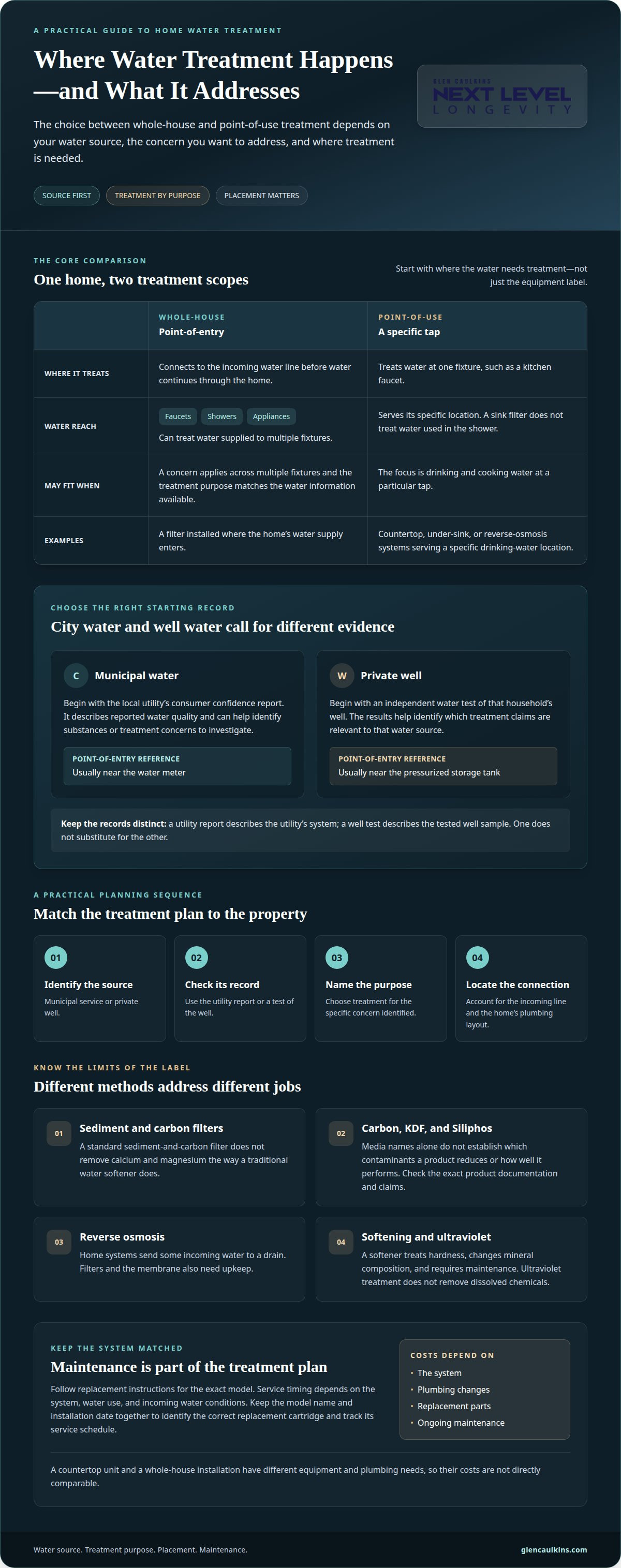
A whole-house filter treats water as it enters the home, so filtered water reaches multiple fixtures. Point-of-use water treatment systems work at a single tap, making them a more targeted option for drinking and cooking water. The right setup depends on the water source and the contaminants you want to reduce.
It’s easy to assume one filter can address every concern. In practice, water treatment systems use different methods: a standard sediment-and-carbon filter, for example, doesn’t remove calcium and magnesium the way a traditional water softener does.
This guide explains what whole-house and point-of-use systems do, how city and well water shape the choice, and why specific contaminant-reduction claims matter. It also covers NSF/ANSI standards and maintenance, helping you assess what product claims do and don’t establish.
Key Takeaways
- Distinguish whole-house filtration, which treats water entering the home, from point-of-use systems designed for a specific tap.
- Use the water source and the concern you want to address to guide the treatment approach; city and well water call for different starting points.
- Look for contaminant-specific reduction claims rather than assuming a filter addresses every substance.
- Learn what NSF/ANSI 42, 53, and 58 identify, and how those standard numbers can help you interpret product claims.
- Account for maintenance and water use when considering a system, including the wastewater produced by home reverse osmosis systems.
What does a whole house water filter do?
Home water treatment systems include whole-house units, countertop and under-sink filters, reverse osmosis systems, softeners, and ultraviolet treatment. A whole-house filter treats water entering the home, while a point-of-use filter treats water at a particular tap.
Home Water Treatment System Types
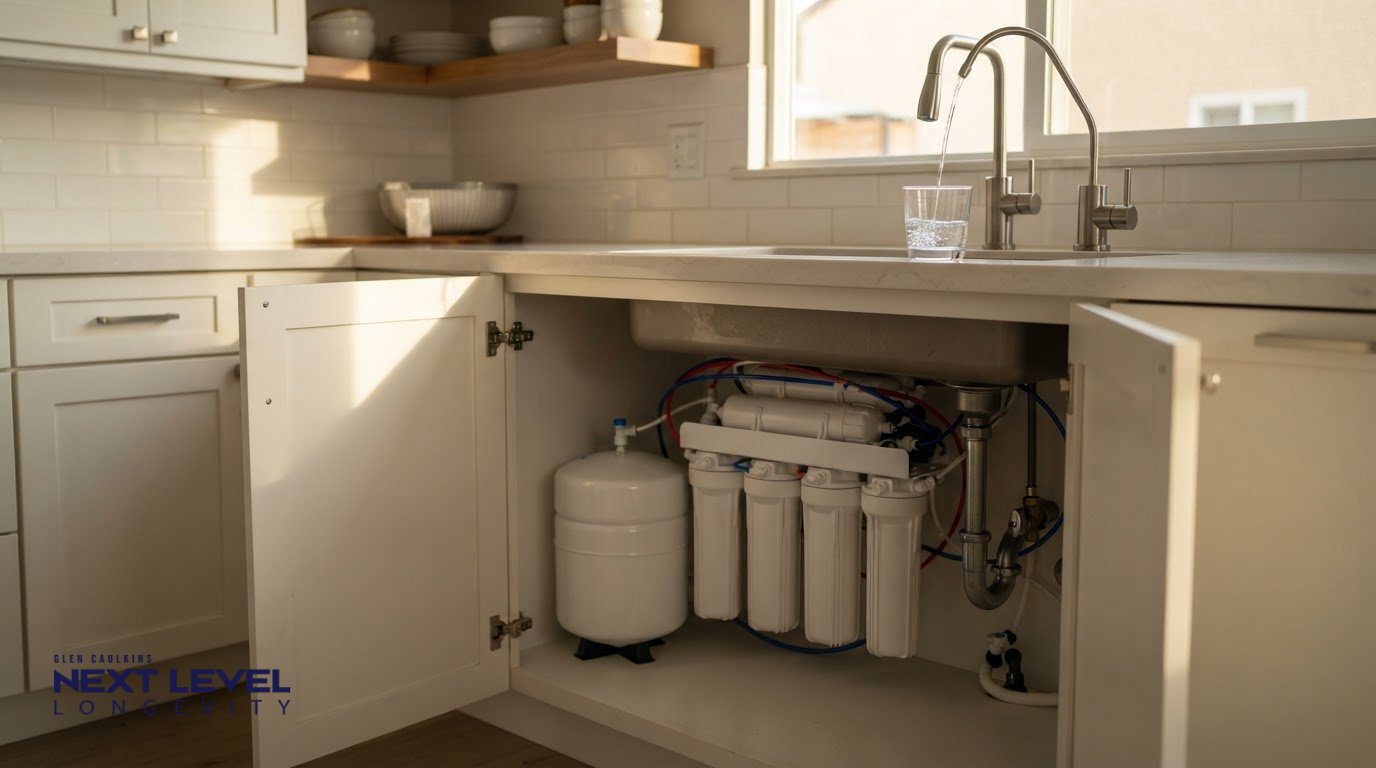
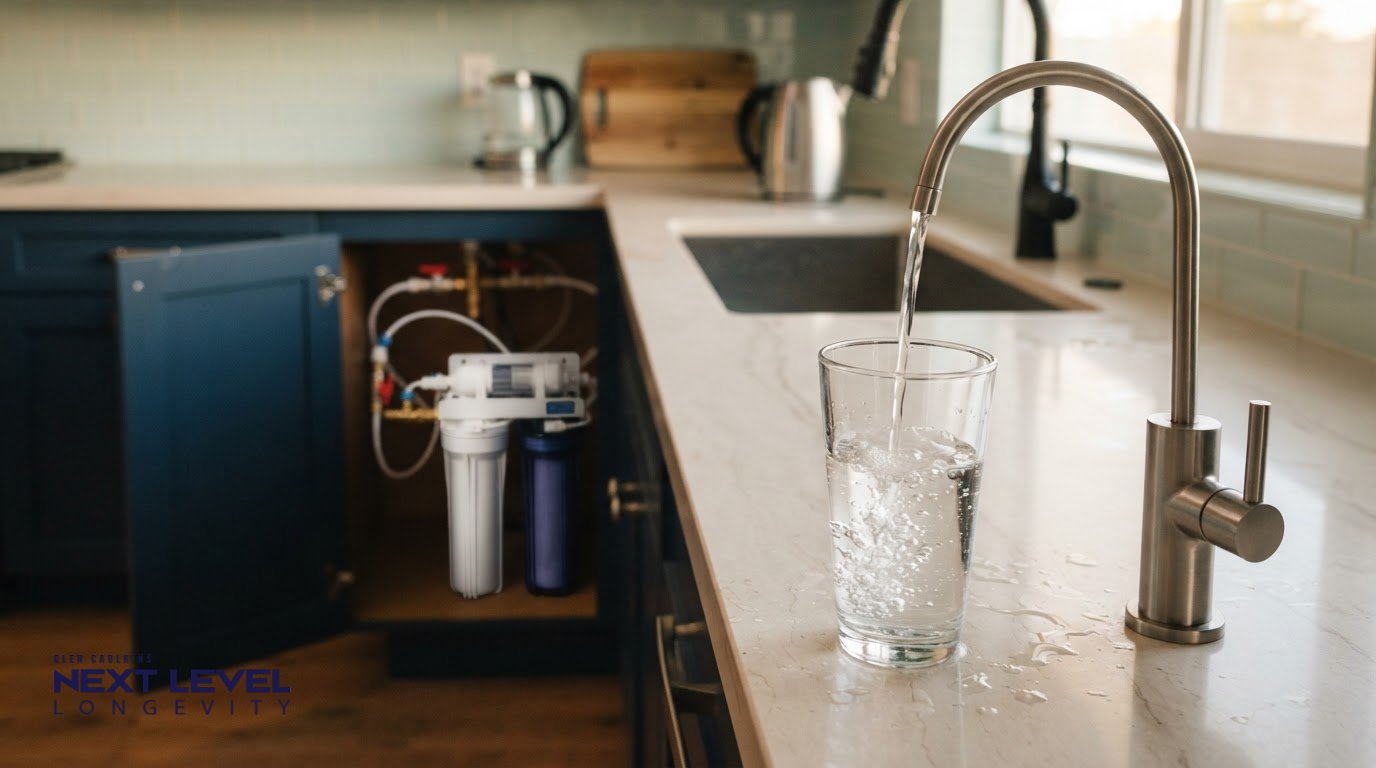
A countertop filter sits beside a sink and may connect to a faucet or use a separate dispenser. It serves one drinking-water location without treating water throughout the plumbing. An under-sink filter also targets a specific tap, while a whole-house unit treats water supplied to multiple fixtures.
Softening and ultraviolet treatment serve different purposes. A softener treats hardness, while ultraviolet equipment uses light as part of water treatment. Choose based on the concern and location, not just the equipment category. A filter beside the kitchen sink, for example, won’t treat water used in the shower.
Whole-House and Point-of-Use Comparisons
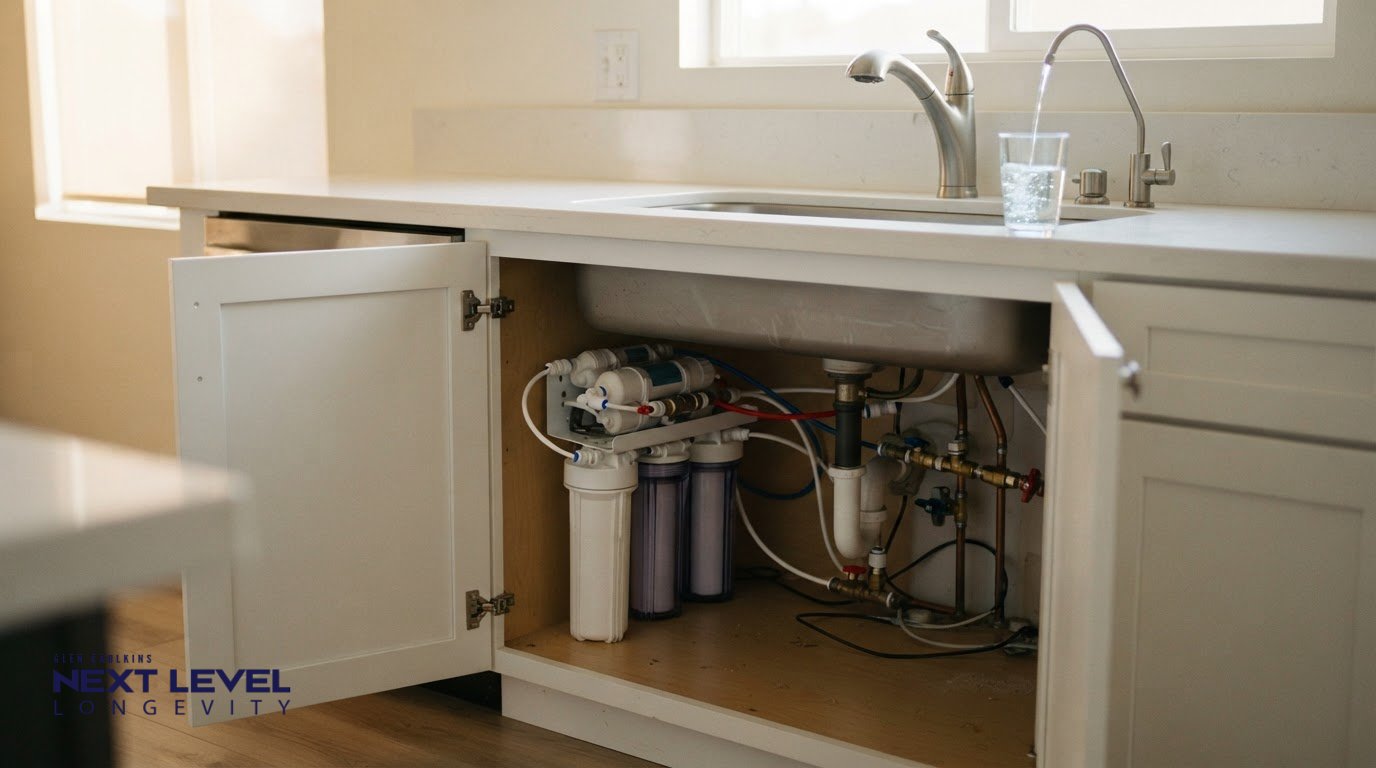
A whole-house filter connects to the home’s incoming water line and can treat water supplied to faucets, showers, and appliances. A point-of-use filter serves a specific fixture, such as a kitchen faucet. Reverse osmosis is typically installed beneath a sink and supplies treated water at one tap.
These options meet different placement needs. A household focused on drinking and cooking water might consider a point-of-use system; a concern across multiple fixtures points toward whole-house treatment. Standard sediment and carbon filters don’t soften water by removing calcium and magnesium.
Carbon, KDF, and Siliphos Media
Carbon, KDF, and Siliphos refer to different filter media. The names alone don’t establish which contaminants a product reduces or how well it performs. A carbon label, for instance, isn’t proof of a specific reduction claim.
Compare the exact product documentation, stated purpose, and contaminant claims. Don’t assume a filter containing one of these media performs like another product with a similar label.
Maintenance: Follow the filter maker’s replacement instructions for the exact model. The schedule depends on the system, water use, and incoming water conditions. Keep the model name and installation date together to identify the correct replacement cartridge and track its service schedule.
Purchase and installation costs: The total depends on the system, plumbing changes, replacement parts, and ongoing maintenance. A countertop unit and a whole-house installation have different equipment and plumbing needs, so their costs aren’t directly comparable.
Drawbacks to weigh: Reverse osmosis sends some incoming water to a drain, and its filters and membrane need upkeep. A softener changes the water’s mineral composition and requires maintenance. Ultraviolet treatment doesn’t remove dissolved chemicals. Weigh these trade-offs against the specific job each method is designed to perform.
Whole-house filtration for city and well water
The water source determines which information can guide a point-of-entry installation. Municipal service and private wells have different records and physical connection points.
City and Well Water Applications
For municipal water, begin with the local utility’s consumer confidence report. It describes reported water quality and can help identify substances or treatment concerns to investigate. Use the report as a starting point for the home’s supply, rather than assuming every city system has the same composition or treatment needs.
Private wells require a different starting record. An independent water test can show what is present in that household’s well water. The results help identify which treatment claims are relevant to that source. A municipal water report, for example, can’t substitute for a private well test, even when both homes are in the same neighborhood.
Keep source information tied to the property and supply. A utility report describes the utility’s system; a well test describes the tested well sample. That distinction helps prevent treatment choices based on another household’s results or broad assumptions about local water.
Point-of-Entry Filtration
A point-of-entry system is installed where water enters the residence. For municipal service, it is usually located near the water meter. For private well water, it is usually placed near the pressurized storage tank. These locations reflect where each supply enters the home’s plumbing.
Before choosing an installation point, identify the incoming line and the relevant connection. A municipal meter marks the service entry; a well’s pressurized storage tank is the corresponding reference for that supply. The actual plumbing layout determines where equipment can connect, and arrangements vary between properties.
Placement also determines the order in which water passes through treatment equipment and household plumbing. A point-of-entry unit sits before water continues into the residence. Its connection point is a practical part of the treatment plan, not just a matter of convenience.
How Whole-House Systems Work
Incoming water passes through point-of-entry equipment before continuing through the home’s plumbing. The treatment stage should address the concern identified in the utility report or well test. A filter’s general label alone doesn’t identify which substances it reduces.
A practical planning sequence is straightforward: identify the source, use its relevant report or test, select a treatment purpose, then locate the entry connection. A municipal home starts with its utility report and meter location; a well-water home starts with its own test and pressurized storage tank.
This source-first approach grounds the installation in the property’s supply. It also distinguishes information about city water from results for an individual well, records that answer different questions about household water quality.
Checking specific contaminant reduction claims
Filters differ in the contaminants they reduce, so a broad label doesn’t establish performance. Start with the specific substance named in the water report or well test.
Contaminants Targeted by Filtration
A product may name lead, PFAS, arsenic, chlorine, or sediment in its reduction claims. Treat each as a separate claim: evidence for reducing one contaminant doesn’t establish reduction of another. The exact filter model, test conditions, and stated performance all matter.
Look for documentation that identifies both the contaminant and the specific system. A statement that a filter is “certified” needs context: certification applies to defined claims and standards, not automatically to every substance a household may want reduced. “Improves water quality” is less informative than a claim naming a contaminant.
Brand language needs the same scrutiny. A label such as “HealthShield” doesn’t, by itself, identify which contaminants a filter reduces. Look for product documentation that names substances and explains the performance claim.
Choosing Contaminants to Reduce
There isn’t one best system for lead, PFAS, and arsenic as a group. Choose a filter whose documented reduction claims match the specific contaminant of concern. A claim for lead, for example, doesn’t establish performance for PFAS or arsenic.
For city water, use the utility’s consumer confidence report to identify reported concerns. For a private well, independent testing can show which substances are present in that household’s water. These results help narrow the decision to relevant claims instead of a broad list of substances a product might address.
Then match the treatment location to the need. If the concern is drinking water at one faucet, a point-of-use filter may fit; if treatment is needed throughout the home, consider a point-of-entry system. “Whole-house” and “under-sink” describe placement, not contaminant performance.
Before installation, compare the product’s exact model and reduction claims with the water concern. Review its stated limits, operating instructions, and replacement-filter requirements. A filter that isn’t maintained as directed may not continue to perform as intended.
If a report identifies arsenic, for example, a filter’s lead claim doesn’t answer that concern. Look for an arsenic-specific claim tied to that system, rather than relying on a general description or familiar media name. This grounds the choice in the contaminant, not just the device category.
What are NSF’s Drinking Water Standards?
NSF/ANSI numbers identify standards that may appear on drinking-water filter packaging. For reverse osmosis systems, the standard name is one part of the evidence, not a substitute for checking the model’s specific claims.
Reading NSF/ANSI Standard Numbers
NSF/ANSI 42, NSF/ANSI 53, and NSF/ANSI 58 are examples consumers may encounter on filter packaging. The number identifies a standard, but it doesn’t show by itself which contaminants a particular product reduces. Check the exact system model and the reduction claims associated with it.
Certification has a defined scope. A reference to one standard doesn’t establish that a filter is certified for every claim on its packaging or every contaminant a household wants reduced. Look for product-specific documentation connecting the named model, standard, and performance claim.
For example, a package may name NSF/ANSI 58. That gives you a standard identifier to investigate, but you still need to see which claims apply to that specific reverse osmosis system. A standard number and a contaminant claim answer different questions.
Reverse Osmosis and Drinking Water
Reverse osmosis pushes water through a semipermeable membrane. Home systems typically pair the membrane with one or more sediment and activated carbon filters. These stages serve different roles, so the complete system configuration matters when assessing drinking-water performance.
Daily production capacity describes how much treated water a system can produce under specified conditions. Read the product’s rating alongside its stated test conditions. Capacity alone doesn’t describe reduction claims or tell you how the system performs in every home. Filter condition and maintenance also matter over time.
Reverse osmosis produces drinking water at a dedicated point of use, often beneath a kitchen sink. It isn’t the same as a whole-house filter, which treats water entering the home. The intended location helps determine whether the system fits a drinking and cooking need or a broader household treatment goal.
Like any filtration system, reverse osmosis requires upkeep. Follow the manufacturer’s instructions for replacing prefilters and the membrane. A neglected filter can affect water flow and system operation, so include maintenance in the decision alongside the initial production rating.
Use a practical sequence: identify the contaminant concern, find the exact product model, read its reduction claims, then examine any NSF/ANSI reference and its scope. For instance, NSF/ANSI 58 on packaging is a useful identifier, but the model’s supporting information must connect it to the claims you care about. This keeps a standard number from becoming a stand-in for evidence.
Point-of-use water treatment systems
A point-of-use choice works best when it fits the water task and the place where that task happens. Consider more than the filter itself: think about cooking, drinking, filling bottles, and how the sink is used during a typical day.
Where Point-of-Use Filters Fit
Start with the main use. If filtered water is mainly for drinking, place the system where glasses and bottles are filled. If it also serves cooking, consider how easily you can fill a pot or kettle. A filter across the kitchen from the usual preparation area may be less convenient during everyday meal preparation.
Countertop and under-sink formats also make different demands on the room. A countertop unit occupies work-surface space; an under-sink unit uses cabinet space. In a small kitchen, either location may compete with other regular tasks, such as storing dishes or preparing food.
Matching the Filter to the Concern
Make the intended use specific before selecting a system. “For drinking water” describes a use, not a contaminant claim. If the goal is reducing a named substance, the product documentation should identify that substance and apply to the exact model. A general filtration description can’t answer that narrower question.
Then consider who will use the filtered outlet. A household that fills reusable bottles may value a convenient filling point. Someone who mainly prepares tea may prefer to reach the kettle without moving it across the kitchen. These everyday routines help determine practical placement.
Separate taste preferences from reduction needs. A filter selected to change taste or odor may not address another concern named in a water report. Keep the intended use and stated performance claim distinct as you compare options.
Plan for Daily Use
Before settling on a location, picture the sequence of daily tasks: filling a glass, rinsing produce, drawing water for cooking, and cleaning the surrounding area. A system should fit those routines without obstructing commonly used counter or cabinet space.
Consider upkeep in the same setting. Keep the filter and replacement parts accessible for routine care. A unit tucked behind stored items may be harder to maintain than one with a clear place in the kitchen plan.
For households weighing filtration options, Glen’s broader water research offers context on how water composition and treatment choices connect.
Glen B. Caulkins
Glen B. Caulkins connects practical water choices with wider questions about water chemistry, minerals, and environmental exposure. His research offers a framework for looking beyond a filter’s location: identify the water concern, understand the treatment method, then consider what the finished water contains.
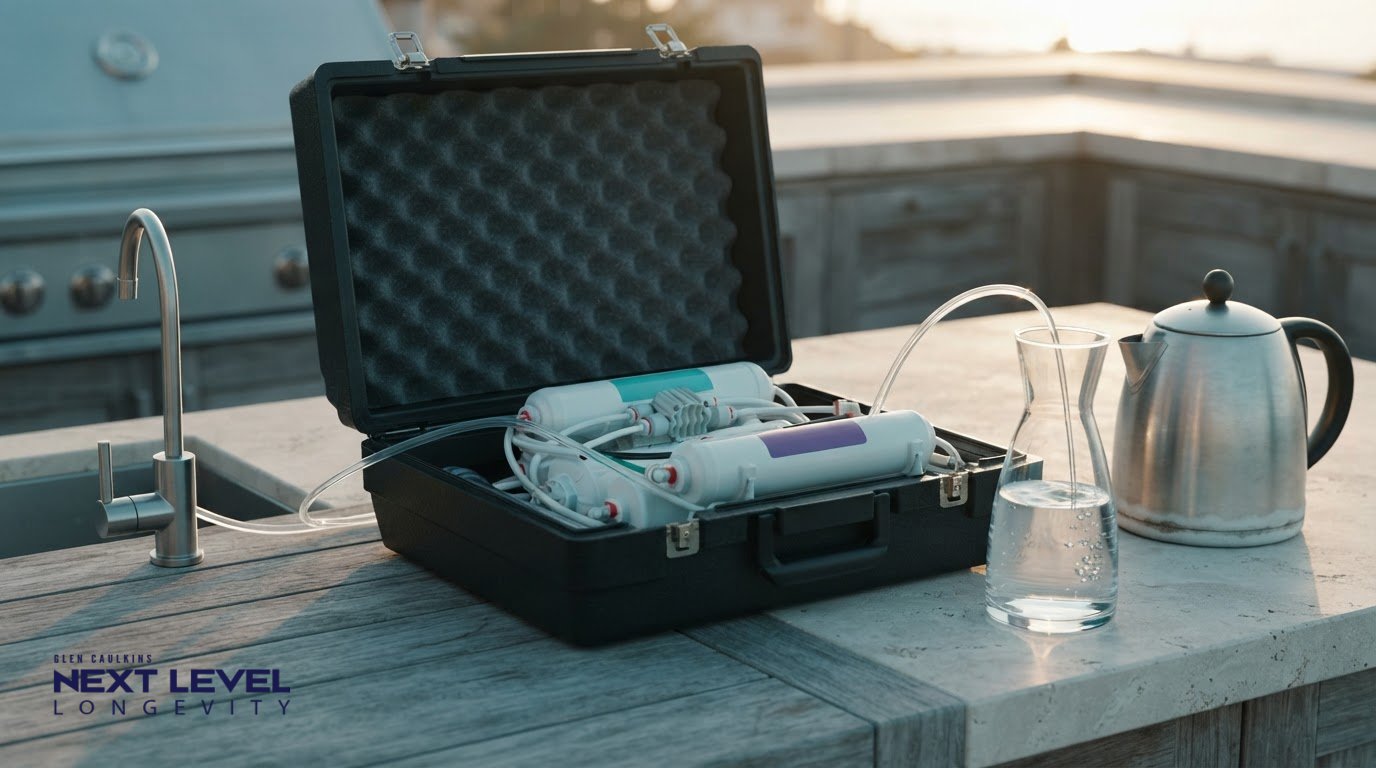
For drinking water at a kitchen sink or while traveling, PristineHydro offers Under-Counter and Travel-Portable Water Revival Systems. Its Aqualux filter with head and Ultimate Dual KDF inline filter address different uses. Glen founded PristineHydro, so he has a commercial interest in the products discussed here. The right fit still depends on the intended use and the system’s documented claims.
Explore Glen’s research and perspective to connect a household water decision with the larger questions behind it.
Choose a next step that fits your water
Turn your water question into clear priorities: which use matters most, what concern you want addressed, and what evidence would make a product claim relevant. Then choosing among water treatment systems becomes a decision grounded in your household’s needs, rather than a response to broad claims.
For drinking water, the Under-Counter Water Revival System and Travel-Portable Water Revival System suit different settings. The Aqualux filter with head addresses a shower-filtration need. Each serves a distinct purpose, so begin with the use you have in mind.
Glen B. Caulkins connects practical water choices with wider questions about water chemistry and the environment. If you’d like to discuss your next step, contact Glen B. Caulkins. Your water choices can begin with one focused question.
Frequently Asked Questions
How often do I need to change the filters?
Follow the replacement schedule for the exact filter model and record the installation date. Filter life depends on the system, water use, and incoming water conditions, so another model’s schedule may not apply. If a cartridge’s instructions include a capacity or replacement indicator, use that guidance alongside any change in flow. Keep the correct replacement model on hand before the current filter is due.
How can I test my tap water and find out which contaminants it contains?
For municipal water, read the consumer confidence report from your local water utility or authority. For private well water, use an independent laboratory test. A report or test provides a basis for choosing which substances to investigate, rather than relying on taste or clarity. Follow the laboratory’s sampling instructions carefully, since collection can affect what the results represent.
What are the annual maintenance costs and filter replacement schedules for water treatment systems?
Annual upkeep depends on the model, its replacement parts, and household use, so there isn’t one reliable cost for every system. Build a maintenance plan from the product’s filter schedule and replacement-part requirements. Record replacement dates and model numbers, then account for each required cartridge. This makes ongoing expenses easier to anticipate without assuming different systems share the same service interval.
What certifications should I look for in a water treatment system, such as NSF/ANSI standards?
Look for the specific NSF/ANSI standard and the exact product model named in its supporting documentation. NSF/ANSI 42, 53, and 58 are examples of standards that may appear on filter packaging. A number alone doesn’t identify every contaminant claim or establish that all claims on the package are covered. Match the documented certification scope to the particular performance claim that matters to you.
What water treatment systems are recommended for private well water?
No single system suits every well. Start with an independent water test, then match the treatment method to the substances identified and the household’s intended use. A point-of-entry system treats water entering the home; a drinking-water filter treats water at a chosen tap. This guide is not health advice and cannot determine your water composition. The same source-first approach applies in Laguna Woods, Newport Beach, Costa Mesa, Laguna Beach, Carlsbad, and Irvine.
What U.S. regulations apply to home drinking water treatment systems?
The standards discussed in this guide identify technical benchmarks, but they don’t provide a complete determination of federal, state, or local requirements for every product or installation. Requirements can depend on the device and its use. Don’t treat an NSF/ANSI number as a complete statement of legal compliance. For a specific installation, review the product documentation and the rules that apply in your jurisdiction.
Where can I find local water quality reports and certified water treatment professionals?
Request a consumer confidence report from your local water utility or authority. For private well water, consider independent testing. The provided information does not identify certified treatment professionals.
Frequently Asked Questions
How often do I need to change the filters?
How can I test my tap water and find out which contaminants it contains?
What are the annual maintenance costs and filter replacement schedules for water treatment systems?
What certifications should I look for in a water treatment system, such as NSF/ANSI standards?
What water treatment systems are recommended for private well water?
What U.S. regulations apply to home drinking water treatment systems?
Where can I find local water quality reports and certified water treatment professionals?
More articles