Electrolyte balance: comparing coconut water and sports drinks
October 27, 2026 · 16 min read

A drink labeled for hydration can’t tell you whether your body has an electrolyte imbalance. An imbalance means one or more electrolyte levels are too low or too high, which can disrupt electrolyte balance. It may be linked to fluid loss, too little fluid, or another change in how the body regulates water and minerals.
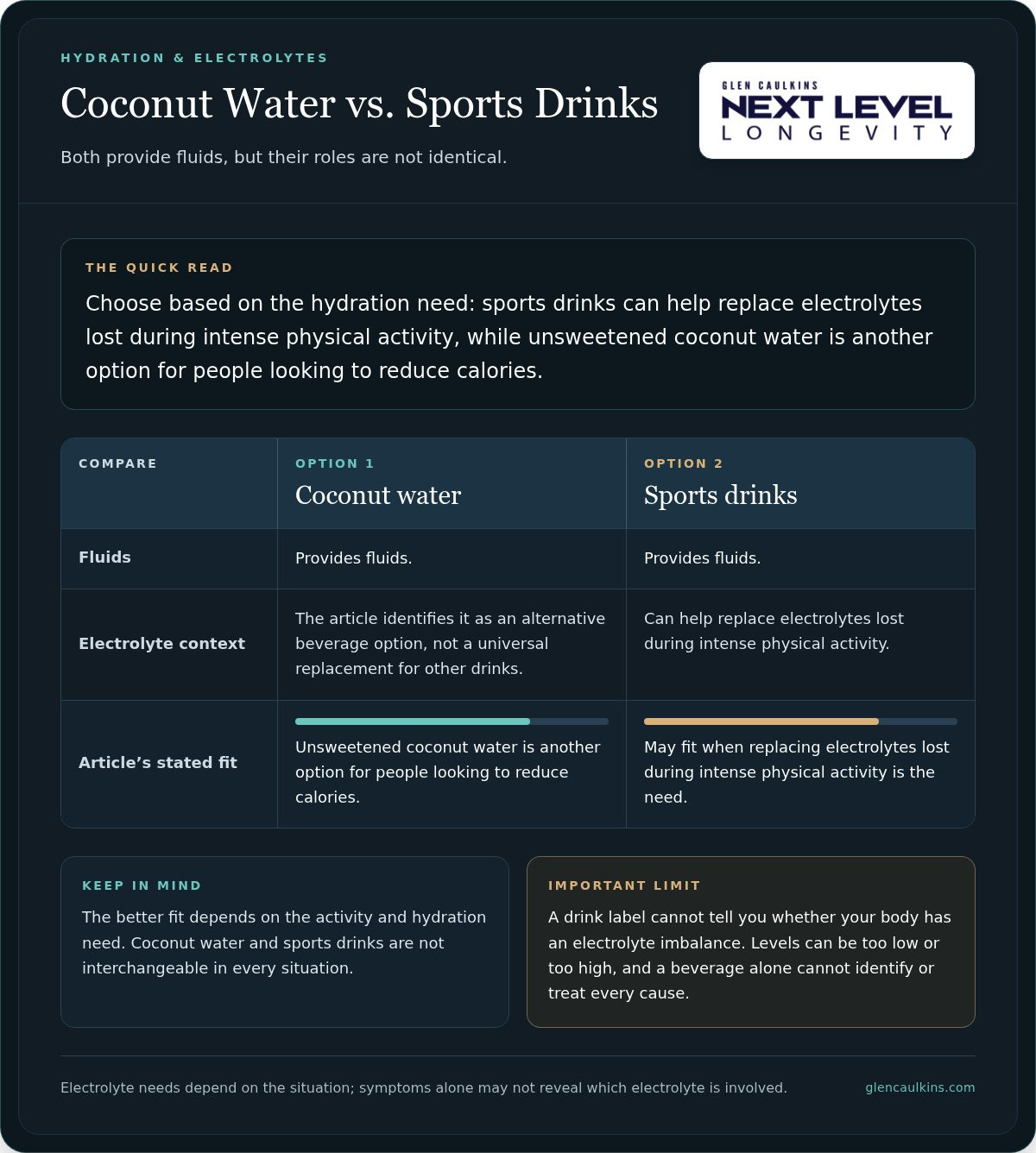
It makes sense to compare coconut water with sports drinks when thinking about hydration, especially after exercise. Both provide fluids, but they aren’t interchangeable in every situation. Sports drinks can help replace electrolytes lost during intense physical activity; unsweetened coconut water is another option for people looking to reduce calories.
This article explains what electrolytes do, which symptoms may signal an imbalance, and how hydration fits into the picture. It then compares coconut water and sports drinks, including when plain water may be enough and why a beverage alone can’t identify or treat every imbalance.
Key Takeaways
- An electrolyte imbalance means one or more mineral levels are too high or too low, and the causes can extend beyond sweating or dehydration.
- Electrolytes help regulate fluid movement and support nerve, muscle, and heart function.
- Symptoms can vary, so how you feel alone may not reveal which electrolyte is involved.
- Coconut water and sports drinks differ in what they provide; the better fit depends on the activity and hydration need.
- Explore how drinking-water composition fits into Glen B. Caulkins’s broader water-first perspective.
What is an electrolyte imbalance?
An electrolyte imbalance means one or more electrolyte levels are too low or too high. It can develop when fluid intake, fluid loss, illness, or medication changes the body’s usual balance.
Common Causes and Risk Factors
Common causes include severe vomiting or diarrhea, heavy sweating, inadequate fluid intake, and drinking too much water. Medicines, including diuretics and laxatives, can also contribute. Heart, liver, or kidney disease may affect how the body manages water and minerals. The cause matters because treatment depends on the electrolyte involved and why its level changed.
Dehydration and overhydration can both disturb electrolyte levels. Exercise may cause heavy sweating, while illness can bring vomiting or diarrhea. Some mild imbalances cause no noticeable changes, and gradual shifts can make the source harder to recognize. An imbalance is named for the electrolyte involved and whether its level is low or high. Sodium and potassium are examples, not a ranking of the most common types.
Sodium guidance is distinct from individual needs for potassium, magnesium, and calcium, which depend on personal factors such as age, sex, and health. The National Heart, Lung, and Blood Institute recommends limiting sodium to no more than 2,300 milligrams per day. For people with high blood pressure or other health conditions, the National Heart, Lung, and Blood Institute recommends limiting sodium to 1,500 milligrams per day.
Essential Electrolytes and Blood Levels
Electrolytes are minerals that carry an electrical charge in body fluids. The main electrolytes include sodium, potassium, chloride, bicarbonate, calcium, magnesium, and phosphate. Each has a distinct role, so a result for one mineral cannot describe the whole picture. Laboratory tests measure blood levels, and the appropriate reference range depends on the test and laboratory.
There is no single daily intake figure that applies to every adult for sodium, potassium, magnesium, and calcium. Sodium guidance includes the limits above; needs for the other minerals vary with individual factors. Blood testing can show whether measured levels fall outside the laboratory’s reference range. An electrolyte panel measures these levels, while a metabolic panel can assess other substances in the blood.
Diagnosis combines test results with symptoms and likely causes. A healthcare provider may order an electrolyte panel or metabolic panel, then consider kidney function when symptoms persist. Dehydration can concentrate body fluids, while excess water can dilute electrolytes. Exercise can increase losses through sweat; vomiting, diarrhea, and medicines can also shift levels. Testing helps distinguish these possible causes, which symptoms alone cannot do.
Electrolyte functions
Electrolytes help coordinate processes across cells, tissues, and body fluids. Their electrical charges support movement and signaling, while their concentrations help direct water between compartments. Sodium, potassium, chloride, bicarbonate, calcium, magnesium, and phosphate each contribute differently. Their roles overlap, but one mineral cannot simply replace another. Together, they help support fluid distribution, nerve and muscle activity, and other basic functions.
Sodium and potassium illustrate why location matters. Sodium helps control fluid levels and supports nerve and muscle function. Potassium supports the heart, nerves, and muscles, and helps move nutrients into cells. It also helps cells move waste out. These minerals work across cell boundaries, where differences in concentration help electrical signals travel and support communication between nerves and muscles.
Fluids shift in response to electrolyte concentrations. Water moves into a compartment when its electrolyte concentration is high and out when it is low. Body fluids occupy spaces inside cells, around cells, and within the blood. Sodium helps maintain fluid levels across these compartments. Chloride also helps control body fluid and supports healthy blood volume and blood pressure.
Bicarbonate helps manage acid-base conditions in the blood and carries carbon dioxide through the bloodstream. This connects electrolyte chemistry with respiration: cells produce carbon dioxide, which the blood transports. Potassium, sodium, chloride, and bicarbonate also contribute to nerve and muscle function, water balance, and acid-base balance. These functions depend on the body maintaining appropriate concentrations.
Calcium has structural and signaling roles. It helps build and maintain strong bones and teeth, and supports blood-vessel contraction and expansion. Calcium also helps regulate hormone and enzyme secretion involved in nervous-system signaling. Phosphate works with calcium to build bones and teeth. These roles show why an electrolyte is more than a dissolved substance: its location and interactions matter, too.
Magnesium supports proper muscle, nerve, and heart function. It also helps control blood pressure and blood glucose. These effects occur alongside magnesium’s role in many body processes; they do not replace the roles of sodium or potassium. A change in one mineral can therefore affect different functions than a change in another. The measured electrolyte, its concentration, and the surrounding fluid context all matter.
The kidneys help maintain electrolyte concentrations by filtering water and electrolytes from blood, returning some to circulation, and excreting excess in urine. This regulation links daily intake with fluid distribution and removal. It also shows why the same mineral can have different effects in the blood and cells. Glen’s research on water and minerals explores this wider chemistry and its relationship to biological function.
Hydration and electrolyte replenishment
Hydration affects electrolyte levels because water and minerals move together through the body. The kidneys filter both from blood, return some to circulation, and excrete excess through urine. This helps balance daily intake from food and beverages against fluid and mineral losses. Dehydration can reduce available fluid; drinking too much water can also disrupt concentrations.
Prevention starts with replacing fluids as activity and conditions change. Before exercise or other physical activity, drink water two hours beforehand. During activity, the guidance recommends four to six ounces after every 20 minutes. Heat, exertion, and heavy sweating increase fluid loss, so the amount needed depends on conditions and individual losses. Water alone is usually sufficient for workouts lasting less than 75 minutes.
Food and beverages both supply electrolytes. Potatoes, avocados, oranges, bananas, strawberries, turkey, and spinach are examples of foods that can increase electrolyte intake. A varied diet supplies minerals, while the kidneys regulate what remains in circulation. Drinking fluids supports this process, but extra water does not automatically correct a mineral shortage. The cause and the electrolyte involved matter.
A blood test can measure electrolyte levels and help identify an imbalance. Blood tests can provide information about electrolyte levels and other substances. An anion gap blood test checks whether electrolytes are out of balance or the blood is too acidic or not acidic enough. These tests provide different information, so results are interpreted alongside symptoms and possible causes.
For mild dehydration, electrolyte-enhanced beverages may help replace lost fluid and minerals. Sports drinks or supplements can also help athletes and people doing intense physical activity replace electrolytes lost through sweat. The right choice depends on the activity, fluid loss, and drink contents. Beverages are not a universal treatment for an imbalance caused by illness, medication, or kidney problems.
More advanced imbalances may require treatment beyond drinking fluids. Electrolyte replacement can be given by mouth or intravenously, depending on the imbalance and overall health. IV hydration delivers fluid and electrolytes directly into a vein. It may be used in more advanced cases, while severe illness or ongoing vomiting can require assessment of the underlying cause. Replenishment is guided by the specific electrolyte and the body’s ability to regulate it.
Symptoms of electrolyte imbalance
Symptoms vary with the type and severity of an electrolyte imbalance. Possible signs include confusion, irritability, nausea, vomiting, constipation, diarrhea, headache, fatigue, irregular heartbeat, muscle cramps, and tingling in the fingers or toes. One person may notice a single change; another may experience several together. These symptoms can also occur for other reasons, so they cannot identify the mineral involved by themselves.
Symptoms may offer clues, but they don’t provide a diagnosis. For example, muscle cramps can occur alongside fatigue, while nausea or vomiting may accompany a fluid disturbance. Potassium supports heart, nerve, and muscle function, but symptoms alone can’t show whether its level is low or high. Blood tests measure electrolyte levels and help distinguish a suspected imbalance from other causes.
Pay attention to changes that appear together or worsen. Confusion paired with vomiting, or an irregular heartbeat alongside weakness or fatigue, deserves more attention than an isolated, brief symptom. Note when symptoms began and whether they followed heavy sweating, diarrhea, vomiting, reduced food or fluid intake, or a medication change. These details can help explain the sequence without assuming a cause.
Some mild imbalances cause no noticeable symptoms. Others develop gradually, making the source less obvious. A headache or tingling may be easy to overlook; new confusion or a persistent irregular heartbeat is harder to dismiss. The absence of clear symptoms does not establish that electrolyte levels are normal, just as a familiar symptom does not prove an imbalance.
Severe electrolyte disturbances can lead to life-threatening complications, including seizures, coma, and sudden cardiac death. A seizure, loss of consciousness, or severe confusion calls for emergency help; an irregular heartbeat with sudden deterioration also warrants urgent attention. Don’t try to correct severe symptoms by guessing which drink or mineral is needed. The specific imbalance and its cause determine appropriate treatment.
For less severe or unclear symptoms, record the signs, their timing, and recent events such as intense exercise or illness. A blood test can measure electrolyte levels, and an electrolyte panel can help identify abnormal values. If symptoms persist, worsen, or include warning signs such as confusion or an irregular heartbeat, seek medical care rather than relying on a beverage to diagnose the problem.
Coconut water and sports drinks
Coconut water and sports drinks both feature in hydration conversations, but their names alone don’t show what they provide. Sports drinks can help athletes or people doing intense physical activity replace electrolytes lost through sweat. Unsweetened coconut water is another option for people seeking to reduce calories. Consider the activity, fluid loss, and drink contents rather than treating every beverage as interchangeable.
Sports drinks commonly contain sodium chloride and potassium chloride. These compounds provide sodium and potassium, minerals involved in fluid regulation and muscle and nerve function. A typical electrolyte drink contains 100 milligrams of sodium and 30 milligrams of potassium in eight ounces. That example gives a comparison point, not a guarantee about every drink. Check the specific label for its serving size and listed minerals.
Coconut water has a different role in this comparison. Unsweetened coconut water is an option for reducing calories, but that alone doesn’t establish its electrolyte content. Compare the package’s nutrition information with the needs of the activity. If you’re looking for a particular mineral, such as sodium or potassium, check its listed amount instead of relying on the words “coconut water” or “electrolyte” on the front.
Calcium is another essential electrolyte, but don’t assume it is present just because a drink has a general electrolyte label. The body uses calcium to maintain bones and teeth, support blood-vessel function, and enable nervous-system signaling. Compare the actual minerals listed on each label. A sports drink’s commonly used sodium and potassium salts don’t show whether it supplies calcium.
For routine exercise, water may be sufficient; the previous section explains how duration affects that choice. Intense activity and heavy sweating make electrolyte replacement more relevant. Sports drinks or electrolyte supplements can help replace sweat losses in those circumstances. Coconut water may suit someone prioritizing an unsweetened, lower-calorie option. Neither choice identifies the cause of symptoms or treats every electrolyte imbalance.
Use a simple comparison: consider whether exercise is intense and producing heavy sweat, read the serving size and mineral amounts, then decide whether the drink suits that context. Drinking extra electrolyte beverages without a clear need can add minerals without addressing the cause of a problem. If confusion or an irregular heartbeat occurs, comparing drinks is no substitute for medical assessment. Choose by context and label, not by a drink’s reputation.
Glen B. Caulkins: Under-Counter Water Revival System
The Under-Counter Water Revival System is a home drinking-water option for people considering water composition as part of daily hydration. People in Laguna Woods, Newport Beach, Costa Mesa, Laguna Beach, Carlsbad, and Irvine may be weighing household water choices, but location alone doesn’t determine what is in a particular supply. Glen B. Caulkins has a commercial interest in PristineHydro products, so consider that context when exploring his research and products.
The system may suit someone focused on drinking water at home, rather than choosing a beverage for exercise or addressing symptoms. It does not diagnose or treat an electrolyte imbalance. Glen’s research on water and minerals explores the broader questions behind his water-first perspective.
Make Your Next Hydration Choice Deliberate
A useful next step is to look more closely at the water you drink and the questions that shape your choices. A beverage decision and a household water decision serve different purposes. Keeping them distinct helps you consider your routine without expecting one choice to address every hydration need.
Glen B. Caulkins’s research connects water, minerals, and biological resilience. He also has a commercial interest in PristineHydro products, a relationship to keep in view as you explore his work. His perspective can offer a starting point for reflection, not a substitute for medical guidance.
If you’d like to explore Glen’s background and ideas, learn more about Glen B. Caulkins. Let curiosity guide your next step, and choose what fits your needs with care.
Frequently Asked Questions
What are electrolytes and why are they important?
Electrolytes are minerals that carry an electrical charge when dissolved in body fluids. Sodium, potassium, calcium, and magnesium are familiar examples; bicarbonate, chloride, and phosphate matter too. Their roles differ: sodium helps regulate fluid, while calcium supports bones and nerve signaling. Knowing which mineral is involved matters because a general “electrolyte” product may not supply the specific mineral a person needs.
What are the types of low electrolytes or electrolyte deficiencies?
Low electrolyte levels can involve sodium, potassium, calcium, magnesium, chloride, phosphate, or bicarbonate. The specific low level gives the condition its medical description, but the name alone doesn’t explain the cause. Heavy sweating, vomiting, diarrhea, reduced food or fluid intake, and some medicines can affect levels. A blood test helps identify which electrolyte is low, rather than relying on symptoms alone.
How Do You Replenish Electrolytes?
Replenishment depends on what was lost and why. For everyday intake, foods such as spinach, potatoes, bananas, and avocados supply different minerals, while fluids replace water. After intense sweating, an electrolyte beverage may help replace losses. Ongoing vomiting or diarrhea changes the situation: replacing fluid alone may not address the underlying cause. Avoid taking mineral supplements for symptoms without knowing which electrolyte is involved.
What questions should I ask my doctor?
Ask which electrolyte levels were measured, which results fell outside the laboratory’s reference range, and whether repeat testing is needed. Share any recent vomiting, diarrhea, heavy sweating, changes in eating or drinking, and medicines or supplements you take. You can also ask whether an electrolyte or metabolic panel could clarify the cause, and which changes or symptoms should prompt follow-up.
When should I call the doctor?
Contact a healthcare professional about persistent or worsening symptoms, especially after illness, heavy sweating, or a medication change. Confusion, an irregular heartbeat, severe weakness, or repeated vomiting needs prompt attention. Seizures or loss of consciousness are emergencies. Don’t try to treat these warning signs with coconut water, sports drinks, or supplements; urgent assessment can determine whether testing or specific treatment is needed.
What is electrolyte balance and why is it important?
Electrolyte balance means maintaining appropriate levels of charged minerals in the body’s fluids. Those levels help coordinate fluid movement, nerve signals, muscle activity, and acid-base regulation. A shift can affect several functions at once, and symptoms may not reveal which mineral changed. Knowing the specific cause and test result provides a clearer basis for decisions than choosing a drink based on a general hydration claim.
How are low or high sodium, potassium, calcium, and magnesium treated?
Treatment depends on the specific mineral, whether its level is low or high, the cause, and overall health. A clinician may use oral or intravenous replacement for a deficiency; excess requires a different approach. Severe excess may require dialysis. Don’t try to correct an abnormal result by taking supplements or sharply changing intake on your own, since the right response depends on the measured level and its cause.
Do electrolyte drinks or supplements help, and how do they compare with water?
Electrolyte drinks can help replace minerals lost during intense activity or sweating; water supports routine fluid intake. Compare labels for the minerals and amounts per serving, since products differ. Supplements aren’t a universal fix for symptoms or diagnosed imbalances. This guide isn’t health advice and can’t determine water composition; a utility report or laboratory test can assess what’s in drinking water.
Frequently Asked Questions
What are electrolytes and why are they important?
What are the types of low electrolytes or electrolyte deficiencies?
How Do You Replenish Electrolytes?
What questions should I ask my doctor?
When should I call the doctor?
What is electrolyte balance and why is it important?
How are low or high sodium, potassium, calcium, and magnesium treated?
Do electrolyte drinks or supplements help, and how do they compare with water?
More articles