Water Filtration Systems for Newport Beach Homes
November 14, 2026 · 14 min read

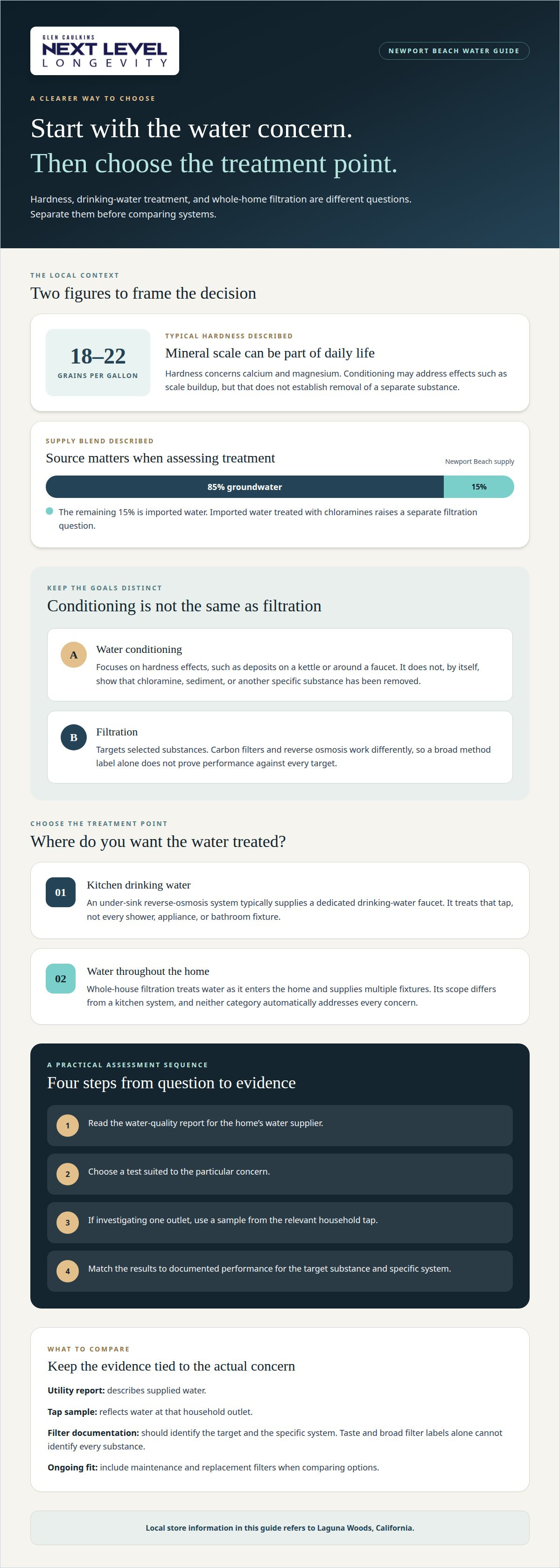
Typical Newport Beach water hardness is described as 18-22 grains per gallon, so mineral scale can be part of daily life at home. Choosing a water filtration system in Newport Beach starts with separating that issue from others: hardness concerns calcium and magnesium, while imported water treated with chloramines raises a different filtration question.
It makes sense to want better-tasting water or less scale without expecting one system to solve every concern. This guide explains how filtration differs from water conditioning, how to assess claims about chloramine, and what each approach is designed to address. The right choice depends on whether you want to treat drinking water, water throughout the home, or both.
Key Takeaways
- Separate drinking-water treatment from whole-home filtration: each serves a different purpose and point of use.
- Distinguish water conditioning, which addresses hardness effects, from filtration, which targets selected substances.
- Match a chloramine treatment method to the water source and the specific filtration evidence available.
- Consider reverse osmosis for drinking water without assuming properly treated RO water is inherently unsafe.
- Explore the Laguna Woods store and PristineHydro’s Water Revival Systems and filter offerings to find a relevant next step.
Reverse Osmosis Systems for Newport Beach Homes
For drinking water at the kitchen sink, reverse osmosis is one option. Choose a filtration system based on your intended use, not just the treatment method. Equipment and installation costs vary with the system, plumbing layout, and work involved.
Reverse osmosis and whole-house filtration serve different purposes. First decide where you want treatment, then consider which method fits that point of use.
Reverse Osmosis Options
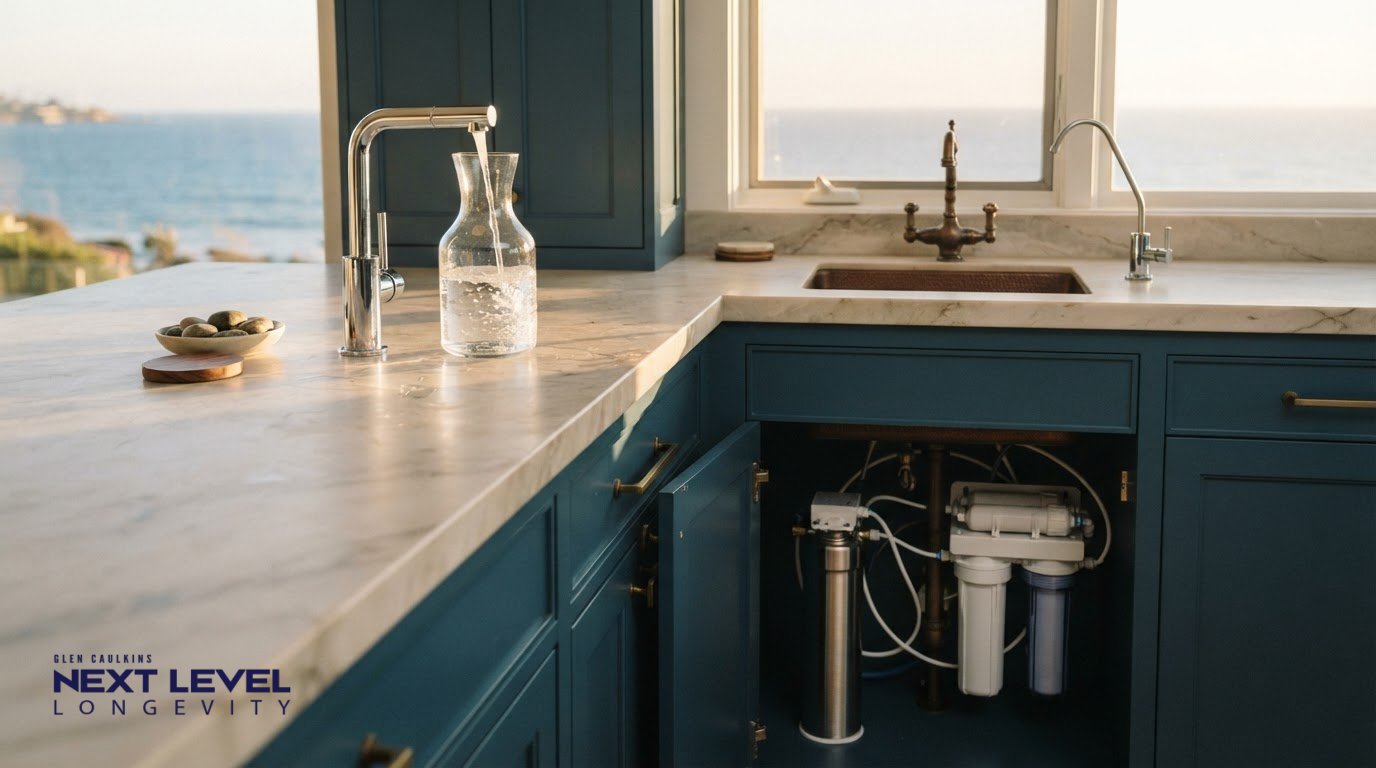
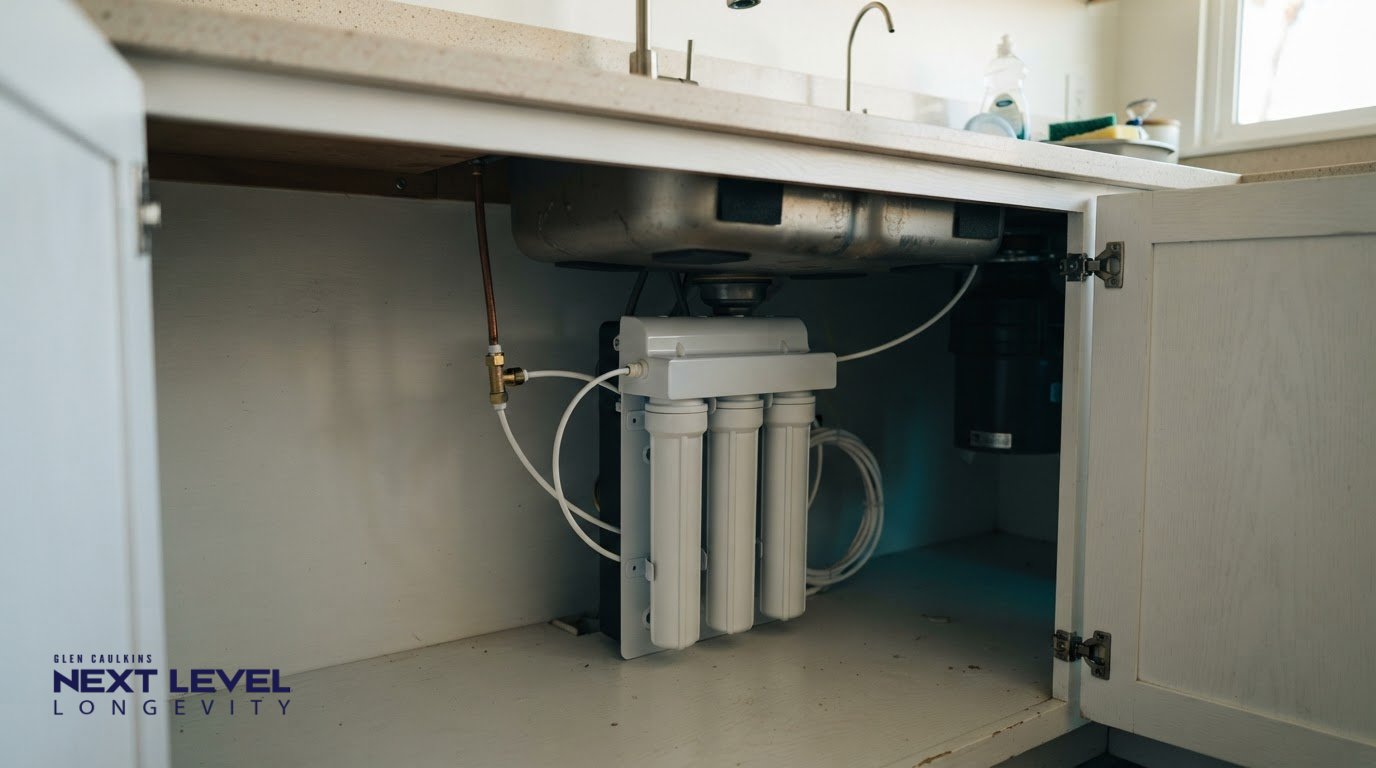
Reverse osmosis, or RO, pushes water through a semipermeable membrane that separates it from some dissolved substances. Those substances leave through a separate waste stream. In a home, an under-sink RO unit typically supplies a dedicated drinking-water faucet. It treats water at that tap, not at every shower, appliance, or bathroom fixture.
Newport Beach’s supply is about 85% groundwater and 15% imported water. That blend makes source and treatment relevant when considering drinking water. A system intended for a kitchen outlet serves a different purpose from whole-home treatment. Properly treated RO water isn’t inherently dangerous; suitability depends on system design, upkeep, and intended use.
Choosing a Home Filtration System
Start with the task: treating drinking water at the kitchen sink, addressing a named substance, or treating water throughout the home. Each goal points to different equipment. A kitchen RO unit serves a drinking-water outlet, while a whole-house filter treats water entering the home. Neither category automatically addresses every concern.
Next, match the method to the target. Membrane systems and carbon filters work differently, so their performance claims aren’t interchangeable. For concerns about dissolved substances, look for evidence relevant to those substances and the specific system. Factor maintenance and replacement filters into your decision.
Purchase and Installation Costs
The purchase cost of an RO system depends on the equipment and its treatment stages. Installation expenses, where applicable, depend on the plumbing layout and work required. For example, a setup with existing connections differs from one that needs changes beneath the sink.
Whole-house equipment has a different scope because it connects near the home’s incoming water line. Access, plumbing configuration, and treatment method affect the work involved. When comparing filtration options for Newport Beach homes, consider intended use, equipment, maintenance, and any installation expenses. This also helps distinguish the initial purchase from ongoing filter replacement.
Where to Find Water Filtration Information Near Newport Beach
Newport Beach homeowners can begin with their utility’s water-quality report, then use a household sample to investigate a specific tap. The local store associated with this article is in Laguna Woods, California, not Newport Beach.
To narrow your filter choice, identify the concern and where it occurs. A utility report describes supplied water; a tap sample reflects water at that household outlet. Compare the results with performance information for a treatment method designed for the target substance.
The Laguna Woods store information identifies a local location in Laguna Woods, not a Newport Beach storefront.
Testing Tap Water and Choosing a Filter
A practical sequence can clarify the decision:
- Read the water-quality report for the home’s water supplier.
- Choose a test suited to the particular concern.
- Use a sample from the relevant household tap if investigating that outlet.
- Match the results to a filter’s documented performance for that target.
A utility report and a tap sample offer different perspectives. The report describes supplied water, while a sample can reflect conditions at one faucet. Testing the kitchen tap, for example, focuses on water used for drinking and cooking. Taste and broad filter labels alone cannot identify every substance.
Licensing and Reviews
Licensing and reviews measure different things. A license relates to qualifications for a defined scope of work; customer reviews describe reported experiences. Reviews may discuss communication or installation, but they do not establish a filter’s performance against substances such as chloramine or lead.
For Newport Beach homeowners, keep the questions separate: what qualifications apply to the work, what customers report about their experience, and what evidence supports a system’s treatment claims. The local information here identifies a Laguna Woods store and does not identify a Newport Beach installer.
Water quality can differ between supply areas and household taps. A report for one area may not describe another address, and a tap sample reflects only its sampling point. Start with your home’s supplier report, then consider testing the relevant tap to focus your filtration decision.
Whole-Home Filtration and Water Conditioning
Whole-house filtration treats water as it enters the home and supplies multiple fixtures. Conditioning addresses a different issue, such as scale on a kettle or deposits around a faucet. Choose based on the concern and where it occurs.
If an issue appears at several taps, showers, and appliances, treatment at the home’s entry point may fit. If the concern is limited to drinking and cooking, a kitchen system treats a narrower part of the household supply.
Conditioning can reduce effects associated with hard water, including scale buildup. It does not, by itself, show that chloramine, sediment, or another specific substance has been removed. A water softener, for example, may address deposits on a kettle while leaving a separate drinking-water concern unresolved.
Carbon filtration, reverse osmosis, and ultraviolet disinfection use different processes. A system’s broad category does not prove performance against every possible target. If you’re concerned about a particular substance, look for evidence that identifies both the target and the specific treatment system.
Distinguish scale concerns from taste, odor, or a named substance, then decide whether treatment is needed at the kitchen sink, throughout the home, or in both places.
- For deposits on several fixtures, consider whether conditioning matches the scale concern.
- For a concern at one drinking-water outlet, consider point-of-use treatment.
- For a named substance, look for system evidence specific to that target.
- For whole-home equipment, account for every fixture the treatment is meant to serve.
For example, a household may want fewer scale deposits on bathroom fixtures and also want to address taste at the kitchen tap. These are separate aims that may call for different approaches. Don’t assume a whole-house unit serves the same function as a dedicated drinking-water system.
Conditioning is suited to managing hardness effects, while filtration targets substances according to its design and supporting evidence. Newport Beach households can choose between them by considering the concern, its location, and the system’s documented scope.
What Home Water Filtration Can: And Cannot Do
A home filter can change water at a chosen point of use. The result depends on the treatment method, target substance, and filter maintenance. A sediment filter, for example, addresses particles, while activated carbon is used for selected chemical and taste concerns. One filter does not automatically address every issue.
Newport Beach water can vary by source and treatment. Reported averages include 22 ppb of total trihalomethanes (TTHM) and 14 ppb of haloacetic acids (HAA5). These figures describe averages, not the water at every home tap. A utility report and a household sample answer different questions.
Filtration may improve qualities such as taste or odor when the method targets the cause. It may also reduce reliance on bottled water and help limit plastic waste. Start by identifying the concern, such as sediment in a glass or an unwanted taste, before choosing a treatment.
Performance depends on the specific system and its tested claims. A label naming a technology does not establish removal of every chemical, metal, or microorganism. Consider the target substance, treatment method, and test evidence together. Filter replacement matters too: a neglected cartridge may not perform as intended.
Filtration has clear limits. It does not prove that water is medically beneficial, prevent disease, or improve health outcomes, and it cannot make every source identical. Newport Beach groundwater and imported supplies can differ in composition, while household plumbing may also affect water at a particular faucet.
Use a simple decision path:
- Identify the water concern, such as taste, sediment, or a named substance.
- Use relevant water-quality information or a targeted household test.
- Choose a treatment method with evidence tied to that concern.
- Maintain the system according to its replacement schedule.
For example, a kitchen drinking-water filter treats water at its outlet, not necessarily shower water. A whole-house system treats water entering the home, but its purpose depends on the installed method. Neither setup should be assumed to remove every substance. The sound approach is to match the water concern with the system’s demonstrated scope.
Chloramine Removal: Match the Method to the Water
Newport Beach relies partly on imported water treated with chloramines. Chloramine is a disinfectant used in water treatment. Whether a filter addresses it depends on the method and evidence for that specific system. A claim about chlorine alone does not establish performance against chloramine.
Reported Newport Beach water figures include average TTHM levels of 22 ppb and average HAA5 levels of 14 ppb. These are different groups of disinfection byproducts, not measurements of chloramine itself. Groundwater figures also include average uranium of 4.58 pCi/L and average nitrate of 1.5 ppm. Water composition varies with source and treatment.
To choose a method, start with the water source and substance of concern. Then look for performance information that names both the target and the treatment system. For chloramine, documentation should address chloramine specifically, rather than relying on a general carbon-filter description or a claim about chlorine.
- Identify whether the home receives imported water, groundwater, or a blend.
- Separate chloramine from related measures such as TTHM and HAA5.
- Match the treatment method to the named target in its performance evidence.
- Include the required filter maintenance in the decision.
Hardness calls for a different distinction. A water softener addresses calcium and magnesium through ion exchange; that is conditioning, not chloramine treatment. Carbon filtration and reverse osmosis also work through different mechanisms. Don’t assume a system intended for one purpose handles another.
Water treatment can address hardness, chlorine, lead, PFAS, or other concerns only when the chosen method is designed and supported for that target. Hardness management is conditioning, while claims about chlorine, lead, or PFAS require evidence for the particular filter and substance. The Newport Beach figures discussed here do not establish that each substance is present at every tap.
For example, a household concerned about chloramine should compare chloramine-specific performance information, not infer results from changes in taste. If the concern is lead or PFAS, look for evidence naming that contaminant. Follow the system’s replacement schedule, since filter condition affects performance. The key is matching the local water, target substance, and treatment method.
Keep the two treatment goals distinct when comparing equipment. Water softeners remove calcium and magnesium to help prevent scale buildup. That purpose is not evidence that a softener addresses chloramine or another chemical concern. Likewise, check filtration claims against the specific concern rather than treating filtration as a substitute for hardness conditioning. This distinction makes it easier to compare systems by their intended purpose instead of treating all water treatment as one task.
Water filtration can target impurities such as bacteria, chemicals, heavy metals, and sediment, using methods that include reverse osmosis, carbon filtration, and ultraviolet disinfection. These categories help identify the type of treatment under discussion, but the method name alone does not identify a target or demonstrate results for a specific system. When reviewing options, ask whether the stated treatment matches the concern in your water and whether performance information supports that target. Keeping the purpose explicit helps distinguish scale prevention from impurity removal and avoids assuming that one method addresses every listed impurity.
Explore Glen B. Caulkins’s Water Systems
Glen B. Caulkins connects water research with practical options for drinking water and specific points of use. If you’re considering a water filtration system in Newport Beach, first define your priorities, then match the intended use to a system rather than assuming one filter meets every household need.
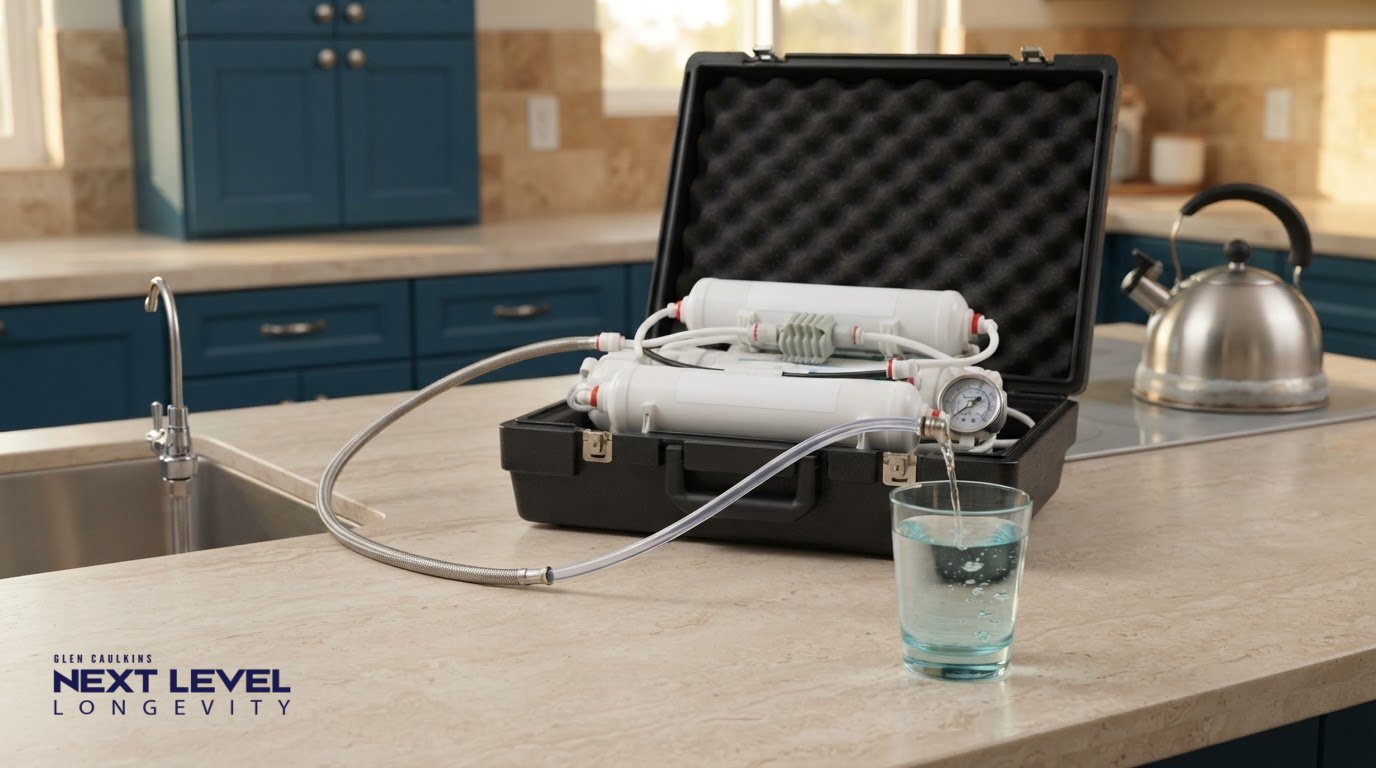
The Under-Counter Water Revival System is a residential option for the kitchen. Its under-counter format makes it relevant to people considering drinking water at home. The Travel-Portable Water Revival System is a separate option for travel. These formats serve different settings, so the decision begins with where you want to use a system.
PristineHydro also offers two shower filtration options: the Aqualux all-in-one filter with shower head and the Ultimate Dual KDF inline filter, which works with an existing shower head. These are different formats for shower use. A product name alone does not establish performance against chloramine, hardness, lead, PFAS, or another specific substance.
That distinction matters in Newport Beach, where water source and treatment can vary. A drinking-water system, a travel system, and a point-of-use filter are not interchangeable with whole-house filtration or water softening. Glen’s work brings practical products alongside a broader interest in water chemistry and minerals. The commercial connection is direct: Glen founded PristineHydro and offers these water products, so product guidance should be read with that relationship in view.
For a considered choice, define the use first: drinking water at home, water while traveling, or a specific filter format. Then compare the product’s documented purpose and maintenance requirements with that use. Replacement filters also matter over time; select replacements for the matching system rather than treating cartridges as universal. A system suited to one task may not address a different water concern, and none of these offerings should be treated as a medical service.
Explore these options when you want to connect your water questions with a practical product category, without confusing point-of-use treatment with whole-home conditioning. To compare PristineHydro’s offerings for your intended use, explore the product information.
Frequently Asked Questions
How Hard Is Newport Beach Water?
Typical Newport Beach water hardness is described as 18-22 grains per gallon. Local groundwater averages about 14 grains per gallon, while imported water averages 236 ppm of hardness. These figures describe different source categories and measures, so they don’t establish the hardness at every home. If scale is the concern, distinguish hardness management from drinking-water filtration before choosing equipment.
Does Newport Beach tap water need filtration or meet EPA and California standards?
Whether supplied water meets applicable standards is a question for the current utility water-quality report; filtration is a separate household choice based on your goals. A report or targeted lab test can help identify water composition. This product guide is not health advice and cannot determine what’s in your water. A household choosing treatment for taste, for example, has a different goal from one investigating a specific substance.
How do reverse osmosis, carbon, and whole-house filtration systems compare for Newport Beach water?
Reverse osmosis is generally considered for a drinking-water outlet, while carbon filters target substances identified for the specific filter. Whole-house systems treat water entering the home, so their suitability depends on the household’s broader needs. For a kitchen taste concern, compare point-of-use options; for several fixtures, assess whole-house scope. In every case, match documented performance to the specific concern, not just the technology name.
Frequently Asked Questions
How Hard Is Newport Beach Water?
Does Newport Beach tap water need filtration or meet EPA and California standards?
How do reverse osmosis, carbon, and whole-house filtration systems compare for Newport Beach water?
More articles