Heavy metals in Carlsbad drinking water: safety and sources
November 26, 2026 · 16 min read
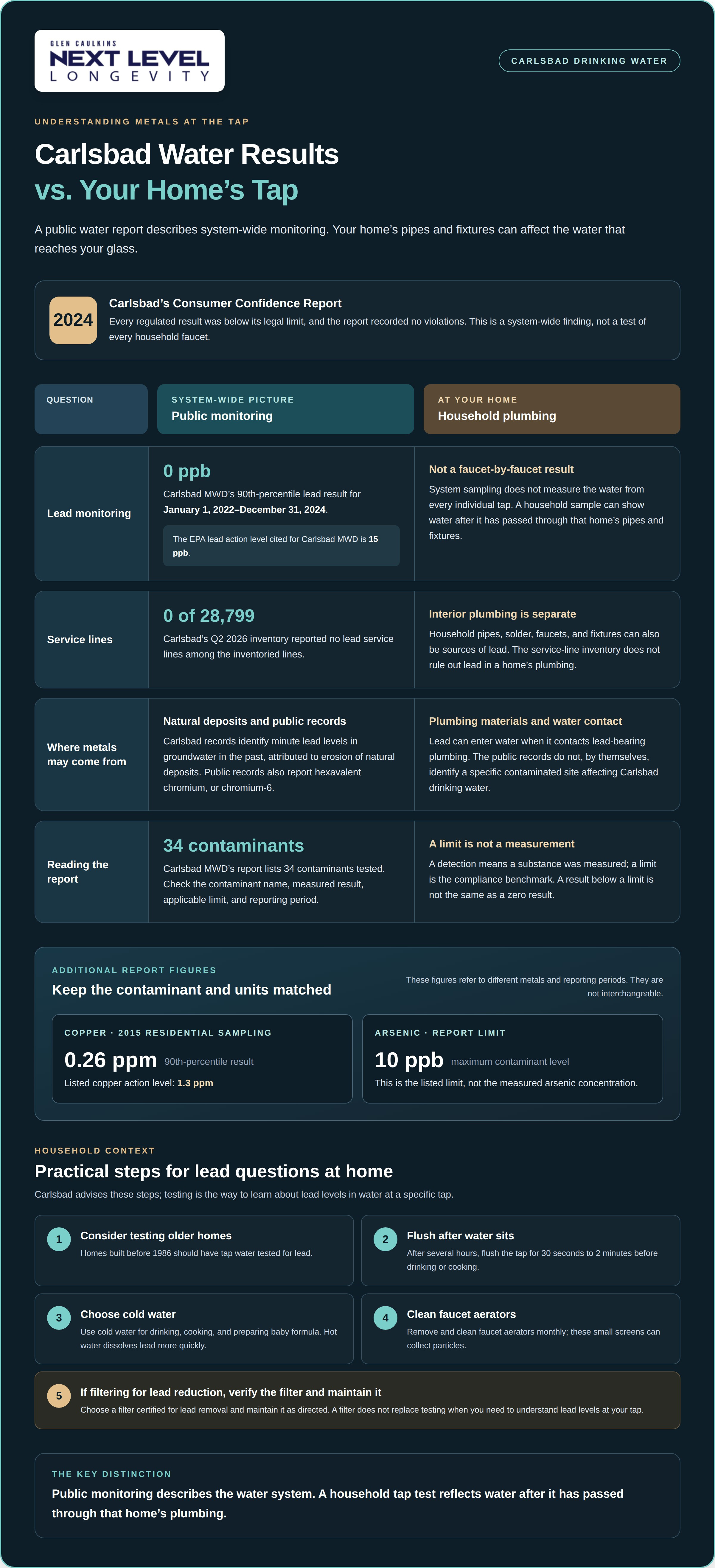
A reassuring citywide report and a specific home’s tap water answer different questions. Carlsbad’s 2024 water-quality report showed every regulated result below its legal limit and reported no violations. For the monitoring period January 1, 2022-December 31, 2024, the district’s 90th-percentile lead result was 0 ppb. Still, whether heavy metals in Carlsbad drinking water are a concern at your tap can depend on the plumbing between the water system and your glass.
It’s reasonable to look beyond a general safety statement. Metals can enter water from natural deposits or from pipes and fixtures, so a system-wide result does not describe every home’s plumbing. The age and condition of that plumbing matter, too.
This guide explains how to read Carlsbad’s water-quality reports, find lead service-line information, and understand where metals such as lead and chromium can come from. It also clarifies what public monitoring can tell you, when a home-specific test may add useful detail, and how filtration fits into the picture.
Key Takeaways
- Use Carlsbad’s water-quality report to understand system-wide monitoring, then consider how your home’s plumbing may affect water at the tap.
- Look up service-line information, but remember that household pipes and fixtures can also be potential sources of lead.
- Learn how metals can enter drinking water through natural deposits, industrial activity, or contact with plumbing materials.
- For a clearer picture of water in an older home, consider whether a tap-water lead test would be useful.
- If choosing filtration, match the system to your intended use and follow its maintenance requirements.
Are there lead service lines in Carlsbad?
Carlsbad’s inventory reports no lead service lines among 28,799 inventoried lines in its Q2 2026 snapshot. That systemwide finding does not rule out lead in older household plumbing or fixtures.
Lead in Household Plumbing
Household plumbing is the network of pipes, solder, faucets, and fixtures that carries water inside a home. Lead can enter drinking water when water contacts lead-bearing plumbing materials, so the service-line inventory cannot answer every home’s question. Lead was used infrequently for Carlsbad service lines until the 1940s, but older interior plumbing remains relevant. Homes built before 1986 should have tap water tested for lead.
Water that sits in pipes for several hours can collect lead from plumbing. Carlsbad advises flushing a tap for 30 seconds to 2 minutes before drinking or cooking. Use cold water for drinking, cooking, and preparing baby formula, because hot water dissolves lead more quickly. Remove and clean faucet aerators monthly; these small screens can collect particles. Carlsbad’s moderately hard water contains calcium carbonate, which coats plumbing surfaces, but hardness alone does not establish a tap’s lead level.
For lead reduction, choose a filter certified for lead removal and maintain it as directed. Costs vary by filter type and replacement needs. A filter does not replace testing when you need to understand lead levels at your tap.
Carlsbad records identify minute lead levels in groundwater in the past, attributed to erosion of natural deposits. They also report hexavalent chromium, or chromium-6, in public water-system records. These records identify metals, not a specific contaminated site affecting Carlsbad drinking water.
Lead Monitoring and Action Levels
Lead monitoring measures tap-water samples to assess lead exposure across a water system. The U.S. Environmental Protection Agency lead action level cited for Carlsbad MWD is 15 ppb. Carlsbad MWD’s 90th-percentile lead result was 0 ppb for January 1, 2022-December 31, 2024. A systemwide sampling result does not measure the water from every individual faucet.
Carlsbad’s water-quality reports provide context for both lead and copper monitoring. The 2015 residential sampling reported a 90th-percentile copper result of 0.26 ppm, below the listed copper action level of 1.3 ppm. The report’s sampling figures describe monitored taps, while household plumbing can differ by material, age, and condition. For a home-specific answer, tap testing addresses water after it has passed through that home’s pipes and fixtures.
Lead in groundwater and metals detected in public records do not, by themselves, establish a known contaminated site. The reported source of lead in Carlsbad groundwater was erosion of natural deposits; household lead can also come from plumbing. Consider the source, sampling location, and date when interpreting a result, especially in an older home.
Where can I find the Carlsbad water quality report?
Carlsbad’s Consumer Confidence Report summarizes tested water quality and regulated contaminant results. The 2024 report showed every regulated result below its legal limit, with no violations.
Finding and Reading the Consumer Confidence Report
A Consumer Confidence Report is a public summary of a water system’s drinking-water quality. Find Carlsbad Municipal Water District’s report by looking for its Consumer Confidence Report or water-quality report in the district’s public water information. The report is the starting point for understanding system results, not a test of every home’s tap.
Carlsbad MWD’s report lists 34 contaminants tested. Scan the report’s tables for each contaminant name, its measured result, the applicable limit, and the reporting period. Those details answer different questions: a detection shows a substance was measured, while the limit provides the compliance benchmark. A result below a limit is not the same as a zero result.
For instance, the report lists an arsenic maximum contaminant level of 10 ppb. That figure is the limit, not the measured arsenic concentration. The 2016 report also lists a chromium VI reporting level of 0.04 ppb, below the state detection limit for reporting of 1 ppb. Reporting limits affect how a sample result should be read; they do not replace the applicable drinking-water standard.
Standards and Compliance
Drinking-water standards are limits used to assess regulated contaminants in public water. Carlsbad’s 2024 report found every regulated result below its legal limit and reported no violations. Public records also show no violations of any kind for CARLSBAD MWD since 2016.
For comparing metal levels with standards, match each result to the same contaminant’s limit and reporting period. The arsenic limit listed for Carlsbad is 10 ppb, and the chromium VI limit listed in the 2016 report is also 10 ppb. These are California standards reported for Carlsbad, not measurements of what every household receives. A sample’s collection date and reporting level matter when interpreting low or non-detect results.
Federal compliance describes results for the public water system. It does not certify every household fixture or identify conditions inside a particular home. A household sample offers a separate view when plumbing materials may affect water after it leaves the distribution system.
Water Sources and Agency
Carlsbad MWD is the local water agency serving its customers. Its primary source is purchased surface water, reported as 83% Colorado River water and 17% Northern California water and desalination. These source figures describe the reported supply mix; they are not contaminant measurements.
To use the report, note the water system, reporting year, contaminant, sample result, and standard. Then distinguish system results from home plumbing and treatment. Carbon filtration, for example, is a household treatment choice, not evidence that public-report results have changed. A report helps frame the question; a tap sample addresses water at the sampling location.
Water quality records and Consumer Confidence Reports
Carlsbad’s records combine system monitoring with yearly consumer summaries. Read each result alongside its reporting period and measurement type.
Consumer Confidence Reports
A Consumer Confidence Report summarizes a water system’s tested water quality. Carlsbad MWD’s records let readers examine individual results rather than rely on a general safety statement.
For context, the report lists total dissolved solids at 670 ppm and hardness at 8.6 grains per gallon, equivalent to 147.0 mg/L. These measurements describe mineral content, not heavy-metal concentrations. Total chlorine residual is listed at 3.6 ppm, while the 2024 report gives a running annual average of 1.97 ppm. The different figures reflect different reporting measures, so preserve the label and time period shown beside each result.
Carlsbad MWD also has 23 PFAS compounds on record. In 464 UCMR5 results collected from January 19 to October 16, 2023, no PFAS were detected at or above reporting limits. A reporting limit describes the level used to report a result; it is not interchangeable with a health standard or proof of zero presence.
Annual Water Quality Reporting
Annual water-quality reporting presents a water system’s monitoring results and compliance information. Compare reports by year, contaminant, sample result, and the standard or reporting limit shown in each record.
Fluoride records require attention to the named agency. Olivenhain Municipal Water District reported fluoride at 0.62 mg/L. That value belongs to Olivenhain MWD’s record, so it should not be presented as a Carlsbad MWD measurement. A household should use the record for its actual water system when reviewing fluoride or other constituents.
Reports have limits. A system result describes monitored water within the reporting program, while household plumbing can affect water at the tap. Treat the report as water-quality information, not personal medical guidance, especially if you are weighing a specific health concern.
Use a simple reading sequence: identify the agency and report year, find the contaminant, then compare the measured result with its listed standard. Keep the units intact. For example, ppm and mg/L are different labels and should not be silently substituted. A carbon filter’s performance is separate from the public report, which does not establish how a particular household filter performs. Glen B. Caulkins’s water chemistry research explores how source water, treatment, and finished-water composition fit together.
Is Carlsbad Tap Water Safe to Drink?
Carlsbad MWD reported no health-based violations since 2020, and its latest sample on file was from October 2025. Municipal records describe the system, while home or well testing can answer different questions.
Water Testing Dates and Reporting
Water testing dates identify when a sample was collected and help place its result in context. Carlsbad MWD’s latest sample on file was from October 2025, while its 2024 report summarizes results for that reporting year.
Compare the sample date, contaminant, reporting limit, and applicable standard together. For example, a result from an earlier reporting period is not a measurement of today’s water. Carlsbad MWD had zero health-based violations since 2020, but that system record does not show the result at every household faucet.
Municipal Water Testing
Municipal water testing monitors water in a public system before and during distribution to residents. Carlsbad tests city water for copper and lead every three years, a practice reported since 1991.
The results help assess the municipal supply and guide treatment. They cannot represent every home’s plumbing, because water can contact household pipes and fixtures after leaving the public system. Carlsbad MWD’s reported 2024 total chlorine range was 0.21 to 3.0 ppm. That is a treatment-related measurement, not a metal result.
Carlsbad’s UCMR 5 records include lithium, with a highest reported result of 52.5 µg/L on October 16, 2023. The cited EPA health reference level for lithium is 10 µg/L, a screening value rather than an enforceable limit. Keep that distinction clear when interpreting detection data.
Home Tap-Water Testing
Home tap-water testing measures water collected from a specific household faucet. Carlsbad homes built before 1986 should have tap water tested for lead, since older plumbing materials may affect water after it enters the home.
The City of Carlsbad offers limited lead testing at no cost to customers. A tap sample reflects the sampled location and collection conditions. If water has been sitting in plumbing, the result may differ from a flushed sample, so follow the test’s collection instructions.
Health Risks from Metals
Health risks related to metals depend on the metal, amount, and pattern of exposure. Lead, arsenic, chromium, and other metals are not interchangeable, and a detection alone does not describe an individual’s risk.
For private wells, Carlsbad recommends annual testing for coliform bacteria and nitrates, plus testing for heavy metals, radon, and PFAS every 3 years. Those schedules address well water, not municipal supply. Use the appropriate test for the water source and interpret its result against the matching standard or screening value.
Sources of metals in drinking water
A metal source is a material or process that introduces a metal into water. To understand sources of heavy metals in Carlsbad drinking water, trace the path from source water through treatment, distribution pipes, and household fixtures. Each point can shape what a sample detects, so location and collection conditions matter.
Geology is one possible starting point. Carlsbad has detected minute lead levels in groundwater in the past, attributed to erosion of natural deposits. Chromium-6 can also be associated with natural deposits and industrial activity. Water moving through rock can pick up naturally occurring elements; industrial activity can create a separate route into the environment. Those pathways call for different questions about where a sample was collected and what it represents.
Plumbing creates another point of contact. Lead or copper can enter water that contacts susceptible pipes, solder, or fixtures. Water leaving a treatment plant and water standing at a household faucet are not necessarily equivalent samples. Water chemistry and contact time influence interactions with plumbing materials. A tap sample can help distinguish a household plumbing concern from a broader source-water question.
Industrial and land-use activity can affect water before it reaches a municipal system, while treatment changes the water supplied to residents. Carlsbad’s reported source mix includes Colorado River water, Northern California water, and desalination. That mix provides context for the water’s journey, but does not identify the origin of a specific metal detection. A result needs its sample location, collection period, and contaminant name to be meaningful.
Other water-quality terms describe different substances or conditions. Chlorine is used in water treatment; it is not a metal. Nitrate is a separate chemical, not a heavy metal. A violation means a regulated requirement was not met, while a detection alone does not establish a violation. In a report, detection and compliance are separate entries to interpret.
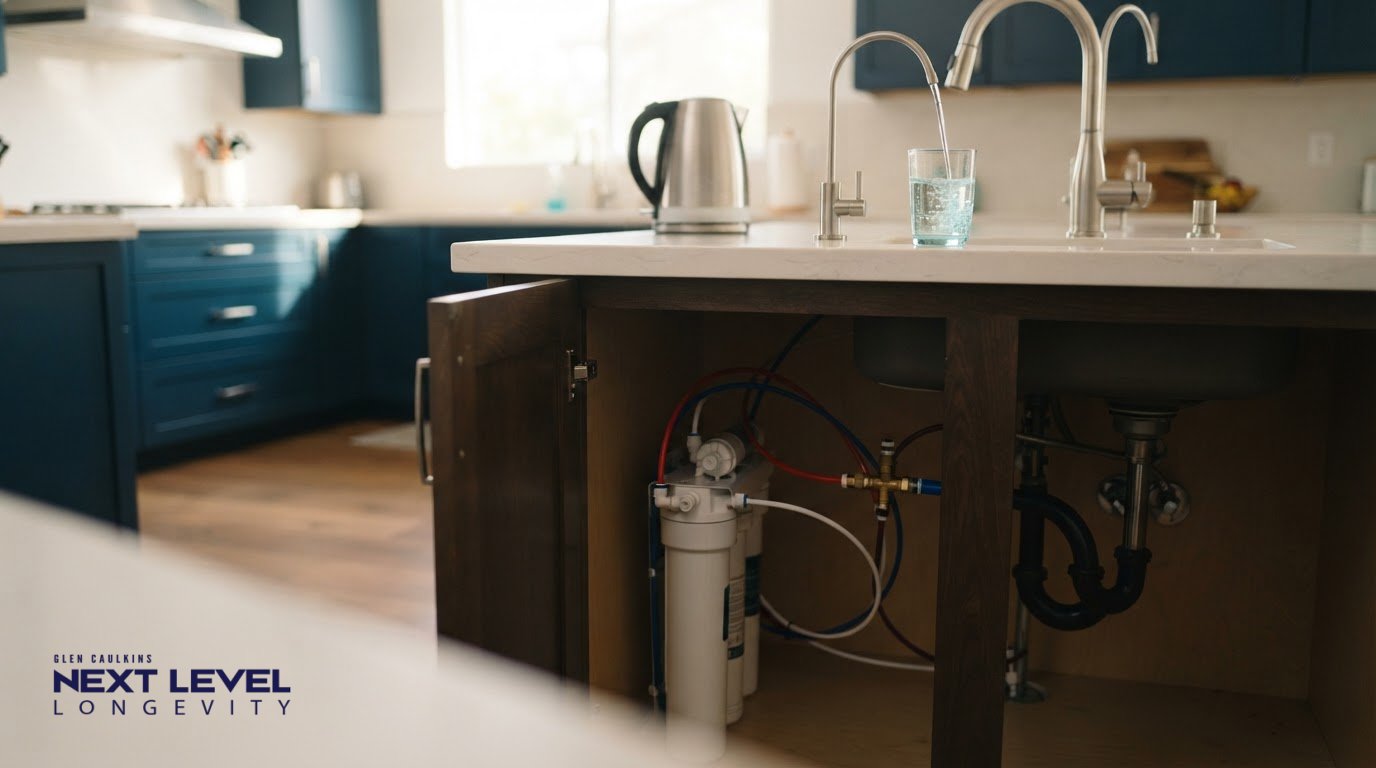
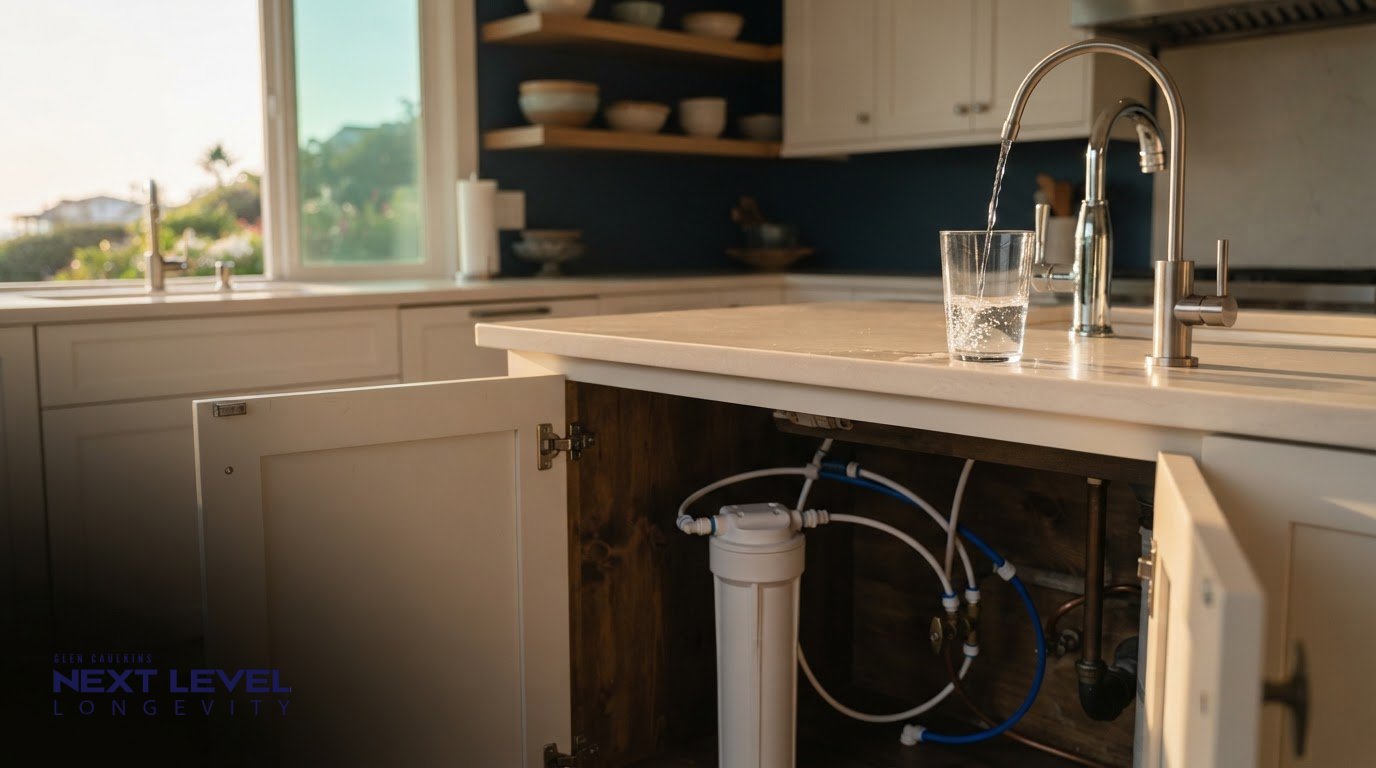
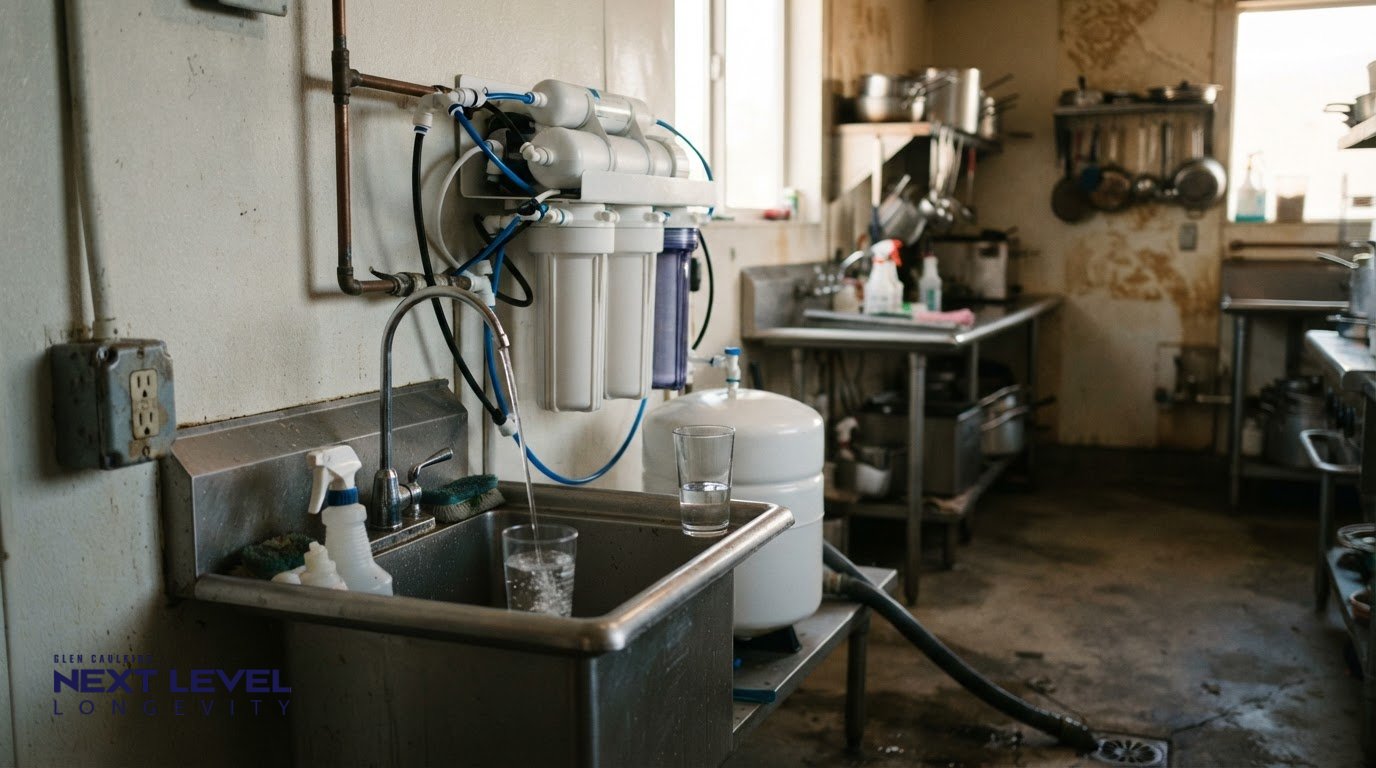
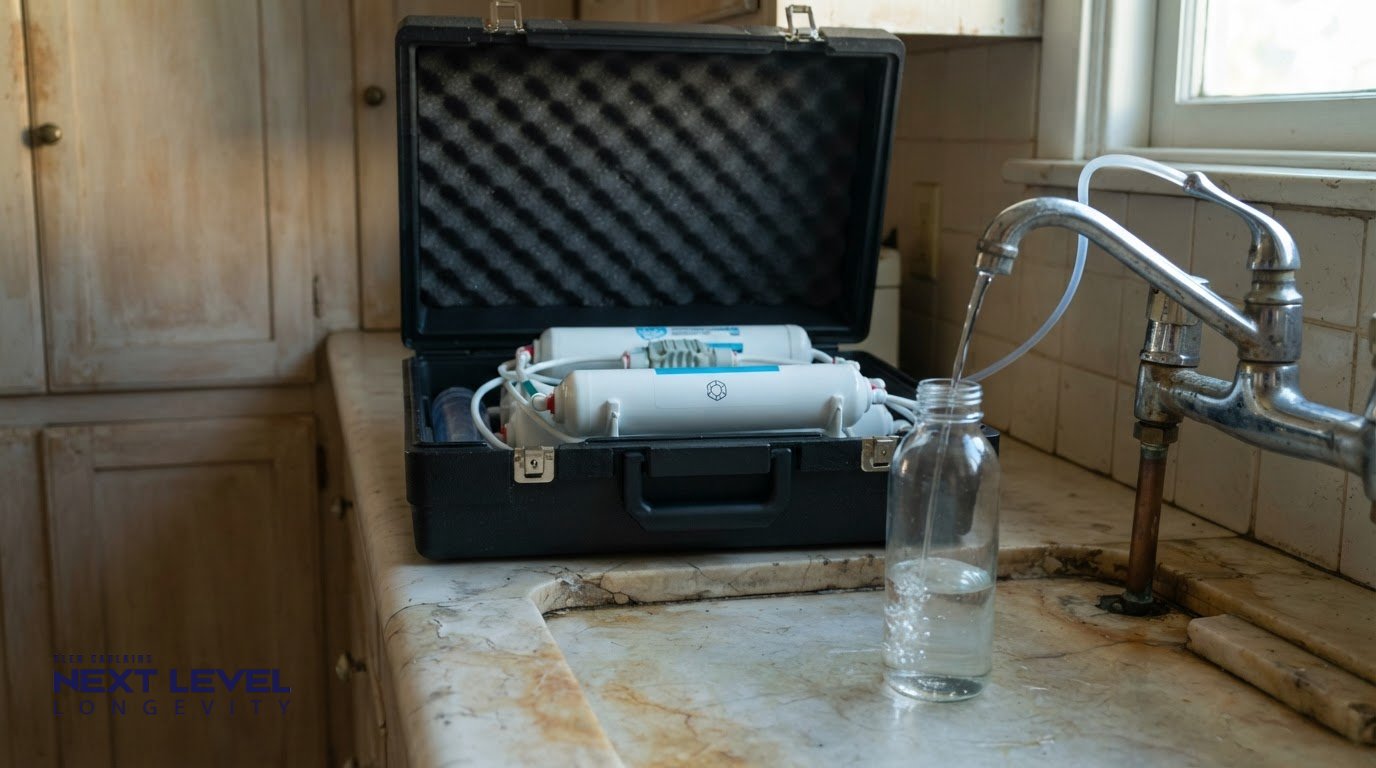
When examining heavy metals in Carlsbad drinking water, trace the possible source before choosing a response. A household-faucet result reflects a different sampling location than a source-water result. If plumbing is the concern, a tap sample can help narrow the question. If you choose a filter, match its certified reduction claim to the specific metal and maintain it according to its instructions.
Glen B. Caulkins explores connections between water chemistry and environmental exposure in his research on water and the environment. This broader view helps put a measured result in context alongside the source, treatment, and materials water encounters before reaching a glass.
Glen B. Caulkins
Through PristineHydro, Glen B. Caulkins connects questions about water chemistry, minerals, and environmental exposure with practical filtration choices. He has a commercial interest in PristineHydro water-treatment products, including the Under-Counter Water Revival System, Travel-Portable Water Revival System, and Aqualux filter with head.
If Carlsbad’s public reports leave you considering household filtration, Glen’s research offers broader context for thinking about water quality and environmental exposure. Choose a product based on its intended use and the specific performance information available for that system.
To learn more about Glen and his work, visit the About Glen page.
Make Your Next Water Decision Deliberate
Turn what you’ve learned into a focused question: what would help you feel more certain about your next step? A clear question can guide further reading or a conversation about heavy metals in Carlsbad drinking water without turning uncertainty into alarm.
Water is part of a wider environmental story. Glen B. Caulkins brings together questions about water chemistry, minerals, and environmental exposure, while PristineHydro offers filtration options for different settings. His commercial interest in water-treatment products is relevant context as you consider those options.
To learn more about Glen’s work, explore his website.
Frequently Asked Questions
Is there lead in Carlsbad’s water supply and distribution system?
Carlsbad’s inventory reports no lead service lines among those it inventoried. That finding concerns recorded service-line materials, not every pipe, solder joint, or faucet inside a home. When reviewing a property, distinguish the public connection from indoor plumbing. A metal result at a tap and a service-line inventory describe different parts of the water’s path.
What can I do to reduce or eliminate lead from my drinking water?
To reduce lead at a drinking-water tap, use a filter specifically certified for lead reduction and follow its replacement schedule. Check that the certification applies to lead, not just another contaminant or a general filtration claim. Keep the product instructions with your replacement records. If you need to know whether the approach is working at a particular faucet, a follow-up sample can assess water there.
What does Carlsbad do to protect my household from lead?
Carlsbad monitors water chemistry and keeps records on lead and copper in its municipal system. These measures help manage the public supply, but cannot reveal the material of every indoor pipe or fixture. For a household concern, identify whether it involves the utility connection, interior plumbing, or a specific faucet. That distinction makes the relevant record or sample easier to interpret.
How can Carlsbad residents test household tap water for heavy metals?
Choose a laboratory test that names the metals you want measured, rather than relying on a broad “water quality” panel label. Before collecting a sample, confirm whether the test calls for water from a particular faucet or collection condition. Keep the laboratory’s instructions with the sample. The report should identify the analytes, units, and reporting limits so you can understand what the test measured.
What steps should Carlsbad residents take if their tap water tests high for metals?
Start by reading the report for the exact metal, units, sampling location, and laboratory reporting limit. If the result is unclear, ask the laboratory to explain those terms and whether the test method fits your concern. Keep the report with notes about the faucet sampled. Do not treat one result as a diagnosis or proof of the source; water testing provides composition information, not medical advice.
How can residents get a free or low-cost drinking water test in Carlsbad?
The City of Carlsbad offers limited no-cost lead testing, while testing for other metals may require a separate laboratory analysis. Before arranging a test, ask which analytes it measures, what collection method it uses, and whether the report includes units and reporting limits. These details help distinguish a focused lead test from broader testing. No-cost lead testing does not establish the presence or absence of other metals.
Frequently Asked Questions
Is there lead in Carlsbad’s water supply and distribution system?
What can I do to reduce or eliminate lead from my drinking water?
What does Carlsbad do to protect my household from lead?
How can Carlsbad residents test household tap water for heavy metals?
What steps should Carlsbad residents take if their tap water tests high for metals?
How can residents get a free or low-cost drinking water test in Carlsbad?
More articles