Laguna Beach Water Contaminants: Tap Levels and Federal Limits
November 25, 2026 · 16 min read
A citywide water report can offer useful context, but it can’t tell you exactly what’s in your kitchen tap. For Laguna Beach water contaminants, EPA compliance monitoring from 2012-2019 reported average total trihalomethanes of 41.4 parts per billion, with a highest sample of 79.3 ppb, compared with a federal limit of 80 ppb. Average haloacetic acids (HAA5) measured 17.8 ppb, with a highest sample of 37.4 ppb, compared with a limit of 60 ppb.
Those figures help explain the public water supply, but they do not necessarily describe the water at your tap. A system-wide report is not a household faucet test. Conditions at home can also vary with the plumbing and the building.
This article explains how reported averages and highest samples compare with federal limits, where to find Laguna Beach’s water-quality report, and how household testing can provide a more direct picture of tap water. It also outlines how to think about filtration and what evidence to consider before choosing a next step.
Key Takeaways
- See how reported trihalomethane and haloacetic acid levels compare with their federal limits.
- Understand why system-wide monitoring results may differ from the water at an individual household tap.
- Learn how household plumbing and targeted tap testing help clarify what’s present at home.
- Find out what local water-quality reports and lead-monitoring results can tell you, and where their limits are.
- Explore how filtration options relate to drinking-water and household water concerns without treating every system as the same.
EPA compliance monitoring results for trihalomethanes and haloacetic acids
EPA compliance monitoring identified two regulated disinfection byproducts in the Laguna Beach water system: total trihalomethanes and haloacetic acids. These Laguna Beach water contaminants were measured in parts per billion.
Trihalomethane Monitoring Results
Total trihalomethanes are a group of compounds that can form when disinfectants react with natural material in water. From 2012-2019, Laguna Beach monitoring reported an average total trihalomethane level of 41.4 ppb. The highest reported sample was 79.3 ppb. The federal limit listed for total trihalomethanes is 80 ppb.
The average and highest sample describe different views of the monitoring record. An average summarizes results across the reporting period, while the highest sample identifies its peak measurement. The 79.3 ppb result was below the stated 80 ppb limit, but close to it. That comparison describes the recorded sample, not every household’s tap water. System monitoring covers sampled locations and times; plumbing and conditions inside a home are separate considerations.
Haloacetic Acid Monitoring Results
Haloacetic acids, or HAA5, are a measured group of disinfection byproducts that can form during water treatment. For 2012-2019, Laguna Beach monitoring reported an average HAA5 level of 17.8 ppb. Its highest sample was 37.4 ppb. The federal limit listed for HAA5 is 60 ppb.
Comparing the highest sample with the limit gives another view of the record. The reported 37.4 ppb peak was below the 60 ppb federal limit. The 17.8 ppb average reflects the broader set of monitoring results rather than the peak alone. Neither value establishes the concentration at a particular home. A household measurement requires sampling from that tap, because system monitoring and household plumbing answer different questions.
Detected Drinking Water Contaminants
A detected contaminant is a substance identified through monitoring, not automatically a violation. From 2012-2019, compliance monitoring detected two regulated contaminants in the Laguna Beach water system: total trihalomethanes and HAA5. Both are disinfection byproducts, but the monitoring record tracks them as separate measurements.
For readers assessing Laguna Beach water contaminants, the figures provide several distinct points of comparison. Total trihalomethanes averaged 41.4 ppb and reached a highest sample of 79.3 ppb, against an 80 ppb federal limit. HAA5 averaged 17.8 ppb and reached 37.4 ppb, against a 60 ppb limit. These system results describe recorded monitoring, not every substance potentially present in every home. Household-specific testing provides a direct measurement from an individual tap.
How to confirm contaminant levels in household tap water
A household tap test measures selected substances in a sample collected from a particular faucet. It answers a narrower question than system-wide monitoring: what was present at that tap when the sample was collected?
Choose a test based on the substance you want to investigate. Laguna Beach compliance results cover disinfection byproducts, while household concerns may also relate to plumbing. A general water test and a lead test do not necessarily measure the same substances. Match the test to the concern, such as lead at a drinking-water faucet or disinfection byproducts in supplied water.
The main potential sources vary by water stage: treatment can produce disinfection byproducts, while building plumbing can introduce metals. According to the Laguna Beach County Water District, homes built before the 1930s primarily had lead pipes, and lead was used in plumbing solder until it was banned in 1991.
Beach water and household tap water are separate, so drinking-water monitoring cannot identify which coastal areas are affected. Stormwater can carry pollutants and bacteria into coastal water, but tap-monitoring results do not establish beach conditions or pinpoint affected areas.
Choose and collect the right sample
A sampling protocol explains how to collect a sample for laboratory testing. Follow the lab’s instructions for the specific substance, faucet, container, and timing. Methods vary: a lead sample, for instance, may need different handling from a sample for disinfection byproducts. Keep the container clean, avoid touching its interior, and return it as directed.
Record the faucet location and collection date. To understand water used for drinking, sample that faucet rather than a bathroom fixture. If your concern involves plumbing, note whether the sample represents water after contact with household pipes. These details help you interpret the result without treating one measurement as a description of every tap.
Read results in context
A laboratory result reports measured concentrations for the substances included in the test. Compare each result with the relevant limit or benchmark using the same units. A result for one compound tells you nothing about substances the test did not measure. A lead result, for example, cannot stand in for a trihalomethane result.
The Laguna Beach County Water District tests for lead at the tap in 30 residences every three years. That monitoring provides information about sampled homes, while a test from your own faucet addresses that household directly. The district’s 2014 sampling detected no lead in the homes tested, but those results describe that sampling round, not every residence.
Filters should be selected for the specific contaminant and supported by performance information for that substance. No single filter type should be assumed to remove every contaminant.
Water-quality reports and regulatory oversight
A Water Quality Report summarizes monitoring results for a public water system. Laguna Beach’s annual report provides a system-level record, while federal and California standards and guidance provide regulatory context.
The Laguna Beach County Water District says its annual Water Quality Report is due to customers by July 1. California water utilities have provided annual reports since 1990. The 1996 reauthorization of the Safe Drinking Water Act changed the report due date to July 1. The report gives readers a recurring way to review monitored water quality, rather than a measurement from one household faucet.
In the report, find the contaminant name, reported result, unit, and applicable limit or benchmark, and consider them together. A value in parts per billion cannot be compared directly with one in parts per trillion without conversion. Note whether a figure is an average, a highest sample, or another reporting measure, since each describes a different aspect of monitoring.
The district has no health-based EPA maximum contaminant level violations on record since 2010. That record is relevant to regulatory compliance, but it does not mean every possible contaminant was measured at every home. The report covers system monitoring. A household sample addresses water at a particular tap and can reflect building plumbing as well as supplied water.
California’s Division of Drinking Water set PFOA’s notification level at 5.1 parts per trillion and PFOS’s at 6.5 parts per trillion in August 2019. The state response level for PFOA and PFOS is 70 parts per trillion. These figures are distinct from the federal lifetime-exposure health advisory: in 2016, the U.S. EPA issued an advisory for combined PFOA and PFOS at 70 parts per trillion.
Interpret each value in light of the authority that issued it and its purpose. A notification level, a response level, and a federal health advisory are not interchangeable. For example, the combined federal advisory value applies to PFOA and PFOS together, while California’s stated notification levels give separate values for each substance. Dates matter too, because standards and guidance can change.
Lead oversight adds another layer. The Laguna Beach County Water District tests lead at the tap in 30 residences every three years. That schedule describes district sampling, not a test at every residence. For a household concern, the report helps establish public-system context; a sample from the relevant tap offers a more specific view of that home’s water.
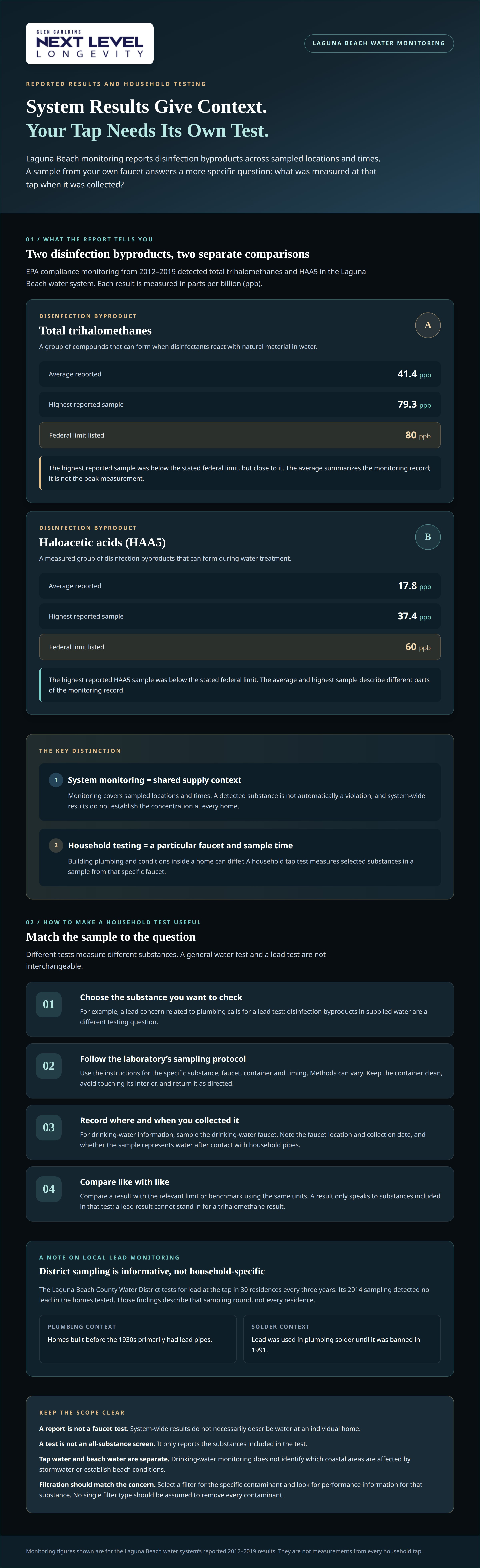
Contaminant averages, highest samples, and federal limits
An average summarizes monitoring results, while a highest sample identifies the peak recorded measurement. Comparing both with federal limits gives two useful views of the Laguna Beach record.
Contaminant Averages and Highest Samples
An average represents the central level across reported samples; a highest sample identifies the largest measured result. From 2012-2019, total trihalomethanes averaged 41.4 ppb, with a highest sample of 79.3 ppb. Haloacetic acids (HAA5) averaged 17.8 ppb, and their highest sample was 37.4 ppb.
Each statistic answers a different question. The average describes results across the monitoring period, while the peak shows the upper recorded measurement. Neither is a reading from every tap. For household interpretation, keep the contaminant name, period, unit, and statistic together. For example, 79.3 ppb is a peak sample, not the system average.
Federal Limits for Contaminants
A federal limit is the regulatory threshold used to assess a contaminant under the applicable standard. The reported limits are 80 ppb for total trihalomethanes and 60 ppb for HAA5. Against those values, the highest samples were 79.3 ppb and 37.4 ppb, respectively.
These comparisons show how recorded samples relate to the listed thresholds. They do not make the highest sample a household result or establish levels outside the monitoring period. Keep the units consistent: ppb means parts per billion. A comparison is meaningful only when the contaminant and measurement basis match.
Comparisons with Nearby Orange County Cities
A city-to-city comparison is useful only when the contaminant, unit, reporting period, and statistic match. The Laguna Beach figures alone cannot show whether levels are higher or lower than those in nearby Orange County cities. Comparing a Laguna Beach peak with another city’s average, for instance, mixes unlike measures.
Use the same approach for trihalomethanes and HAA5: align the reporting periods, then compare averages with averages and highest samples with highest samples. Keep each city’s reported federal limit alongside its measured result. This method avoids treating different monitoring records as direct equivalents.
EPA and California Drinking Water Standards
Compliance means the system’s monitored results meet applicable drinking-water requirements. Laguna Beach County Water District has no health-based EPA maximum contaminant level violations on record since 2010. The reported peak samples also fall below the listed federal limits for trihalomethanes and HAA5.
The listed compliance detections name trihalomethanes and HAA5. Lead testing in 2014 detected no lead in the sampled homes, while the district’s program tests 30 residences every three years. These facts do not establish whether PFAS, arsenic, or nitrates occur at every tap. California’s August 2019 PFOA and PFOS notification levels were 5.1 and 6.5 parts per trillion, respectively; those benchmarks are not detection results.
What contaminants have been detected in Laguna Beach drinking water?
A detection means monitoring identified a substance in a tested water sample. Laguna Beach compliance monitoring from 2012-2019 detected two regulated contaminants: total trihalomethanes and haloacetic acids, also called HAA5.
Both are disinfection byproducts. For total trihalomethanes, the reported average was 41.4 ppb and the highest sample was 79.3 ppb. For HAA5, the average was 17.8 ppb and the highest sample was 37.4 ppb. These figures describe the monitoring record, not every household tap or a measurement from every home.
Lead is a separate plumbing-related concern. The Laguna Beach County Water District tests lead at the tap in 30 residences every three years. In 2014, testing detected no lead in any sampled home. That result applies to those homes and that sampling round, not every residence.
Fluoride is also part of the local water context, though it was not one of the two contaminants detected in the cited compliance-monitoring results. The Metropolitan Water District of Southern California began adding fluoride to drinking water in December 2007 and adjusted fluoride in imported treated water to a range of 0.6 to 1.2 parts per million. California regulations limit fluoride in drinking water to a maximum dosage of 2 parts per million.
PFAS are a broad group of chemicals that includes PFOA and PFOS. California’s Division of Drinking Water set notification levels at 5.1 parts per trillion for PFOA and 6.5 parts per trillion for PFOS in August 2019. These benchmarks do not establish that either substance was detected in Laguna Beach. The cited local monitoring findings identify trihalomethanes and HAA5, not local PFAS results.
Arsenic and nitrates require their own monitoring results. The Laguna Beach findings summarized here provide no local detection results for either substance. The two reported detections are not a complete list of everything a test could measure. Household testing answers a different question from system monitoring: it measures selected substances in a sample from a particular tap.
For a useful comparison, consider the substance, sample location, date, and unit together. A result in ppb cannot be compared directly with a value in parts per trillion without converting units. Glen B. Caulkins’s water chemistry research explores how treatment and finished-water composition shape the interpretation of these measurements.
Glen B. Caulkins
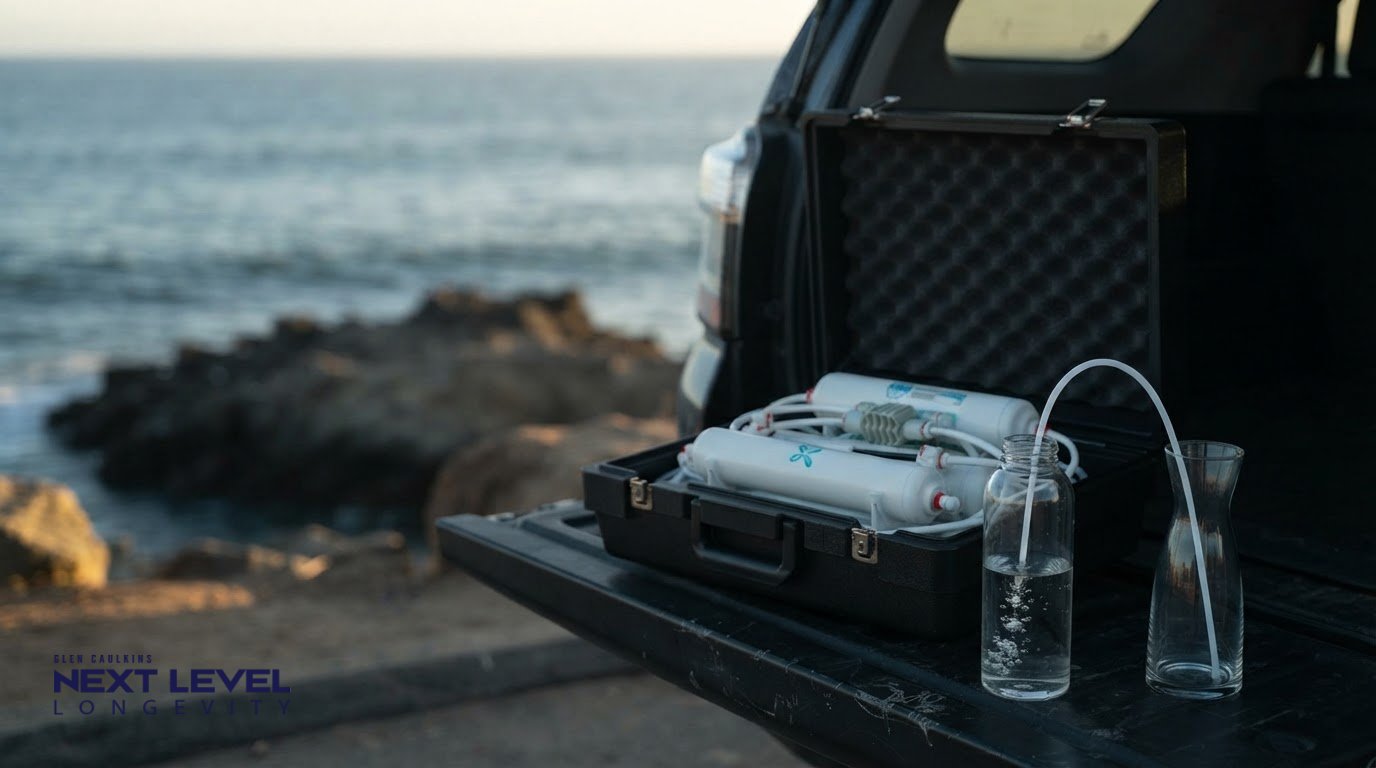
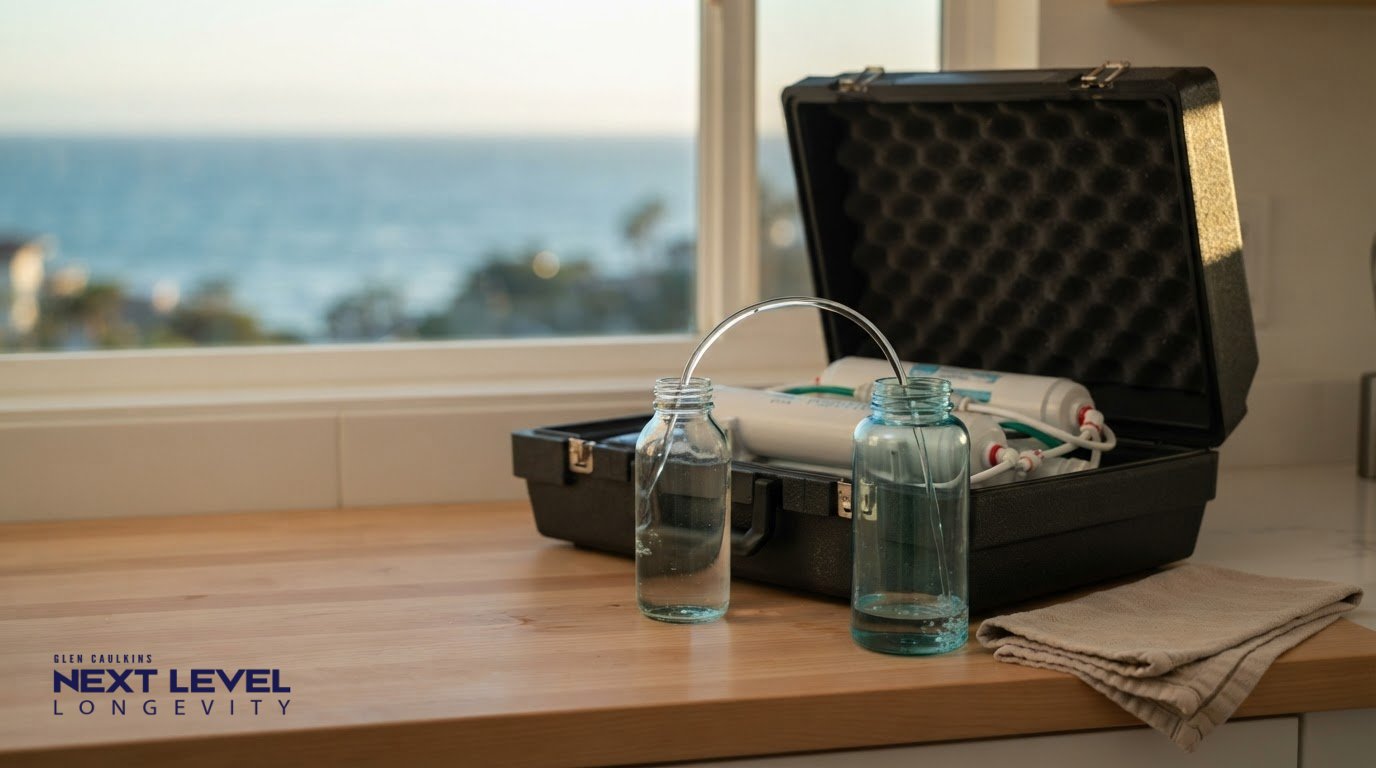
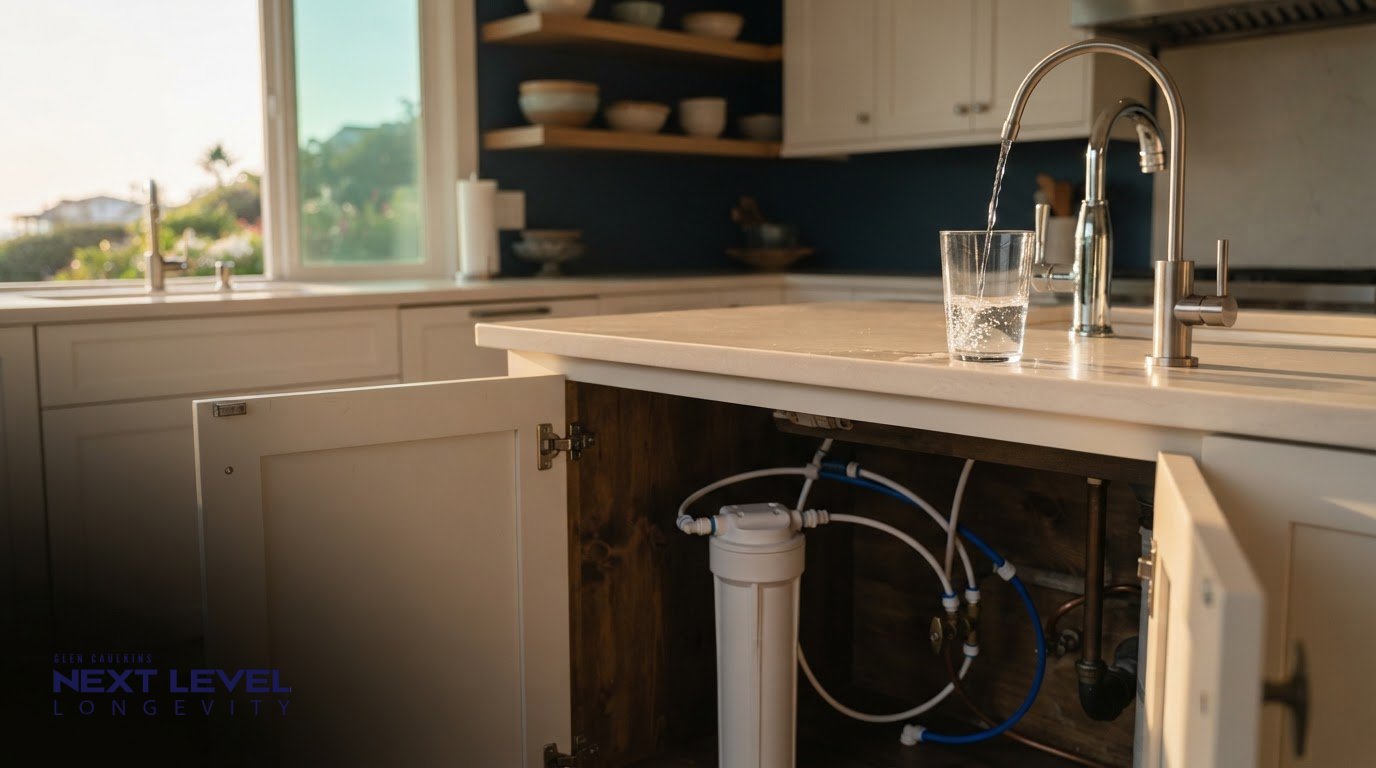
Glen B. Caulkins connects water chemistry, treatment, and finished-water composition. If public monitoring results raise questions about what to do at home, his research offers context for thinking through household water and filtration choices. PristineHydro’s Under-Counter Water Revival System and Travel-Portable Water Revival System are practical options for readers considering treated drinking water at home or while traveling. Their suitability depends on the specific water concern and the system’s documented performance for that contaminant.
Glen founded PristineHydro, so his water research and the products offered through the company share a commercial connection. Product information should be considered alongside the relevant test results, not as a substitute for household-specific testing. For a thoughtful next step on your water questions, learn more about Glen’s work.
Choose a Clear Next Step for Your Home
Water decisions are clearer when the question is specific. For Laguna Beach water contaminants, consider what you need to decide, not just what a monitoring table contains. Is your concern public-system oversight, a particular household faucet, or a treatment preference? Each calls for evidence suited to its purpose. Keeping these questions separate prevents a result for one setting from being stretched into an answer about another.
Before taking a next step, write down your concern and the information that would help resolve it. A broad question about water quality may call for a different discussion than a concern tied to one location or use. Then compare options with the question you actually have in mind, rather than relying on a general impression of water quality.
To explore Glen B. Caulkins’s research and writing on water, visit Glen’s website. Take the next step at your own pace, with a clearer question in hand.
Frequently Asked Questions
Can I get sick from swallowing beach water?
Yes, swallowing contaminated beach water can cause illness. Conditions may change after a sample is collected, especially when runoff enters coastal areas. Avoid swallowing water while swimming. If you accidentally swallow some, stop drinking or swallowing more and rinse your mouth with clean water. A beach-water result does not describe the drinking water from your home faucet.
How is the water quality tested at the beach?
Beach-water testing checks samples for indicator bacteria, typically enterococci and sometimes E. coli. A result applies to the sampled location and collection time. A sample from one stretch of shoreline, for example, cannot describe every beach area. Rainfall and runoff can change conditions after collection, so a later sample may better reflect later conditions.
Is it Safe to Swim?
Swimming conditions depend on the beach and recent weather, so one answer cannot cover every day or shoreline. Check local public-health advisories for guidance on whether to avoid swimming for 24-48 hours after heavy rainfall. If you have an open wound or get a cut in the water, consult public-health guidance or a clinician for advice on whether to swim and how to care for the wound.
Is it harmful to my health?
Whether exposure can affect health depends on the substance, the amount, and the route of exposure. Drinking, swimming, and contact with a household fixture are different routes. Clear appearance or ordinary taste cannot establish what a sample contains. For a specific concern, identify the substance and exposure route first. A water result can inform that question, but it cannot diagnose an individual health condition.
Should You Filter Your Laguna Beach Water?
Consider filtration when you have a defined water-quality concern or a treatment preference. Start with a utility report or laboratory result, then match the filter’s documented performance to the substance identified. Review care instructions and replacement-filter requirements too. A general product description does not establish performance for every contaminant or tell you what is present at your tap.
What are PFOA, PFOS, AND PFAS?
These chemical names can appear in drinking-water tests and regulatory materials. When reading a result, look for the exact substance tested, measured concentration, unit, and sampling date. Distinguish a measured detection from a notification level or health advisory. A benchmark is a comparison point; on its own, it does not show that a particular household sample contained that chemical.
What is Vibrio and how can I avoid it?
Vibrio is a type of bacteria associated with coastal water. If you have an open wound or get a cut in the water, consult public-health guidance or a clinician about swimming and wound care. These steps address contact with coastal water, not drinking-water quality. A beach sample and a household tap sample measure different environments and cannot substitute for each other.
What are the latest Laguna Beach water quality test results and contaminant levels?
The contaminant figures discussed here come from historical compliance monitoring, not real-time readings. For the current system-level picture, consult the latest Laguna Beach County Water District annual Water Quality Report. If your question concerns a particular household faucet, a laboratory sample from that tap gives more direct information. Beach-water testing is separate and does not establish drinking-water conditions at home.
Frequently Asked Questions
Can I get sick from swallowing beach water?
How is the water quality tested at the beach?
Is it Safe to Swim?
Is it harmful to my health?
Should You Filter Your Laguna Beach Water?
What are PFOA, PFOS, AND PFAS?
What is Vibrio and how can I avoid it?
What are the latest Laguna Beach water quality test results and contaminant levels?
More articles