Mineral Concentrates: A Practical Guide to Choosing the Right Type
October 14, 2026 · 15 min read
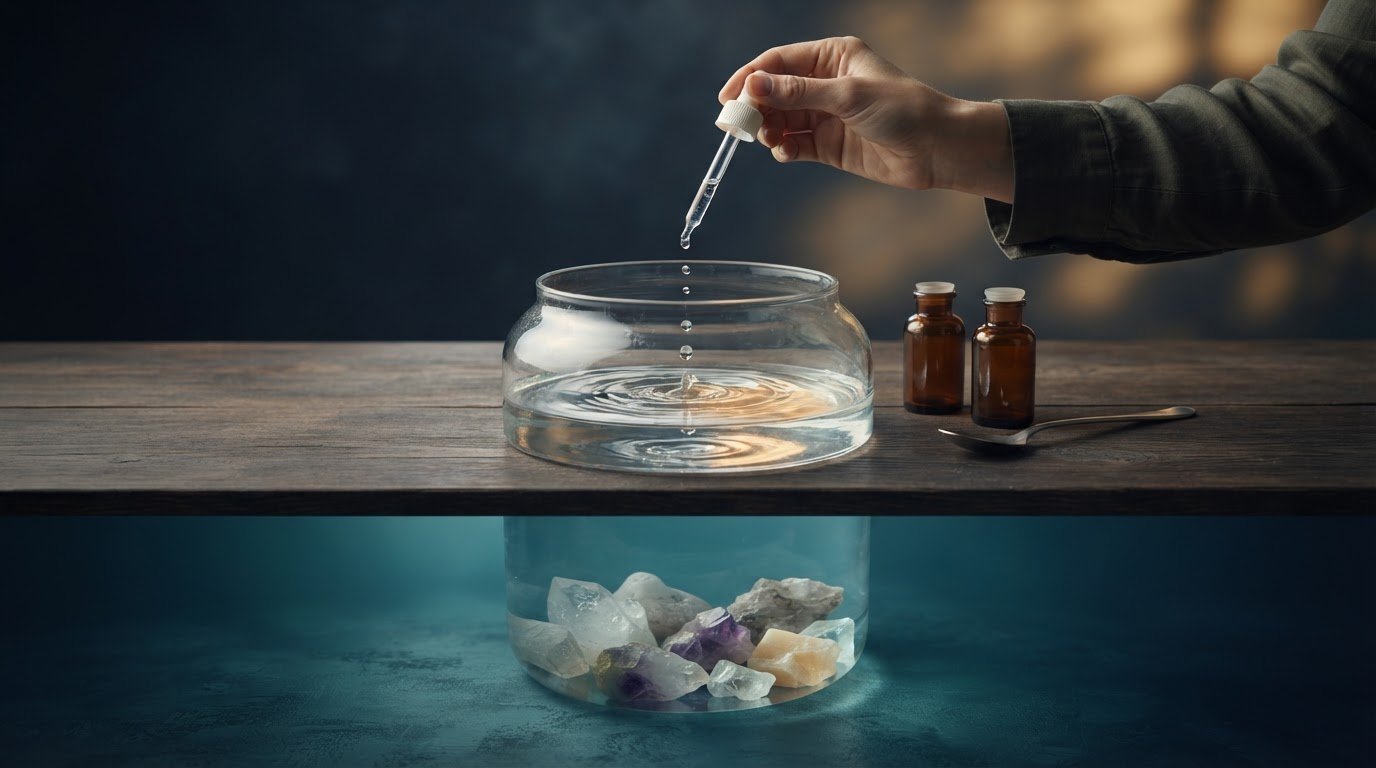
“Mineral concentrates” can describe two very different things: processed ore in an industrial context, or a liquid product intended to be added to water or another beverage. If you’re comparing liquid mineral concentrates for your water routine, start by identifying the product’s intended use. Then look at its ingredients, stated amounts, and directions. Those details help you compare products without relying on broad claims or assuming that similar names mean similar formulas.
This guide explains the main consumer product types and offers a practical way to compare them. It also puts liquid mineral concentrates, including PristineHydro’s, in context alongside filtration systems and prepared water. A product’s stated purpose can help you decide whether it fits your routine, but it should not be confused with a guaranteed health outcome.
Key Takeaways
- Start with intended use. The term mineral concentrates can refer to industrial materials or consumer liquids added to water and beverages.
- Compare products by purpose, then review the label details relevant to that use.
- Read the complete ingredient list and serving directions on the current label before deciding how a product fits your routine.
- Separate product information you can verify from broad wellness language.
- PristineHydro’s liquid mineral concentrates are one option within a broader water-focused range that includes filtration systems and prepared water.
What Are Mineral Concentrates, and What Are They Used For?
A consumer mineral concentrate is a product intended to be added in measured amounts to water or another beverage. Products can differ in their ingredients, intended use, directions, and claims. The shared word “concentrate” doesn’t mean they’re interchangeable.
The term also has a mining-related meaning. An ore concentrate is processed material from which some waste rock has been removed to increase the proportion of valuable minerals. Consumer liquids are a separate category, formulated for use in beverages rather than as mined or processed ore. Context matters when the same phrase appears on a label or in search results.
Why shoppers use concentrates in water and beverages
People may choose a liquid product to add minerals to water or to adjust water used to prepare a beverage. Those are different purposes. A product intended for water remineralization is used in relation to the water itself. A coffee product may instead be designed around brewing water and the flavor of the finished drink. A product positioned as a supplement has its own stated use. Don’t assume one formula is suited to all three.
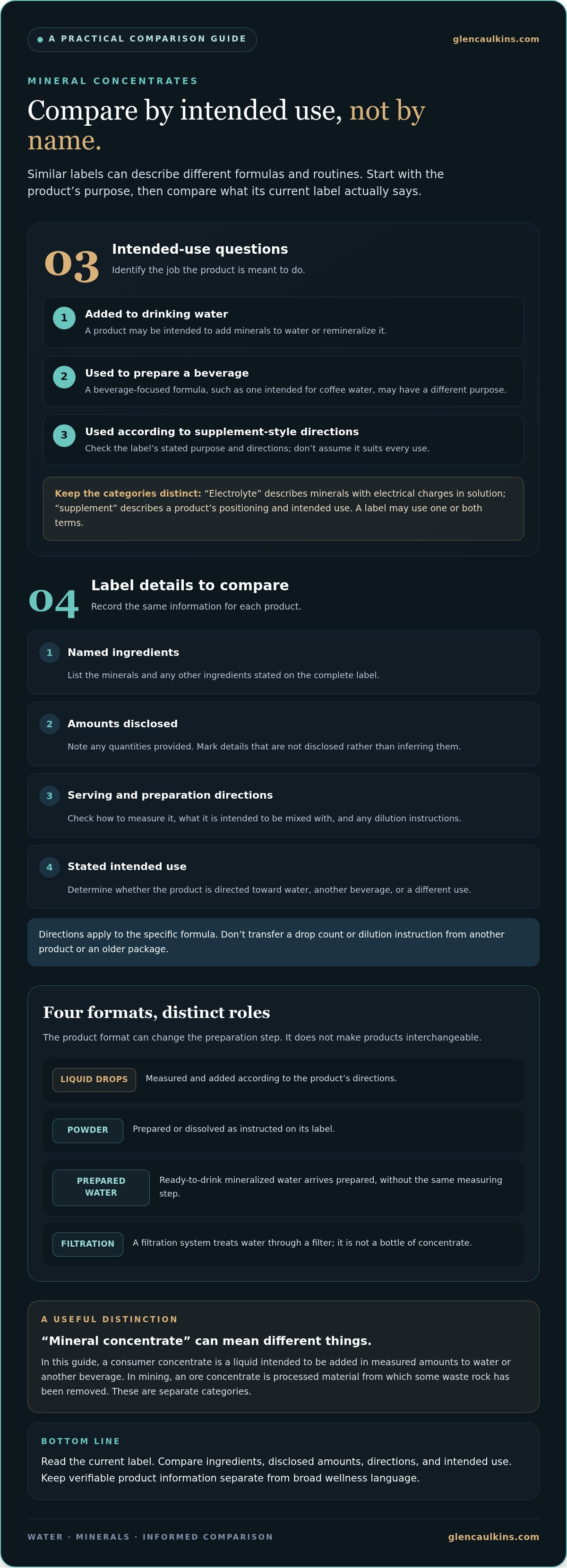
Start by asking what you want the product to do. Is it meant to be mixed into drinking water, used when preparing a beverage, or taken according to supplement-style directions? The answer gives you a practical way to compare its format and instructions with your routine. A general phrase such as “mineral drops” doesn’t answer that question.
Mineral concentrates are not all the same product type
Liquid drops are measured and added according to their directions. Powders are prepared or dissolved as instructed. Ready-to-drink mineralized water arrives prepared for consumption, so it does not require the same measuring step. A filtration system is different again: it treats water through a filter rather than functioning as a bottle of concentrate. A water routine may include filtration and remineralization, but those products have distinct roles.
Mineral concentrates, electrolytes, and supplements are not interchangeable terms. “Electrolyte” refers to minerals with electrical charges in solution, while “supplement” describes a product’s positioning and intended use. A concentrate may be described in one or both ways, but the product’s label is the place to check what it contains and how it is directed to be used. Read the ingredients and directions rather than relying on the category name alone.
For example, two liquids described as mineral drops may list different minerals or forms and give different serving directions. A powder and a liquid may also require different preparation, even if their front labels use similar language. Compare the label, not just the format or product name. That makes it easier to judge how each option fits your water or beverage routine without reading more into a broad wellness description than it says.
How Mineral Concentrate Formulas and Directions Differ
A product name is only a starting point. Mineral concentrates can vary in the minerals they list, the forms those minerals take, the concentration of the liquid, and other ingredients in the formula. Check the label for those distinctions. It can tell you what the product discloses and how its maker directs you to prepare or use it.
What to look for in an ingredient list
Read the complete ingredient list, not just the front label. Note each named mineral and any other listed ingredients. If the label provides quantities, record them so you can compare products on the same basis. If quantities are not disclosed, don’t infer them from the product name or phrases such as “trace” or “complex.” Clear ingredient names and legible information make comparison easier. Claims about purity, quality, or performance are not a substitute for details about composition.
The word “mineral” can also lead to broader information about mining and industry. The USGS Mineral Commodity Summaries offers background on mineral commodities, their uses, and production. It is not a guide to the ingredients or amounts in a consumer liquid, so use the product’s own label for those specifics.
Why dilution and serving directions matter
Directions apply to the specific formula. The listed minerals and their forms, the liquid’s concentration, and its intended use can all affect how a product is prepared. A drop count or dilution instruction for one product cannot be assumed to apply to another. Follow the current label for the product you have, rather than carrying over directions from another brand or an older package.
Look for instructions that make the practical steps clear: how to measure the product, what it is intended to be mixed with, and whether directions differ by use. Treat preparation instructions as the reference for using the product. Don’t turn a general benefit statement into a serving recommendation.
To compare products without guessing, record the same details for each one:
- Named ingredients: List the minerals and any other ingredients stated on the label.
- Amounts: Note any quantities provided. Mark information that is not given as undisclosed.
- Directions: Record the stated serving, measurement method, and dilution instructions.
- Intended use: Note whether the product is directed toward water, another beverage, or a different use.
Keep product facts separate from interpretation. A named ingredient tells you what the label discloses. A performance promise is a claim, not a replacement for ingredient or serving information. For a water-centered perspective, explore Glen B. Caulkins’ work on water and mineral concentrates. Apply the same approach to any product: read the current label first, and avoid filling gaps with assumptions.
Compare Mineral Concentrates by Intended Use
Begin with the job you want the product to do. Some concentrates are positioned for coffee preparation, others for adding minerals to water, and others as supplement-style drops. These descriptions indicate intended use, not guaranteed effects. Ingredient lists and directions still matter. Two products with similar names may suit different routines, and similar directions do not prove that their formulas are alike.
| Intended use | Label details to review | Questions to resolve |
|---|---|---|
| Coffee or beverage preparation | Whether the directions refer to brewing water or a finished drink; any stated guidance about flavor profile or preparation | Is the product meant for coffee specifically, or does its label describe a broader beverage use? |
| Water remineralization | Stated remineralization purpose, named ingredients, and instructions for adding the product to water | Does the label describe use with drinking water, and what preparation steps does it give? |
| Supplement-positioned drops | Named ingredients, any disclosed amounts, serving directions, and the product’s stated intended use | What does the label actually say about use, and are its directions distinct from beverage-preparation guidance? |
| Electrolyte product | How the product identifies itself, its listed composition, and directions for use | Is it positioned as an electrolyte product, and what ingredients and instructions support that description? |
Coffee and beverage concentrates versus water-focused products
A coffee-oriented concentrate may focus on brewing water and the flavor profile of the finished cup. A water-focused product may state that it is intended for remineralization. The difference is practical: one label may describe preparing a particular beverage, while another describes adding minerals to water as part of a water routine. Check whether the directions specify the water, beverage, or preparation stage. Don’t assume a product intended for one context is suitable for another.
Trace-mineral drops versus electrolyte products
“Trace-mineral drops” and “electrolyte” are not interchangeable descriptions. A product name alone does not establish that two formulas contain the same minerals, forms, or amounts. Read each label independently and note its stated purpose and directions. If a detail you want to compare is not provided, treat it as undisclosed rather than making an assumption.
Use the table as a sorting tool, not a verdict. First identify your intended use, then compare the label details that match it. If you’re choosing for coffee, look for preparation guidance for that beverage. If you want to add minerals to water, focus on the stated water use. If a product is positioned as a supplement, follow its own label instead of borrowing directions from a beverage concentrate. This keeps your decision grounded in the product information rather than its category name.
That approach is especially useful when browsing mineral concentrates. The category can suggest a possible use, but the label and directions show whether the product aligns with your routine.
How to Evaluate a Mineral Concentrate Before You Choose
A sound comparison starts with intended use and clear directions. Decide what you need the product for, note what the label actually states, and then compare those details with its claims. This sequence helps keep broad wellness language from overshadowing practical information.
- Define your use. Decide whether you want a product for water, beverage preparation, or another stated purpose. A clear use case gives you a fair basis for comparing options.
- Inspect the label. Read the full ingredient list and note named minerals, other ingredients, and any quantities provided. Don’t infer amounts from the product name or general descriptions.
- Read the directions. Look for clear instructions on measuring, mixing, and intended use. Follow that product’s directions rather than applying another product’s preparation steps.
- Assess the claims. Separate details you can check on the label, such as listed ingredients, from broad claims about quality or wellness. Consider what evidence supports a specific outcome and whether it relates to the product itself.
- Decide based on fit. Choose only if the product’s stated use, available information, and directions align with your routine and expectations. If key details are missing, treat them as unknown rather than filling the gaps with assumptions.
Questions to ask while comparing labels and claims
Does the label identify the product’s intended use? Are the preparation steps clear? Are the ingredients and any stated amounts specific enough to compare? These questions bring the focus back to information you can review. Research about a mineral or ingredient in general may provide context, but it does not by itself establish that a particular formula delivers a claimed result. Look for evidence that matches the specific product and claim.
When personal health considerations change the decision
This guide is for general information, not medical advice or treatment. If you have a health condition or take medicines, discuss supplement use with a qualified healthcare professional. A product’s stated purpose is not a guarantee of hydration, mineral balance, or another health outcome, and this guide cannot determine whether a supplement is suitable for an individual.
For a water-focused view of mineral concentrates, explore Glen B. Caulkins’ approach to mineral concentrates alongside water and remineralization products. Use the same checklist: understand the stated purpose, review the product information, and keep expectations grounded in what is disclosed.
PristineHydro Mineral Concentrates and a Water-First Approach
PristineHydro offers liquid mineral concentrates as part of its wider focus on water, filtration, and remineralization. The concentrates are designed to support cellular hydration and mineral balance. That describes their intended purpose, not a guaranteed health result or medical treatment.
This water-first perspective treats a concentrate as one part of a routine, not a replacement for every other water product. Glen B. Caulkins, an independent researcher and founder of PristineHydro, investigates water chemistry, minerals, and remineralization. The practical choice still depends on what you’re looking for and what the product information says.
Where mineral concentrates fit within a water routine
A liquid concentrate, filtration hardware, and prepared PristineHydro water are different product categories. A concentrate is considered according to its stated purpose and directions. Filtration products treat water through hardware, while prepared water is offered ready to drink. These options have different roles, so don’t assume one replaces another.
To choose a next step, first identify what you want to address: the water you use, the water you drink, or adding a liquid concentrate to your routine. If you’re considering a concentrate, assess its product information on its own terms. Don’t infer its ingredients, amount, or preparation method from the broader water-focused approach. The product’s label and directions are the practical reference.
Explore PristineHydro’s mineral concentrates
If you’re considering a liquid concentrate for your water routine, PristineHydro’s mineral concentrates offer one option within a range that also includes residential and travel filtration systems, specialty filters, mineral supplements, and prepared PristineHydro water. The stated purpose can help you understand how the product is presented, while its specific information helps you decide whether it fits your preferences. Intended use is not a promise of a medical effect.
Before deciding, review the current product information, including the ingredient details and directions. These particulars help you understand how the concentrate is presented and whether its use fits your routine. Keep general descriptions separate from details the label provides.
PristineHydro has a retail storefront in Laguna Woods, California, and its products and research writings are also available online. For readers in Laguna Woods, Newport Beach, Costa Mesa, Laguna Beach, Carlsbad, and Irvine, the water-first approach offers a local point of connection as you compare filtration, prepared water, and mineral concentrates. Consider the product information alongside your own preferences and routine.
Choose the Next Step That Fits Your Water Routine
The next step can begin with one practical question: what role, if any, would a concentrate have in the water routine you already follow? A clear answer can help you decide whether to explore a product further or set it aside. The aim is not to collect more claims. It is to find information that supports a considered choice.
Keep expectations grounded in the product information, and give yourself time to compare before deciding. Mineral concentrates are one possible part of a water routine, not a required addition. A careful choice is useful, even if it means waiting.
To review PristineHydro’s mineral concentrates and other water-focused products, explore PristineHydro online and compare the product information with your routine.
Frequently Asked Questions
Are all mineral concentrates the same?
No. Mineral concentrates can differ in formulation and intended use, even when their names sound similar. A product meant for brewing water may have different directions from drops intended for another use. Bottle size or the number of drops per serving does not show how two formulas compare. Review each product’s ingredients and directions instead of treating a shared category name as proof that they are equivalent.
Can mineral concentrates be added to coffee?
Only when the product’s directions allow it. A concentrate intended for brewing water may be added during water preparation, while another product may give no coffee instructions. Adding drops to a finished cup is not necessarily the same as adjusting water before brewing. If coffee use matters to you, look for specific guidance on the product label rather than assuming any water-focused concentrate is suitable.
How much mineral concentrate should I use?
Use the amount stated on that product’s current label. There is no universal serving amount for mineral concentrates because formulas and directions differ. Instructions for one drop-based product cannot be transferred to another just because both use a dropper. Check the serving directions for the exact product and intended use, and don’t increase the amount based on a general benefit claim or another person’s routine.
Do mineral concentrates work with reverse osmosis water?
It depends on the concentrate’s intended use and directions. Reverse osmosis changes the dissolved contents of water, but that alone does not establish whether a particular product is suitable or how it should be used with that water. Look for product-specific guidance about reverse osmosis water. If the label does not address your situation, don’t assume that directions for a different water source apply unchanged.
What happens if I add too much mineral concentrate?
The result depends on the formula and how much was added. An excess may change a drink’s taste or make it stronger than intended, but the label is the source for product-specific guidance. Don’t add more to compensate for an uncertain result. If you’ve consumed more than directed and have concerns, contact a qualified healthcare professional for advice suited to your circumstances.
How should I store liquid mineral concentrates?
Follow the storage instructions on the product label, since requirements can vary by formula. Keep the original packaging so the directions remain available, and close the container as instructed after use. Don’t assume refrigeration is needed or that room-temperature storage is suitable unless the label says so. PristineHydro’s Laguna Woods storefront is a local option for readers in Laguna Woods, Newport Beach, Costa Mesa, Laguna Beach, Carlsbad, and Irvine.