Portable RO Water Systems Compared by Capacity, Care and Cost
November 23, 2026 · 15 min read
A small footprint alone doesn’t make a reverse osmosis system portable. A portable RO water system is designed to treat water away from a fixed kitchen installation, but its practical value depends on how it works, what it is designed to remove, and what upkeep it requires. The Centers for Disease Control and Prevention says reverse osmosis filters remove parasites, bacteria, viruses, and salt.
Capacity is a sensible place to start: a system that can’t keep pace with your use may be inconvenient, even if it travels easily. But capacity is only one consideration. Filter replacement needs, ongoing filter costs, treatment stages, and the contaminants a system is designed to reduce also affect whether it suits your needs.
This guide compares portable RO systems through practical details. You’ll learn how portability differs from compact size, what to consider when comparing output and maintenance, and why the number of stages alone doesn’t establish performance. The goal is to help you judge which system suits your water needs and travel habits.
Key Takeaways
- Judge portability by how a system is set up and used, not by its size alone.
- Compare water delivery and storage with your daily routine to see whether capacity will suit you.
- Look beyond the number of filtration stages: contaminant-removal claims need relevant test evidence.
- Factor filter replacement needs into ongoing care, and distinguish travel use from kitchen or whole-house treatment.
What Is a Portable Reverse Osmosis (RO) Water System, and How Does It Work?
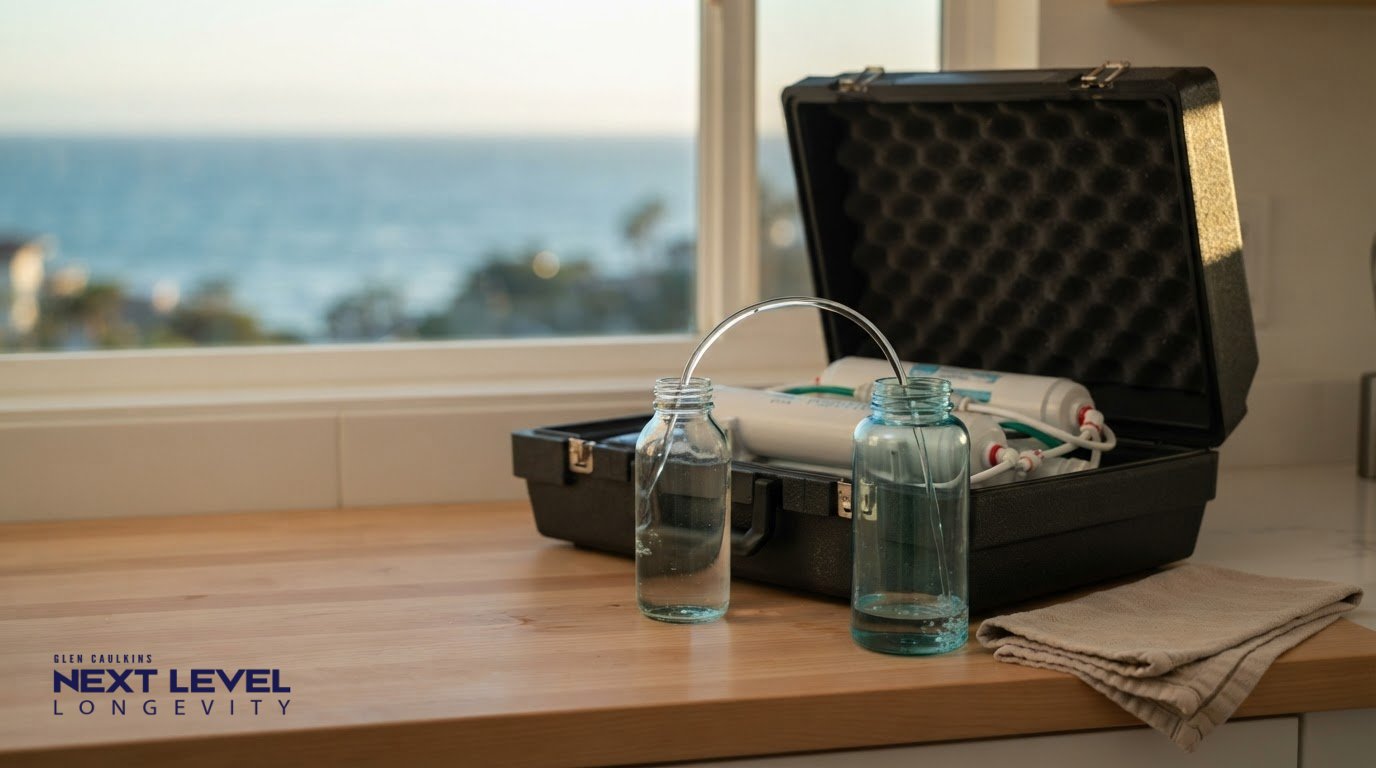
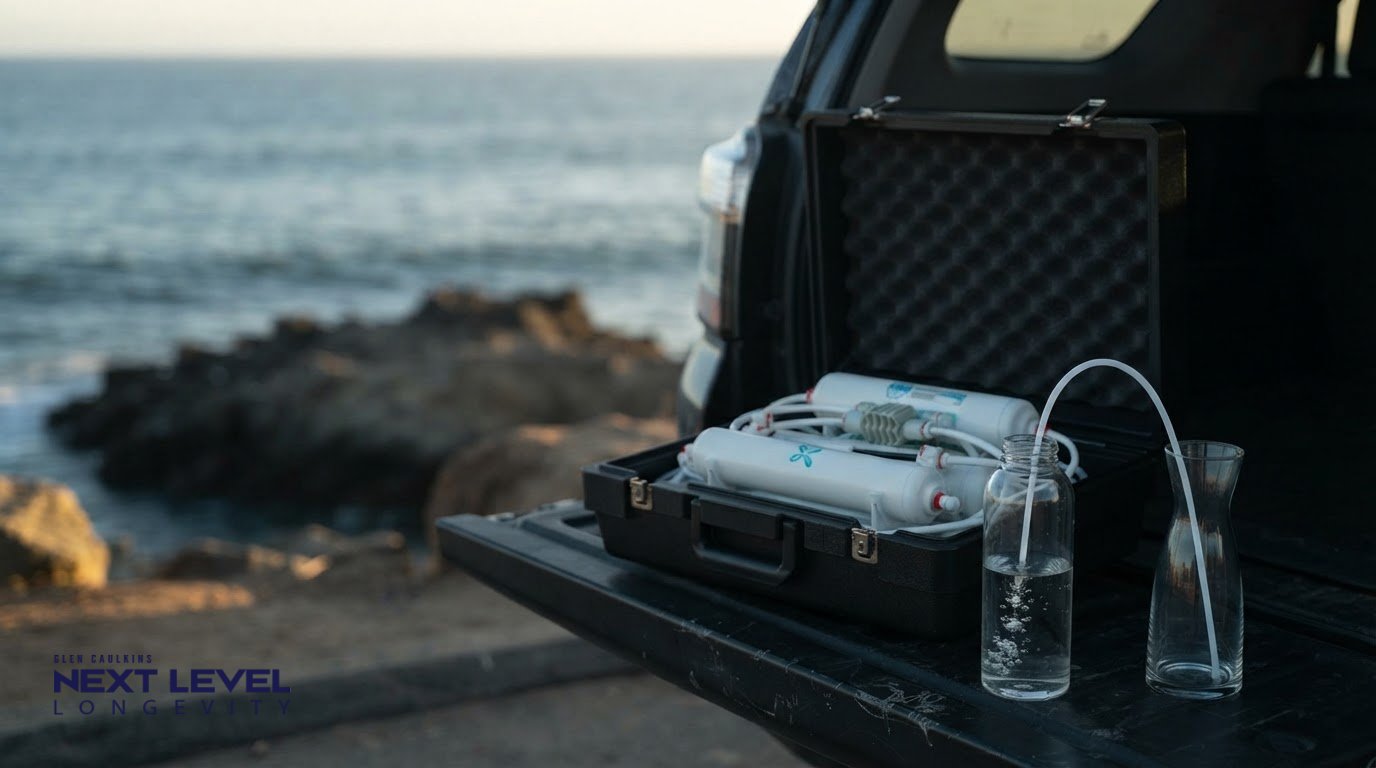
A portable reverse-osmosis (RO) water system treats water where people drink it, without a permanent under-sink connection. A portable RO water system can suit travel, temporary spaces, or locations where fixed plumbing is impractical. “Portable” describes how a unit can be used, not a particular design or output rate.
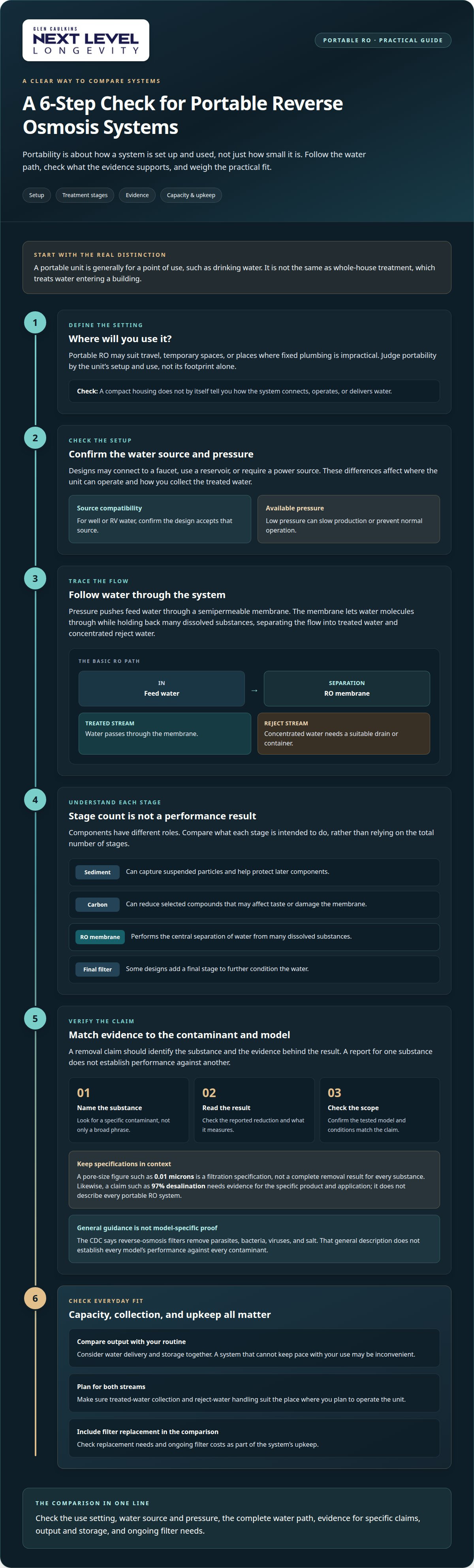
The process begins when feed water enters the system. Pressure pushes it through a semipermeable membrane, which lets water molecules through while holding back many dissolved substances. The membrane separates the flow into treated water and a more concentrated reject stream. The reject stream needs a suitable drain or container.
Most RO systems use more than a membrane alone. A sediment filter can capture particles, while a carbon filter can reduce certain compounds that may affect taste or damage the membrane. The membrane performs the central separation step. Depending on the design, a final filter may further condition the water.
Portable units vary in how they create pressure and deliver treated water. One design may connect to a faucet; another may use a reservoir or require a power source. These differences affect setup, where the unit can operate, and how you collect the water. A countertop model, for example, may need space beside a sink and a way to manage reject water.
RO differs from a basic carbon pitcher. Carbon filtration can reduce selected substances, but it does not use a membrane to separate dissolved material from water. RO also differs from whole-house treatment, which treats water entering a building. A portable unit generally serves a point of use, such as drinking water, rather than every tap.
What a system can remove depends on its process and supporting evidence. The Centers for Disease Control and Prevention (CDC) says reverse-osmosis filters remove parasites, bacteria, viruses, and salt from water. That general description does not establish every model’s performance against every contaminant. Product-specific claims require applicable test evidence.
To assess a portable unit, trace three things: how water enters, what drives it through the membrane, and where the treated and reject streams go. These steps help determine whether the setup fits a campsite, temporary kitchen, or other point-of-use setting, and distinguish portability from a compact housing.
Efficiency is another point to consider when tracing the two output streams. If a product lists an efficiency figure, such as 75%, check the supporting documentation to see which system and operating conditions it applies to. The figure should not be assumed to describe every portable RO unit. A system’s pump and configuration matter, so compare claims only when their stated scope is clear.
In practical terms, check whether the unit’s water collection and reject-water handling suit the setting where you plan to use it. The membrane is the separation stage, while the overall design determines how the process is supported and managed at the point of use.
Filtration Stages and Contaminant Removal
Stage names describe the treatment sequence; contaminant claims describe measured results. To understand a reverse osmosis system’s performance, consider both.
Filtration Stages
A typical sequence may begin with sediment filtration to capture suspended particles. A carbon stage can reduce selected compounds, while the reverse-osmosis membrane separates water from many dissolved substances. Some designs add a final carbon stage after the membrane. Each stage has a distinct role, so counting stages alone doesn’t show what the system removes.
Compare the stated role of each component, not just the total number. For example, a sediment filter protects later components from particles; it doesn’t perform the membrane’s separation of dissolved solids. Carbon media also vary in purpose and placement. A clear product description identifies each stage and explains its intended role.
Micron ratings need context, too. A pore-size figure such as 0.01 microns describes a filtration specification, not a complete contaminant-removal result for every substance. When comparing it with an RO unit, distinguish physical filtration specifications from results measured for named contaminants.
Contaminant Removal
Removal claims should identify the contaminant and the evidence supporting the result. A report for one substance does not establish performance against another. Test evidence should match the specific model and support the particular claim, rather than rely on a broad phrase such as “removes contaminants.”
Some products address specialized tasks. A claim of 97% desalination, for example, should be supported by evidence for the specific product and application. It does not establish that every portable RO model achieves the same result. The application and tested performance matter more than a shared technology label.
Read each claim in sequence: identify the substance, find the reported reduction, then note the test conditions and model. Evidence about salt reduction, for example, answers a different question from evidence about a specific chemical. This approach keeps a percentage or removal statement within the scope of the evidence.
Stage count, pore size, and contaminant results are separate comparison points. A system may have several stages without evidence supporting a particular removal claim. A simpler design, meanwhile, may have documented performance for specific substances. Compare like with like, and apply each advertised result only to the product and conditions described by its evidence.
Capacity, Water Delivery and Maintenance
A portable RO system can work with well or RV water if its design accepts that source and the available pressure. Low pressure can slow production or prevent normal operation. Start by confirming compatibility with the water source and pressure.
Output rate describes how quickly treated water is produced. One listed portable filtration product is described as filtering 1 liter per minute. That figure applies to that product, not every model. Actual delivery can depend on the unit’s design, feed-water conditions, and filter condition. A brief refill and a larger cooking-water need place different demands on the same stated rate.
Storage capacity affects how quickly water is ready at the tap. A tank-based unit stores treated water between uses; a tankless unit delivers it as filtration occurs. Compare usable tank volume with your routine. For example, filling several containers before leaving an RV site may call for more stored water than preparing one glass at a time.
A glass bottle adds another capacity consideration. Its fill volume determines how often you’ll need to refill it, while its shape affects whether it fits beneath the dispenser. Think about the bottle you carry on a day trip: its capacity should match how much water you want ready before departure, not just the machine’s countertop footprint.
Household demand needs a different frame. An average US family uses more than 300 gallons of water each day, but a point-of-use RO unit serves drinking and cooking needs, not the whole household supply. Compare its output with the drinking water you use, rather than total home water consumption.
Reject water also affects placement and daily use. According to the U.S. Environmental Protection Agency, a typical point-of-use RO system generates five gallons or more of reject water for every gallon of treated water it produces. Before setting up the unit, plan where that stream will go, such as a suitable drain or collection container.
Maintenance helps preserve expected flow. Follow the model’s schedule for filter and membrane changes, and clean water-contact parts as directed. Record service dates. If a unit that once filled a glass promptly slows noticeably, review its maintenance schedule and operating conditions. A simple record can help distinguish routine upkeep from a change in the water source or setup.
Filter Replacement Intervals and Costs
Plan replacements using the exact system model and its maintenance instructions. Compare the schedule for each component, then note which parts may be due together.
Filter Replacement Intervals
A replacement interval is the recommended service point for a filter or membrane. It can vary by component because each part has a distinct role and workload. Follow the schedule for the specific model rather than borrowing guidance from a similar-looking unit. Water conditions and usage also affect how quickly a component reaches its recommended replacement point.
Keep the system’s model details and maintenance record together. Note each component’s name, installation date, and stated replacement guidance. If a model uses separate prefilters and a membrane, track them independently. This helps you avoid replacing every component at once when only one is due, while making scheduled changes easier to remember.
Filter Replacement Costs
Replacement expense depends on which parts the model requires and how they are packaged. A single cartridge differs from a kit containing multiple components. Compare the included parts, compatibility, and replacement schedule together. A kit’s contents matter more than its label, especially if the membrane is sold separately from other filters.
To understand ongoing expense, map the full replacement cycle. List each compatible part, note when its instructions call for replacement, and identify whether it is sold individually or in a set. This gives you a clearer picture than comparing one cartridge in isolation. Don’t assume a kit for one system fits another, even if both use reverse osmosis.
- Match the part to the system model.
- Separate filter changes from membrane changes.
- Compare kit contents with the components due for service.
- Keep the schedule and purchase record together.
These steps also explain why two systems can have different maintenance costs without implying a difference in water quality. One may use a combined replacement kit, while another requires separate parts at different service points. Use the model’s documentation to plan purchases, and consider water conditions and actual usage when organizing future replacements. This keeps your comparison grounded in the parts and schedule relevant to your system.
Comparing Portable RO Systems: Fit, Setup and Limitations
The best portable RO system for you is the one that fits its setting and routine. Compare intended use, setup requirements, included components, maintenance, and the limits of each model’s stated performance.
Start with where you’ll use it. A countertop unit may suit a temporary kitchen with enough work surface. A travel-oriented design may suit stays in different locations if its instructions match the available water source and setup. For example, someone moving between temporary housing and an office may value flexibility more than permanent installation.
Map the setup before comparing convenience. Identify the required water connection, power source, space, and destination for wastewater. A faucet-fed model, for instance, needs a compatible connection; a unit with a separate reservoir needs room to fill and position it. These requirements affect whether a system works in a compact kitchenette or shared workspace.
Then examine what comes with the unit. Look for components needed for its described setup, such as connection fittings, tubing, a collection vessel, or power components. Treat these as points to verify in the product description, not assumptions. If you already carry a suitable container, that may change what you need to pack. If an adapter is required, check that it is compatible with the intended faucet.
Consider upkeep and practical limits alongside portability. A compact unit still needs cleaning and scheduled component care. A model designed for one point of use won’t supply treated water throughout a building. Performance claims apply to the model and conditions supported by its evidence, not automatically to every reverse osmosis unit.
Kitchen drinking-water systems and whole-house treatment serve different purposes. A kitchen unit focuses on water collected at a drinking-water point. Whole-house treatment addresses water entering the building. Someone seeking drinking water at a temporary kitchenette, for example, has a different need from someone seeking treatment at several household taps.
- For temporary spaces: compare connection needs and available counter space.
- For travel: consider what must be packed and how the unit will be set up.
- For home use: weigh point-of-use needs against broader household treatment goals.
Use these criteria to narrow your options before comparing advertised features. A system is a practical fit when its setup requirements, included components, and maintenance routine align with the place and purpose you have in mind.
Glen B. Caulkins: Travel-Portable Water Revival System
The Travel-Portable Water Revival System is an option to consider when you want a system designed for travel rather than a fixed kitchen installation. Assess it practically: consider it for mobile use, then compare its setup and care with your routine.
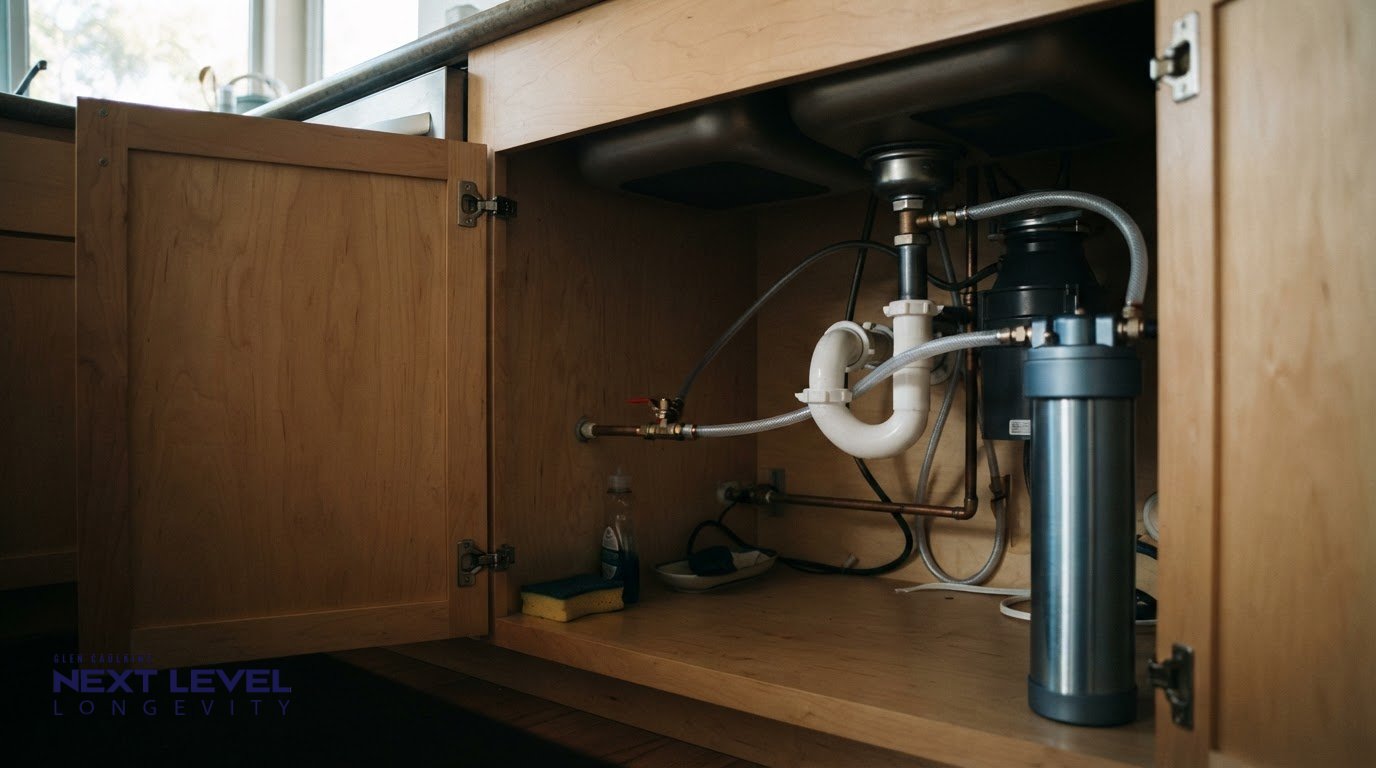
Start with where you expect to use it. A system carried between locations serves a different need from the Under-Counter Water Revival System, which is intended for a kitchen setup. The travel-oriented option may suit someone moving between temporary spaces. A fixed kitchen system may fit better when you mainly need drinking water at home.
Next, consider the conditions of use. Your water source, available space, and access to needed connections can shape whether a travel system fits a particular setting. Think through a real example, such as preparing drinking water in a temporary kitchen rather than treating water at every tap in a building. Portability does not make a point-of-use system a whole-house treatment system.
Care matters in the decision too. Follow the water system’s maintenance instructions and replace its filters as directed. Before relying on a system during a trip, consider where you’ll use it and how you’ll maintain it. Those practical details matter as much as whether the system can travel.
Glen B. Caulkins’s interest in water connects treatment choices with the composition of finished drinking water. That perspective encourages a careful comparison: consider intended use first, then setup, maintenance, and the evidence supporting performance claims. Glen has a commercial interest in PristineHydro, which sells the systems discussed here. The product name establishes its travel-oriented role, but doesn’t answer every question about output, included components, or contaminant reduction. Keep those questions separate from portability.
For travel, explore the Travel-Portable Water Revival System. For a permanent kitchen drinking-water setup, compare it with the Under-Counter Water Revival System. Neither is whole-house treatment. Start with the setting you need to serve and the practical routine you can maintain.
For product details and system comparisons, explore PristineHydro.
Frequently Asked Questions
How much do portable RO water systems cost, including replacement filters?
Costs vary by system and its replacement parts, so compare the full maintenance plan rather than the initial purchase alone. Review current product information for the specific unit and its compatible filters. Check what a replacement kit includes: a set of prefilters may differ from one that includes a membrane. Don’t apply one system’s replacement cost to another model.
How many gallons per day can a portable RO water system produce?
Daily output depends on the unit’s production rate and how long it operates under its specified conditions. Use the manufacturer’s stated daily capacity for the exact model, then compare it with your drinking and cooking needs. For example, someone filling bottles for daily outings should consider both the stated output and how much treated water the unit can store between uses.
How much water does portable RO filtration waste, and can the reject water be reused?
According to the U.S. Environmental Protection Agency, a typical point-of-use RO system generates five gallons or more of reject water for every gallon of treated water. Collecting that flow may make sense for a non-drinking task, but its composition depends on the feed water and treatment process. Don’t use reject water for drinking or cooking; choose any other reuse based on its intended use.
What contaminants do portable RO water systems remove, and what do they not remove?
The Centers for Disease Control and Prevention says reverse-osmosis filters remove parasites, bacteria, viruses, and salt. That does not establish removal of every contaminant by every model. Check the specific product’s test evidence for each substance claimed. This guide is not health advice and cannot determine water composition. In Laguna Woods, Newport Beach, Costa Mesa, Laguna Beach, Carlsbad, and Irvine, utility reports or lab tests provide water-specific information.
How often should portable RO membranes and filters be replaced?
Follow the service schedule for the exact model, since filters and membranes can have different replacement intervals. Water conditions and usage affect how quickly components need attention. For a unit used at home and on trips, keep its manual with the system and record maintenance dates in one place. A change in taste or flow can prompt you to review maintenance, but it does not replace the manufacturer’s schedule.
Frequently Asked Questions
How much do portable RO water systems cost, including replacement filters?
How many gallons per day can a portable RO water system produce?
How much water does portable RO filtration waste, and can the reject water be reused?
What contaminants do portable RO water systems remove, and what do they not remove?
How often should portable RO membranes and filters be replaced?
More articles