Costa Mesa Chlorine Removal: Choose a Drinking Water Filter
October 24, 2026 · 16 min read
Costa Mesa’s annual water quality report is the clearest place to identify the disinfectant used in the local supply. That distinction matters when considering Costa Mesa chlorine removal for drinking water: a filter designed for chlorine may not be suitable for chloramine.
A chlorine-like taste or smell may draw your attention to the water, but it cannot identify the treatment method. Start with the report, then consider how you use water at home.
This guide explains how to read the disinfectant information and compare filtration options. It also covers where you want filtered water, how your home setup affects the choice, and why replacement filters are part of the decision.
The goal is practical: choose according to your water use and household setup, rather than treating every filter or water concern as the same problem.
Key Takeaways
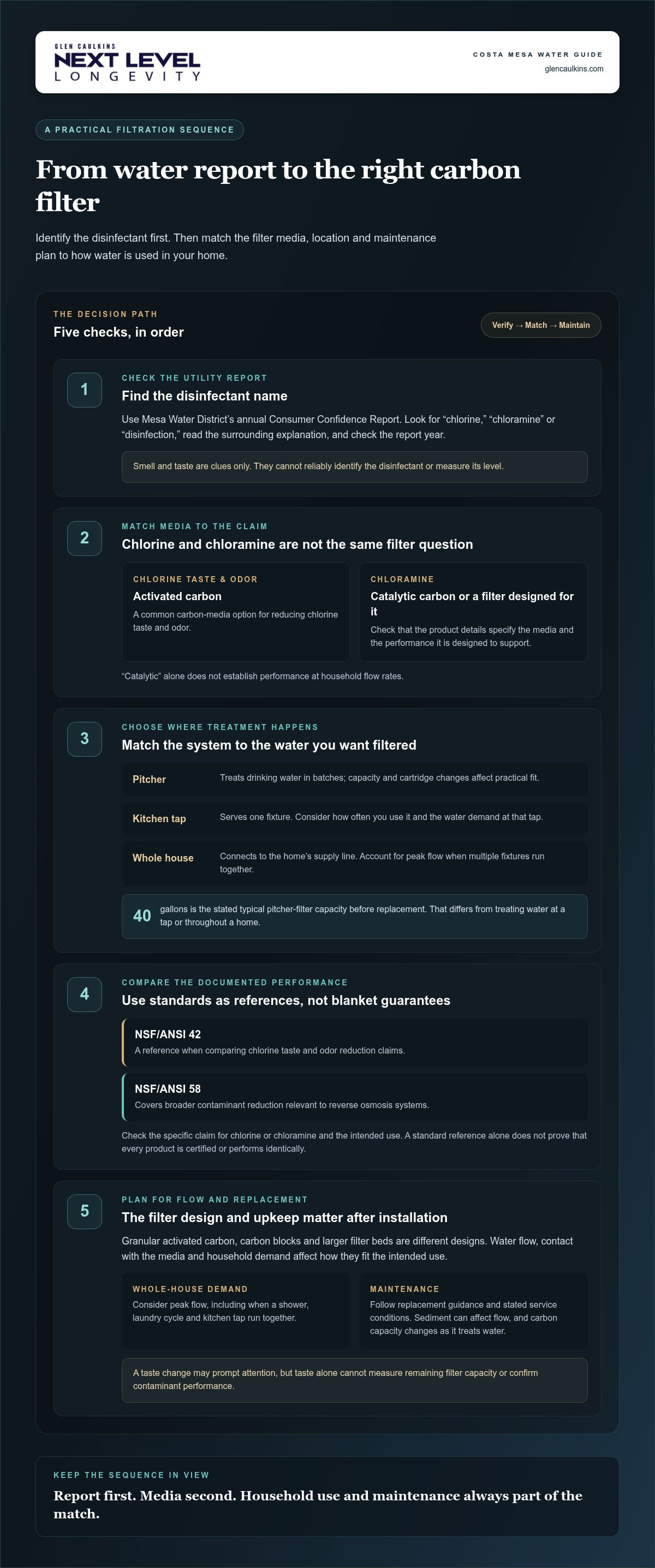
- Read the annual water quality report to identify the disinfectant; taste and smell can offer clues but aren’t definitive.
- Match the filter media to the disinfectant: activated carbon reduces chlorine taste and odor, while chloramine may require catalytic carbon or a filter designed for it.
- Use NSF/ANSI 42 as a reference when comparing filters for chlorine taste and odor reduction.
- Choose between point-of-use and whole-house filtration based on where you want treated water and how the system fits your home.
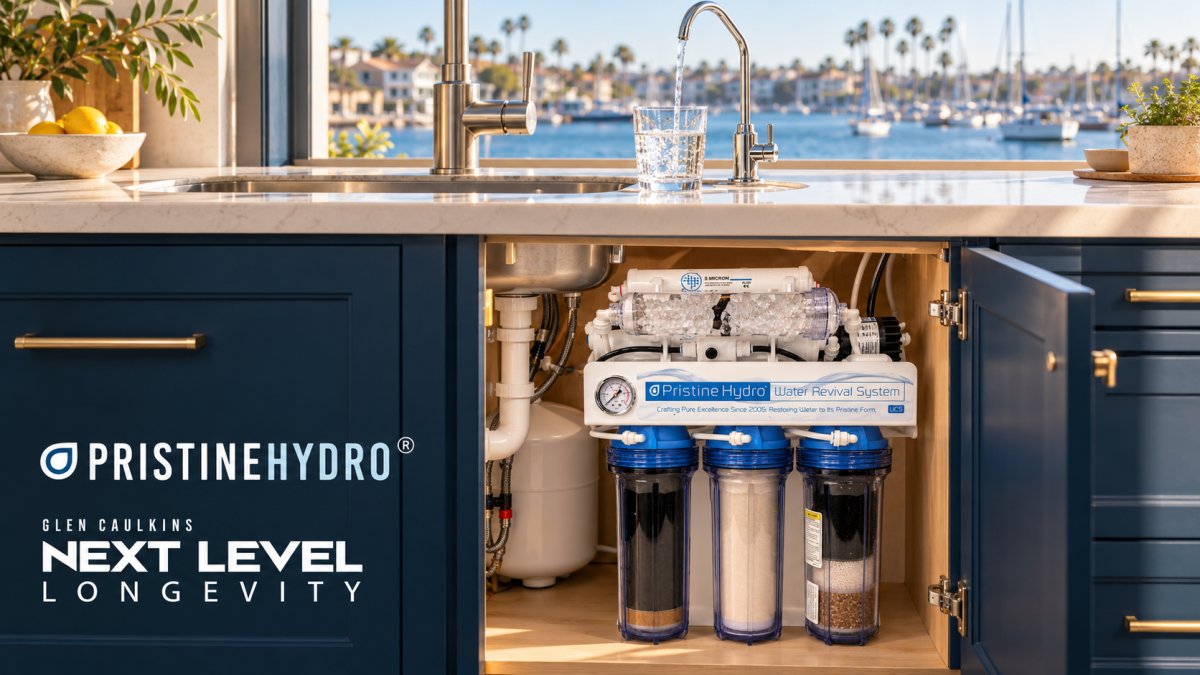
- For kitchen drinking water, consider whether an under-counter Water Revival System suits your setup and water-use needs.
Activated carbon and catalytic carbon filtration
Carbon filtration works through the carbon’s large internal surface area. As water flows through its pores, certain dissolved substances can attach to the media in a process called adsorption. Unlike a screen that catches particles by size, a carbon filter’s performance depends on the media and how water moves through it.
Carbon type and form affect how water travels through a filter. Granular activated carbon uses loose particles, while a carbon block compresses carbon into a shaped cartridge. A block can create a more uniform path through the media; loose granules leave spaces between particles. Uneven flow can reduce contact with parts of the filter bed, even when carbon is present.
Catalytic carbon has a treated surface that promotes reactions as water passes over it. This catalytic action differs from ordinary adsorption, although both involve contact with carbon media. Product details should specify the media and the performance it is designed to support. The word “catalytic” by itself does not establish how a unit performs at household flow rates.
For comparing chlorine taste and odor claims, NSF/ANSI 42 is the benchmark standard, according to NSF. Look for the specific claim associated with a filter, rather than assuming the standard covers every contaminant or treatment purpose. A standard reference is not, by itself, proof that every product has certification or identical performance.
Granular activated carbon can be used in larger filter beds as well as small cartridges. A larger format may provide more media and contact area, but results depend on the water flow and system design. A household using several fixtures at once, for example, creates a different demand from a kitchen tap used intermittently.
Whole-house carbon filtration must account for peak household flow, not just the number of people in the home. A shower, laundry cycle, and kitchen tap running together can change how quickly water passes through the media. Filter-bed size and flow distribution help determine whether water has adequate contact under common use patterns.
Maintenance is part of filtration. Sediment can build up and affect flow, while the carbon’s capacity changes as it treats water. Follow the filter’s replacement guidance and stated service conditions. A change in taste can prompt attention, but taste alone cannot measure remaining capacity or confirm contaminant performance.
Think of carbon selection as a match between media, flow, and intended use. A small cartridge, carbon block, and larger bed are different designs, not interchangeable labels. Compare the filter’s documented purpose with your home’s water demand.
How do I know if my water has chlorine or chloramine?
Use Mesa Water District’s annual Consumer Confidence Report to identify the disinfectant used in Costa Mesa water. The district says water is disinfected before entering its system, but taste and smell alone cannot tell you whether the method uses chlorine or chloramine.
A bleach-like or swimming-pool smell may suggest chlorine, while chloramine can have a less noticeable odor. These are clues, not reliable ways to identify the disinfectant. People’s sensitivity varies, and a glass of water cannot show which disinfectant was used or measure its level. Check the report’s treatment description rather than choosing a filter based only on what you notice.
Look for terms such as “chlorine,” “chloramine,” or “disinfection” in the report. If the wording is unfamiliar, read the surrounding explanation to see whether it names the disinfectant or describes another treatment step. Check the report year, too, since an older document may not describe the utility’s current method.
Where an odor seems strongest can help frame the question, but it cannot identify the cause. Compare cold water from the kitchen tap with cold water from a bathroom faucet. If only one fixture has a noticeable smell, the observation is specific to that tap. If several taps smell similar, consult the utility report for system-wide treatment details.
Skin and hair concerns are separate from identifying the disinfectant in drinking water. Chlorine does not easily enter the body through skin. Small amounts may pass through when water has high chlorine levels, and very sensitive people can rarely experience skin irritation. A dry-feeling scalp or hair alone cannot establish that chlorine caused it or identify the treatment method.
Keep two questions separate: which disinfectant does the report name, and what do you notice at home? The first requires utility information; the second describes your experience, not a water test. For broader context on how treatment connects to finished-water chemistry, explore Glen’s water research.
Choosing a filter based on water use, drain access, power, and budget
First decide where you want filtered water. A pitcher treats drinking water in batches, a kitchen filter serves one tap, and a whole-house filter connects to the home’s supply line. For Costa Mesa chlorine removal for drinking water, match the filter’s intended use to the water you plan to treat, rather than choosing by system size alone.
For chlorine taste and odor reduction, look for NSF/ANSI 42. NSF/ANSI 58 covers broader contaminant reduction relevant to reverse osmosis systems. These standards help frame a comparison, but the specific filter claim matters too. Check whether the stated reduction addresses chlorine or chloramine, and whether it fits your intended use.
A pitcher can work for smaller amounts of drinking water, but capacity and cartridge changes shape its practical fit. Pitcher filters typically handle 40 gallons before replacement. That’s different from treating water at a kitchen tap or throughout a home. For Costa Mesa chlorine removal for drinking water at a single fixture, consider how often the filter will be used and how its replacement schedule fits your routine.
Reverse osmosis is another point-of-use option, commonly installed beneath a kitchen sink. It pushes water through sediment and carbon filters, then a semipermeable membrane, and sends filtered impurities down a drain. The cabinet needs room, and the sink area needs drain access. Reverse osmosis systems also use carbon filtration to reduce chlorine and chloramines.
A whole-house chlorine filter connects to the home’s water supply line and treats water used throughout the household. It does not remove hardness minerals or salts such as calcium and sodium. In homes with a water softener, carbon filtration is commonly placed before the softener to protect its resin bed from chlorine degradation. This differs from a kitchen drinking-water filter.
Power and plumbing can narrow the options. A pitcher needs no electrical connection, while a reverse osmosis system needs water pressure and a drain for wastewater. For chlorine-removal filters in Costa Mesa, price depends on the case and is provided after a quote request; factors include filter type, capacity, installation needs, and replacement schedule. Compare those ongoing requirements with the amount and location of water you want to treat.
Costa Mesa drinking water safety
Chlorine in Costa Mesa drinking water is considered safe at levels up to 4 milligrams per liter (4 parts per million). Disinfection helps control bacteria and other pathogens, while regulated disinfection byproducts have separate limits.
Chlorine Safety and EPA Limits
The EPA limits chlorine in drinking water to levels considered safe for human consumption. This allows water systems to disinfect the supply while controlling the amount of disinfectant reaching household taps.
Disinfection can also produce byproducts when chlorine reacts with natural organic matter. Under the EPA’s Stage 2 DBP rule, total trihalomethanes are limited to 80 parts per billion, and haloacetic acids to 60 parts per billion. These are separate measures from chlorine itself, so a chlorine taste doesn’t tell you whether byproduct levels meet their limits.
Chlorine Safety Threshold
The stated chlorine safety threshold is up to 4 milligrams per liter, or 4 parts per million. It gives residents a concrete reference for understanding why a disinfectant may remain in treated water.
Mesa Water District says its tap water meets or exceeds State and Federal drinking water standards. The district also reports conducting over 30,000 water quality tests annually in Costa Mesa. These points describe system-wide monitoring and standards; taste and smell alone don’t measure chlorine concentration or disinfection byproducts.
Health Risks of Chlorine in Drinking Water
Chlorine’s role in controlling microbes must be considered alongside the byproducts that can form during disinfection. Chlorine can react with naturally occurring organic matter to form disinfection byproducts, which may cause negative health effects after regular, long-term exposure.
Public water systems that disinfect must regularly test treated water for regulated byproducts. If levels exceed applicable limits, systems must act to reduce them and notify customers. A noticeable odor does not show that a limit has been exceeded; it indicates a taste or smell concern, not a laboratory result.
Mesa Water District says boiling Costa Mesa tap water is not necessary. Boiling cannot assess chlorine levels or remove every disinfection byproduct. When deciding whether to filter, distinguish the disinfectant’s taste from questions about regulated water quality. A filter may address taste and odor, while the district’s testing and published standards describe public-system safety oversight.
Chlorination and home water treatment
Municipal disinfection has a continuing role after treatment, because water travels through pipes before reaching a tap. Chlorine helps control waterborne microbes, including bacteria, viruses, and parasites. The disinfectant’s presence is part of water treatment, not automatically evidence of a water-quality problem.
The history helps explain this approach. U.S. utilities first used chlorine to kill germs in tap water in 1908. Chloramine, made by combining chlorine with ammonia, was first used by U.S. utilities in 1929. Unlike ultraviolet light or ozone, chlorine-based disinfectants can continue protecting water as it moves through the supply system.
Disinfection also involves a tradeoff. Chlorine can react with naturally occurring organic matter and form disinfection byproducts. Chloramine may form lower levels of regulated byproducts, but it can create other byproducts. The resulting chemistry depends partly on source water. That is why treatment discussions distinguish the disinfectant, the water supply, and compounds formed during disinfection.
For free chlorine taste and odor, leaving water uncovered for 24 hours can allow chlorine to dissipate. This method is aimed at free chlorine, not chloramine. Letting water stand for a few days also does not remove chloramine. A household that relies on this approach should first identify its disinfectant, rather than assuming every chlorine-based method behaves alike.
Point-of-use filtration offers another option. Common filters, including pitcher filters, can reduce chlorine taste and smell. For chloramine, choose media designed for that disinfectant. Activated and catalytic carbon work through contact between water and filter media, so the intended treatment, flow, and timely cartridge replacement all matter.
Reverse osmosis combines carbon filtration with a semipermeable membrane and other treatment stages. It connects to a fixture, commonly a kitchen sink, and sends filtered impurities to a drain. This setup differs from a carbon-only filter aimed mainly at chlorine taste and odor. Choose according to your water use and treatment goals, not the assumption that every home needs the same method.
Disinfection remains a public-health measure, while home filtration can address taste and odor preferences. The distinction is between protecting water during distribution and adjusting it at a household tap. Explore water chemistry research to follow how treatment choices shape finished drinking water.
Glen B. Caulkins: Under-Counter Water Revival System
The Under-Counter Water Revival System provides a kitchen option for households seeking a dedicated drinking-water setup. It may suit Costa Mesa residents who want treatment at the sink rather than throughout the home. Before choosing a filter, compare the disinfectant information with the system’s product details, since chlorine and chloramine can call for different carbon media.
For water use beyond the kitchen, consider the Travel-Portable Water Revival System. The Aqualux filter with head and Ultimate Dual KDF inline filter are for shower filtration, not the same drinking-water need as an under-counter system. Choose by use: kitchen water, portable use, or shower water.
For more about Glen B. Caulkins and his work on water, visit Glen’s website.
Choose a filter that fits your next step
For Costa Mesa chlorine removal for drinking water, start with the specific use you want to address. A kitchen drinking-water setup serves a different purpose from a portable system or shower filter. Keeping those uses distinct can help you avoid choosing a method simply because it sounds broader.
Glen B. Caulkins offers the Under-Counter Water Revival System for kitchen use, the Travel-Portable Water Revival System for portable use, and the Aqualux filter with head for shower filtration. Each serves a different setting, so compare its intended use with your household’s needs before deciding.
Water treatment is a practical choice, but it also opens a larger question: how do source, treatment, and household use shape the water at the tap? Glen’s work explores those connections alongside practical filtration options. If you’d like to continue that inquiry, contact Glen B. Caulkins for guidance. A thoughtful next step can start with the water you use every day.
Frequently Asked Questions
Does reverse osmosis remove chlorine?
Reverse osmosis systems use carbon filtration to reduce chlorine and chloramines, alongside a semipermeable membrane and other filtration stages. The carbon stage matters because chlorine can affect the membrane. When comparing systems, look for performance information specific to the model and disinfectant. A reverse osmosis label alone does not show which reduction claims have been tested or what maintenance the system requires.
Is chlorine safe to drink?
Chlorine levels up to 4 milligrams per liter (4 parts per million) are considered safe in drinking water. Disinfection helps control disease-causing microbes, but chlorine can react with natural organic matter and form disinfection byproducts. Those compounds have separate limits. A taste or smell doesn’t measure either chlorine concentration or byproduct levels; water quality reports describe monitoring and test results.
Is there anything I can do about the taste and/or smell?
Yes. An activated-carbon drinking-water filter can reduce chlorine taste and odor. If chloramine is in your supply, choose media suited to it. Replace cartridges as directed, since exhausted carbon can lose effectiveness. You can also try chilling water in a clean, covered container. If the taste changes suddenly or seems unusual, consult the local water quality report rather than relying on smell alone.
Does Costa Mesa tap water contain chlorine or chloramine?
Mesa Water District disinfects water before it enters its system, but its current Consumer Confidence Report identifies the specific disinfectant. Check the treatment or disinfection section for “chlorine” or “chloramine.” Do not infer which is used from a pool-like smell or taste. The same approach applies when comparing utility reports in nearby Laguna Woods, Newport Beach, Laguna Beach, Carlsbad, and Irvine.
What are Costa Mesa drinking water chlorine levels and where can I find the latest water quality report?
The safety threshold cited for chlorine or chloramine is up to 4 milligrams per liter (4 parts per million); that figure isn’t a measurement of a particular tap. Mesa Water District publishes water quality information, including its annual Consumer Confidence Report. Use the latest report to review disinfection details and test results. The report offers system-level information, while a laboratory test can assess water from a specific household tap.
How can I remove chlorine from tap water for drinking in Costa Mesa?
For drinking water, choose a filter designed for the disinfectant named in the local report. Activated carbon commonly reduces free-chlorine taste and odor; chloramine calls for suitable filtration media. A pitcher or kitchen filter treats water at the point of use, while reverse osmosis combines carbon filtration with additional treatment stages. This guide is not health advice and cannot determine your water composition; your utility report or a lab test can.
Do carbon filters remove chlorine or chloramine from Costa Mesa tap water?
Activated carbon is commonly used to reduce free chlorine, while catalytic carbon can be an option for chloramine. Filter design, water flow, contact time, and cartridge condition affect performance. Check the product’s specific claim for the disinfectant you want to reduce instead of relying on the general phrase “carbon filter.” A chlorine taste-and-odor claim does not establish reduction of every other compound in the water.
Can boiling, letting water stand, or using a pitcher remove chlorine from tap water?
Leaving water uncovered can help free chlorine dissipate, but standing water doesn’t remove chloramine. Boiling can reduce chlorine, but it doesn’t remove chloramine and isn’t a substitute for treatment designed for that disinfectant. Pitcher filters can reduce chlorine taste and smell; their capacity varies, and some are typically rated for 40 gallons before replacement. Follow the pitcher’s own cartridge instructions.
Frequently Asked Questions
Does reverse osmosis remove chlorine?
Is chlorine safe to drink?
Is there anything I can do about the taste and/or smell?
Does Costa Mesa tap water contain chlorine or chloramine?
What are Costa Mesa drinking water chlorine levels and where can I find the latest water quality report?
How can I remove chlorine from tap water for drinking in Costa Mesa?
Do carbon filters remove chlorine or chloramine from Costa Mesa tap water?
Can boiling, letting water stand, or using a pitcher remove chlorine from tap water?
More articles