Water Purification Systems for Carlsbad Homes
November 13, 2026 · 13 min read
Choosing water purification systems in Carlsbad starts with matching a system’s treatment method and capacity to your household’s needs. The filtration media determines which substances the system is designed to reduce, while the intended use helps distinguish a drinking-water unit from treatment designed for more fixtures. Home size can inform the decision, but daily water use and the number of outlets needing treated water matter too.
A sound choice also accounts for the system after installation. Warranty terms, inspection guidance, replacement schedules, and ongoing care all shape ownership. This guide considers how to assess reduction claims, connect household demand with system capacity, and understand the practical differences between cartridge-based and other maintenance designs. It also looks at installation costs as a set of factors rather than a universal figure. The goal is a clear framework for narrowing options around your home’s actual water uses and maintenance preferences, without assuming every Carlsbad household needs the same approach.
Key Takeaways
- Match filtration media to the specific reduction claims and water concerns that matter to your household.
- Base system capacity on daily water use and where treated water is needed, not home size alone.
- Read warranty terms alongside inspection and maintenance requirements to understand ongoing responsibilities.
- “Cartridge-free” does not necessarily mean maintenance-free; identify what still needs cleaning or service.
- Compare the system and installation together, since project costs depend on the equipment and the work involved.
Filtration media and claimed contaminant reduction
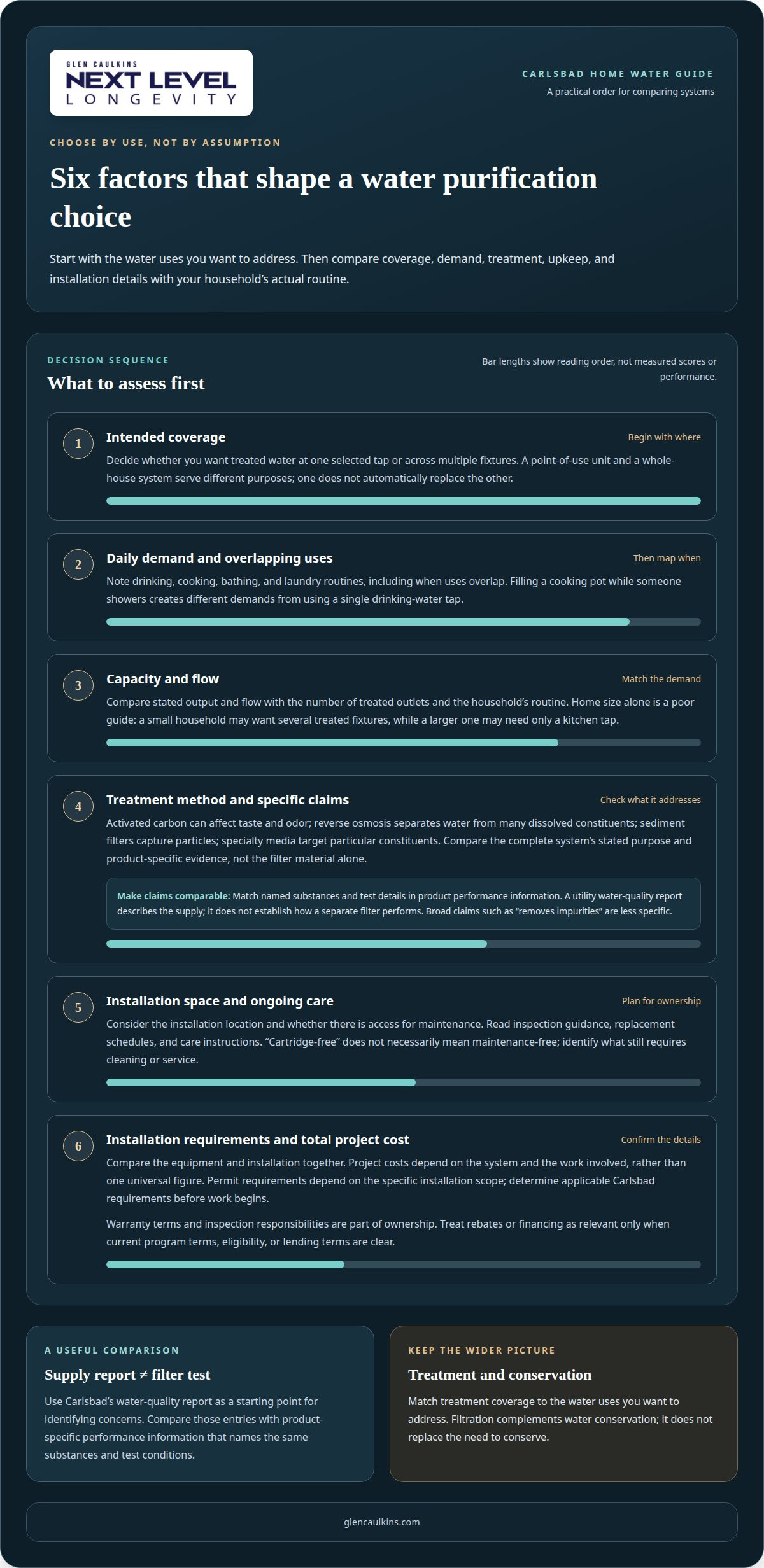
For Carlsbad homes, begin with the water use you want to address, then compare systems designed for that setting. Check the treatment method, product-specific information, and installation requirements.
Filtration Media Options
Activated carbon can affect taste and odor, while reverse osmosis separates water from many dissolved substances. Sediment filters capture particles, and specialty media are designed for particular constituents. Compare a system’s listed components and purpose with the water use you have in mind. A filter material alone doesn’t establish what the complete system treats.
Claimed Contaminant Reduction
Reduction claims refer to specific substances and test conditions. Compare product performance documentation with relevant information in Carlsbad’s water quality report, looking for the same named substance and test details. Broad claims such as “removes impurities” provide less useful detail than results tied to specific substances. A utility report describes the water supply; it doesn’t show how a separate filter performs.
Reverse Osmosis and Carbon Filtration
Reverse osmosis and carbon filtration have different treatment roles. Reverse osmosis separates water from many dissolved constituents; carbon media can address specific taste, odor, or chemical concerns. A point-of-use unit treats water at a selected tap, while whole-house treatment serves multiple fixtures. For a Carlsbad home, compare the substances addressed, intended coverage, flow needs, and test evidence rather than assuming one method is best for every use.
Use Carlsbad’s water quality report as a starting point, not as evidence of a particular filter’s performance. Identify entries relevant to your concern, then compare them with product-specific information for the system you’re considering. Matching the substance names helps make the comparison clearer.
Permit requirements depend on the installation work, not simply on the home’s location. Before work begins, determine the applicable Carlsbad requirements for the specific plumbing scope.
Rebates and financing depend on active programs and their eligibility or lending terms. Don’t include them in a system comparison until the applicable terms are clear.
Incorrect installation can cause leaks, loose connections, or water to bypass a treatment stage. Missed maintenance can restrict flow or affect a component’s intended operation. Follow the product’s installation and care instructions, then check accessible connections for leaks after setup.
Carlsbad residents are advised to conserve water because of the city’s dry climate and limited availability of imported water. Keep conservation in mind when choosing treatment: match the system’s coverage to the water uses you want to address rather than assuming broader treatment is necessary. Filtration should complement, not replace, water conservation at home.
Before choosing, compare the system’s stated purpose and product information with your intended use. Continue conserving water regardless of the treatment method, and don’t assume filtration changes the need to conserve.
System sizing by home size and water usage
Choose a system based on the water uses it is designed to serve. Home size alone is a poor guide: a small household might want treated water at several fixtures, while a larger household may need it only at the kitchen sink.
Start with the intended coverage. A point-of-use system treats water at one tap, often for drinking and cooking. A whole-house system treats water as it enters the home and supplies multiple fixtures. These systems serve different purposes. A kitchen unit should suit the household’s drinking-water needs; a whole-house system must account for multiple uses across the home.
Map the household’s routine across the day. Note where water is used and when demand overlaps. For example, filling a cooking pot while someone else showers involves different demands from using a single drinking-water tap. Thinking through these routines helps avoid choosing a system based only on bedrooms or square footage.
- Coverage: Decide whether treatment is for one sink or the home’s supply.
- Demand: Identify drinking, cooking, bathing, laundry, and overlapping uses.
- Capacity: Compare the system’s stated output and flow with those uses.
- Space: Account for the installation location and access for maintenance.
How can homeowners choose the right water purification system for a Carlsbad home? Begin with the water-quality concern and the fixtures that need treated water. Then compare the system’s intended coverage, rated capacity, flow, installation footprint, and upkeep with the home’s actual routines.
Carlsbad’s water supply can vary with source and treatment, so sizing should follow the home’s goal rather than a blanket assumption about local water. A household focused on drinking and meal preparation can evaluate a kitchen system. Residents seeking treatment at showers and other fixtures need to assess whole-house equipment separately. One approach does not automatically replace the other.
Also consider how usage changes. A home with frequent visitors may draw more water at the kitchen tap; a household that cooks at home may value steady access for filling containers and preparing meals. These examples affect capacity needs, but they do not establish a universal size. Product output, usage pattern, and the number of treated outlets matter together.
Glen B. Caulkins’s research connects water composition with how people use water in daily life. Explore Glen’s water research for broader context as you consider coverage and household needs.
Warranty and annual inspections
A warranty is useful when its coverage aligns with the system, installation, and maintenance plan. Before choosing a product, read its warranty terms alongside the care instructions and replacement-filter requirements. These details clarify the owner’s responsibilities and what the warranty covers.
Start with the written coverage. Note the warranty period, covered components, exclusions, and any steps required to make a claim. For example, a warranty may treat a defective component differently from damage caused by a leak or improper installation. Keep the receipt, model information, and service records together so the system’s history is clear if a problem arises.
An annual inspection can provide a regular point to review connections, flow, and visible wear. It should not replace the manufacturer’s maintenance schedule. A cartridge may need attention on its own stated schedule, while a membrane or other component may follow different instructions. Check the housing for moisture, inspect accessible tubing, and note changes in water flow or taste.
- Coverage: Identify covered parts, exclusions, and claim steps.
- Maintenance: Record each filter change and the part used.
- Inspection: Review connections, leaks, flow, and visible condition.
- Records: Keep receipts, model details, and service notes in one place.
What maintenance and replacement costs do water purification systems require? They depend on the system’s components, replacement schedules, and any inspection or service work. A multi-stage system may have several filters to maintain, so its upkeep differs from a simpler design.
Follow the product instructions to identify which components need replacement and when. A drop in flow can indicate a clogged filter, but doesn’t identify which part needs attention. Use the troubleshooting guidance before replacing anything. An incompatible filter or misplaced seal can cause leaks or interrupt operation.
Warranty terms can also affect the maintenance record you keep. If the warranty calls for documented care, record filter changes and any installation details. For example, noting a replacement date alongside the part information can help you follow the product’s maintenance schedule.
Set reminders based on the product’s actual care instructions, then review the system periodically for overlooked issues. Glen B. Caulkins’s water research considers how treatment and finished-water composition connect; explore it for context as you evaluate ongoing care.
Cartridge-free and low-maintenance systems
“Cartridge-free” describes a maintenance design, not a system without upkeep. A media tank may avoid routine cartridge changes but still require backwashing, which flushes trapped material from the filter bed. Other parts may also need periodic service. Compare the complete maintenance routine, not just the label.
Find out what a system uses instead of replaceable filters. For example, a tank containing granular media may use a control valve to reverse water flow and clean the media bed. That setup can require a drain connection and suitable installation space. The product instructions explain its operation and requirements.
Some systems still have components that need replacement. A reverse-osmosis unit, for example, may use prefilters and a membrane; a UV treatment unit uses a lamp that eventually needs replacing. These examples show why “low-maintenance” should be judged by the full parts list and care schedule, not one cartridge-free feature.
- Media: Identify whether the system uses a tank, cartridge, membrane, or lamp.
- Cleaning: Look for backwashing, flushing, or other required cleaning steps.
- Consumables: List replacement media, filters, lamps, or other parts.
- Installation: Note drain access, electrical needs, and service clearance.
Maintenance matters because each treatment stage has a specific role. A clogged prefilter can restrict flow to a downstream membrane, while missed backwashing can leave material in a media bed. Follow the product’s care instructions and keep a record of completed maintenance.
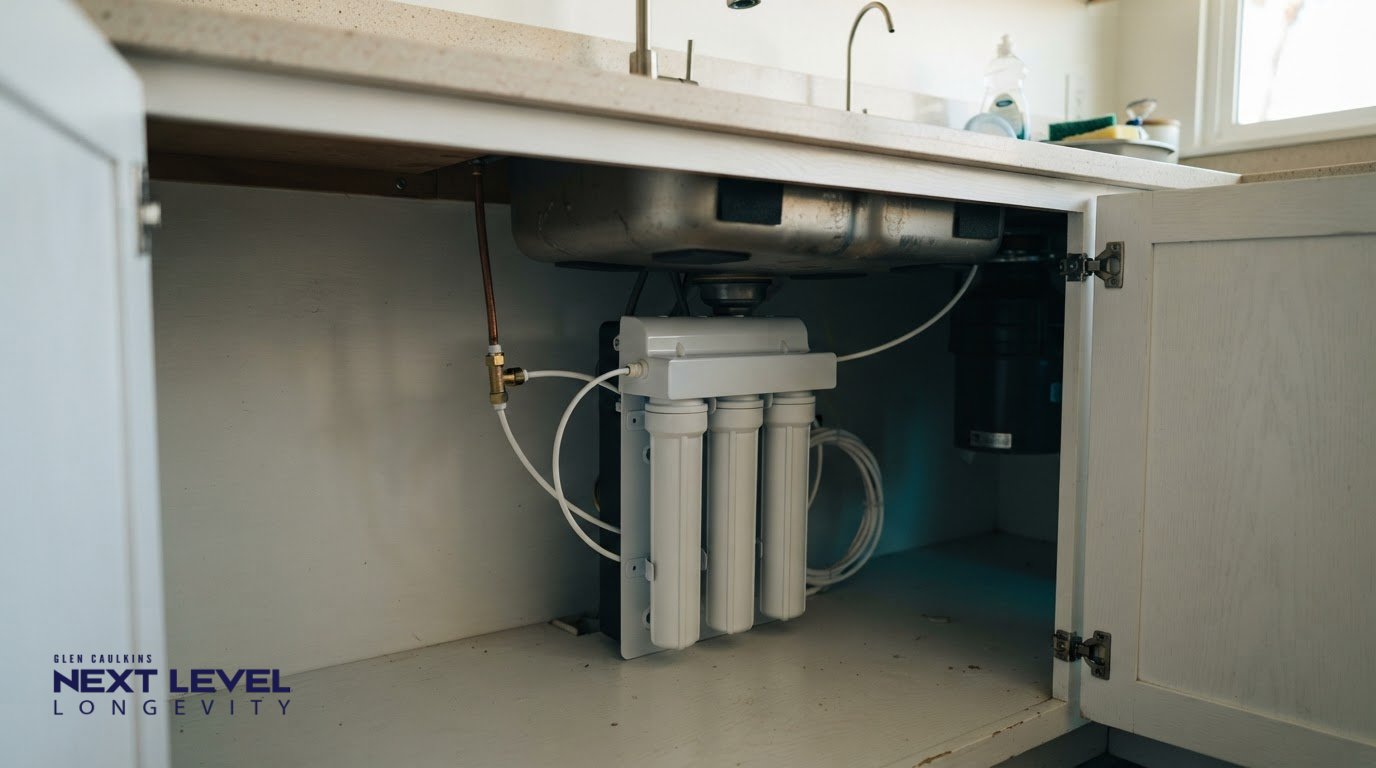
For a Carlsbad home, water use and installation location also shape the practical choice. A tank system may need floor space and drainage, while an under-sink unit uses cabinet space and requires access for filter changes. A low-maintenance design may suit a household that prefers scheduled system cycles. Another household may prefer a visible, simple cartridge replacement routine.
Before choosing, write down every recurring task: what the owner cleans, what the system cycles automatically, and which components require replacement. Then compare those tasks with the product’s operating guide. A design is genuinely convenient only when its actual maintenance fits the household’s space, routines, and willingness to manage ongoing care.
Water purification system costs in Carlsbad with install
There isn’t one installed price for every Carlsbad home. The total depends on the system and installation requirements, including plumbing access and the chosen location. Compare equipment, installation, and ongoing maintenance separately rather than treating a single total as the whole cost.
The installed price depends on the case and is given after a quote request. Cost factors include the system type, the number of treatment stages, installation location, plumbing changes, electrical or drain access, and replacement components. A unit fitted beneath a kitchen sink has a different scope from equipment connected to a home’s incoming supply.
Ask what the estimate includes. Equipment and labor may appear together or separately, so the written scope should identify each. For example, a quote for a kitchen system should clarify whether it includes the faucet connection, tubing, fittings, and any cabinet modifications. For whole-house equipment, the scope may also depend on access to the main water line and the system’s installation requirements.
Compare systems by total ownership, not purchase amount alone. Replacement cartridges, membranes, or other components create recurring expenses. Inspection or maintenance labor may add to those expenses, depending on the system and service plan. A system with a lower initial outlay may require more frequent replacements; a higher initial outlay does not automatically mean lower upkeep.
- Equipment: Identify the system and included components.
- Installation: Separate labor from plumbing or site modifications.
- Ongoing care: Include replacement parts and scheduled maintenance.
- Scope: Confirm which taps or household fixtures receive treated water.
Before comparing estimates, define the job. Specify whether you want treated water for drinking and cooking at one tap or for multiple uses around the home. Note the installation location and known access constraints, then compare the same scope. Estimates for different coverage aren’t directly comparable.
Carlsbad homeowners can separate equipment costs from the work needed to fit a system into a particular home. Installation requirements vary with the location and plumbing access. The system’s treatment method and care needs also matter when considering ongoing costs.
To connect system choices with Glen B. Caulkins’s water research, explore the research alongside your installation priorities.
Glen B. Caulkins
Glen B. Caulkins brings water chemistry and practical filtration choices into the same inquiry. His research offers context for weighing a system’s purpose, treatment approach, and maintenance needs without assuming one design suits every home.
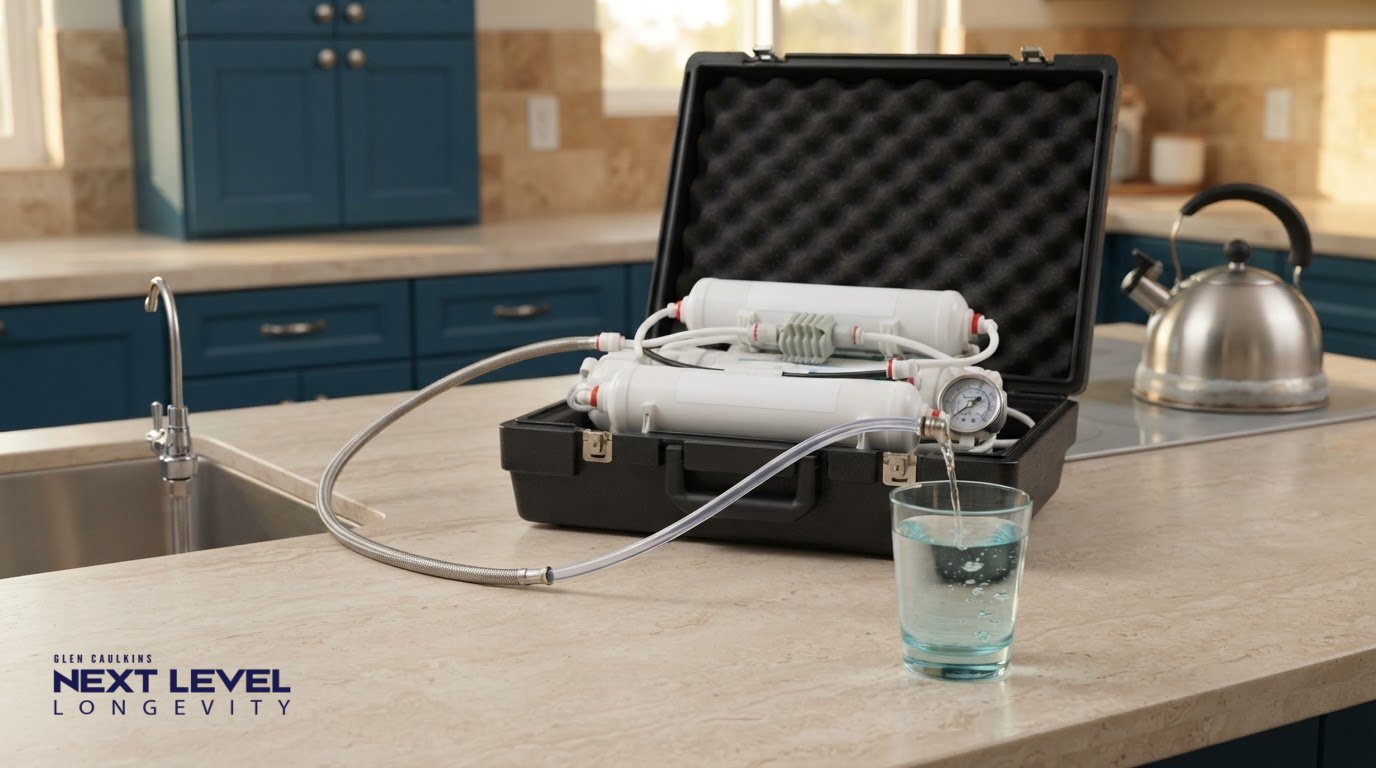
PristineHydro offers the Under-Counter Water Revival System and Travel-Portable Water Revival System, along with the Aqualux filter with head and Ultimate Dual KDF inline filter. These options serve different settings, from drinking water at home to portable use and shower filtration. Choose according to the water use and installation setting you identified.
For more on the questions behind this work, learn about Glen B. Caulkins.
Make the next choice with care
The next step is to identify your household’s main priority: drinking water, portable use, or shower filtration. That distinction helps narrow the options without treating every system as interchangeable.
PristineHydro offers the Under-Counter Water Revival System, the Travel-Portable Water Revival System, and the Aqualux filter with head. Each serves a different purpose. Choosing water purification systems in Carlsbad starts with identifying the use you want to address, then considering how a system fits your home and routine.
Water treatment is one part of a broader inquiry into water chemistry and everyday life. A measured decision begins with your own priorities, not a promise that one design suits every household. To learn more about Glen B. Caulkins’s work, visit Glen B. Caulkins. A thoughtful next step can make the choices ahead feel clearer.
Frequently Asked Questions
Which filtration options can Carlsbad residents consider?
Options include reverse-osmosis or carbon filtration for drinking water, whole-house treatment, and shower filters. The right category depends on whether you want to treat water at one tap, throughout the home, or at the shower. This guide isn’t health advice and can’t determine water composition; consult your utility’s report or a lab test. For local service information, verify current details directly before making any plans.
Are there rebates or financing options for water purification systems in Carlsbad?
Rebates and financing depend on active programs and their eligibility or lending terms. Confirm the applicable terms before including them in a system comparison.
Frequently Asked Questions
Which filtration options can Carlsbad residents consider?
Are there rebates or financing options for water purification systems in Carlsbad?
More articles