Costa Mesa Drinking Water Contaminants and Filter Choices
November 2, 2026 · 16 min read
Meeting a legal limit doesn’t tell the whole story. Costa Mesa drinking water contaminants vary by service area, and a detection above a health-based guideline isn’t automatically a legal violation. Mesa Water District reported that its tap water met federal health-based standards for April through June 2024, while individual contaminant results still need to be read against both legal limits and health goals.
It’s reasonable to ask whether filtering is worthwhile. The answer depends on what you want to address: a specific contaminant, taste, or mineral content. This guide explains how reported contaminant levels compare with health guidelines, what common filter types may reduce, and how Costa Mesa’s water hardness and total dissolved solids factor into the decision. The goal is to help you match a filter to a specific concern without treating every detection as a reason for alarm.
Key Takeaways
- Read contaminant results alongside both legal limits and health-based guidelines; a detection alone doesn’t establish a violation.
- Choose a refrigerator or pitcher filter by the specific substances it’s designed and tested to reduce, especially when considering metals such as arsenic or mercury.
- Use report dates and the water system serving your address to put test results in context; system-wide data may not reflect every household faucet.
- Hardness and total dissolved solids describe mineral content, not the presence or absence of a particular contaminant.
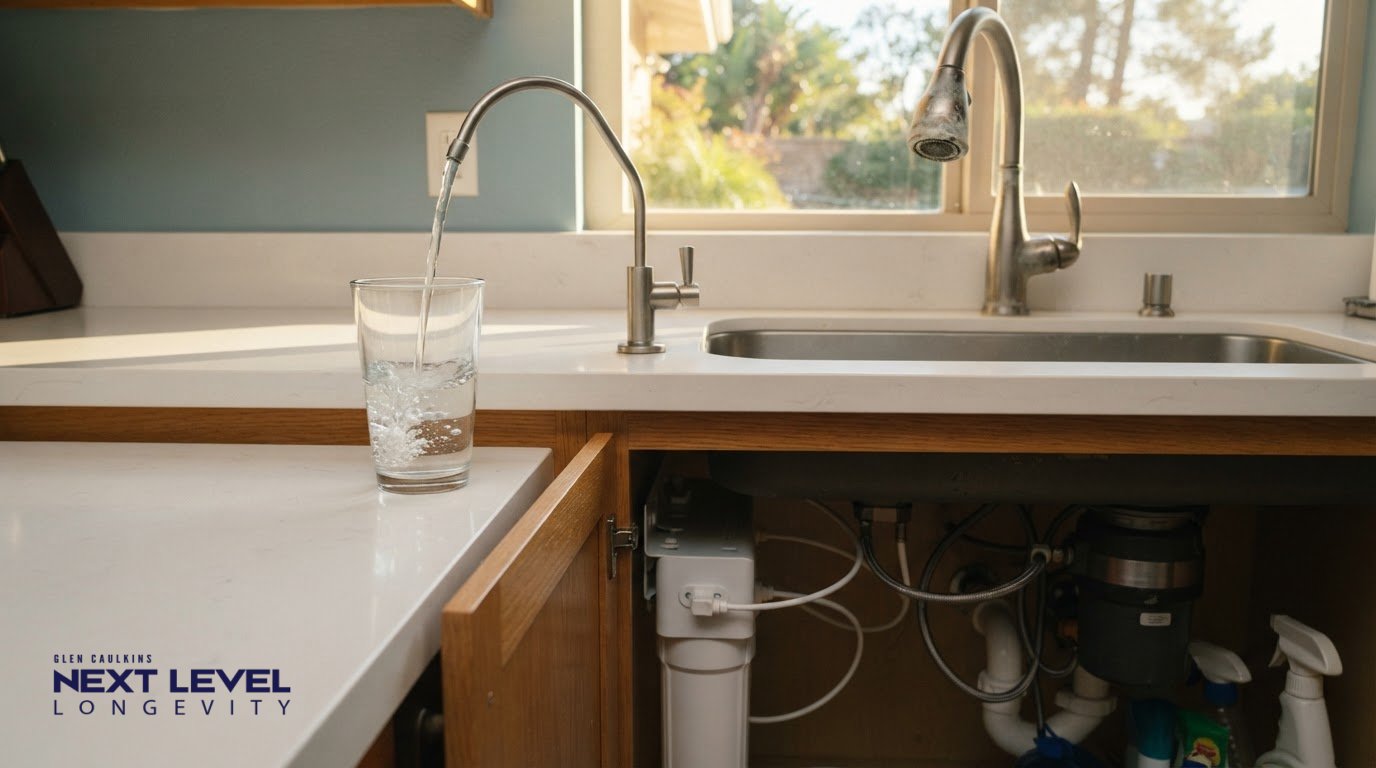
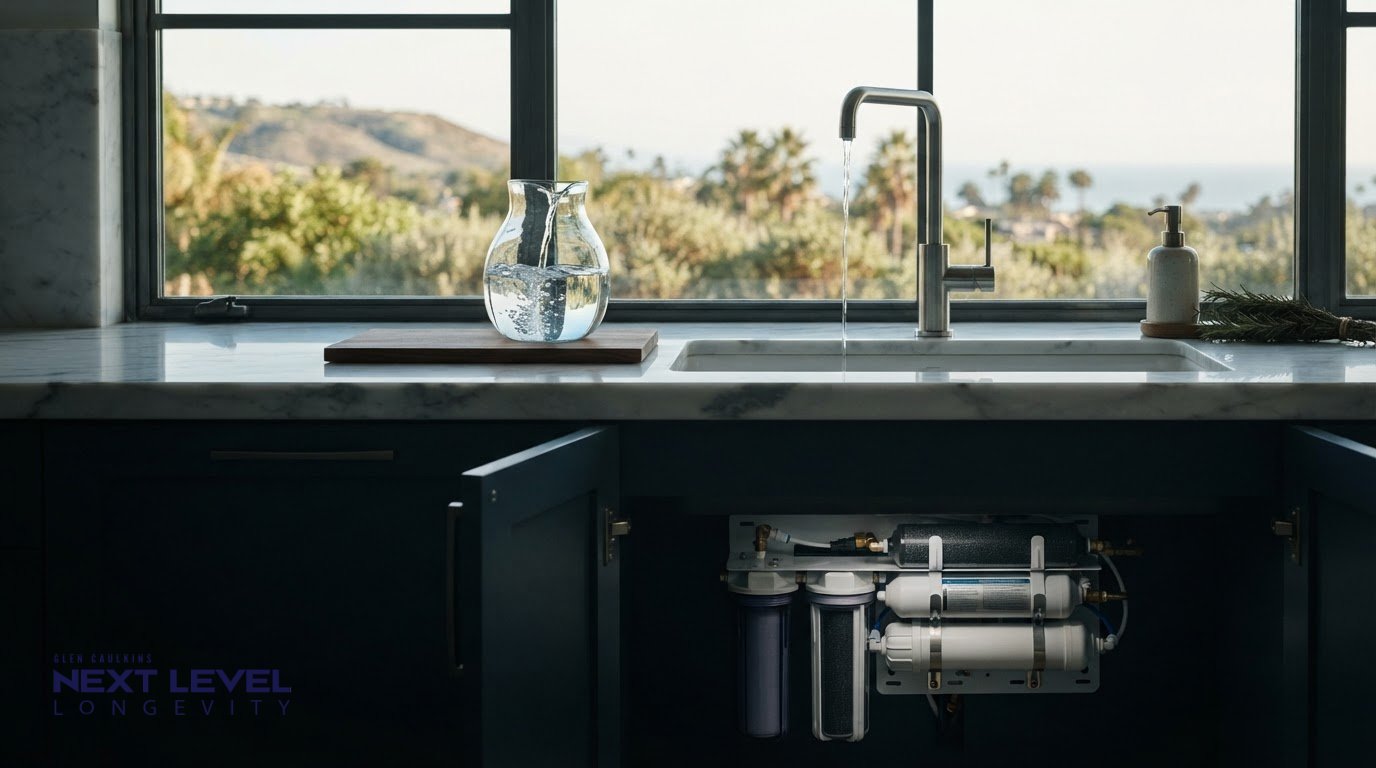
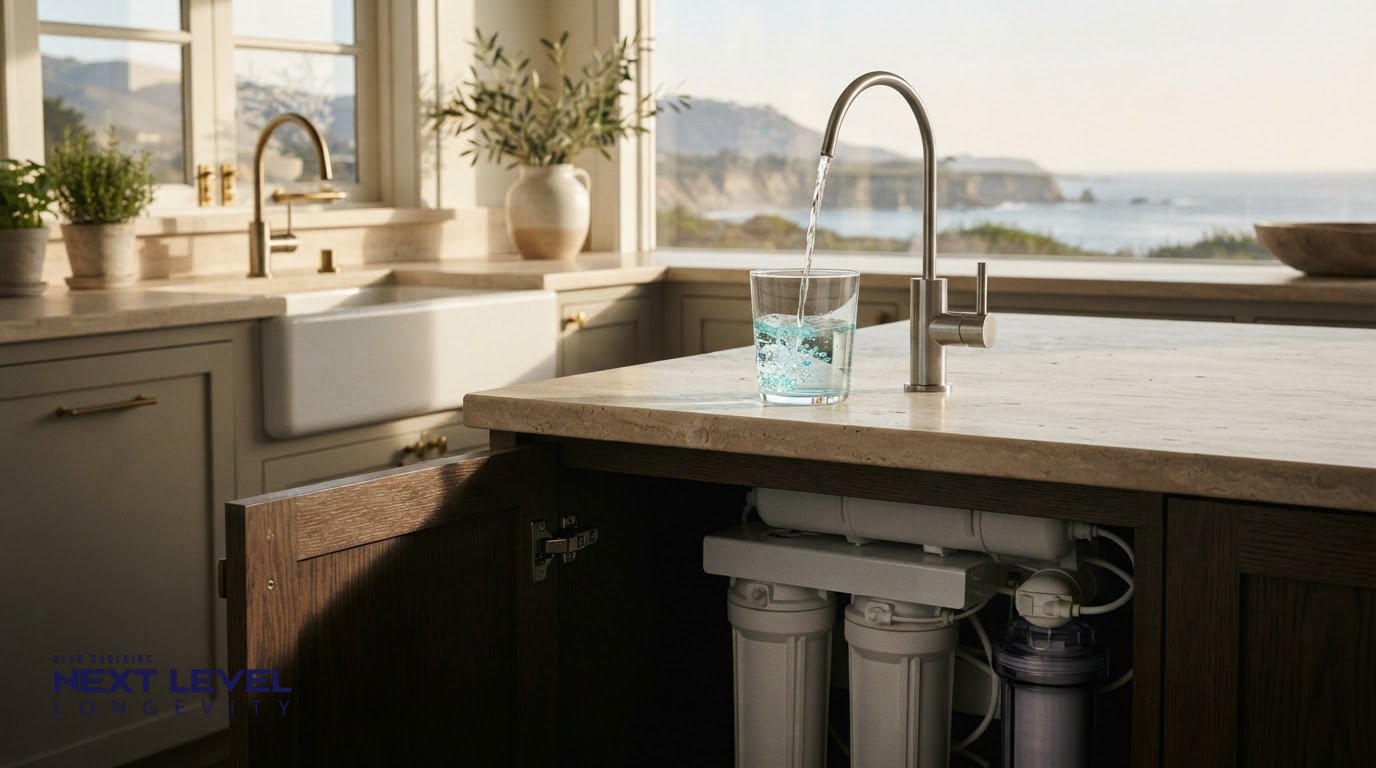
- For an under-counter drinking-water option, consider whether the Under-Counter Water Revival System fits your needs and the contaminants you want to address.
Contaminant levels compared with EWG health guidelines
Costa Mesa reports include measurements below federal legal limits as well as detections that merit comparison with health-based benchmarks. A detection is not automatically a violation, and results depend on the water system and sampling period.
Average Contaminant Levels and Federal Limits
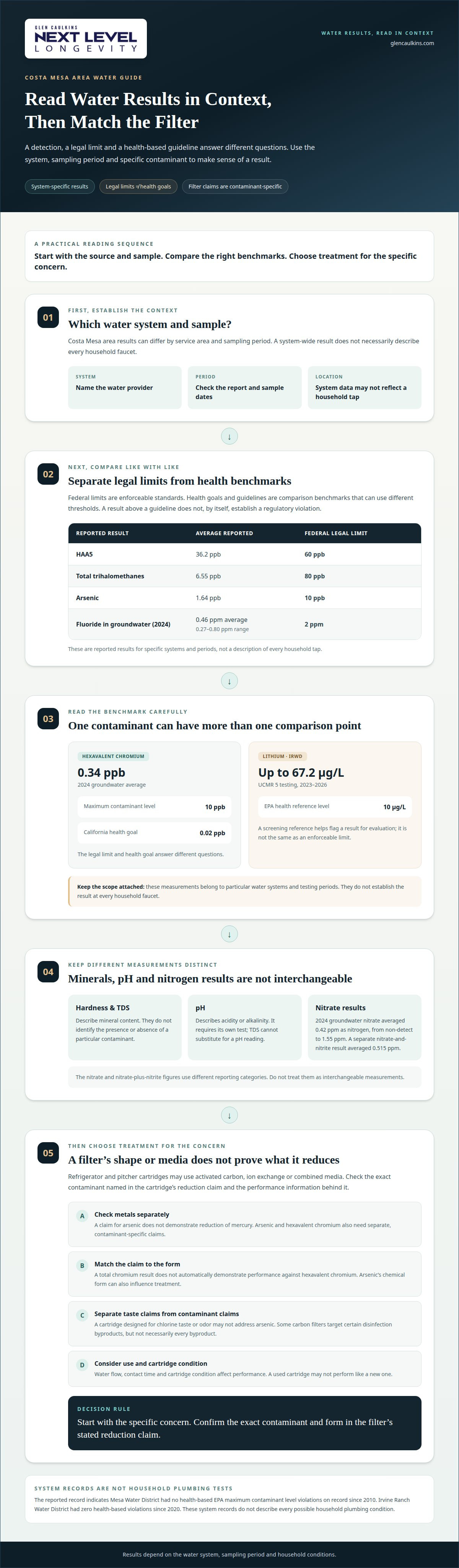
Federal limits are enforceable standards; health guidelines are comparison benchmarks that may use different thresholds. For example, reported HAA5 averaged 36.2 ppb against a 60 ppb legal limit, while total trihalomethanes averaged 6.55 ppb against 80 ppb. Arsenic was reported at 1.64 ppb against a 10 ppb limit. These comparisons describe specific results, not every household tap.
Hexavalent chromium illustrates why the benchmark matters. Its 2024 groundwater average was 0.34 ppb, below the 10 ppb maximum contaminant level. California’s health goal was reported as 0.02 ppb. The legal limit and health goal answer different questions. EWG health guidelines provide another comparison point, but a value above a guideline does not by itself establish a regulatory violation.
Nitrate, Nitrite, and pH Levels
Nitrate and nitrite are measured nitrogen compounds, while pH describes how acidic or alkaline water is. Mesa Water District’s 2024 groundwater nitrate average was 0.42 ppm as nitrogen, with detections from non-detect to 1.55 ppm. A separate reported nitrate-and-nitrite result averaged 0.515 ppm. These figures use different reporting categories, so they should not be treated as interchangeable measurements.
pH requires its own test result; nitrate levels cannot tell you the pH. Source water, treatment, and dissolved minerals can all influence pH. For a household comparison, use a pH reading from the same tap and sampling period as your other results. A mineral measurement such as total dissolved solids cannot substitute for a pH test.
Drinking Water Violations and Health Advisories
A violation means a regulated standard was exceeded; an advisory is a separate public notice about a water concern. The reported record indicates Mesa Water District had no health-based EPA maximum contaminant level violations on record since 2010. Irvine Ranch Water District’s system had zero health-based violations since 2020. Those statements concern system records, not every possible household plumbing condition.
The reported information identifies no health-based violation for the periods covered. That does not establish that every result is below every health guideline. When comparing Costa Mesa drinking water contaminants, record the system name and sample date alongside each result.
Lithium is another example of a screening comparison, not a federal legal-limit finding. Irvine Ranch Water District measured lithium up to 67.2 µg/L in 2023-2026 UCMR 5 testing, above EPA’s 10 µg/L health reference level. A screening reference helps flag a result for evaluation; it is not the same as an enforceable limit. The measurement also belongs to a particular testing period and water system.
Other results show why averages and individual detections both matter. The 2024 groundwater fluoride average was 0.46 ppm, with detections from 0.27 to 0.80 ppm, below its 2 ppm MCL. The average summarizes tested water; a range shows the spread. Neither figure alone describes every faucet, because household plumbing and sampling location can affect tap results.
Will a refrigerator or pitcher filter remove these contaminants?
Possibly, but a filter’s shape does not tell you what it removes. Check the exact contaminant named in the cartridge’s reduction claim and the conditions supporting that claim.
Heavy Metals Including Mercury and Arsenic
Heavy metals are elements that may occur in water and require contaminant-specific treatment. Refrigerator and pitcher filters may use activated carbon, ion exchange, or combined media, but the presence of those materials alone does not establish performance. Arsenic and mercury need separate consideration: a claim for one does not demonstrate reduction of the other. Check the cartridge label and supporting performance information for the specific substance.
Start with the concern, then match it to the filter’s stated capabilities. A cartridge designed to reduce chlorine taste or odor may not address arsenic. Similarly, a broad claim such as “reduces contaminants” does not tell you which substances were evaluated. Filter media, water flow, contact time, and cartridge condition all affect performance. A used cartridge may not perform like a new one.
Chlorine is added during disinfection, while disinfection byproducts can form when disinfectants react with material in water. Some carbon filters are designed to reduce chlorine taste and certain byproducts. That does not mean every refrigerator or pitcher cartridge handles every byproduct. Check whether the specific substance appears in the product’s reduction claims instead of assuming a general carbon filter covers them all.
Arsenic and Hexavalent Chromium
Arsenic and hexavalent chromium are distinct contaminants, so evaluate their reduction claims separately. Costa Mesa-area reports include results for both, but system measurements do not show what a particular household filter removes. Look for a cartridge claim and performance information specific to the contaminant, rather than relying on a general claim about metals.
Hexavalent chromium, sometimes called chromium-6, is one form of chromium. A result for total chromium does not automatically demonstrate performance against this specific form. Arsenic can also occur in different chemical forms, which can influence treatment. For either contaminant, identify the form covered by the filter’s claim and compare it with the form measured in the water report.
For a practical comparison, write down the contaminant, the filter’s exact claim, and the cartridge replacement instructions. Then check whether the stated reduction of chlorine or a specific metal matches your priority. Do not infer that mercury is present from a general discussion of heavy metals. Base the filter decision on relevant test results and the filter’s documented scope.
Refrigerator and pitcher filters can be convenient for drinking water, but their small cartridges have finite capacity. Follow the manufacturer’s replacement schedule and use the correct cartridge. To explore how water source, treatment, and finished-water composition connect, read Glen B. Caulkins’s research on water and the environment.
Should You Filter Your Costa Mesa Water?
Filtering is a household choice, not an automatic response to every detection. Start with the water system, sample date, and contaminant you want to address.
Water Testing and Sample Dates
Water quality testing measures substances in samples collected at particular places and times. A water quality report, also called a consumer confidence report, summarizes system-level results; it does not test every home’s tap.
Use the report for the utility serving your address, then note each sample date and result. Household plumbing can affect tap-water measurements, so a home test can answer a different question than a system-wide report. Costa Mesa’s reported hardness is 5.8 grains per gallon, below the approximate 7-grain threshold given for considering a softener. Hardness testing and contaminant testing address different concerns.
For nitrate, compare the result’s unit and sampling period with the relevant benchmark. An average in a report describes the samples tested, while a household sample reflects one location and time. Neither value should be substituted for the other.
PFAS Testing and Detections
PFAS are a group of chemical compounds tested individually or in panels. The Costa Mesa report lists 23 PFAS compounds on record for Irvine Ranch Water District, but that count alone doesn’t establish that any compound was detected.
Read each compound’s reported result, including whether it was detected and the sample date. The size of a testing panel tells you what was tracked, not how many substances were detected. Base filtering decisions on actual detection information and the filter’s documented, contaminant-specific performance, not simply on a compound’s name appearing in a testing record.
Lead, Arsenic, and Chromium-6 Detections
A detection is a measured amount in a sample; it is not automatically a health-based violation. Mesa Water District reported residential-tap lead as non-detect in 2024, with no maximum contaminant level violation. Irvine Ranch Water District reported a 0 ppb 90th-percentile lead result for Jan 1, 2023 to Dec 31, 2025, below the 15 ppb action level.
Arsenic and chromium-6 also appear in reported Costa Mesa results. The earlier section compares their measurements with legal limits and health goals. For a household decision, distinguish groundwater results from faucet samples and match the filter’s performance claim to the specific contaminant.
Water Sources and Treatment
A utility treats water from its sources before distributing it. Costa Mesa addresses may fall within the Mesa Water District or Irvine Ranch Water District service areas, so the relevant utility and report depend on your location.
Reported testing includes groundwater, and Metropolitan tested source water and treated surface water for Cryptosporidium in 2024 without detection. Chlorine and chloramines are used to disinfect drinking water. Find the latest consumer confidence report through the serving utility’s official water quality or report page; use its source and treatment descriptions for your address.
Costa Mesa water hardness and total dissolved solids
Water hardness measures dissolved minerals, chiefly calcium and magnesium, that can leave scale. Costa Mesa tap water is reported at 5.8 grains per gallon, equivalent to 98.4 mg/L. That value describes mineral content, not a contaminant concentration. It can help explain scale on fixtures or mineral spots on dishes, but it doesn’t identify other substances in the water.
Total dissolved solids, or TDS, measures the combined amount of dissolved material in water. Costa Mesa water is reported at 371 parts per million, compared with a California average of 285 ppm. TDS can include minerals and salts, but one TDS reading doesn’t reveal which substances contribute to it. It also can’t establish whether a specific contaminant is present.
Hardness and TDS describe related but different features. Hardness focuses on mineral ions associated with scale; TDS covers a wider range of dissolved material. For example, the reported hardness of 5.8 grains per gallon and TDS of 371 ppm are separate measurements. Neither substitutes for a contaminant-specific test or a utility water quality report.
For household decisions, start with the problem you observe. Scale on a kettle or faucet points toward mineral deposits, while an unwanted taste may have another cause. That comparison can inform a decision, but it doesn’t make softening necessary for every home.
A softener changes water hardness; drinking-water filters target the substances their media are designed to reduce. These methods serve different purposes. A softener may be relevant if scale affects plumbing or appliances, while a point-of-use filter is selected for a drinking-water concern. Do not choose either based on TDS alone: that measurement combines dissolved material without identifying it.
For a useful comparison, record the test type, location, and units. A hardness result in grains per gallon cannot be compared directly with TDS in parts per million. Mesa Water District system measurements describe distributed water, while a household tap can also reflect local plumbing. Keep these distinctions in mind when monitoring changes or considering filtration.
The reported 371 ppm TDS is higher than the cited California average, but that difference doesn’t identify a health concern or a specific mineral. Use TDS as a broad composition indicator, then rely on the relevant test for the question at hand. For scale, compare hardness; for a named contaminant, use its measured level and an appropriate filter claim.
EPA legal limits and health-based guidelines
A legal limit is an enforceable maximum concentration; a health-based guideline is a comparison value for evaluating potential concern. Costa Mesa results are easier to interpret when the benchmark type, sample period, and unit are considered together.
Potential health concerns vary by contaminant and exposure. A measured concentration is compared with the relevant benchmark; reported data do not determine an individual’s health outcome.
For example, 1,4-dioxane averaged 1.1 ppb in Mesa Water District groundwater during 2024, with detections from non-detect to 4.2 ppb. California’s notification level for 1,4-dioxane is 1 ppb. A notification level is not the same as a federal legal limit, so crossing that comparison point alone doesn’t establish a violation.
The distinction matters across water systems. A result may be below an enforceable standard but above a separate health-based comparison value. Both statements can be true because the benchmarks serve different purposes. When reviewing a result, record the contaminant, concentration, sample date, unit, and benchmark type instead of reducing it to “safe” or “unsafe.”
EPA maximum contaminant level goals, or MCLGs, are health goals, while maximum contaminant levels are enforceable standards. A goal may be stricter than a legal limit. For example, Costa Mesa reports list bromoform and bromodichloromethane detections above an EPA MCLG of zero. That comparison alone does not mean the water violated a legal limit.
Some results also use screening references rather than enforceable limits. EPA’s lithium health reference level is 10 µg/L, while Irvine Ranch Water District measured lithium up to 67.2 µg/L in 2023-2026 UCMR 5 testing. Treat that comparison as a screening signal, not as proof of a legal violation. The unit matters: µg/L and ppb are numerically equivalent in water, but reports should retain their stated units.
For another benchmark example, Mesa Water District’s reported uranium level was 0.76 pCi/L against a 20 pCi/L legal limit. Its combined radium-226 and radium-228 result was 0.07 pCi/L against 5 pCi/L. These values are below the listed legal limits; they do not establish that every contaminant is absent.
Before installing a filter, match its documented reduction claims to the specific contaminant and concentration you want to address. Filter media differ, and a general claim about organic compounds or metals does not establish reduction of every substance in those categories. Explore water chemistry research to learn how source, treatment, and mineral composition shape finished water.
Potential health concerns vary by contaminant and exposure; a measured concentration alone does not determine an individual’s health outcome.
Glen B. Caulkins: Under-Counter Water Revival System
The Under-Counter Water Revival System is a residential drinking-water option for people considering filtration at the kitchen tap. Glen B. Caulkins has a commercial interest in PristineHydro products, including this system. Consider that connection alongside the product information when weighing your options.
This system may suit a household seeking a dedicated under-counter setup instead of a pitcher or refrigerator cartridge. It is not a whole-house system, and it does not replace reviewing the water report or identifying your household’s concerns. A useful next step is to compare your priorities with the system’s product details.
Visit Glen B. Caulkins’s site to explore the Under-Counter Water Revival System.
Choose your next step with care
Water decisions become clearer when you start with a specific purpose: improving drinking water at home, carrying a system while traveling, or filtering shower water. Costa Mesa drinking water contaminants are one part of a larger picture that includes the source, treatment, household plumbing, and the filter’s documented scope. Consider these factors together when deciding what matters in your home.
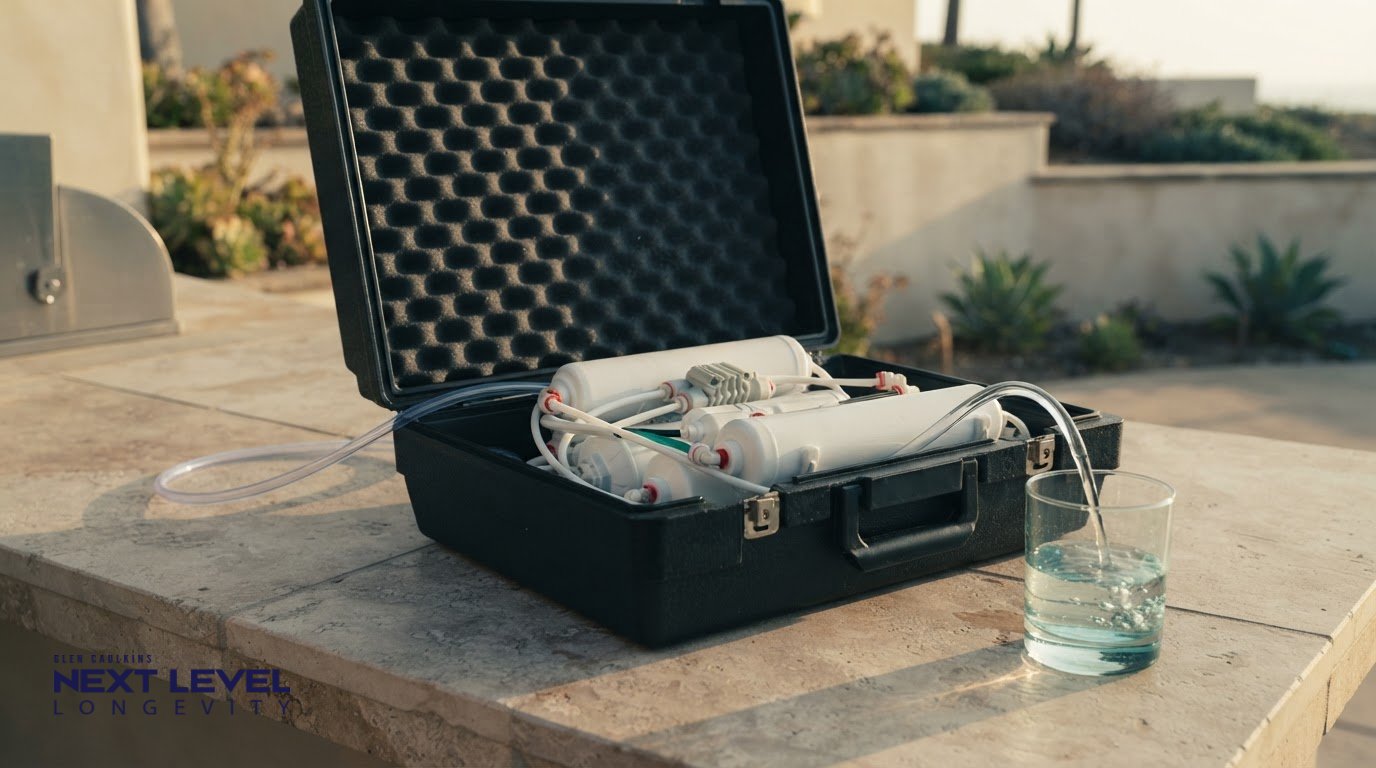
Glen B. Caulkins offers the Under-Counter Water Revival System for home drinking water, the Travel-Portable Water Revival System for travel, and the Aqualux filter with head for shower use. Each serves a different setting. Start by considering which water you want to address and where you use it.
If you’d like to explore those options or learn more about Glen’s work on water, minerals, and environmental chemistry, learn more about Glen B. Caulkins. Take the next step at your own pace, guided by the question you want your water choice to answer.
Frequently Asked Questions
What contaminants have been detected in Costa Mesa drinking water?
Reported records include detections across several contaminant categories, but the relevant results depend on the utility and sampling location. For a precise inventory, read the individual result entries rather than relying on a headline count. Note the exact contaminant name and whether the result is reported as a detection, non-detect, or range. This helps prevent separate records from being mistaken for one combined sample.
What are the latest Costa Mesa water quality test results and contaminant levels?
There is no single results table for every Costa Mesa address. Identify the utility serving your home, then review its latest report and the collection dates listed for each test. A report’s publication year may differ from the sample year. For a useful household record, note the utility, collection date, sampling location, and result units together.
How do Costa Mesa drinking water contaminant levels compare with EPA and California limits?
Keep each benchmark’s exact label alongside the result. A legal standard, health goal, notification level, and screening reference are different kinds of comparison points. Do not treat them as interchangeable or describe an exceedance of a health goal as a legal violation. A clear comparison identifies the contaminant, its measured form, the benchmark type, and the reporting unit.
How can Costa Mesa residents check for lead in household plumbing or request water testing?
For a household-specific assessment, use a laboratory test that analyzes lead in drinking water. Choose the tap relevant to your concern and follow the laboratory’s instructions for collection, container, and handling. Record the tap location and collection date with the result. Collection method matters, so do not combine samples or change the procedure unless the laboratory’s instructions say to.
What water filters remove contaminants found in Costa Mesa, and how much do they cost?
Filter choice depends on the specific contaminant and the product’s documented reduction claim. Compare the claim with the substance you want to address, then include cartridge replacement requirements in your decision. Prices vary by product and replacement needs, so consult current product information for the system you are considering. A general label such as “water filter” does not establish removal of a particular contaminant.
Frequently Asked Questions
What contaminants have been detected in Costa Mesa drinking water?
What are the latest Costa Mesa water quality test results and contaminant levels?
How do Costa Mesa drinking water contaminant levels compare with EPA and California limits?
How can Costa Mesa residents check for lead in household plumbing or request water testing?
What water filters remove contaminants found in Costa Mesa, and how much do they cost?
More articles