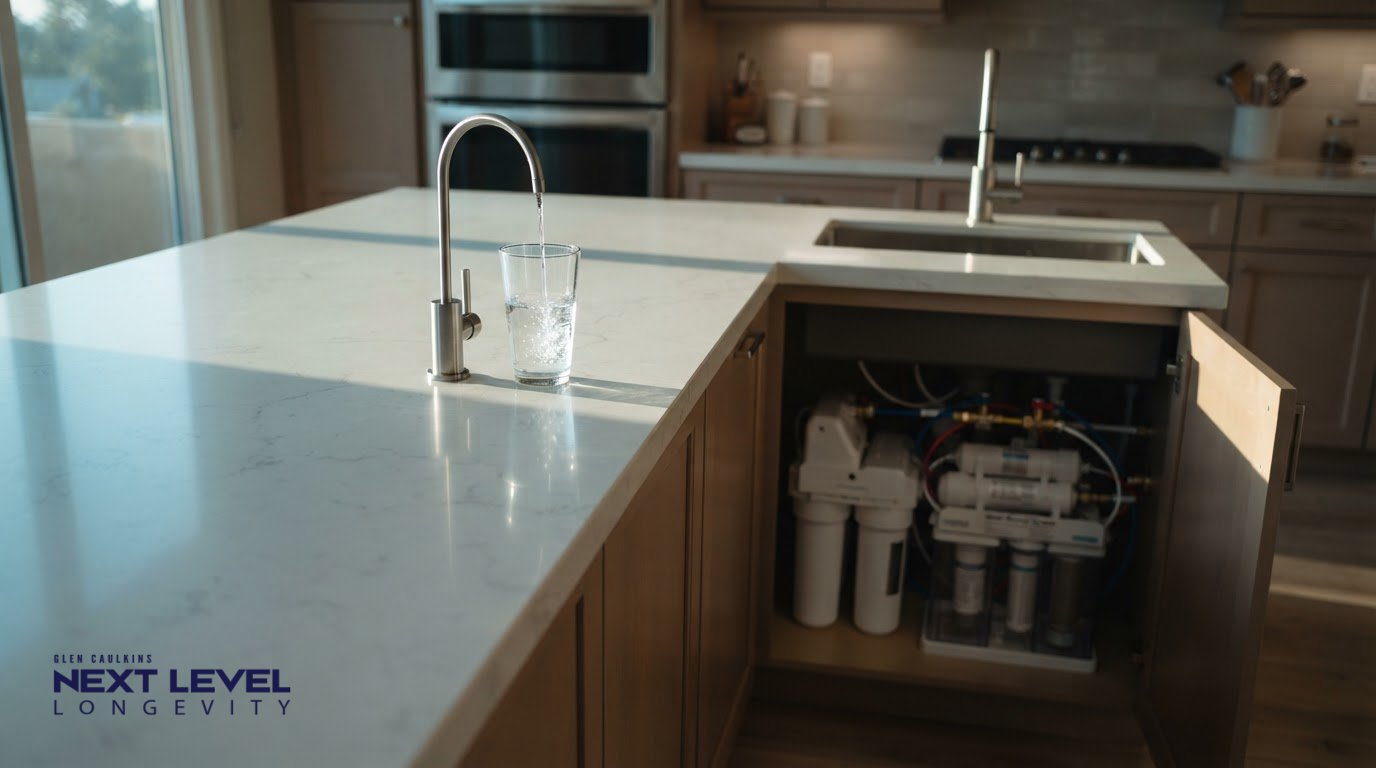
Under Counter Reverse Osmosis Systems for Home Water Filtration
November 21, 2026 · 17 min read
Capacity alone doesn’t decide the best fit. An under counter reverse osmosis system should suit your household’s water use, available cabinet space, and expectations for flow and wastewater. Some recommendations favor 800 or 1200 GPD systems, but rated capacity alone does not establish that a system will deliver faster flow or have a lower drain ratio. According to the U.S. Environmental Protection Agency, tankless systems use less space but may need a booster pump or take longer to fill a glass.
It’s reasonable to want an under counter reverse osmosis system that fits neatly beneath the sink and supplies water when you need it. But rated capacity is only one part of the decision. The system’s layout, storage, filtration stages, and upkeep also shape how it works in a real kitchen.
This guide explains common undersink RO configurations, what capacity figures can and can’t tell you, and how to weigh space, flow, maintenance, and water use. You’ll also see how Glen B. Caulkins’s interest in water chemistry informs PristineHydro’s Under-Counter Water Revival System. Glen has a commercial interest in PristineHydro products. This context can help you assess practical options and decide what matters for your kitchen.
Key Takeaways
- Choose a system by considering household water use and everyday flow, not capacity ratings alone.
- Compare tanked and tankless layouts by how they balance cabinet space, water storage, and filling convenience.
- Understand what a daily production rating describes before deciding whether it suits your household’s routine.
- Plan for regular filter maintenance, since upkeep is part of keeping a filtration system functioning properly.
- Explore the Under-Counter Water Revival System as a kitchen drinking-water option, and consider how its intended use fits your home.
How Can You Choose A Suitable RO System?
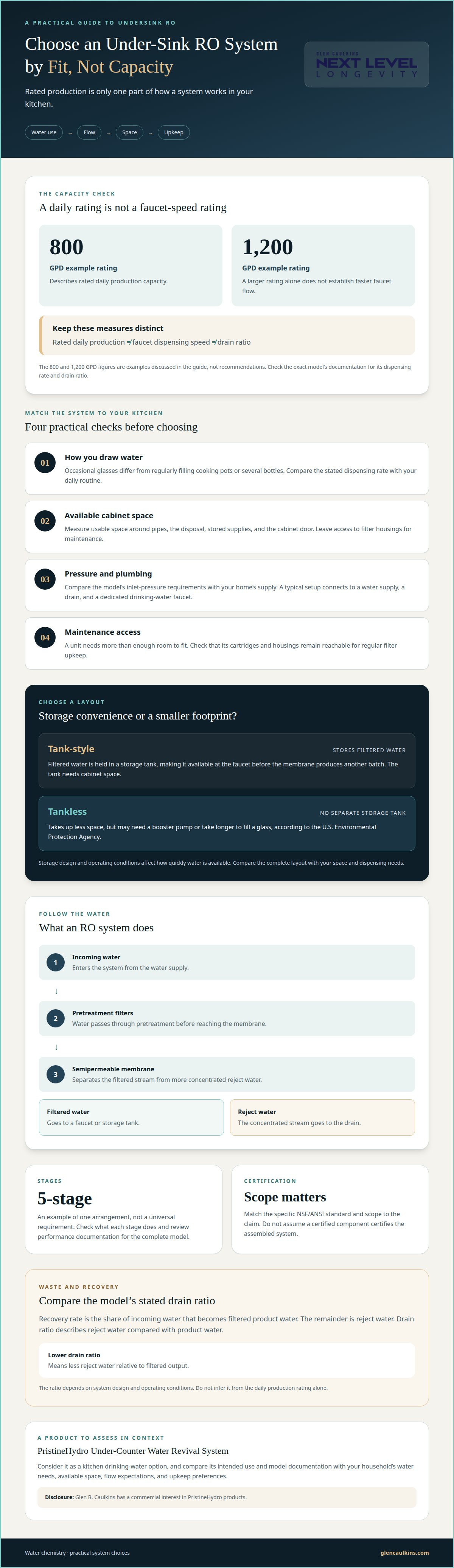
Choose by matching household water needs with faucet flow, installation requirements, and available cabinet space. Rated capacity helps, but it doesn’t tell the whole story.
Flow Rate Selection
Flow rate can mean rated daily production or the speed water comes from the faucet. An 800 or 1200 GPD rating describes rated production capacity. It does not, by itself, establish faucet speed or a lower drain ratio. Check the documentation for the exact model for its dispensing rate and drain ratio.
Consider how you use the tap. A household that fills a glass now and then has different needs from one that regularly fills cooking pots or several bottles. Compare the system’s stated dispensing rate with its daily production. Storage design and operating conditions also affect how quickly water is available. This distinction helps prevent a high GPD figure from obscuring the flow you experience at the sink.
NSF/ANSI Certifications
Look for the specific NSF/ANSI standard and scope identified for the exact system model. Match that scope to the performance claim you care about. A certification label should not be read as proof of claims beyond its stated scope.
Read the model’s supporting documentation alongside its label. Confirm that it applies to the complete system rather than assuming a certified component establishes certification for the assembled unit. Compare specific claims directly, such as the contaminant reduction being assessed. This keeps your decision tied to the model and claim, not a broad label alone.
Water Pressure and Plumbing Connections
Required inlet pressure varies by system design. Water pressure helps drive flow through the reverse-osmosis membrane, so pressure below a model’s operating requirements can slow production. Compare the system’s stated pressure needs with your home’s supply conditions before choosing. Requirements are model-specific, so don’t apply one system’s figures to another.
A typical under-sink setup connects to a water supply, a drain for reject water, and a dedicated drinking-water faucet. Existing pipes, shutoff valves, and the sink opening affect component placement. Tankless systems take up less space but may require a booster pump or take longer to fill a glass, according to the U.S. Environmental Protection Agency. Consider plumbing layout and dispensing needs together.
Cabinet Space Requirements
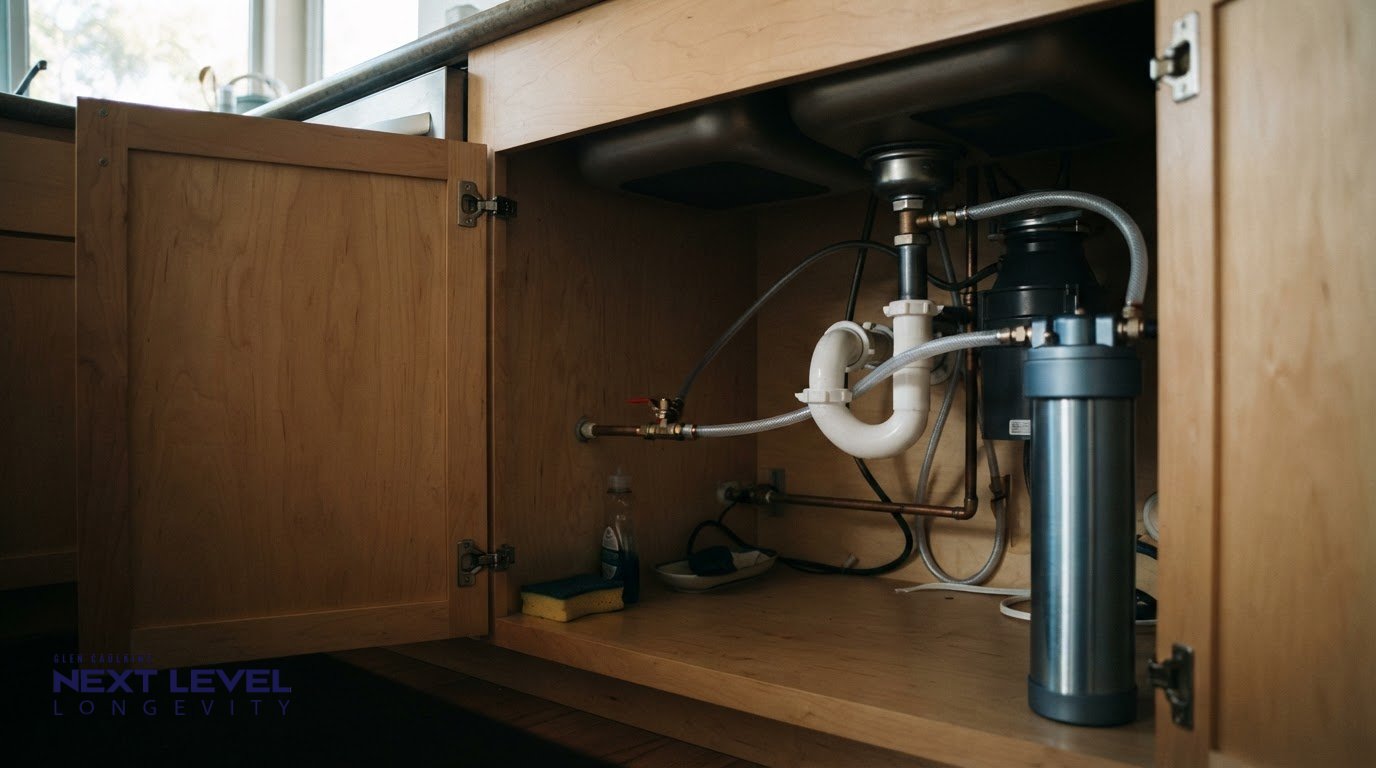
Measure usable cabinet space, including obstructions. Pipes, a garbage disposal, stored supplies, and the cabinet door can limit placement or access. Components also need room for maintenance, including clearance to reach filter housings. A unit may fit beside a disposal but remain difficult to service if its cartridges face a cabinet wall.
Tankless systems can reduce the space needed for storage, while tank-style designs need room for a storage tank. The U.S. Environmental Protection Agency notes that tankless systems may involve a booster pump or take longer to fill a glass. Compare the complete layout with cabinet obstructions and nearby connections. A workable fit leaves access for upkeep, not just enough room to squeeze the unit beneath the sink.
How Does A Reverse Osmosis Water Filter System Work?
Incoming water passes through pretreatment filters and a semipermeable membrane. The system then sends filtered water to a faucet or storage tank and directs concentrated reject water to the drain.
Tank and Tankless Systems
A tank-style system stores filtered water, making it available at the faucet before the membrane produces another batch. A tankless design has no separate storage tank, which changes how the system fits and dispenses water. According to the U.S. Environmental Protection Agency, tankless systems take up less space but may need a booster pump or take longer to fill a glass.
Compare rated production capacity with the way water is delivered. A large daily rating doesn’t automatically mean a fast pour at the faucet. Tank storage can affect the supply available for repeated draws; tankless performance depends on the system’s design and operating conditions.
Filtration Stage Requirements
There isn’t one stage count that suits every RO system. A five-stage listing, for example, describes one arrangement, not a universal requirement. Stages may include pretreatment, the RO membrane, and post-treatment. The useful question is what each stage does and whether the complete system’s performance claims match your water-treatment priorities.
Stage count alone can obscure important differences. Two systems with the same number of stages may use different components or make different claims. Look for clear descriptions of each stage and applicable performance documentation for the complete model. The membrane is central to reverse osmosis, while the other stages support the system’s treatment sequence.
Water Waste and Recovery Rate
RO separates water into a filtered stream and a more concentrated stream that flows to the drain. The recovery rate describes the share of incoming water that becomes filtered product water. The remainder is reject water. A system’s drain ratio expresses the same relationship from the perspective of reject water compared with product water.
There isn’t a single waste figure for every system. The ratio depends on the system design and its operating conditions, so compare figures stated for the specific model. A lower drain ratio means less reject water relative to filtered output. Don’t infer that ratio from the daily production rating alone.
Installation Sequence
Installation connects the system to the cold-water supply, drain, and drinking-water faucet. Follow the model’s instructions because fittings and layouts differ. A typical sequence is to shut off the supply, mount the components, connect the feed and drain lines, attach the faucet, then restore water and inspect connections for leaks.
Flush the system as its instructions direct before drinking from it. A five-stage, 100 GPD listing illustrates how stage count and rated capacity describe different things. GPD means gallons per day; it describes rated daily production, not the speed at which a glass fills. Glen B. Caulkins’s water research and chemistry writing offers broader context for thinking about finished drinking water.
Filter replacement features
Replacement filters are part of owning an RO system, not an occasional extra. Each cartridge has a specific role, fit, and replacement schedule. The Centers for Disease Control and Prevention (CDC) advises regular filter maintenance to keep filters working properly and prevent germs from growing in them. Follow the instructions for the exact system model.
Start with the model name and cartridge identification. Two systems can look similar beneath a sink but use different replacement parts. A cartridge that does not fit correctly may fail to seal or connect as designed. Match each replacement to the system’s model and filter position, rather than relying on appearance alone.
Replacement designs also affect the work involved. Some housings open for a cartridge change; other systems use a cartridge assembly designed for replacement as a unit. The system manual should identify the correct part and explain how to remove and install it. Clear instructions reduce the chance of mixing up a membrane, sediment filter, or post-filter.
Maintenance problems often begin with a missed change or incorrect installation. A worn cartridge can reduce performance, while a poorly seated filter can allow water to bypass its intended path. The CDC’s guidance makes routine care relevant to hygiene as well as operation. A written record of the model, filter position, and replacement date helps track each change.
- Identify the part: Record the system model and the cartridge position before ordering.
- Use the matching replacement: Compare the replacement part’s model compatibility with the system manual.
- Follow the change instructions: Use the specified sequence for removing, installing, and flushing each cartridge.
- Keep a maintenance record: Note the date and filter position after each replacement.
After installation, inspect the connections and housing for leaks. Follow the model’s flushing instructions before using the filtered water. If flow changes after a cartridge replacement, recheck that the cartridge is seated correctly and that the valves are in their intended positions. These steps help distinguish a fitting issue from a filter that needs attention.
Don’t assume every cartridge lasts the same length of time. Replacement timing depends on the specific system instructions and the water passing through it. Sediment load and household use can affect how quickly a filter reaches its service limit. The model’s maintenance guide is the practical reference for its sequence and timing.
Regular upkeep has a trade-off: it requires attention, correct parts, and access to the unit. A system placed behind stored items can make even a simple cartridge change awkward. Keep filter housings reachable and record each service date to make replacement a manageable household task rather than one that gets forgotten.
Product prices and sale discounts
RO system costs reflect more than the filtration method. Configuration, included components, replacement filters, and installation requirements all shape the purchase decision. PristineHydro’s current product pages show product prices. Installation costs depend on the work and parts needed for the particular sink and plumbing layout.
Start by comparing systems with similar purposes. A kitchen drinking-water system is not the same as whole-house treatment. Within undersink systems, compare the listed configuration, included parts, and installation requirements. A lower product price may not represent the complete setup if separate components or installation work are needed.
Replacement filters also belong in the cost picture. Check which cartridges the model uses and whether replacements are sold separately or as a set. Compare the ongoing filter needs of two systems alongside their initial product prices. This gives you a more useful view than focusing on the first amount alone.
A sale discount is meaningful only in relation to the same model and included items. Compare the product configuration before and during a promotion. A listed reduction may be difficult to interpret if the promoted option includes different components or a different replacement-filter arrangement. Read the offer dates and terms shown with that listing.
- Match the system: Compare the same model and intended use.
- Review the contents: Note which components and filters come with the listed configuration.
- Consider upkeep: Include the system’s replacement-filter needs in the comparison.
- Read promotion terms: Check the dates and conditions attached to the discount.
For example, a discounted system with fewer included components may not be directly comparable to a standard listing that includes those parts. Compare what each option contains, then consider the replacement filters required for that model. Keep the model name and configuration together in your notes to avoid comparing unlike options.
Installation can affect the overall decision too. Existing plumbing, the sink arrangement, and the space beneath the cabinet can shape the work involved. A system that fits your household’s needs and available layout offers a clearer basis for comparing total expense than a discount alone.
Before choosing, read the current product listing as a complete package: model, included components, replacement-filter details, and sale terms. This simple sequence makes the advertised price easier to interpret without letting a discount label decide for you.
Undersink reverse osmosis product range
Undersink RO systems vary by stage count, rated production, storage design, and replacement parts. Compare those features as a package. A five-stage listing rated at 100 GPD illustrates why a stage count and a production rating describe different characteristics.
Start with the system’s intended use and complete configuration. One listing may emphasize daily capacity, while another describes its stages or storage arrangement. Those labels answer different questions. The capacity rating describes stated production; the stage count describes the treatment sequence. Neither alone establishes how well a model performs against a particular contaminant.
Next, compare what the system includes. A product listing should identify its major components, compatible replacement filters, and installation requirements. For example, a system listing that names a membrane and post-filter gives more useful detail than a stage count alone. Match any performance claim to the exact model and its supporting documentation.
- Rated production: Note the stated GPD figure, such as 100 GPD.
- Stage arrangement: Record the number of stages and each stage’s stated role.
- System layout: Identify whether the listing describes a tank or tankless design.
- Replacement parts: Note the filter names and model compatibility.
- Performance claims: Match each claim to documentation for that exact model.
Then check whether the product’s stated capacity suits the intended routine. A 100 GPD rating is a production figure, not a guarantee of a particular faucet flow. Actual dispensing also depends on system design and operating conditions. Keep rated capacity separate from the pace of filling a glass or container.
Stage count deserves the same care. A five-stage system may list pretreatment, a membrane, and post-treatment, but the count alone doesn’t reveal each component’s function. Read the individual stage descriptions. Compare stated treatment claims and replacement requirements rather than assuming a longer sequence means broader performance.
Finally, compare the full ownership picture: system components, filter replacements, installation needs, and available cabinet space. For example, a compact system may suit a crowded cabinet, while a different configuration may better match the household’s dispensing pattern. Compare complete systems with clearly described components and purposes, not headline numbers alone.
A practical takeaway: use GPD to compare rated production, stage descriptions to understand the treatment sequence, and model-specific documentation to assess performance claims. This three-part comparison clarifies what a product range offers without treating unlike systems as interchangeable.
Glen B. Caulkins: Under-Counter Water Revival System
The Under-Counter Water Revival System is a practical option for readers considering a dedicated kitchen drinking-water system. It filters water through reverse osmosis and dual deionization, then adds minerals including magnesium and calcium bicarbonate. Glen B. Caulkins, PristineHydro’s founder, has a commercial interest in the company’s products.
Consider this option when you want an under-sink system for home use. For a portable setup, the Travel-Portable Water Revival System offers a different format. These products are filtration systems, not medical advice or treatment.
To learn more about Glen’s work, visit the About Glen page.
Choose the System That Fits Your Next Step
A home water system is one part of a larger question: what do you want your drinking water to be like, and what practical setup suits your routine? Glen B. Caulkins’s interest in water chemistry informs his work as an independent researcher and founder of PristineHydro. The Under-Counter Water Revival System is designed for kitchen use, while the Travel-Portable Water Revival System provides a portable option. The Aqualux filter with head addresses a different filtration need.
As you consider an under counter reverse osmosis system, keep your priorities in view: intended use, installation fit, ongoing maintenance, and performance information for the exact model. These choices clarify the next step without treating one configuration as right for every household.
To learn more about Glen and his work on water, visit the About Glen page. A thoughtful choice begins with the questions that matter in your own home.
Frequently Asked Questions
What Are The Benefits Of RO Water?
Reverse osmosis can provide a household with point-of-use water treatment, with performance depending on the system and its documented claims. It may suit people seeking an alternative to relying only on bottled water or untreated tap water for drinking and cooking. Water composition varies by source and treatment, including across Laguna Woods, Newport Beach, Costa Mesa, Laguna Beach, Carlsbad, and Irvine. A utility report or lab test can help identify what is present locally.
Why Do People Choose RO Water?
People may choose reverse osmosis for practical reasons, such as wanting a dedicated drinking-water tap or preferring the taste of treated water. It also gives households an option besides buying bottled water for daily use. There isn’t one reason that applies to everyone. Priorities differ: one household may focus on taste, while another may want treatment for drinking and cooking. The right choice depends on individual needs and local water conditions.
What is an under-counter reverse osmosis system and how does it work?
An under-counter RO system treats water at a kitchen sink. Water passes through filters and a semipermeable membrane, which separates treated water from a concentrated reject stream. The system sends treated water to a dedicated faucet or storage arrangement. Designs vary, so examine the exact model’s components and documented performance claims. Glen B. Caulkins’s Under-Counter Water Revival System uses reverse osmosis and dual deionization, then adds minerals including magnesium and calcium bicarbonate.
How much does an under-counter reverse osmosis system cost, including installation?
The total depends on the selected system and the installation work needed at the sink. Existing plumbing, faucet placement, and cabinet layout can affect installation requirements. PristineHydro’s current product pages show system prices; installation costs vary with the work and parts required. Glen B. Caulkins has a commercial interest in PristineHydro filtration products. Compare the system configuration and installation scope separately so the product price isn’t mistaken for a complete installed cost.
How often should under-counter RO filters and membranes be replaced, and what do replacements cost?
Replacement timing and cost depend on the specific system, its cartridges, and its maintenance instructions. Use the model’s schedule to identify when each filter or membrane needs attention, rather than applying one timetable to every system. Replacement parts also differ by model and filter position. PristineHydro offers replacement filters; match the part to the system’s exact model before ordering, and check the current product information for its price.
Does an under-counter reverse osmosis system remove lead, PFAS, fluoride, and other contaminants?
What a system removes depends on the exact model and the performance claims supported for it. A general RO label alone doesn’t establish reduction of lead, PFAS, fluoride, or every other substance. Check model-specific performance documentation for each contaminant of concern. To learn what may be present in household water, consult your local utility’s water report or obtain a laboratory test. This guide is not health advice and cannot determine water composition.
What are the best under-counter reverse osmosis systems in the United States?
An 800 or 1200 GPD rating alone does not establish a system’s faucet flow rate or drain ratio. Compare documented performance, cabinet space, installation requirements, and maintenance before choosing.
Frequently Asked Questions
What Are The Benefits Of RO Water?
Why Do People Choose RO Water?
What is an under-counter reverse osmosis system and how does it work?
How much does an under-counter reverse osmosis system cost, including installation?
How often should under-counter RO filters and membranes be replaced, and what do replacements cost?
Does an under-counter reverse osmosis system remove lead, PFAS, fluoride, and other contaminants?
What are the best under-counter reverse osmosis systems in the United States?
More articles