Is Costa Mesa Tap Water Safe to Drink? A Reference on Limits
October 24, 2026 · 15 min read

A water result can meet a legal limit and still exceed a health-based guideline. For Costa Mesa homes served by Mesa Water District, the district’s water was in compliance with federal health-based standards during the EPA-assessed quarter from April through June 2024. So the answer to whether Costa Mesa tap water is safe to drink is reassuring under that standard, but the benchmark matters.
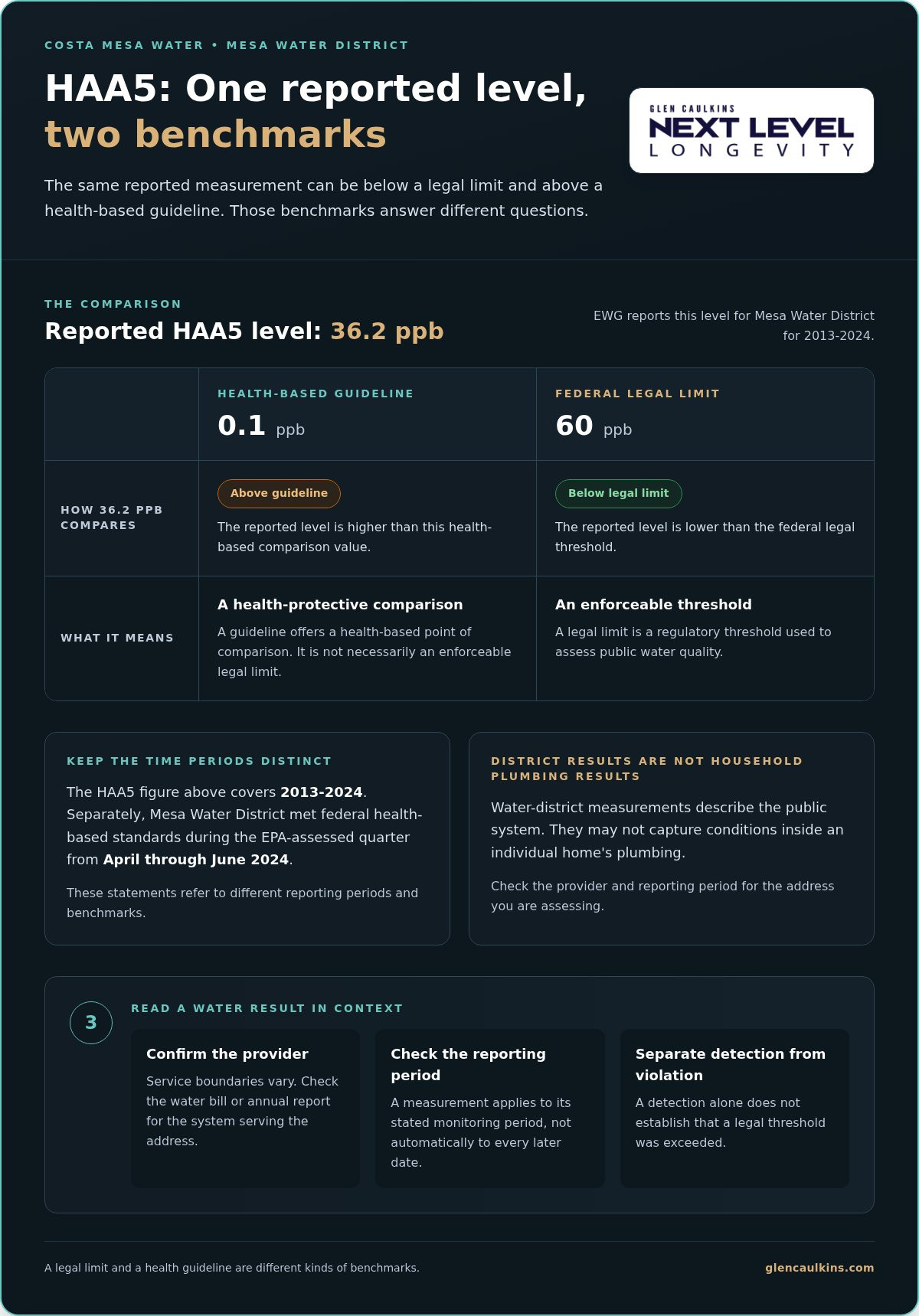
It’s reasonable to want more than a pass-or-fail label. EWG reports Mesa Water District’s HAA5 level at 36.2 ppb for 2013-2024, below the legal limit of 60 ppb but above its health guideline of 0.1 ppb. Those limits answer different questions: one sets an enforceable threshold, while the other is a more health-protective comparison. This reference explains how to read the difference, what reported measurements say about disinfection byproducts, and why water-district data may not capture conditions inside an individual home.
Key Takeaways
- Understand why meeting a federal legal limit and meeting a health-based guideline are different ways to assess water measurements.
- Use the annual Consumer Confidence Report to see how your water system reports its test results and compliance status.
- Learn why disinfection byproducts deserve a closer look, even when reported levels are below legal limits.
- Separate water-district measurements from possible changes that can occur in a home’s plumbing.
- Consider whether an Under-Counter Water Revival System fits your household’s interest in point-of-use water treatment.
Is Costa Mesa Tap Water Safe to Drink?
For customers of Mesa Water District, the available compliance information indicates water met federal health-based standards during the EPA-assessed quarter from April through June 2024. To understand what that means for a household, distinguish district-wide results from local plumbing, reported violations, and temporary advisories.
Consumer Confidence Reports
A Consumer Confidence Report is an annual summary of a public water system’s water quality and compliance. California reports describe detected contaminants, monitoring results, and whether the system met applicable standards. Read the report for the provider serving your address, note its reporting period, and distinguish a detection from a violation.
How does Costa Mesa tap water compare with bottled water and nearby Orange County cities? District data alone cannot establish a direct comparison: bottled-water labels and neighboring systems describe different sources and measurements. Compare the stated source, test period, and contaminant values instead of treating “bottled” or “tap” as a complete measure of quality.
Water Quality Violations and Reporting
A health-based violation occurs when a water system fails to meet an applicable health standard. Mesa Water District has no recorded health-based EPA maximum contaminant level violations since 2010; Irvine Ranch Water District reports 0 health-based violations since 2020. These records describe separate systems and periods, so identify your provider before drawing a conclusion.
For suspected pollution, distinguish a discharge from a drinking-water concern. Costa Mesa directs reports of discharges on public property or in the public right-of-way to Public Services at (714) 754-5323. Residents can report water pollution through the 24-hour hotline at (714) 567-6363. Include the location and observed condition when reporting.
Costa Mesa Water Provider
A water provider is the public system that delivers treated water to an address. Mesa Water District supplies Costa Mesa customers, but service boundaries mean the provider depends on location. Check the provider name on a water bill or annual report before relying on district test results.
Does Costa Mesa have hard water, and what is its typical hardness level? Costa Mesa tap water measures 5.8 grains per gallon of hardness. Hardness describes dissolved minerals, chiefly calcium and magnesium; it can contribute to scale on fixtures and appliances, but it is a separate measure from health-based contaminant limits.
Water Advisories and Boil Notices
A boil-water notice is a temporary instruction for a defined area when public officials advise precautions. The available facts here do not establish a current Costa Mesa notice, so a district-wide compliance result should not be treated as a live advisory update. Follow any notice that names your address or neighborhood.
Is Costa Mesa tap water safe for infants, pregnant people, and people with weakened immune systems? Public-system compliance results describe the water system, not individual medical circumstances. These groups should consult current public notices and their healthcare professional’s guidance when making personal decisions.
Contaminant measurements compared with legal limits
A contaminant measurement is the amount reported in a water sample. EPA monitoring data and health-based comparisons answer different questions, so check the reporting period and benchmark.
Drinking Water Standards
A drinking water standard is a regulatory threshold used to assess public water quality. The supplied Costa Mesa summary says two contaminants exceeded EPA maximum contaminant level goals, while reported levels met federal legal limits. However, EPA compliance monitoring data from 2012-2019 detected eight regulated contaminants, including one average above a federal limit. Read these results together, with attention to dates and the specific measurement described.
Does Costa Mesa tap water meet EPA and California drinking water standards? The summary reports compliance with federal legal limits, while a separate EPA dataset records one average above a federal limit. These are not identical findings. Compare the contaminant, sample period, and compliance basis in the underlying water quality report.
Measured Contaminant Levels
A measured level is the concentration reported in samples over a stated monitoring period. EPA compliance data for Costa Mesa from 2012-2019 averaged arsenic at 2.22 ppb, total trihalomethanes at 22.7 ppb, and HAA5 at 6.61 ppb. The same dataset reported nitrate at 1,010 ppb and combined radium at 0.413 pCi/L.
EPA data also list nitrate plus nitrite at 271,000 ppb, compared with a federal limit of 10,000 ppb. Because that reported figure conflicts with the separate summary describing compliance, don’t blend the records into a single conclusion. Check the named analyte, unit, averaging period, and applicable limit in the report.
EPA-Regulated Contaminants
An EPA-regulated contaminant is assessed against a federal drinking-water requirement. Costa Mesa monitoring data cover eight regulated contaminants, including arsenic, fluoride, nitrate, uranium, and disinfection byproducts. A detection alone does not show whether a legal threshold was exceeded; that depends on the concentration and applicable standard.
Does the latest Costa Mesa water quality report show lead, arsenic, PFAS, and disinfection byproducts? The cited Costa Mesa data give arsenic and disinfection-byproduct averages for 2012-2019, but Irvine Ranch Water District’s lead and PFAS records describe a different system. Don’t substitute Irvine Ranch results for Costa Mesa measurements.
Health Guideline Exceedances
A health guideline is a health-based comparison value, not necessarily an enforceable legal limit. EWG reports that Mesa Water District measurements for 2013-2024 included 1,4-dioxane at 1.72 ppb, 4.9 times its guideline, and hexavalent chromium at 0.136 ppb, 6.8 times its guideline.
EWG also reports arsenic at 1.64 ppb, below the legal limit of 10 ppb but above its health guideline. Cadmium is another contaminant name readers may encounter, but the cited Costa Mesa figures here do not provide a cadmium measurement. Glen B. Caulkins has a commercial interest in PristineHydro water-treatment products; his research on water chemistry explores how water measurements fit into a wider account of treatment and finished-water composition.
California public water safety
Public water safety involves both the water delivered by a public utility and conditions inside each home. In California, utility monitoring describes system-wide quality, while household plumbing can raise separate concerns that district results may not capture.
California’s public water network includes more than 400 large, urban utilities supplying over 90% of residents, alongside nearly 2,500 smaller utilities serving more rural communities. These figures show why a statewide label cannot describe every tap. The provider, source water, treatment process, and distribution system all shape the water reaching a particular address.
For Costa Mesa, Mesa Water District reports 100% local groundwater as its customer supply and conducts more than 30,000 water quality tests annually. That monitoring provides a broad view of the district’s system, not a direct test of every home’s faucet. A water quality report is therefore useful for understanding utility results, while household plumbing remains a separate part of the picture.
Independent testing is a targeted step, not an automatic requirement for every California public-water customer. People concerned about a specific home condition can use a laboratory accredited for that drinking-water test by California’s Environmental Laboratory Accreditation Program, or ELAP. The California State Water Board identifies drinking-water-related ELAP fields of testing as 101, 102, 103, 104, 105, and 106. Match the laboratory’s field to the contaminant being tested.
A test should answer a defined question. For example, a household concerned about plumbing-related metals can choose an appropriate metals test rather than a broad, unfocused panel. Lead and cadmium are examples of metals people may ask a laboratory to assess; organic compounds, manganese, and mercury are other analytes that can appear in water testing. Their mention does not mean they were detected in a particular Costa Mesa home.
Property owners are responsible for addressing water quality problems caused by plumbing on their private property. Renters concerned about plumbing conditions should work with their landlord on testing and any needed remediation. A utility report describes the water system, while a tap sample reflects conditions at the sampled location.
Use a practical sequence: identify the water provider, read its annual report, then define any remaining household concern. If the report’s contaminant table does not address the issue, contact the public water system or local county environmental health department. A focused question and the correct ELAP testing field can clarify the next step.
Disinfection byproducts
Disinfection byproducts are compounds formed when a disinfectant reacts with organic matter in water. Chlorine is one disinfectant associated with this process. The resulting measurements depend on water conditions and treatment, so a reported value needs its sampling period and comparison benchmark to make sense.
EWG reports Mesa Water District total trihalomethanes at 6.55 ppb for 2013-2024. That measurement is below the legal limit of 80 ppb and 44 times EWG’s health guideline of 0.15 ppb. These comparisons describe different thresholds, not conflicting measurements. The legal limit and health guideline should not be treated as interchangeable.
EWG also reports Mesa Water District HAA9 at 5.62 ppb for 2013-2024, which is 94 times its health guideline of 0.06 ppb. HAA9 refers to a group of haloacetic acids. The reported comparison helps readers distinguish a measured concentration from a health-based benchmark, but it does not establish that a household tap has the same concentration.
Other reported compounds show why the individual chemical matters. For Mesa Water District, EWG lists bromodichloromethane at 0.882 ppb, 15 times its guideline of 0.06 ppb, and bromoform at 3.54 ppb, 7.1 times its guideline of 0.5 ppb. EWG reports dibromoacetic acid at 1.60 ppb, 53 times its guideline of 0.03 ppb.
EWG’s figures cover the 2013-2024 reporting period, while a utility’s water quality report organizes results around its own monitoring and compliance records. Comparing those sources requires matching the compound, unit, and period. For example, a trihalomethane result cannot be substituted for a haloacetic acid measurement, even when both belong to the broader category of disinfection byproducts.
Arsenic is a separate contaminant, not a disinfection byproduct, so its measurement belongs in a different part of a water quality comparison. Mineral content is also distinct from disinfection chemistry, a distinction that informs Glen B. Caulkins’s water chemistry research. Keeping these categories separate helps readers interpret test results without treating every detected substance as the same kind of water-quality issue.
IRVINE RANCH WATER DISTRICT reported bromoform at 1.83 PPB, above the EPA MCLG of 0 PPB. IRVINE RANCH WATER DISTRICT also reported bromodichloromethane at 5.09 PPB, above the EPA MCLG of 0 PPB; the reported values differ by compound.
Federal legal limits and health-based guidelines
The Safe Drinking Water Act protects drinking-water quality in the United States. For readers comparing Costa Mesa measurements, it provides a framework for understanding reported compliance. Read each result alongside the contaminant name, measurement unit, sampling period, and benchmark attached to that record.
Start with the exact analyte name. Similar names can refer to different substances or grouped measurements, and a benchmark may apply only to the named contaminant. Next, check the unit: a number in ppb cannot be compared directly with a value in ppm without conversion. Then match the reporting period, since an annual average and a single sample represent different kinds of evidence.
Keep the source of each comparison clear. A municipal water report presents results and compliance information for its water system. A health-based guideline from another organization uses that organization’s comparison framework. If two sources appear to disagree, check whether they report the same compound, period, unit, and type of result before drawing a conclusion.
This method also helps prevent treating a detection as a complete answer. A reported contaminant concentration does not, by itself, show what comparison was used. Look for the applicable benchmark and reporting period alongside the measurement. Without that context, readers can mistake a concentration for a compliance finding.
For household decisions, distinguish system-wide results from a sample collected at a particular tap. A district report describes monitored water-system results; a household sample addresses water collected at that location. These records answer different questions. If the concern is a home’s plumbing, system-wide figures cannot identify its condition.
Filters also require contaminant-specific evidence. A legal comparison does not establish what a particular filter reduces, and a broad product label cannot replace performance information for the substance in question. Match treatment decisions to the relevant contaminant and the filter’s documented scope. Glen B. Caulkins’s research on water chemistry and finished-water composition considers these measurements in a broader chemical context.
Glen B. Caulkins: Under-Counter Water Revival System
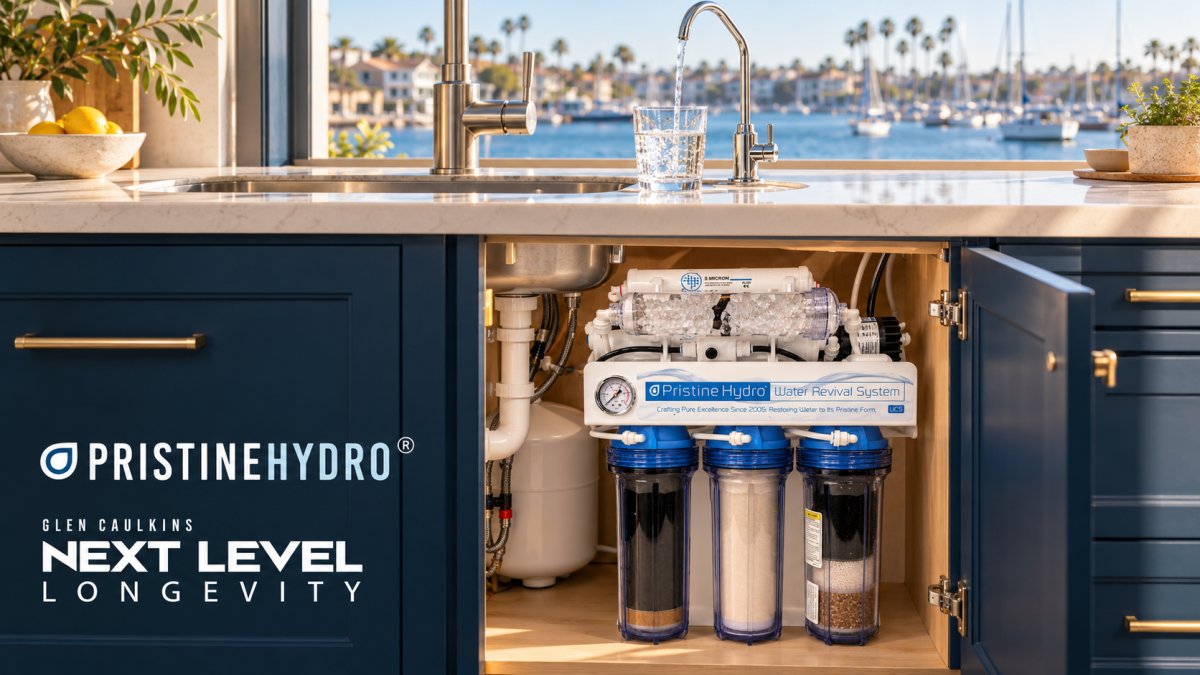
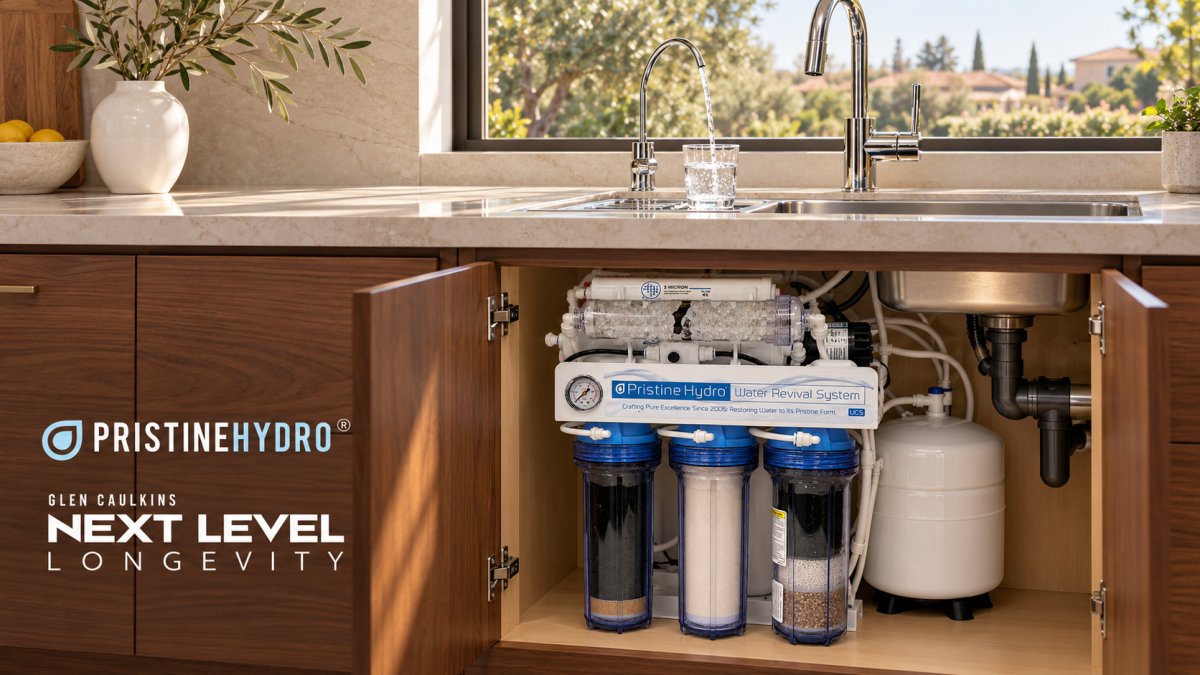
The Under-Counter Water Revival System offers a point-of-use option for households considering additional treatment at the kitchen tap. It may suit readers who have reviewed their district’s water measurements and want a system focused on drinking water, rather than treatment throughout the home.
Choose a filter based on the specific concern. Match its documented performance to the contaminant or water characteristic you want to address, and follow its maintenance requirements. District-wide measurements can inform the decision, but they do not describe every home’s plumbing or establish what a particular filter will remove.
For a portable option, the Travel-Portable Water Revival System serves a different setting. Explore the Under-Counter Water Revival System’s current details, or visit glencaulkins.com to learn more.
Choose Your Next Step With Clearer Water Priorities
To answer whether Costa Mesa tap water is safe to drink, start with the measurements relevant to your household. A district report can guide your inquiry, while a specific concern about taste, treatment, or plumbing may call for a more focused next step. Keep these questions distinct, and do not expect one measure or filter to answer them all.
If you’re considering additional treatment, first identify what you want the system to address and how you’ll maintain it. Glen B. Caulkins’s Under-Counter Water Revival System is an option for drinking water at the kitchen tap. The right choice depends on your priorities and the product’s documented scope, not on a broad claim that every household needs filtration.
For a considered conversation about your water questions and available options, contact Glen B. Caulkins for help. A clear question is a useful place to begin.
Frequently Asked Questions
Is Costa Mesa tap water safe to drink according to the latest water quality report?
For Mesa Water District customers, available records show compliance with federal health-based standards during the EPA-assessed quarter from April through June 2024. Read the district’s annual Consumer Confidence Report for its system results and reporting period. That report describes water-system monitoring, not a test of your kitchen tap. If your address has another provider, use that provider’s report and notices instead.
What contaminants are detected in Costa Mesa drinking water, and at what levels?
EPA compliance monitoring data for Costa Mesa from 2012-2019 reported average levels of arsenic at 2.22 ppb, total trihalomethanes at 22.7 ppb, and HAA5 at 6.61 ppb. These are historical system measurements, not current results for every home. Check each result’s date, unit, and benchmark before comparing contaminants; a detected amount alone doesn’t establish whether it exceeded a legal limit.
How can Costa Mesa residents check for lead in household plumbing or request water testing?
To assess lead at your tap, arrange a household water test through a laboratory accredited by California’s Environmental Laboratory Accreditation Program for the relevant drinking-water test. Follow the laboratory’s sampling instructions so the result reflects the intended tap and sampling conditions. If you rent, involve your landlord in testing and any needed plumbing remediation. A utility-wide result cannot show the lead level at an individual household faucet.
How does Costa Mesa tap water compare with bottled water and nearby Orange County cities?
District data alone cannot establish a direct comparison with bottled water or nearby Orange County cities because they involve different sources and measurements. Compare the stated source, test period, and contaminant values.
What are the latest Costa Mesa water quality report results for lead, arsenic, PFAS, and disinfection byproducts?
Costa Mesa data from 2012-2019 report arsenic at 2.22 ppb, total trihalomethanes at 22.7 ppb, and HAA5 at 6.61 ppb. The cited Costa Mesa data do not give lead or PFAS results; Irvine Ranch records are for a different system.
Frequently Asked Questions
Is Costa Mesa tap water safe to drink according to the latest water quality report?
What contaminants are detected in Costa Mesa drinking water, and at what levels?
How can Costa Mesa residents check for lead in household plumbing or request water testing?
How does Costa Mesa tap water compare with bottled water and nearby Orange County cities?
What are the latest Costa Mesa water quality report results for lead, arsenic, PFAS, and disinfection byproducts?
More articles