Shower filtration prices and filter options for homeowners
November 20, 2026 · 15 min read

More filtration stages don’t automatically make a shower filter better. The right choice depends on what it is designed to reduce, how often its cartridge needs replacing, and whether it fits your shower. These factors also affect the ongoing cost of shower filtration, so the purchase price alone doesn’t tell the whole story.
It makes sense to compare prices first, but cartridge capacity and replacement needs also affect maintenance costs. Filtration claims depend on the media inside the unit, not simply the number of stages.
This guide compares shower-filter formats, stated capacities, filtration stages, reduction claims, installation, maintenance, and customer reviews. Learn how a filter with an included showerhead differs from an inline filter, what to look for in performance claims, and which practical details can help you choose one for your home.
Key Takeaways
- Compare filters by their intended use, capacity, replacement needs, and total upkeep, not just the purchase price.
- Read reduction claims by contaminant and test scope; a longer list of filtration stages alone doesn’t establish performance.
- Match the filter format to your shower setup, then account for installation and cartridge maintenance.
- Use customer recommendations as context, while weighing the reviewer’s water conditions and product use against your own.
- Distinguish an included shower head from an inline unit when considering PristineHydro’s Aqualux filter with head and Ultimate Dual KDF inline filter.
Product comparisons, prices, and filter capacities
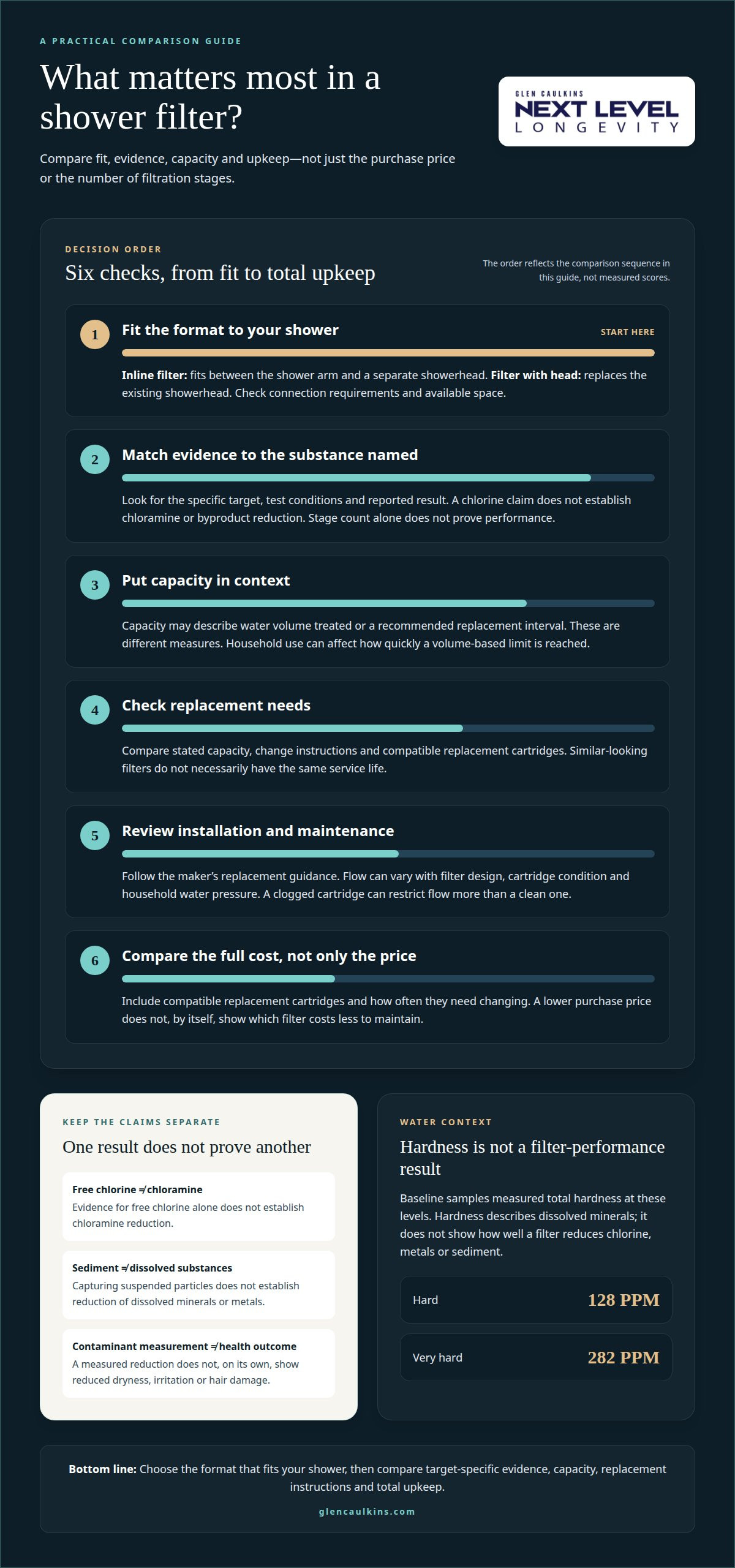
Compare shower filters by format, stated capacity, replacement requirements, and intended use. The purchase price is only one part of the cost of ownership. A filter that needs more frequent cartridge changes may cost more to maintain than one with a longer stated service interval. Compare each filter with its compatible replacements rather than judging by the initial price alone.
Capacity figures need context. A stated capacity may refer to the volume of water treated or the recommended time before cartridge replacement. These measures aren’t interchangeable. For example, a household that showers frequently may reach a volume-based limit sooner than one with lighter use. Follow the product’s capacity and replacement instructions, and don’t assume filters of similar size have the same service life.
Water conditions also shape the comparison. Baseline samples measured total hardness at 128 PPM and 282 PPM, described as hard and very hard, respectively. Hardness is a measure of dissolved minerals, not a direct measure of how well a filter reduces chlorine, metals, or sediment. Use hardness information to understand the water context, then assess a filter’s separate performance claims for each named substance.
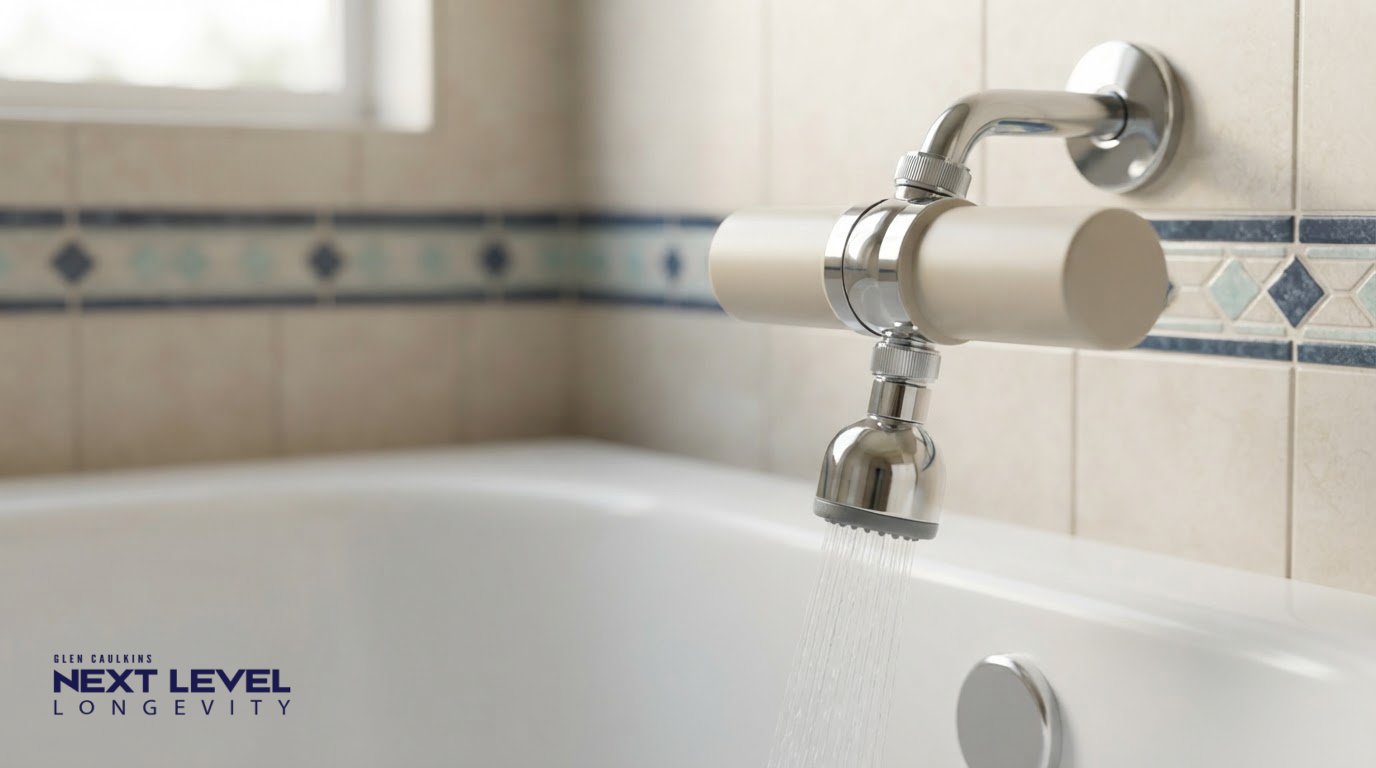
Installation depends on the filter format and your existing showerhead. An inline filter fits between the shower arm and a separate showerhead. A filter supplied with a head replaces the existing one. Before choosing, decide whether you want to keep your showerhead, then compare the product’s connection requirements with your fixture. Each format suits a different setup.
- For an inline unit: Check that the showerhead can be detached and that the filter’s listed connections match the existing setup.
- For a filter with a head: Compare the supplied head’s connection and dimensions with the shower arm and available shower space.
- For either format: Include replacement cartridges in the comparison, and note the stated capacity and change instructions.
Keep comparisons specific. If two products list different capacities, compare their replacement instructions and the conditions attached to each claim. A product’s stage count is neither a capacity figure nor proof of performance. Start with the fit: keep your existing showerhead with an inline design, or replace it with a filter-and-head unit. Then weigh the documented capacity, replacement needs, and price together.
Reduction of chlorine, heavy metals, and sediment
A shower filter can reduce chlorine only if its media and performance evidence address chlorine. Claims about chloramine or dissolved hard-water minerals need separate evidence. A reduction claim also doesn’t show that a filter prevents dry skin, irritation, or hair damage. Those are health outcomes, not contaminant measurements.
Chlorine and Disinfection Byproduct Reduction
Chlorine and disinfection byproducts are different targets. Evidence of chlorine reduction doesn’t demonstrate reduction of every byproduct, such as trihalomethanes. Look for the named substance, test conditions, and reported result. A broad claim such as “reduces chemicals” doesn’t say which compounds were measured or how the test relates to household conditions.
Compare like with like. A chlorine result applies to the test conditions and filter configuration used; it isn’t proof of chloramine reduction. Chloramine contains chlorine, but a claim for free chlorine alone doesn’t establish performance against it. The same applies to disinfection byproducts: each named compound needs relevant evidence.
Claims about skin and hair require a different kind of evidence. A measured reduction in chlorine doesn’t, on its own, show that a filter reduces dryness, irritation, or hair damage. These effects can have multiple causes, so a contaminant test shouldn’t be presented as proof of a health outcome. Keep claims tied to what was measured.
Sediment and Other Contaminant Reduction
Sediment means suspended particles, such as visible rust flakes or grit. A filter’s ability to capture particles depends on its design and the particle sizes tested. That result says little about dissolved substances, which pass through water as ions or molecules. Check whether the claim specifies sediment, particle size, or another target.
Hard-water minerals, including dissolved calcium and magnesium, differ from sediment. A screen that catches grit doesn’t necessarily remove dissolved minerals, and a chlorine-reduction claim doesn’t establish water softening. Baseline hardness measurements of 128 PPM and 282 PPM were described as hard and very hard, respectively. Those values describe water hardness, not filter performance.
For a practical comparison, sort claims by target: free chlorine, chloramine, named byproducts, particles, metals, and hardness. Then match each claim to evidence for that target and the tested conditions. For example, a sediment claim cannot answer whether dissolved lead is reduced. A hardness figure cannot show whether a filter reduces chlorine. Keeping these categories separate makes performance statements easier to interpret and avoids treating one result as proof of another.
Shower-filter installation and maintenance
Replace cartridges according to the filter maker’s stated capacity or replacement interval. If flow drops or the recommended replacement point arrives, follow the product’s instructions. Don’t rely on taste or appearance alone.
A shower filter may affect water flow, depending on its design, condition, and household water pressure. A clogged cartridge can restrict flow more than a clean one. Compare the product’s flow information and maintenance guidance rather than assuming all filters cause the same change.
First identify the installation format. An inline filter sits between the shower arm and showerhead, while a filter supplied with a head replaces the existing one. Follow the product’s connection instructions, align the seals, and secure the assembly. If your showerhead has an unusual mount or fixed connection, compatibility may determine which format fits.
Testing and scoring criteria
A useful comparison score separates performance targets instead of treating every reduction claim as equivalent. The page’s shower-filter score weights disinfection byproducts at 50%, chlorine at 35%, and water hardness at 15%. Those weights describe that page’s scoring method, not a universal standard or proof that a specific filter achieves those reductions.
Look at the evidence behind each performance claim. A chlorine test doesn’t establish performance against disinfection byproducts, and a hardness rating doesn’t prove dissolved minerals are removed. The test conditions, named substances, and filter configuration matter. Installation and maintenance also affect whether the product remains usable as intended.
Hard water, product options, and maintenance
Don’t assume most shower filters soften hard water. Softening requires a process that addresses dissolved hardness minerals. A filter that captures particles or targets chlorine may leave those minerals in the water. Keep this distinction in mind when comparing claims and intended uses.
For shower filtration, compare PristineHydro’s two options: the Aqualux filter with head and the Ultimate Dual KDF inline filter. The Aqualux includes a showerhead; the Ultimate Dual KDF works with your existing showerhead. Consider the format, installation requirements, and the product’s stated performance information when choosing.
Maintenance is part of choosing a filter. Note the cartridge’s stated replacement point when you install it, then follow the maker’s instructions. If the shower’s flow changes, inspect the filter and cartridge as directed. A change in flow may indicate a maintenance need, but it doesn’t identify the cause on its own. Sediment, cartridge condition, and the fixture can all affect flow.
Customer reviews and recommendations
Customer reviews are accounts of experience, not verdicts. A recommendation may explain how a product fit into someone’s routine, what they expected, or what surprised them. It can’t establish that the same experience will apply in another home. Read reviews for useful details, not just their ratings.
Start with the reviewer’s reason for choosing the product. Someone seeking a simpler routine may value different qualities from someone comparing technical claims. A review that explains the original concern gives you a better basis for deciding whether its recommendation reflects your priorities. Brief praise without context offers less insight.
Notice how the reviewer describes the experience. Specific observations, such as an easier morning routine or confusing instructions, are more informative than broad labels like “excellent” or “terrible.” These details provide context, but still describe personal experience rather than a controlled comparison.
Consider when the review was written and which part of the customer journey it describes. An account written soon after purchase may focus on setup and first impressions, while a later one may reflect continued use. Neither is automatically more accurate; each answers a different question. Reviews that identify the stage they describe are easier to interpret.
- Look for context: A useful review explains what the person hoped to improve or simplify.
- Read for examples: Specific events are more informative than sweeping praise or criticism.
- Compare perspectives: Different priorities can explain why customers assess the same product differently.
- Separate opinion from fact: Personal satisfaction is meaningful, but it isn’t a technical measurement.
Read critical comments as carefully as positive ones. Ask what happened, what expectation shaped the response, and whether the reviewer explains the circumstances. A complaint without context may be hard to apply, while a detailed account can raise a useful question to consider before buying. Praise also needs context, especially when it makes broad claims without describing the experience.
Recommendations are more useful when you compare the reasons behind them, not just the sentiment. If several independent accounts describe a similar everyday benefit, they may help you understand how people use the product. That still doesn’t prove the same outcome for every household. Customer reviews can inform your decision, but only product documentation or testing can answer technical questions.
Multi-stage shower filtration
A multi-stage design uses a sequence of treatment steps, housed in one filter or arranged across separate components. The sequence shapes how water moves through the system and how its parts are maintained. Thinking of the design as a pathway, rather than relying on a label, can reveal practical differences between similar-sounding products.
Some designs place several media in one cartridge. This makes for a compact unit, but the stages may not be replaceable separately. Other designs use separate components, making the water’s path easier to identify, but adding parts to assemble or maintain. Product diagrams and cartridge instructions can show how each system is arranged.
The order of the stages can matter. A stage that catches larger particles may come before a finer treatment medium, helping limit particles reaching later layers. Manufacturers may also combine media to address different treatment goals in one housing. To understand how a particular filter is intended to work, consult its product documentation.
Compare maintenance, too. A combined cartridge may need to be replaced as a whole according to its instructions, even if its internal stages have different roles. Separate components may have their own replacement procedures. Consider whether you prefer changing one cartridge or tracking several parts. A simpler routine may suit a household that wants fewer maintenance steps.
Multi-stage designs also involve tradeoffs in space and water movement. A larger housing may accommodate more media, while each added layer creates another part of the path water follows. Product diagrams can show whether the stages sit in one cartridge, separate housings, or a defined sequence.
- Trace the pathway: Use the product diagram to see how water moves through the components.
- Check cartridge design: Note whether the stages share one cartridge or use separate parts.
- Consider upkeep: Compare the replacement routine with the maintenance you can realistically sustain.
- Review the layout: Account for the filter’s housing and connections in your shower space.
The most useful design is one whose arrangement and upkeep suit your home. Glen B. Caulkins’ writing about water chemistry and treatment offers context for considering water as a sequence of processes, from source to use. A filter’s internal pathway is one part of that bigger picture, alongside how it fits your household routine.
Glen B. Caulkins
Glen B. Caulkins brings water chemistry and practical filtration choices into the same conversation. For shower filtration, PristineHydro offers the Aqualux filter with head and the Ultimate Dual KDF inline filter. The Aqualux includes a showerhead; the Ultimate Dual KDF works with your existing one. Consider fit, stated performance information, and replacement needs when choosing.
Glen’s wider work examines water, minerals, and environmental chemistry. He also has a commercial interest in PristineHydro products, so assess product performance using evidence specific to each claim. For details about the two shower-filter formats, review the current product information.
Choose the next step for your home
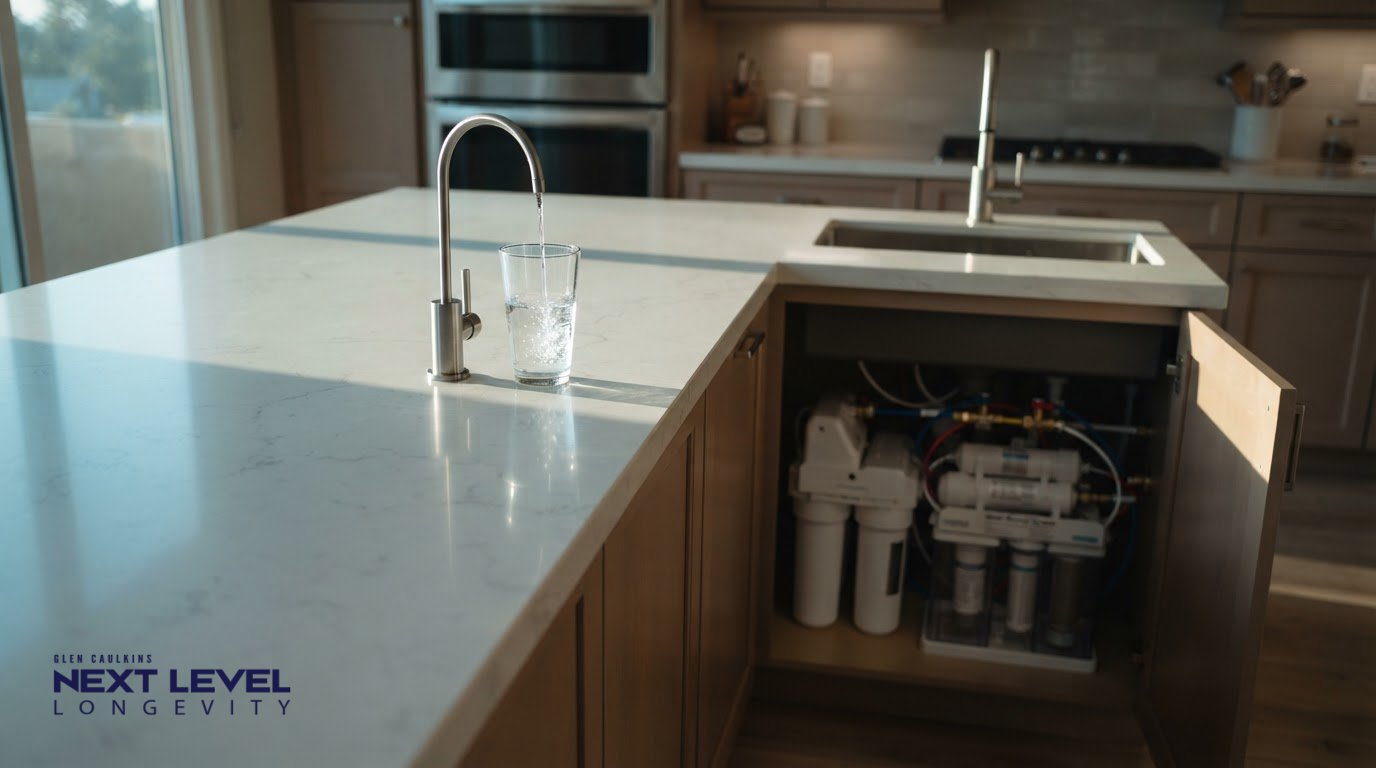
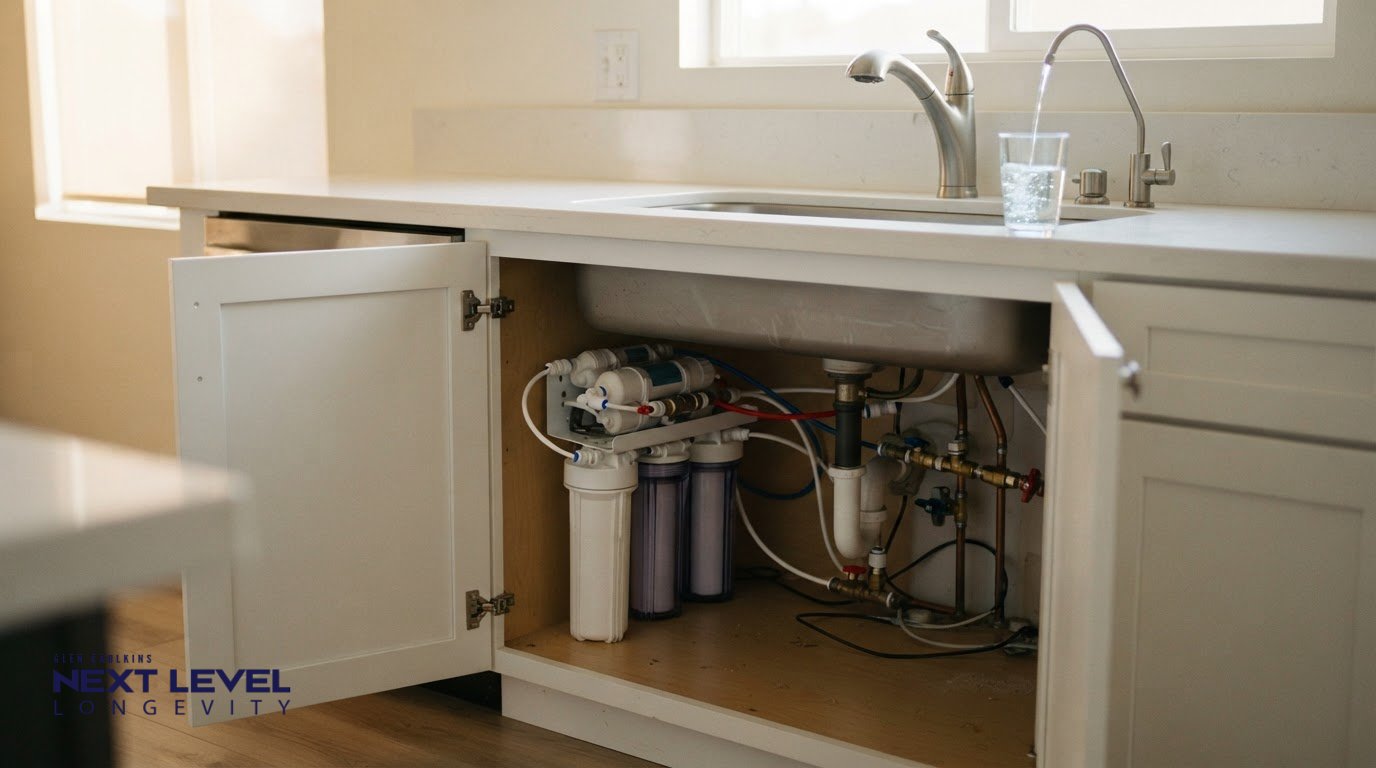
A shower is one part of a larger water system. Match each filter to its purpose, then consider the water you drink, use while traveling, and bathe in. Glen B. Caulkins offers the Under-Counter Water Revival System and the Travel-Portable Water Revival System for drinking-water settings, as well as the Aqualux filter with head for shower use.
Keep the decision grounded in your setup. Note which water source matters most, what you want a filter to address, and how much maintenance fits your routine. Then compare product details with those priorities. This makes shower filtration a practical choice, rather than a search for the longest feature list.
To compare drinking-water systems, visit Compare Water Revival Systems. You can take the next step at your own pace, with clearer priorities in hand.
Frequently Asked Questions
What does a shower filter remove from water, and what does it not remove?
A shower filter’s function depends on its materials and design. For a useful comparison, note which substances the product information names and whether those match your priorities. A utility water report can show substances monitored in supplied water; a laboratory test can analyze a sample from a specific tap. Smell or appearance alone can’t tell you what a filter has removed.
What types of shower filtration systems are available, and how do they compare?
Shower filters generally come as an inline unit or a combined filter and showerhead. Beyond installation style, consider the space around the shower arm, whether you rent or own, and how easily you can reach the unit for maintenance. If you share a bathroom, consider whether everyone can use the setup comfortably and follow its replacement routine.
What certifications should I look for when buying a shower filter, such as NSF/ANSI standards?
If a product claims certification, look up the exact model rather than relying on a brand-level statement. Confirm that the certification applies to the complete filter, not just a material inside it. Then check whether its scope covers the claim that matters to you. A certification mark without a matching model and scope doesn’t show whether that claim was evaluated.
How much does a shower filter cost, including replacement cartridges?
There’s no single cost that applies to every filter and household. Check the current product listing and the price of cartridges made for that exact model. Note how often the maker recommends replacement and how many cartridges the product requires. This gives you a clearer view of ongoing costs than purchase prices alone, without assuming every household uses filters at the same rate.
How do I install a shower filter, and will it fit standard U.S. shower plumbing?
Fit depends on the filter’s connection and the existing shower fixture, so “standard” shouldn’t replace checking the model instructions. Before installation, identify whether the shower arm can accept the unit and whether the current head must be removed. Keep the instructions nearby, protect finished surfaces, and avoid forcing a connection. Follow the product’s directions if the parts don’t align smoothly.
Do I need a shower filter based on my local water quality, and how can I check my water report?
A filter may suit you if its stated purpose matches a concern in your water information, but the choice is personal. Consult your utility’s water report or get a laboratory test of a household sample to understand its composition. A utility report may not describe water after it passes through your plumbing. This guide is not health advice and cannot determine what’s in your water.
Frequently Asked Questions
What does a shower filter remove from water, and what does it not remove?
What types of shower filtration systems are available, and how do they compare?
What certifications should I look for when buying a shower filter, such as NSF/ANSI standards?
How much does a shower filter cost, including replacement cartridges?
How do I install a shower filter, and will it fit standard U.S. shower plumbing?
Do I need a shower filter based on my local water quality, and how can I check my water report?
More articles