Reverse osmosis in Laguna Woods: water quality and RO options
November 1, 2026 · 15 min read
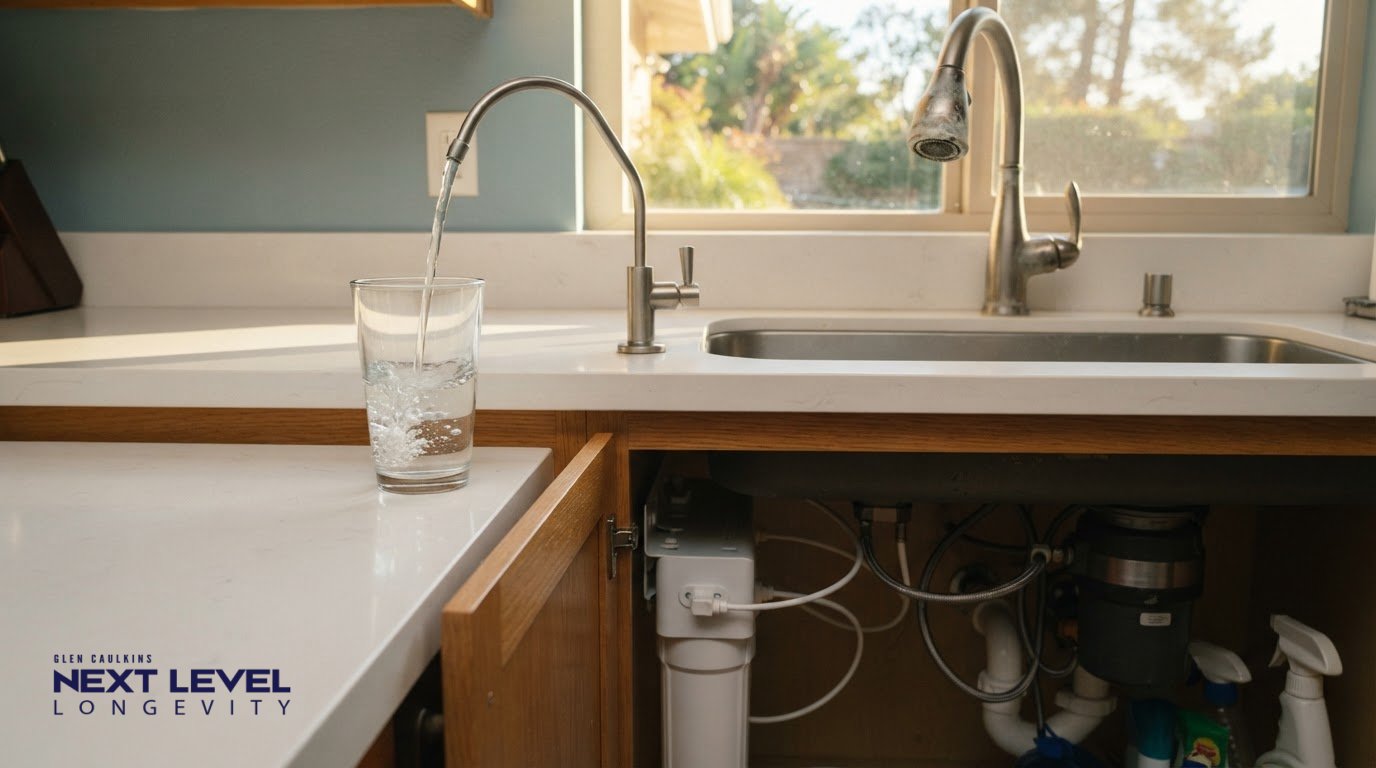
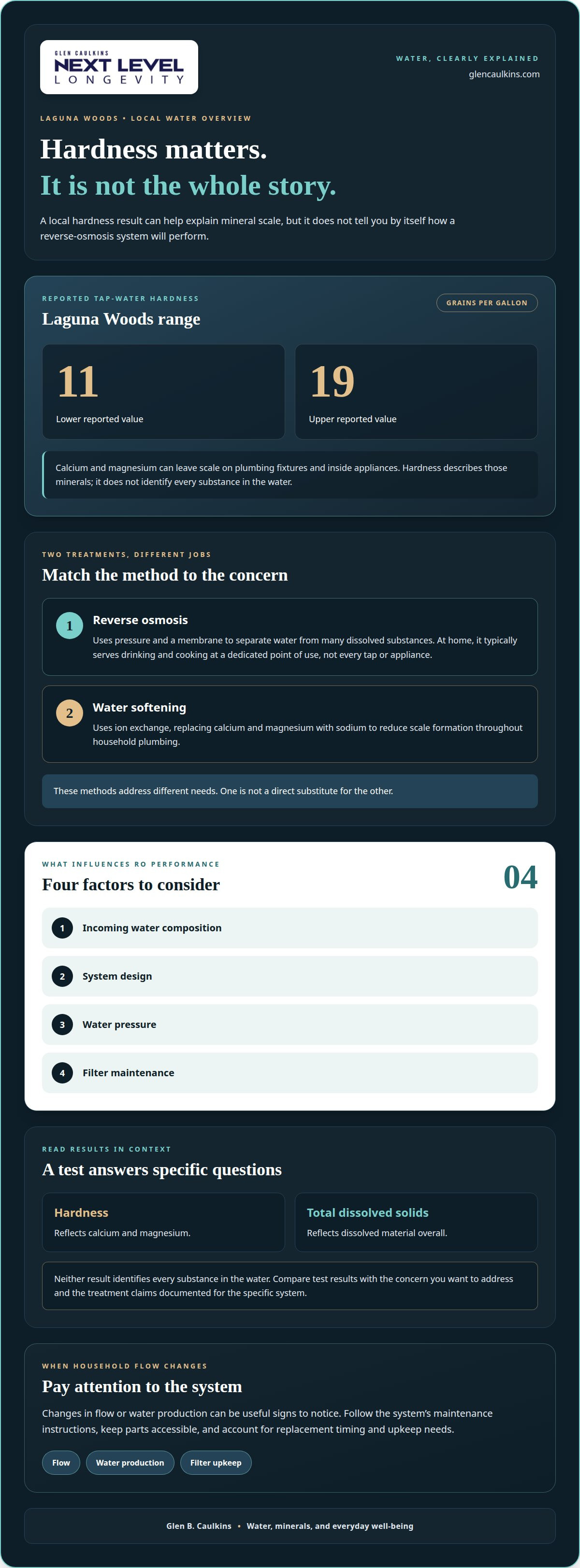
Laguna Woods water is hard: reported tap-water hardness ranges from 11 to 19 grains per gallon. For households considering reverse osmosis in Laguna Woods, that matters because calcium and magnesium can leave scale on plumbing fixtures and inside appliances. Hardness alone, however, doesn’t tell you how an RO system will perform.
It’s reasonable to connect hard water with spots, mineral buildup, and changes in taste. This article explains what local hardness figures mean, how scale affects household plumbing and appliances, and how reverse osmosis in Laguna Woods treats drinking water differently from a water softener. Understanding the distinction helps clarify which problem each system is designed to address.
You’ll also learn what influences RO performance in homes and commercial settings, including incoming water composition, system design, water pressure, and filter maintenance. The aim is a practical overview of local water conditions and the factors to consider when assessing an RO system for your needs.
Key Takeaways
- Laguna Woods tap water is hard, with reported hardness ranging from 11 to 19 grains per gallon. Learn what that can mean for scale on plumbing and appliances.
- Reverse osmosis treats drinking water at the point of use, while a water softener addresses hardness throughout household plumbing.
- RO performance depends on more than hardness. Incoming water, system design, pressure, and filter upkeep all matter.
- Understand what to look for when RO flow, taste, or water production changes, and why regular maintenance matters.
- Explore how an Under-Counter Water Revival System may fit a home drinking-water setup, and how portable options serve a different use.
Reverse osmosis systems for homes and commercial properties
Reverse osmosis can serve a kitchen drinking-water point at home or a drinking and food-preparation point in a commercial property. The right fit depends on water use, test results, system design, and access for maintenance.
How Reverse Osmosis Works
A reverse-osmosis membrane separates water from many dissolved substances by using pressure. In a home, treated water usually serves drinking and cooking at a dedicated faucet. A restaurant might use treated water for beverage preparation or cooking, where staff draw water repeatedly during service. That difference in use matters: a household’s pattern may be occasional, while a commercial kitchen may need a steady supply during busy periods. The membrane’s purpose is not the same as treating every tap or appliance throughout a building.
Home Water Testing and Recommendations
Water testing measures selected characteristics to help guide system selection. Start with the concern you want to address, then compare it with what the test measures. A hardness result, for example, reflects calcium and magnesium, while total dissolved solids reflect dissolved material overall. Neither identifies every substance in the water. A recommendation should account for test results, whether you need water for drinking or cooking, and the system’s documented treatment claims. A small household and a café also have different water-use patterns and space requirements.
Filtration Claims and System Comparisons
Filtration claims are useful only when they specify the substances and testing conditions they cover. Read claims for the particular system rather than treating “purifies” or “removes contaminants” as answers to every water concern. Reverse osmosis uses a membrane to reduce dissolved solids. Carbon filtration is used for some taste and odor concerns. A water softener uses ion exchange, replacing calcium and magnesium with sodium to reduce scale formation. These methods serve different purposes, so one is not a direct substitute for another.
System, Installation, and Maintenance Costs
The cost of buying and installing an RO system in Laguna Woods depends on the system and installation requirements. System choice, plumbing access, installation work, and replacement parts affect the overall expense. Replacement timing and maintenance costs also vary with the system and its upkeep needs. Follow the system’s maintenance instructions, keep parts accessible, and note changes in flow or water production. At home, clear space beneath the sink helps with access. In a café, an accessible installation can make routine service easier.
Business hours and contact information
The Laguna Woods location is at 24102 El Toro Rd, Suite D, Laguna Woods, CA 92637. The listed phone number is (949) 581-9191. Posted hours are Monday through Thursday from 10:00 AM to 6:00 PM, and Friday from 10:00 AM to 7:00 PM. The location is closed Saturday and Sunday. Keep the suite number in your directions, since it is part of the street address.
The weekday schedule has two closing times. Monday, Tuesday, Wednesday, and Thursday share the 6:00 PM closing time. Friday closes at 7:00 PM. A visit planned for Friday therefore follows a different schedule from a visit planned earlier in the week. Saturday and Sunday are closed, so plan an in-person visit for a weekday instead. Checking the calendar against the posted schedule helps avoid arriving on a closed day.
For directions, enter the full address rather than searching only for “Laguna Woods water.” The street, suite, city, state, and ZIP code together identify the destination. If you’re making a water-treatment decision, bring notes on the points you want to discuss, such as whether you need water for household drinking or another use. That preparation helps keep a visit focused on your questions instead of a general search for filtration information.
The listed phone number provides a direct way to reach the location with a specific question. For example, you can ask for directions to Suite D or refer to the posted weekday schedule when planning a visit. Keep posted business hours distinct from phone availability: the hours describe when the location is open. Having a concise question and the full address to hand can make planning easier.
Plan a practical visit by noting the day you intend to go, the posted opening and closing times, and the full street address. If you’re comparing water-treatment options, also note the intended use and any water-quality information you already have. These details can help focus the discussion without assuming one treatment method suits every concern. The address and schedule make it easier to include a local visit in your research.
Use the weekday hours to choose a suitable time, then save the full Laguna Woods address for navigation. The listed schedule distinguishes Monday through Thursday from Friday and excludes weekends. The Laguna Woods visit information offers a convenient reference as you plan your local visit.
Domestic reverse osmosis use
Small household reverse-osmosis systems appeared in the United States in the early 1970s. Their domestic role centers on water used at home, not on treating every activity that uses water. A household might choose treated water for a drinking glass, soup pot, or coffee maker while using its existing supply for cleaning and laundry. That division helps define what a kitchen system can contribute to everyday routines.
Start by noticing which household tasks use drinking water. Someone who fills a kettle each morning may value a dedicated kitchen faucet, while someone who mainly drinks bottled water may have a different daily pattern to consider. Cooking matters too: water can be an ingredient in rice, broth, or tea, and may be used to prepare infant formula. Listing these uses gives a household a concrete basis for deciding whether a fixed drinking-water point would be useful.
Kitchen layout shapes the experience. Under the sink, stored items, plumbing, and faucet placement all affect how the space works. Consider whether the faucet is easy to reach while preparing a meal, whether the cabinet remains usable, and whether everyone knows which tap supplies treated water. These practical details influence everyday use, not just the system’s presence. A clear label or shared household routine can prevent confusion between faucets.
How often you use water also affects how a system fits into the home. A household that draws water throughout the day may naturally use a dedicated faucet for bottles, cooking, and drinks. In a home where residents are often away, the faucet may see less use. Build it into familiar routines, such as filling a cooking pot at the start of meal preparation. That makes the system’s role easier to understand and maintain.
Homes have different needs. A renter may want to preserve cabinet space, while a homeowner may consider how a fixed kitchen installation fits a long-term renovation. A household with limited counter space may prefer not to add another countertop appliance. These are practical constraints, not conclusions about water quality. Match the system format to the home’s layout and the way residents prepare food and drinks.
Some households need water beyond the kitchen. Travel, a second residence, or an office routine can make a movable format more relevant than a permanent kitchen fixture. The key questions are where you need water and whether the setup should stay in one place. Map those uses before choosing a format, then consider how each person will access and maintain it. This grounds the decision in household habits rather than an abstract idea of filtration.
Factors affecting RO performance
Reverse osmosis performance depends on the incoming water, system conditions, and upkeep. In Laguna Woods, hardness figures vary by supply: water from the Baker plant measured 269 to 322 ppm in 2025, averaging 293 ppm. Imported Metropolitan water supplied to the area measured 191 to 280 ppm that year, averaging 236 ppm. Different source blends can therefore present different starting conditions.
Hardness matters because calcium and magnesium can contribute to mineral scale. Scale on a membrane can interfere with water flow, while clogged prefilters can restrict it. A prefilter helps protect the membrane but doesn’t eliminate the need for routine filter changes. Reduced flow or lower production can point to a maintenance issue or a change in operating conditions.
Pressure and temperature also affect how quickly water passes through an RO membrane. Lower feed pressure can slow production, while warmer feed water can increase flow compared with colder water. System condition matters too: a worn filter, kinked line, or poorly seated cartridge can restrict water before it reaches the membrane. Keep components accessible and note changes in the faucet’s usual flow.
How much water does reverse osmosis waste, and what are the environmental impacts? RO sends some incoming water down a drain as reject water, so it uses more feed water than it produces as treated water. The amount depends on system design, pressure, incoming water, and maintenance. Environmental effects also depend on local water availability and wastewater handling.
Use patterns affect performance too. A household that draws water regularly uses the storage tank differently from one that leaves it unused for long periods. Consistent use helps integrate the system into daily routines. If taste or odor changes, production falls, or flow slows, compare the change with the system’s maintenance schedule rather than treating one symptom as a complete diagnosis.
Laguna Woods receives 100 percent imported supply from El Toro Water District, while plant-level hardness can differ. That makes the water source and current blend relevant context, but hardness alone doesn’t show how a specific RO system will perform. A water test, the system’s design, pressure, and filter condition together provide a clearer picture. For commercial settings, demand patterns matter too: frequent draws place different demands on storage and production than occasional kitchen use.
A return of unpleasant water taste or odor can indicate a change in RO system performance. A reduced flow rate can indicate a change in RO system performance. An RO system producing less water than usual can indicate a performance change.
These signs are prompts to consider the system as a whole, not proof that the membrane alone is at fault. Note when the change began and whether it coincided with a change in use or upkeep. That information can help guide what to check next.
What is reverse osmosis and how does it work?
Reverse osmosis uses pressure to move water through a semipermeable membrane. In natural osmosis, water moves across a membrane toward a more concentrated solution. Reverse osmosis applies pressure in the opposite direction. The membrane lets water pass while reducing many dissolved substances. For a Laguna Woods household, this process creates a separate treated-water stream for drinking and cooking.
In a typical system, incoming water first passes through prefilters that help protect the membrane from particles and substances that can affect its operation. Pressure then pushes water across the membrane. The treated portion, often called permeate, moves toward a storage tank or faucet. The remaining stream carries away some concentrated material. The system separates water into two paths rather than turning all incoming water into treated water.
The membrane works differently from a simple screen. A screen catches particles larger than its openings; an RO membrane separates water from many dissolved constituents. “Many” is important: a reduction claim applies to specific substances and test conditions, not every possible material. A total dissolved solids reading can show a change in overall dissolved content, but it cannot identify individual substances.
Reverse osmosis systems became possible through a sequence of membrane research. Researchers have studied semipermeable membranes for saltwater desalination. In 1959, UCLA researchers Srinivasa Sourirajan and Sidney Loeb created a viable cellulose acetate polymer membrane. That development helped move the idea toward practical water treatment.
Membrane design continued to evolve. In the 1960s, John Cadotte recognized that interfacial polymerization could produce highly effective filtering capabilities in RO systems. This method helped establish a foundation for later membrane designs. By 1977, Cape Coral, Florida, was using reverse osmosis to purify most of its potable water supply. Those milestones show how research moved from membrane experiments toward municipal and household uses.
For a home or business, system components shape everyday use. Prefilters, membrane, storage, tubing, and faucet each play a distinct role. A slow faucet may reflect low pressure, a restricted filter, or another system condition. A change in taste alone doesn’t identify the cause. Compare the symptom with the system’s maintenance history and performance instructions. To explore Glen B. Caulkins’s wider inquiry into water and chemistry, explore his water research and related topics.
Glen B. Caulkins: Under-Counter Water Revival System
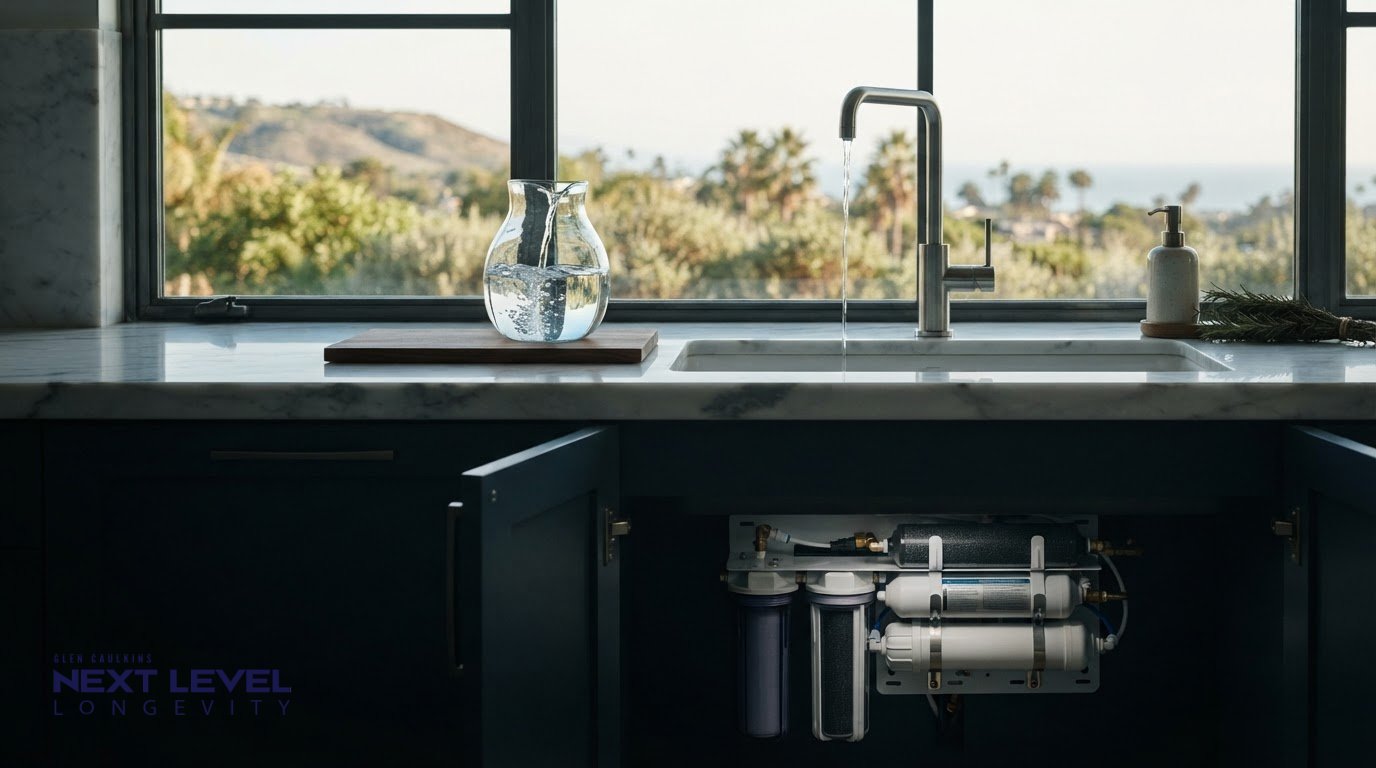
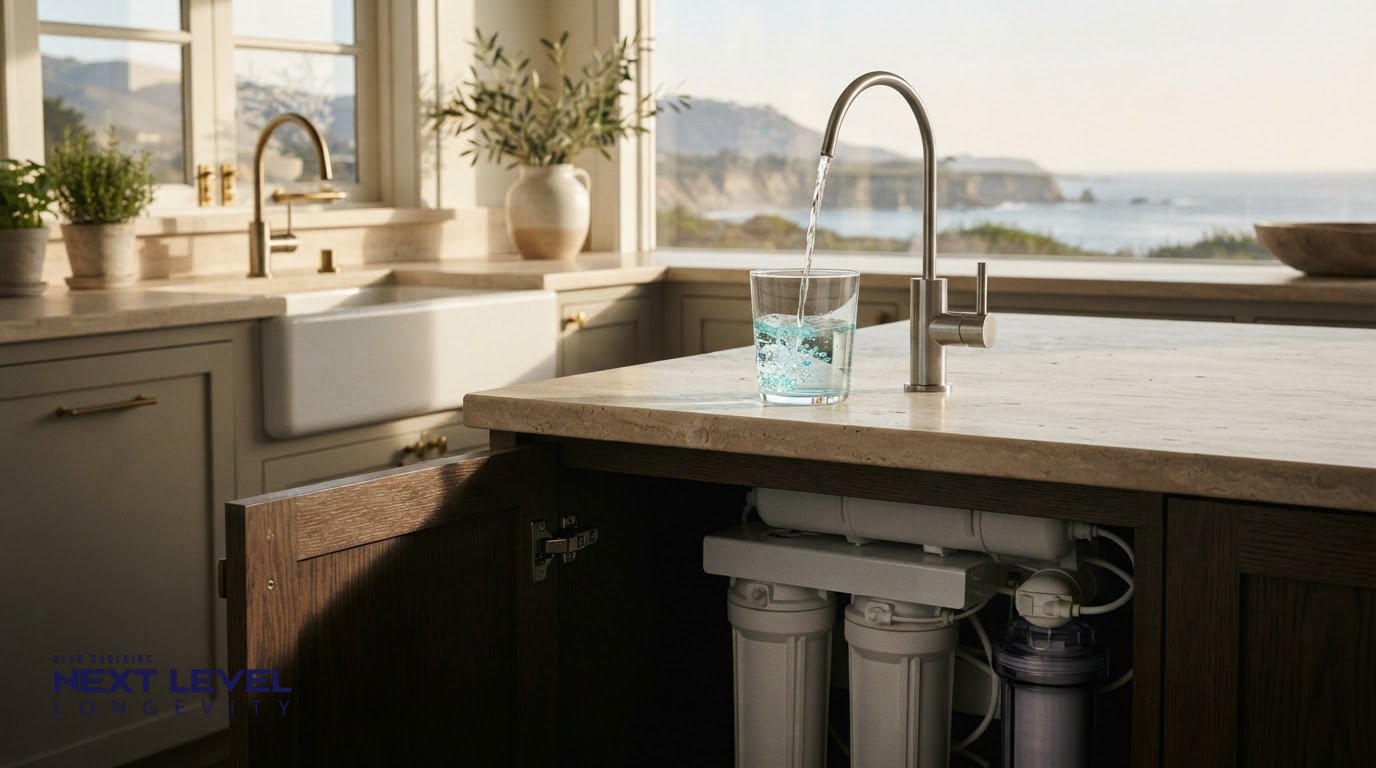
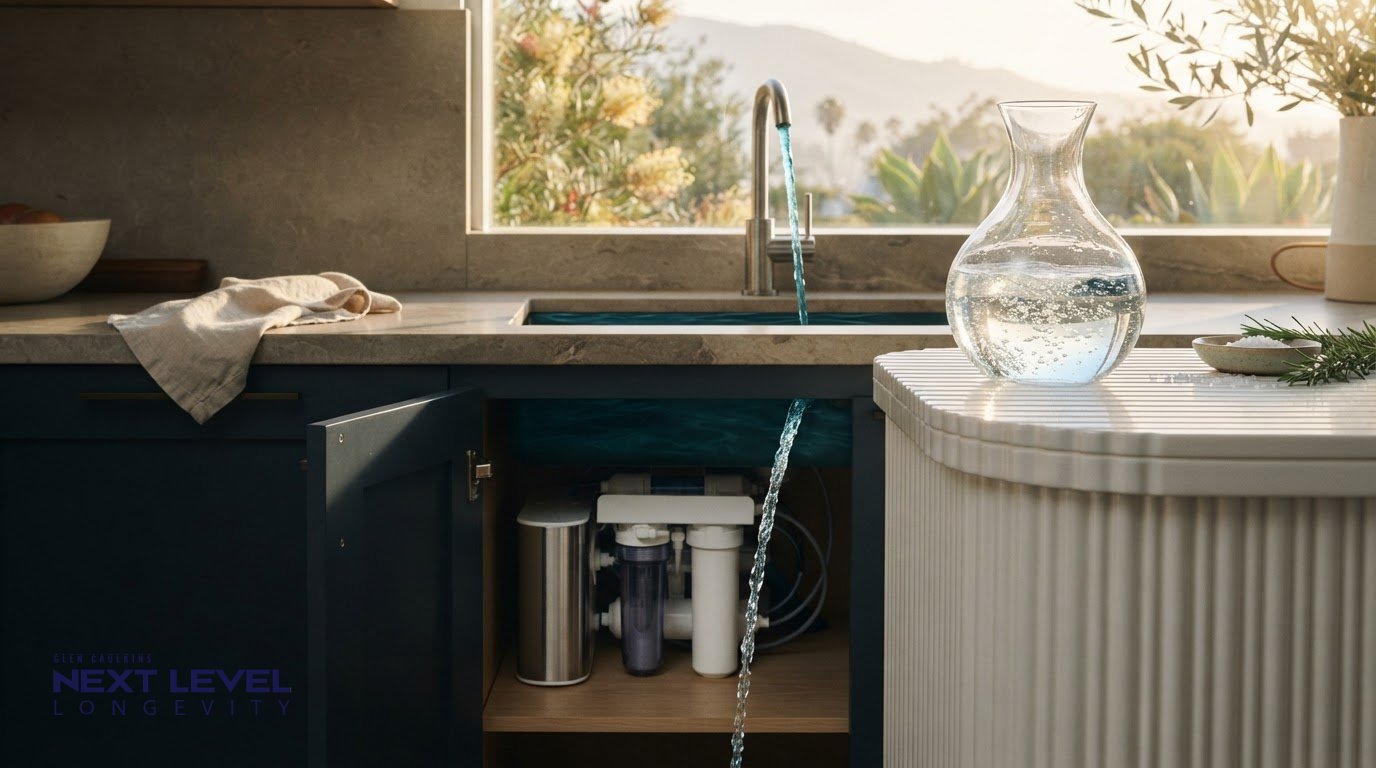
The Under-Counter Water Revival System offers households an option for kitchen drinking water. Its reverse osmosis and dual deionization filtration, followed by the addition of minerals such as magnesium and calcium bicarbonate, reflects Glen B. Caulkins’s interest in contaminant reduction and the composition of finished water. It may suit someone seeking a dedicated under-counter setup rather than treatment at every household tap. For water needs away from home, the Travel-Portable Water Revival System is a separate option. The right fit depends on where you want treated water and how you plan to use it. Product descriptions explain each system’s intended role. To explore the systems and Glen’s water research, visit glencaulkins.com.
Choose the next step that fits your water use
Water treatment is a practical choice, and it raises a broader question: what do you want your water system to do in daily life? If you’re considering reverse osmosis in Laguna Woods, match the system’s intended use with your household routine, available space, and maintenance habits. A kitchen drinking-water system serves a different role from a portable option or a shower filter.
Glen B. Caulkins offers the Under-Counter Water Revival System for a fixed kitchen setup and the Travel-Portable Water Revival System for water needs away from that location. The Aqualux filter with head is a distinct shower-filtration option. Each serves a different purpose, so focus on the setting and use that matter to you.
If you’d like to explore the options or Glen’s wider work on water, minerals, and environmental chemistry, contact Glen B. Caulkins. Take the time to choose thoughtfully; a clear understanding of your needs is a useful place to begin.
Frequently Asked Questions
Is the water hard in Laguna Woods?
Yes. Reported tap-water hardness in Laguna Woods ranges from 11 to 19 grains per gallon. Hardness comes mainly from dissolved calcium and magnesium, which can leave mineral deposits on faucets, glassware, and heating surfaces. For example, a kettle that develops a chalky ring may show scale buildup. Hardness describes these minerals, not every aspect of water quality, so it doesn’t by itself determine whether a household needs reverse osmosis.
Does Laguna Woods tap water need reverse osmosis filtration?
No single filtration choice suits every household. For reverse osmosis in Laguna Woods, consider what you want to address, such as taste, odor, or dissolved material, and what a water report or lab test shows. The product guide is not health advice and cannot determine water composition. Use actual water information to identify the concern before choosing treatment. Hardness alone doesn’t answer that question.
What reverse osmosis systems are available for homes in Laguna Woods?
Home options include under-counter and travel-portable systems. For households exploring reverse osmosis in Laguna Woods, the Under-Counter Water Revival System uses reverse osmosis and dual deionization, then adds minerals such as magnesium and calcium bicarbonate. The Travel-Portable Water Revival System is a countertop unit that follows a filter-then-remineralize approach and can move between homes, offices, and trips. These options may also suit households in Newport Beach, Costa Mesa, Laguna Beach, Carlsbad, and Irvine.
Which reverse osmosis providers serve Laguna Woods, and how do their reviews and warranties compare?
Compare reviews and warranty terms for the specific system and purchase rather than assuming they are the same across providers. Look for recurring comments about filter access, replacement-part support, and changes in water flow. Read warranty language for coverage, exclusions, and whether it applies to the system, membrane, or labor. A review describes one customer’s experience; it doesn’t establish tested product performance or predict results for another household.
Frequently Asked Questions
Is the water hard in Laguna Woods?
Does Laguna Woods tap water need reverse osmosis filtration?
What reverse osmosis systems are available for homes in Laguna Woods?
Which reverse osmosis providers serve Laguna Woods, and how do their reviews and warranties compare?
More articles